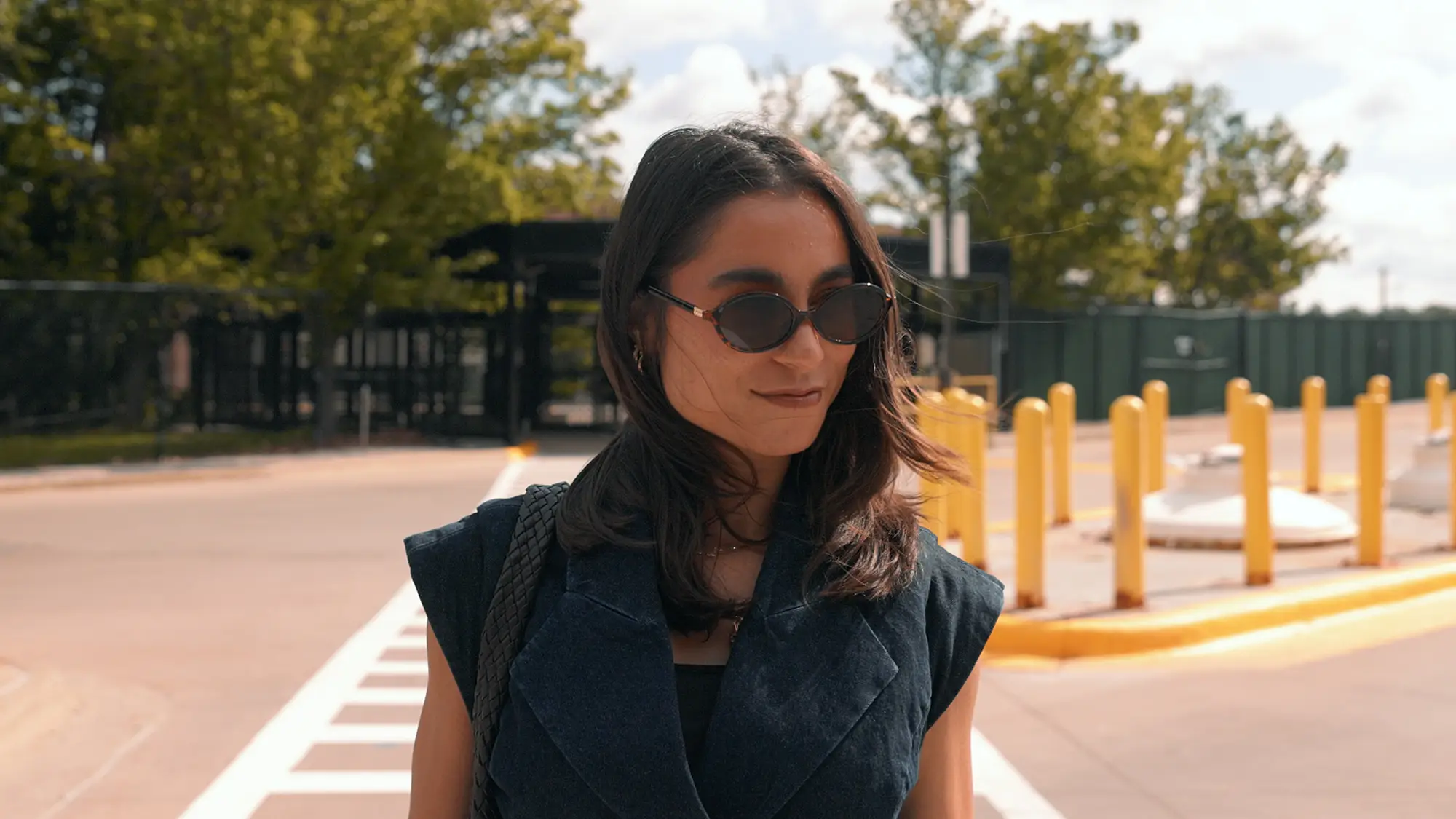
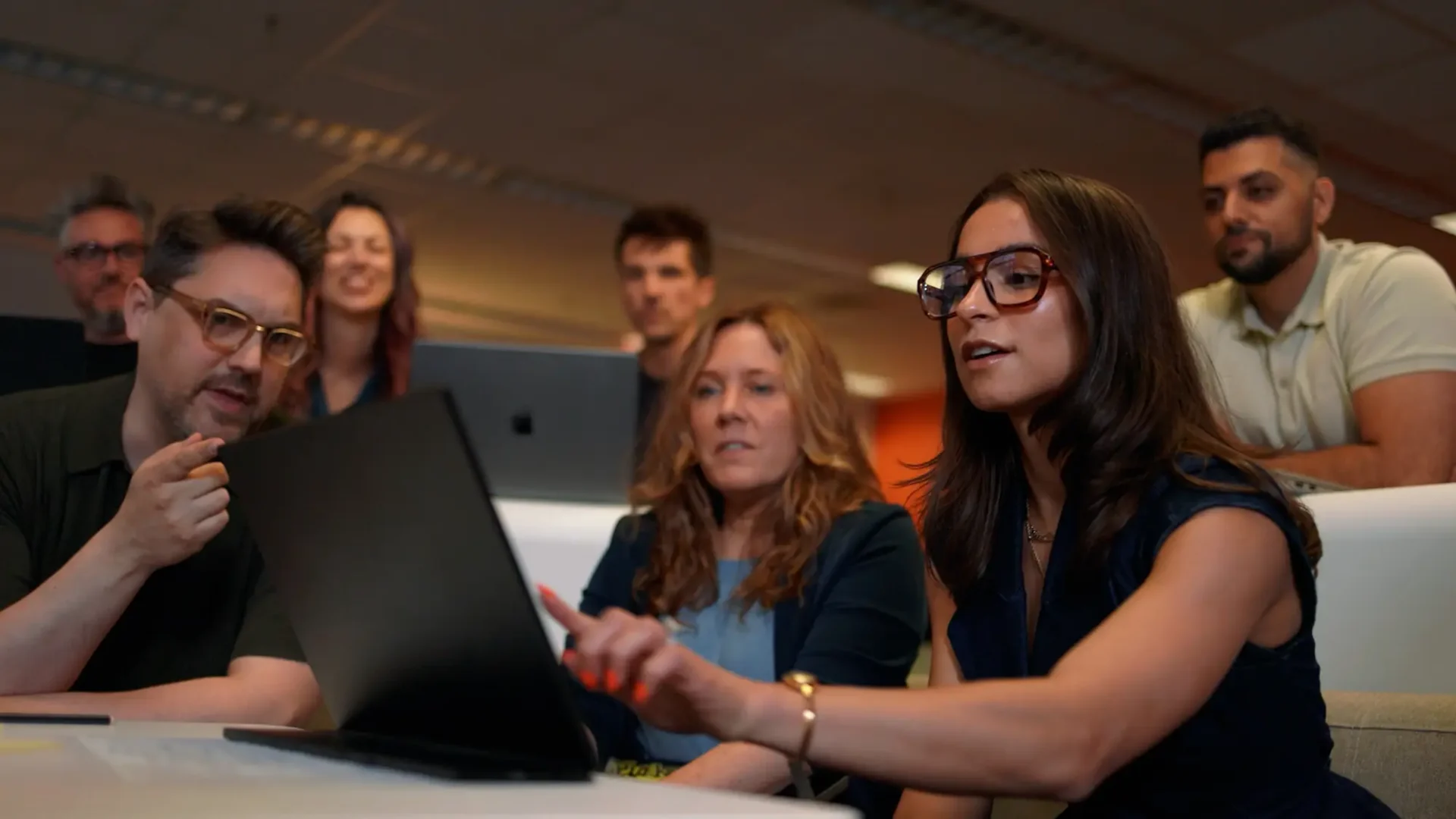
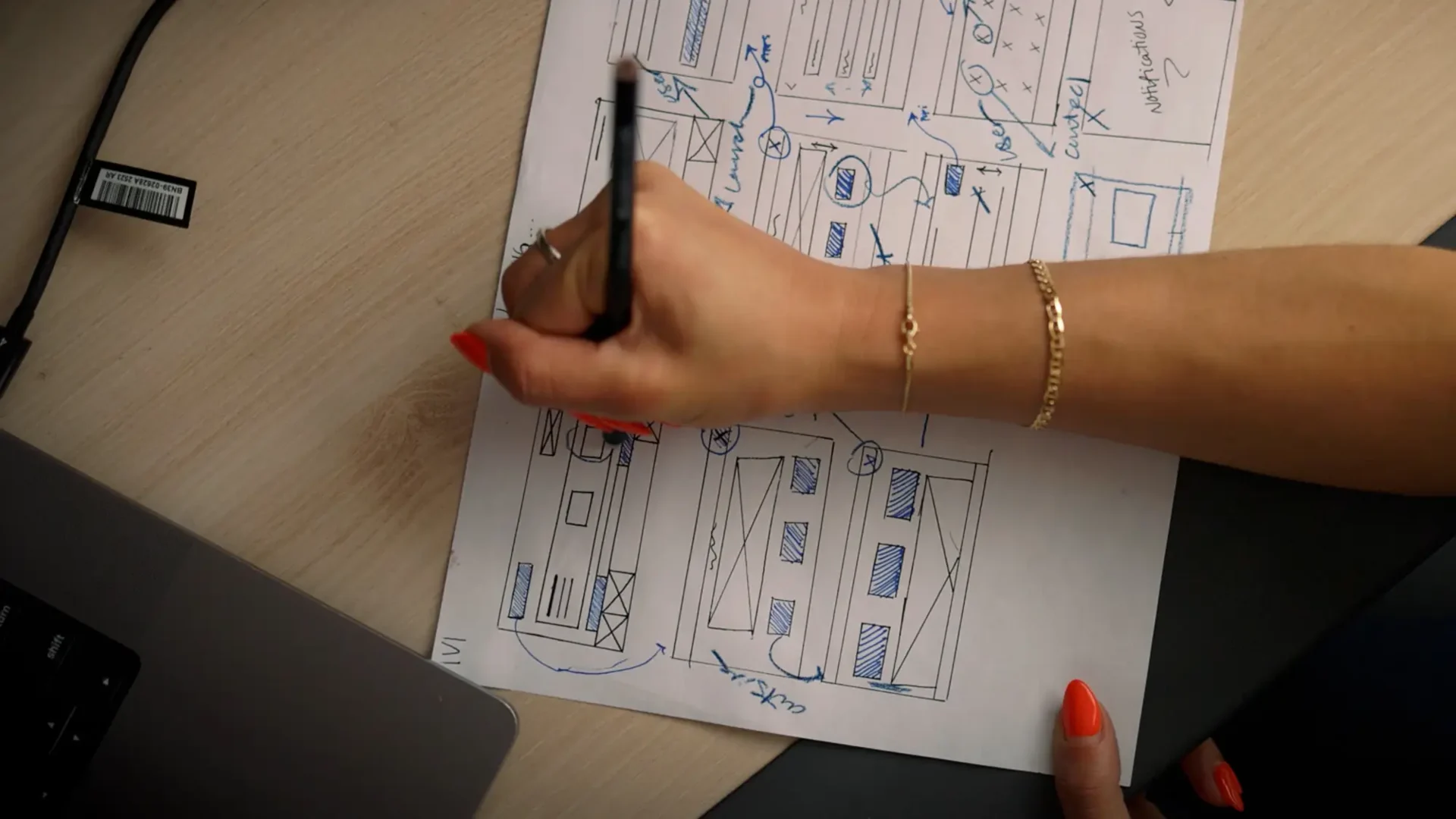
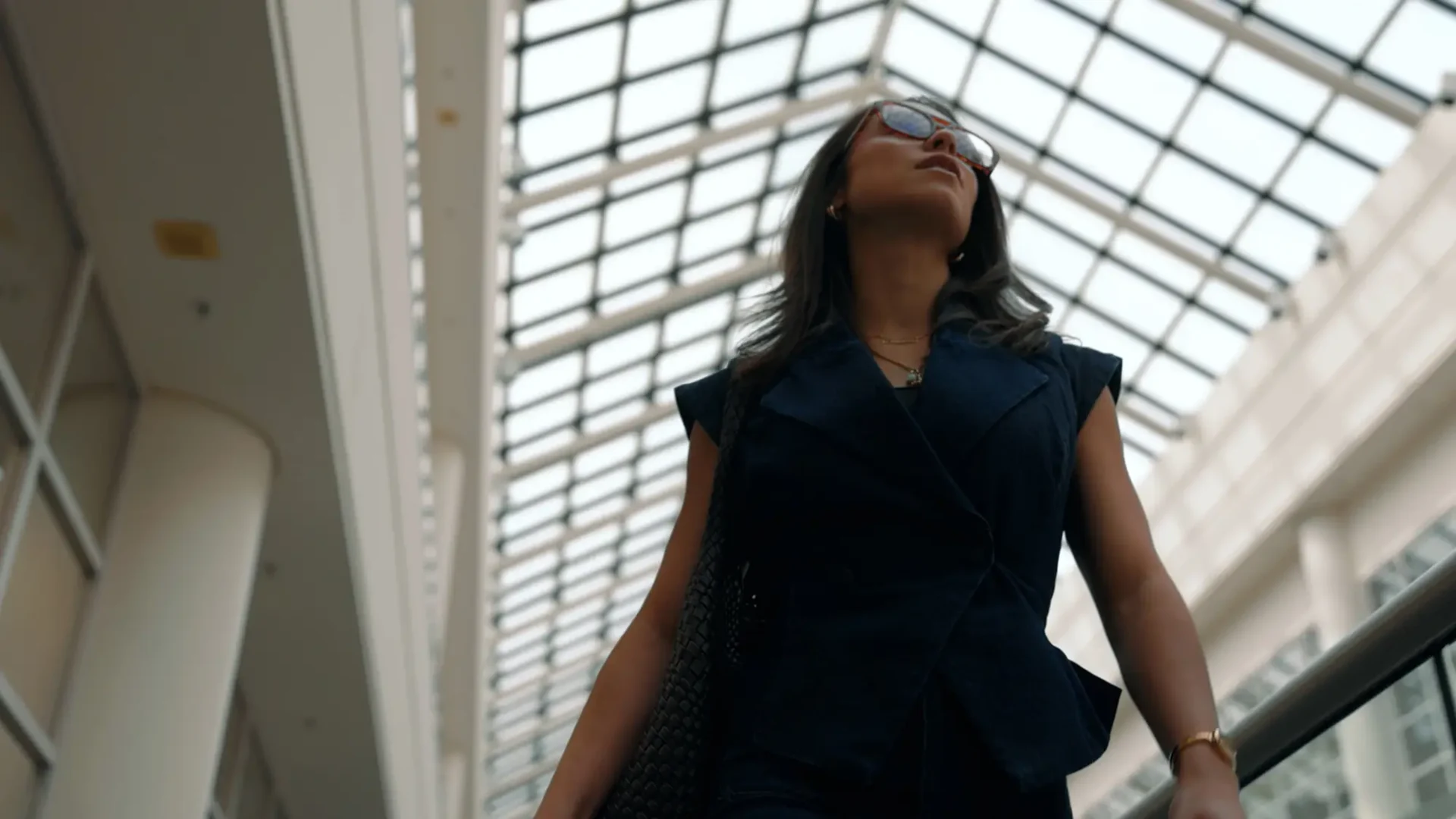
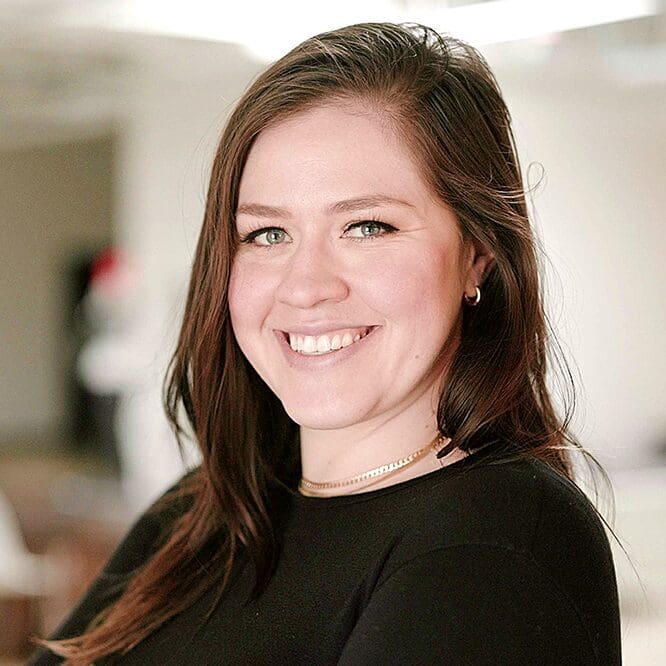
Christine Montalbano (’22, User Experience Design) has always been curious about how things work. A lifelong creative with an interest in making experiences both functional and intuitive, she found a career that brings together her creative and analytical sides. Today, Christine manages the Core Global User Experience Design Team for Stellantis’ in-vehicle infotainment system, helping translate complex technology into experiences that feel natural to drivers across its global brands. She also returns to CCS as an Adjunct Instructor, sharing what she has learned with the next generation of designers.
Can you tell us more about what you do at Stellantis?
At Stellantis, I currently manage the Core Interaction Design Team for our in-vehicle infotainment system. My team and I design the structure and framework of our user interface for all 14 of our global brands. We look at how every single element on the screen is communicating different vehicle functions to the user. We do the actual interaction. We understand the electrical engineering requirements, how the back end and the software work, and build the front end in a digestible way for the driver, passenger and anybody else in the vehicle.
How did you get where you are today?
I was born and raised in the Metro Detroit area. I have tons of family members who have been in the automotive industry. I kind of grew up consumed by going to the auto shows and different cars and coffee events with my family. My parents are big car people, so there was always something to drive or something to sit in growing up. After my undergrad, I went to CCS for my master’s, and I was just consumed by the automotive industry with different collaborative projects that we were working on. I kind of became a cliché. I’m from Detroit. I went to CCS. I went into the car design world, and that’s how I got here.
Honestly, I’m an experiences person. I love experiences. I love designing the best possible experience not only for other people, but myself. A lot of times, people make fun of me like, “Christine, we don’t need to experience that the exact way that you want us to.” But it’s in my nature. Designing the in-vehicle infotainment system, you really have to understand the entire vehicle experience – before you get in the vehicle, while you’re in it, when you get out, and even what you’re doing at home that prepares you for getting in. So I think it really comes down to being super experience-focused and doing something with purpose.
What are you most proud of right now in your career?
What I am most proud of in my career is overcoming fear. I used to be a very anxious person, and now I tell myself, “You just need 10 seconds. Don’t be afraid, just do it.”
It’s helped me a lot in overcoming some of those anxieties. Now managing a team, I’m able to help my team feel that as well. They’re so talented. They just need 10 seconds of that confidence, and we know what we’re doing. So I think it’s about sharing that experience of overcoming fear, gaining confidence through it, and seeing that confidence in my team’s faces as well.
What’s it like seeing your work come to life?
Being in the automotive industry, it’s just part of the gig that these vehicles have long product life cycles. Since I arrived at Stellantis, I’ve been working on the next generation of our in-vehicle infotainment system, and it still is not on the road yet. But I know the army behind it. There are so, so, so many people and brains that really go into it. I think seeing the end product, and it being so sharp and seamless, while knowing every little detail that went into every single pixel on the screen, is just mind-blowing – knowing how a car works and then seeing it in front of the user looking so mindless and simple, so elegant and not as technical as I understand it to be.
Was being creative something you grew up with as a kid?
Yes, I was always very creative. I was the person making the videos for my family after every family vacation. “Christine, make a video of it. Play it at the family reunion.” Which is every week in my family because I’m super Italian. Then I was always making invitations, different stationery and printed materials. In high school, instead of being in the advanced math classes, I was taking the art classes. I was designing the yearbooks. I was always into not only the visual communication side of things, but making things work and using different computer applications. I even taught myself the whole Adobe suite.
It’s something that I’ve always been chasing. And who knows where it’ll go because I still chase my creativity every day. I always want to do more. I think that’s just who I am as a person.
What would you say to someone who is apprehensive about chasing their creative path in life?
If I could say anything to someone who’s apprehensive about chasing a creative path in life, I would say don’t be. When I was in high school, the traditional careers were always advertised, which is great, but sometimes I wonder if part of my brain is analytical and then the other part is super creative – hence user experience design.
I would say, don’t be afraid to chase it. I’m sure that’s the answer they hear all the time when they talk to people like me, but at least start exploring it because the opportunities are endless. When you think of a big corporation, you don’t realize that there’s always a creative team behind it, whether it’s internal or external. Just thinking of how cars are designed, right? I went to school with people who were studying sculpture, and they now are working on the clay models of the cars. You just don’t know what you don’t know. Definitely explore it. And if you have an itch to explore something, scratch that itch. I think I’ve scratched a lot of itches that I’ve had, in all directions – professionally, personally and creatively. Scratch that itch.
Is there something specific about user experience design that you love most?
The big picture in interaction design, specifically in automotive, is you’re driving a car at 75 miles an hour. It just has to work. You don’t have time to tinker through multiple apps and look for something. If you need to know where your tire pressure is within a second, you need to be able to find it instantly. I think what I love is understanding the technical side of it and being the bridge that translates that into a digestible way for a human being. It needs to feel emotional. It needs to feel like you’re working with the car and the human driving it, not a piece of technology.
What is it like going back to CCS as an Adjunct Instructor after being a student there?
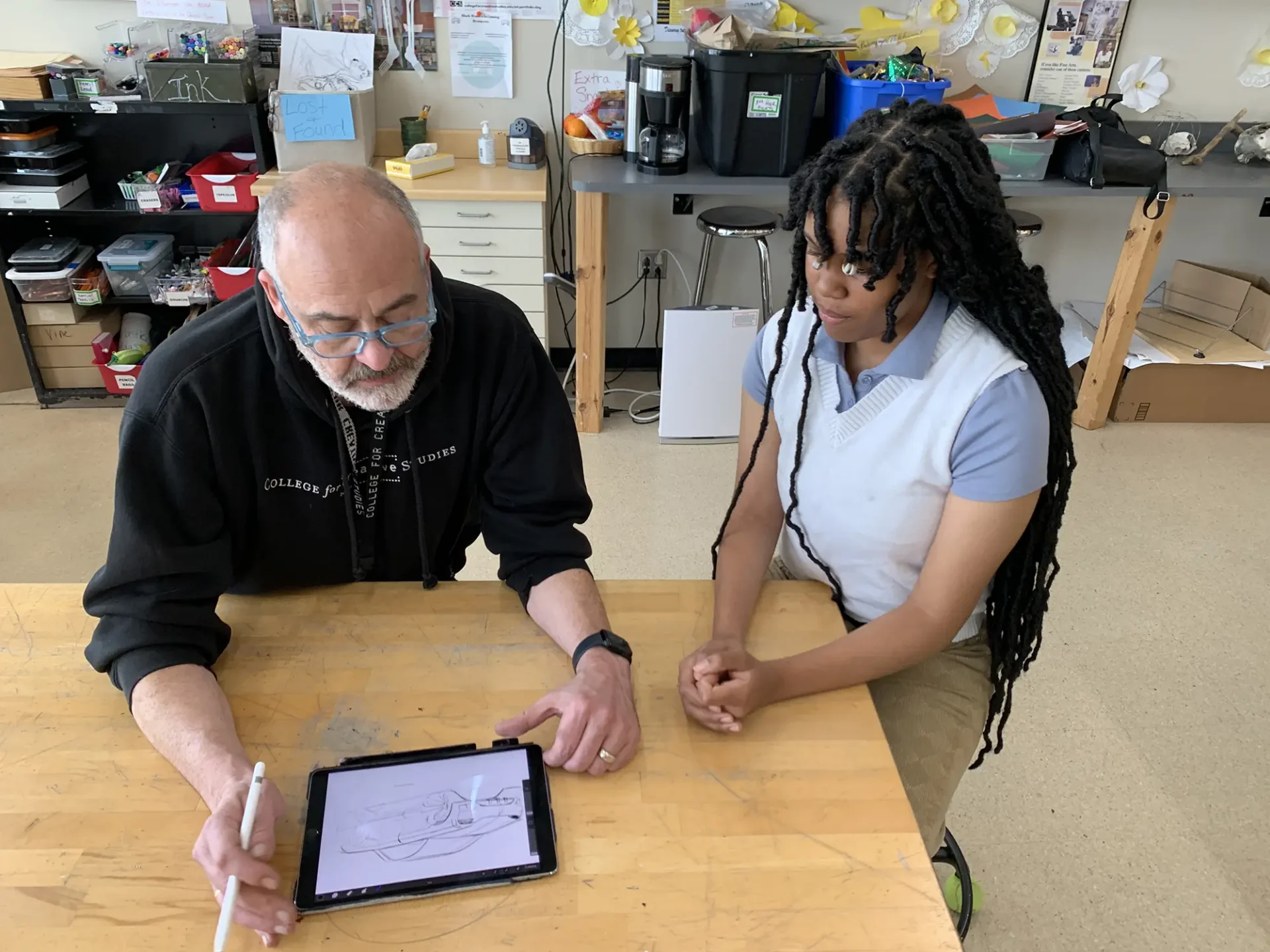
Going back is super rewarding. I remember myself in those students’ shoes, and I can see the stress on their faces. Being able to reassure them that you’re doing this for a reason, you’re here for a reason, you chose to be here and the hard work will pay off is always something that excites me about being there. I love the energy of school and all the opportunities that are presented to students and all the blue-sky possibilities you have as a student.
It also humbles me at work. I think when you get into the industry, there are certain practices or day-to-day things that you learned about your craft that you may forget to practice on a daily basis. Being an Adjunct, I hold myself accountable to the practices that I’m teaching my students, the practices that I learned as a student. Then I’ve been able to give back. So over my time at Stellantis, we’ve hired a few of my students as either an intern or a full-time hire as well. So it’s been a super rewarding experience on my end.
How did CCS help prepare you for where you are right now?
CCS helped prepare me for where I am now in so many ways. I realized in studying user experience design that I’m not designing for me or my classmates. I am designing for whoever is going to be interfacing with the product, system or service. Beyond that, CCS really helped me hone in on the craft. I gained a lot of technical skills in addition to creative thinking. I think combining the two is awesome.
I love being creative, but at the same time I want to understand how things work.
I’d also say that my professors at CCS were super inspiring. When I was working on my thesis and research, I spoke with the College about some of the specific areas I was interested in, and CCS was able to connect me with influential people in those fields. I didn’t know it at the time, but my thesis focused on programming hardware and software and having it output to a graphical user interface. With the help of my professors, we came up with this awesome outcome, and here I am doing a larger-scale version of what that thesis project was. So it really came full circle.
What would you tell your younger self?
I think when I was younger, I put myself in a box. I always said, “Oh, you’re just not smart.” I was never a math or science person. That wasn’t me. I was the creative one, and I was just groomed to think that you had to follow the traditional career path. I would go so hard trying to figure out math and science. I remember my mom used to give me these at-home tests, and I would tell myself, “I’m just not smart enough for this. I don’t know what I’m going to do with my life.”
And I think looking back, it’s not that I wasn’t smart enough. I just wasn’t following something I was interested in. Once I found that interest, the opportunities were endless. I’m good at this. There’s so much I can do with this, learn and even teach. I think I stayed curious, and I’ll always remain curious. It’s helped me a lot throughout the years, and we’ll see where it continues to take me.
A conversation during CCS Industry Days brought together two artists more than 20 years apart in their CCS journeys. What followed is a story about mentorship, creative community – and what can happen when one person sees possibility in another.
When Darcel Deneau, ’02 Fine Arts, first came to the College for Creative Studies, she couldn’t afford to stay.
Drawn by CCS’s reputation, she enrolled about a year after graduating from high school. But the cost of continuing was more than she or her family could manage, so she left school, married and started a family.
Then, in her 30s, she came back. A scholarship helped give her the opportunity to return to CCS and finish what she had started. That journey gave Darcel a perspective on opportunity that has stayed with her ever since.
“I know firsthand how much support can change someone’s path,” she said.
Returning to CCS opened the world Darcel had wanted to be part of years earlier. She developed her artistic voice, became part of Detroit’s creative community and discovered something else she still associates with CCS: people willing to help one another.
“People tend to be nurturing, compassionate, generous with their time and willing to help one another,” Darcel said.
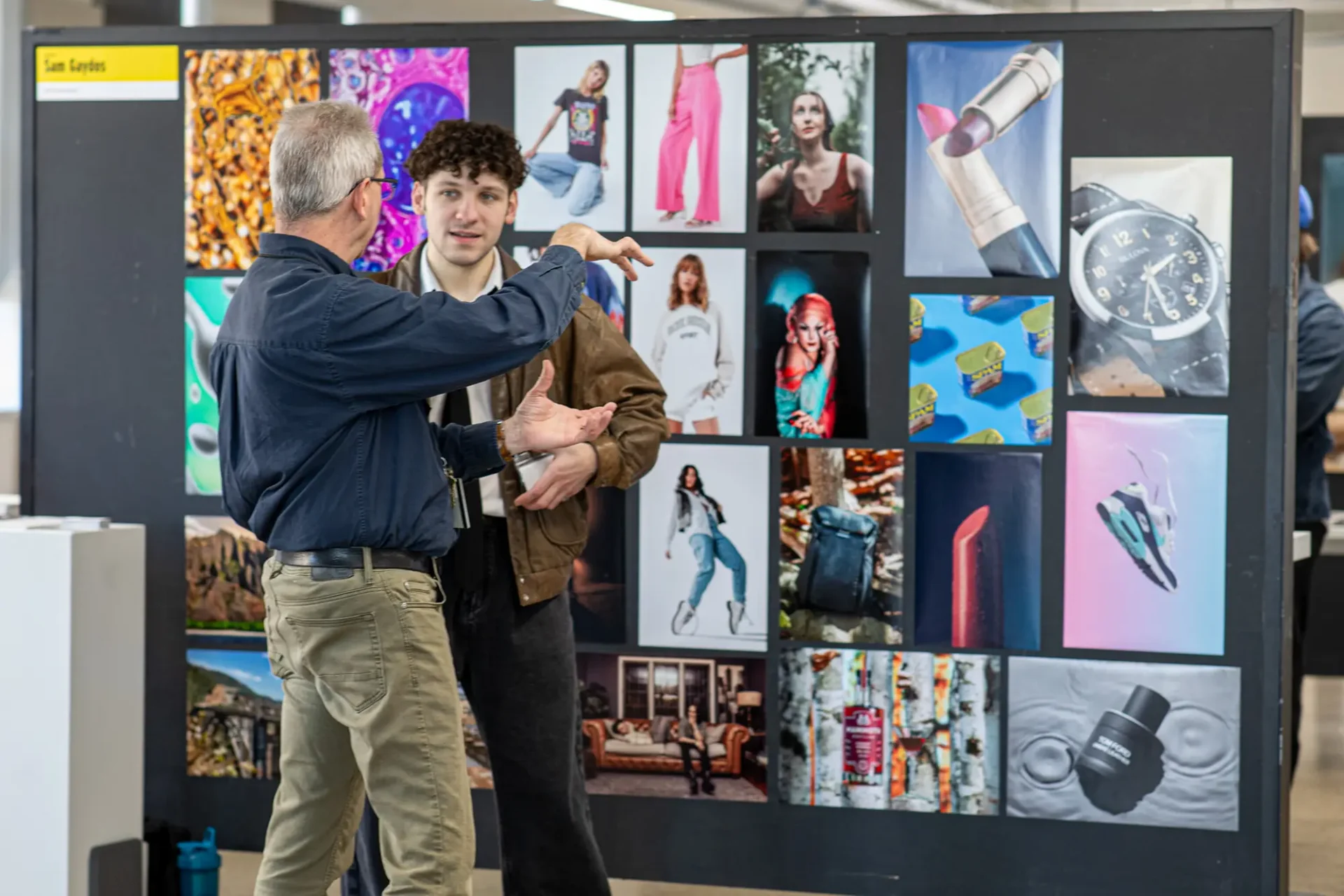
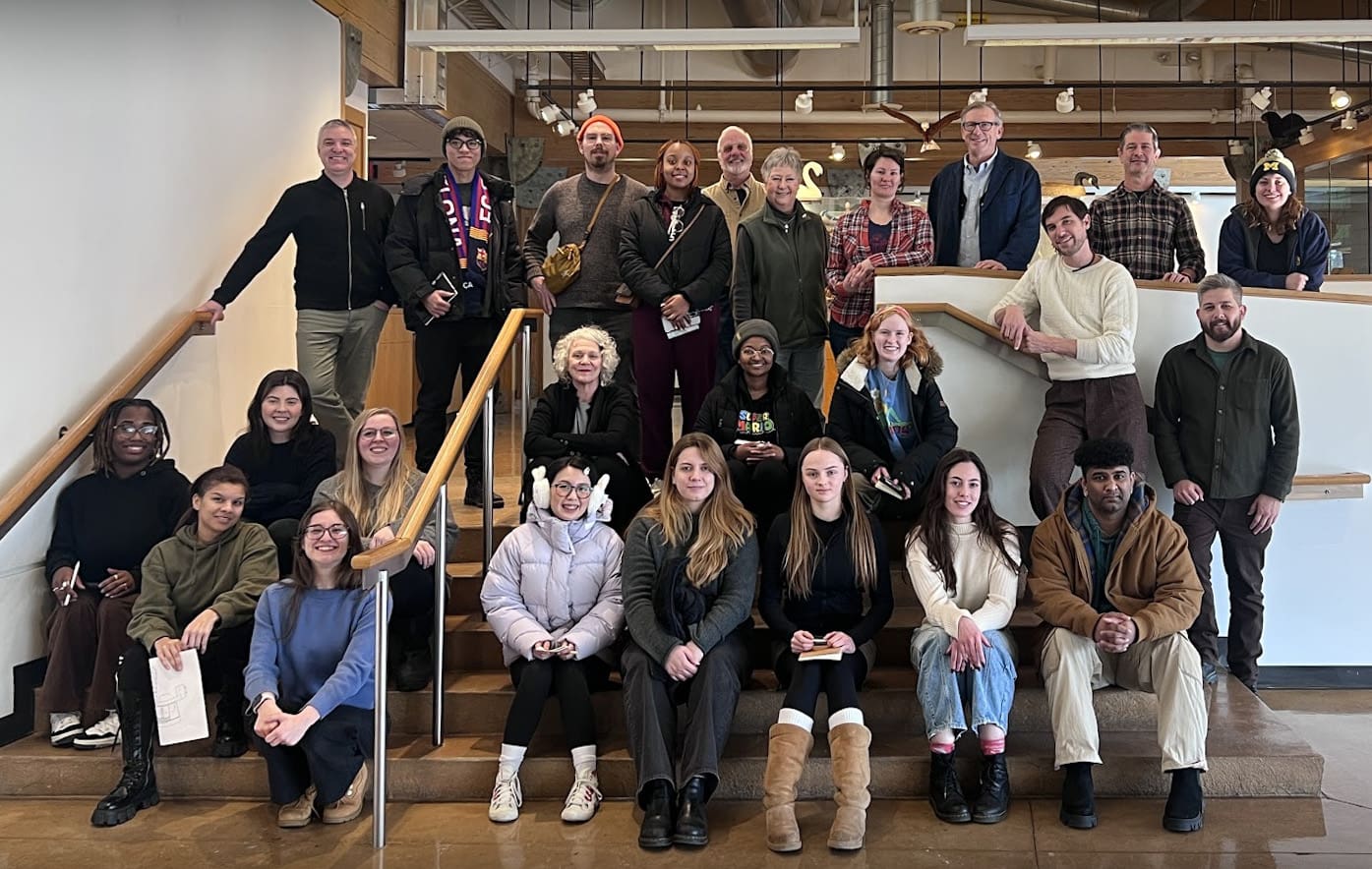
More than 20 years after graduating, Darcel has remained connected to CCS through the Alumni Council, mentoring, volunteering and attending Industry Days. Hosted by the Office of Partnerships, Industry Day events bring alumni and creative professionals back to campus to review student work, share advice, and help emerging artists and designers prepare for careers in the creative industries – reflecting something that has long defined the CCS community: alumni returning to invest in the next generation.
It was during one of those visits that Darcel met graduating Senior Neo Hopkins, ’25 Studio Art & Craft.
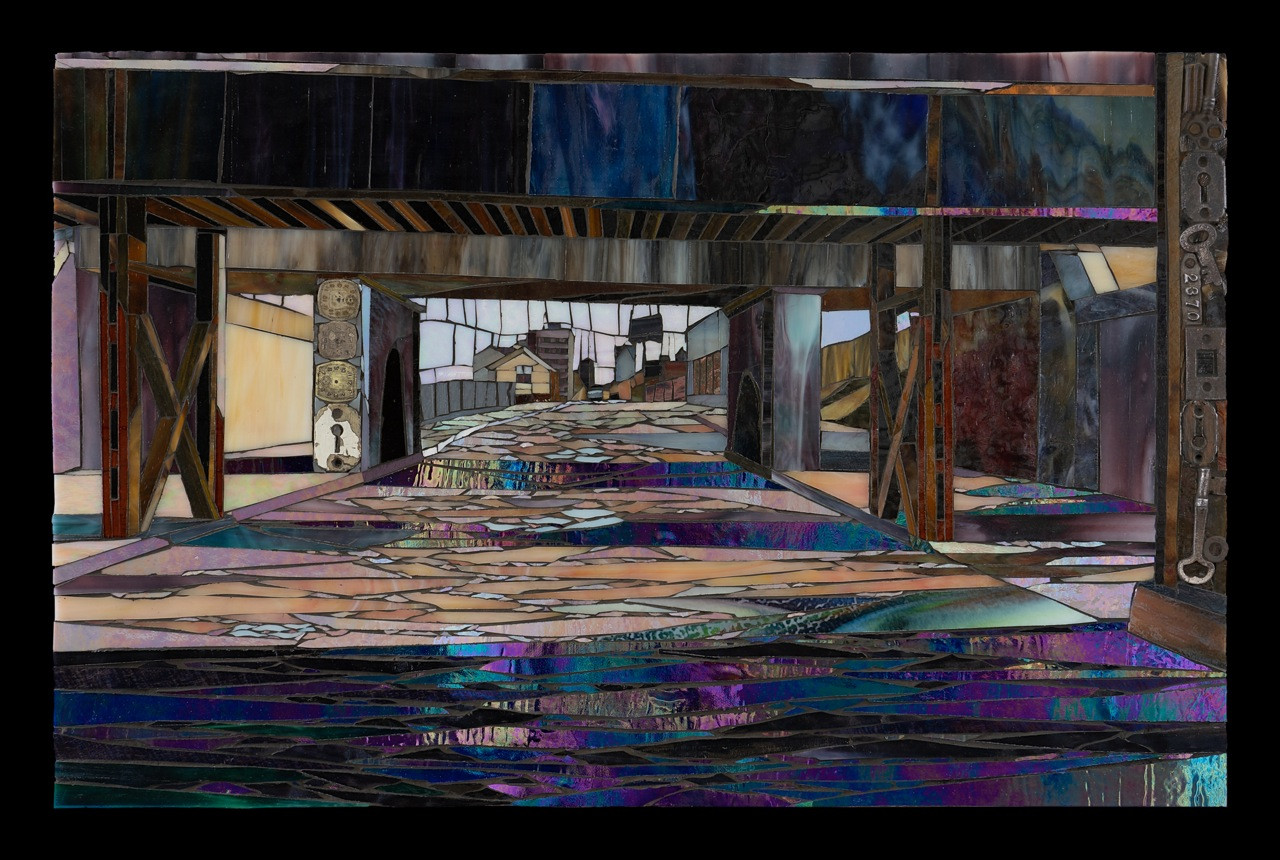
Artwork by Darcel Deneau
One Conversation
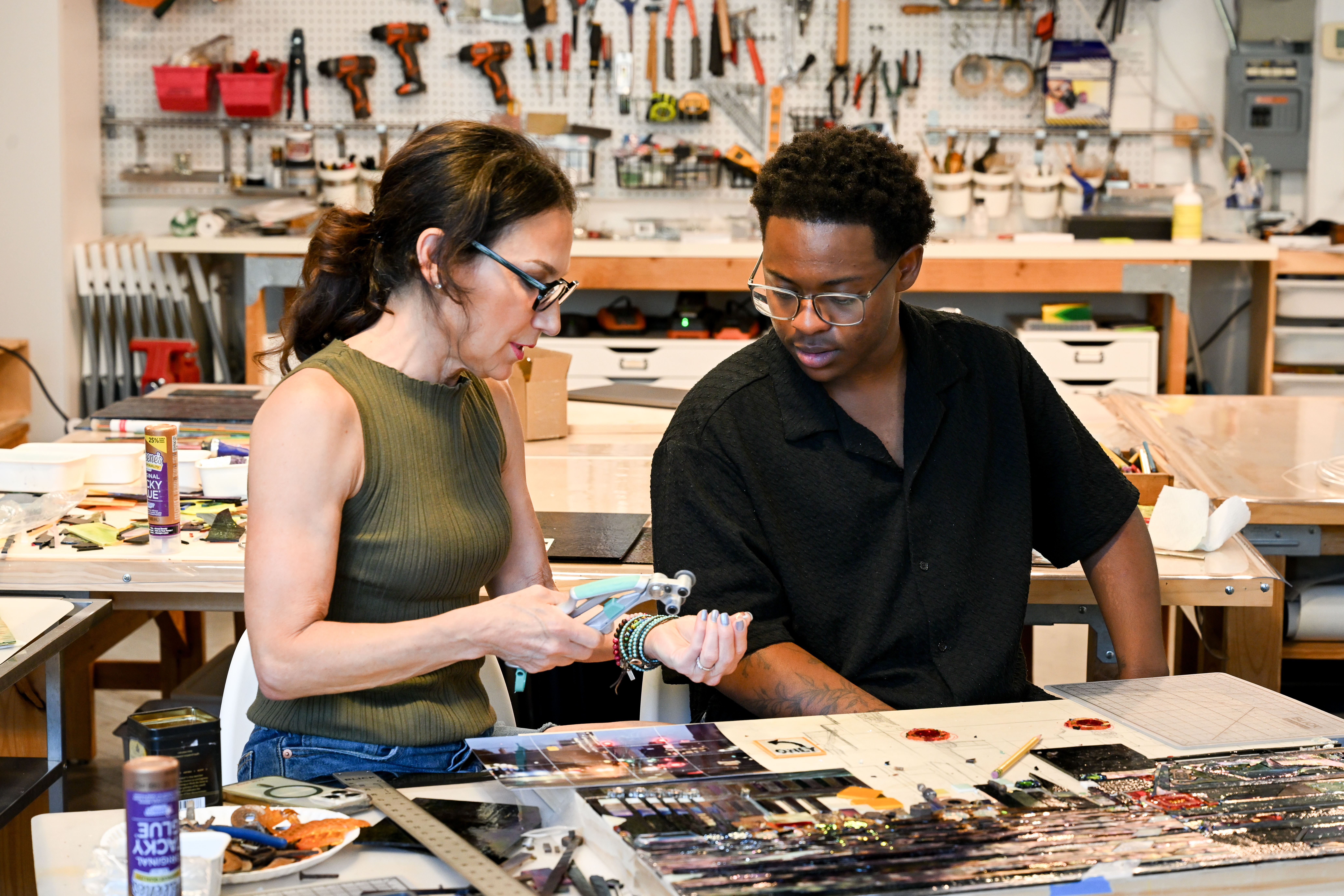
Neo was approaching graduation when his paintings and collage work caught Darcel’s attention. She could envision his ideas translated into another medium: glass. So she extended an invitation.
“I was excited when Darcel invited me to her studio, but I was also nervous,” Neo remembered. “Sometimes people say, ‘Come by sometime,’ but you don’t always know if they really mean it.”
The timing made the invitation even more significant. Graduation was approaching, and Neo was trying to determine what would come next. He wanted mentorship and people he could turn to as he began navigating life as a working artist.
“From the very first day I visited her studio, everything felt easy,” Neo said. “She was incredibly welcoming and generous.”
That first visit led to another, and then another. A professional connection became a creative partnership and, ultimately, a friendship.
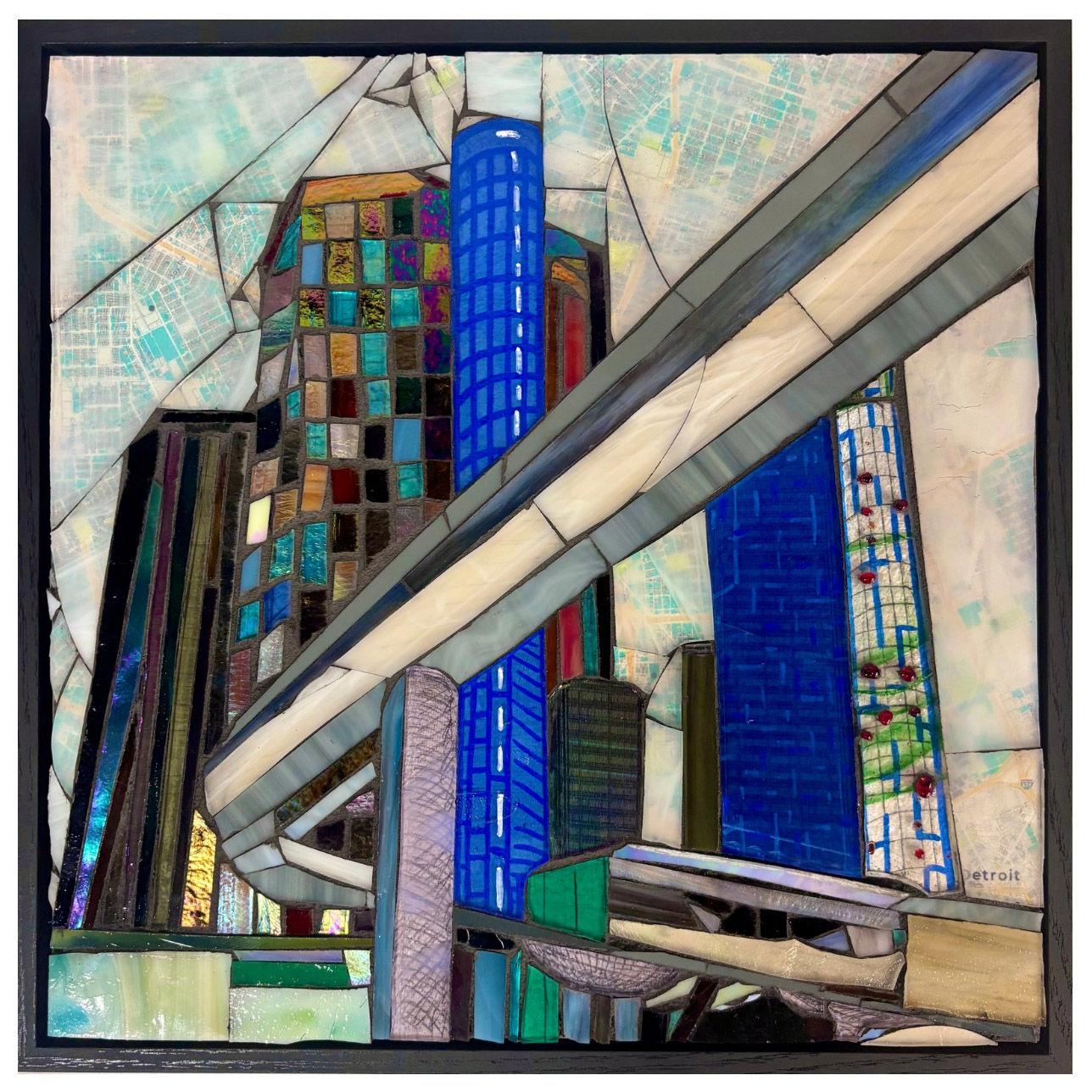
Artwork by Neo Hopkins
Seeing What’s Possible
During those early studio visits, Darcel introduced Neo to glass and taught him glass portraiture. As he explored the medium under her guidance, he began to see how it could complement his own artistic ideas.
“Darcel showed me possibilities in the medium that I hadn’t seen before,” Neo said.
What began as artistic instruction grew into an enduring mentorship. Darcel became someone Neo could call while navigating commissions or trying something new. When he needed his first studio space after graduation, she helped make that possible, too.
Today, the two artists work in the same building, exchanging ideas and continuing to learn from one another. Looking back, Neo can draw a remarkably straight line from that first invitation to where he is now.
“I probably wouldn’t have started working in glass without Darcel,” he said.
His career is growing in other ways, too. Neo works full time as a Brand Identity Coordinator for the Detroit Economic Growth Corporation while continuing to develop his studio practice, take commissions and pursue new creative opportunities.
People often describe mentorship as a one-way relationship, but Darcel believes both people grow through the experience.
“Neo inspires me just as much as I hope I’ve encouraged him,” she said.
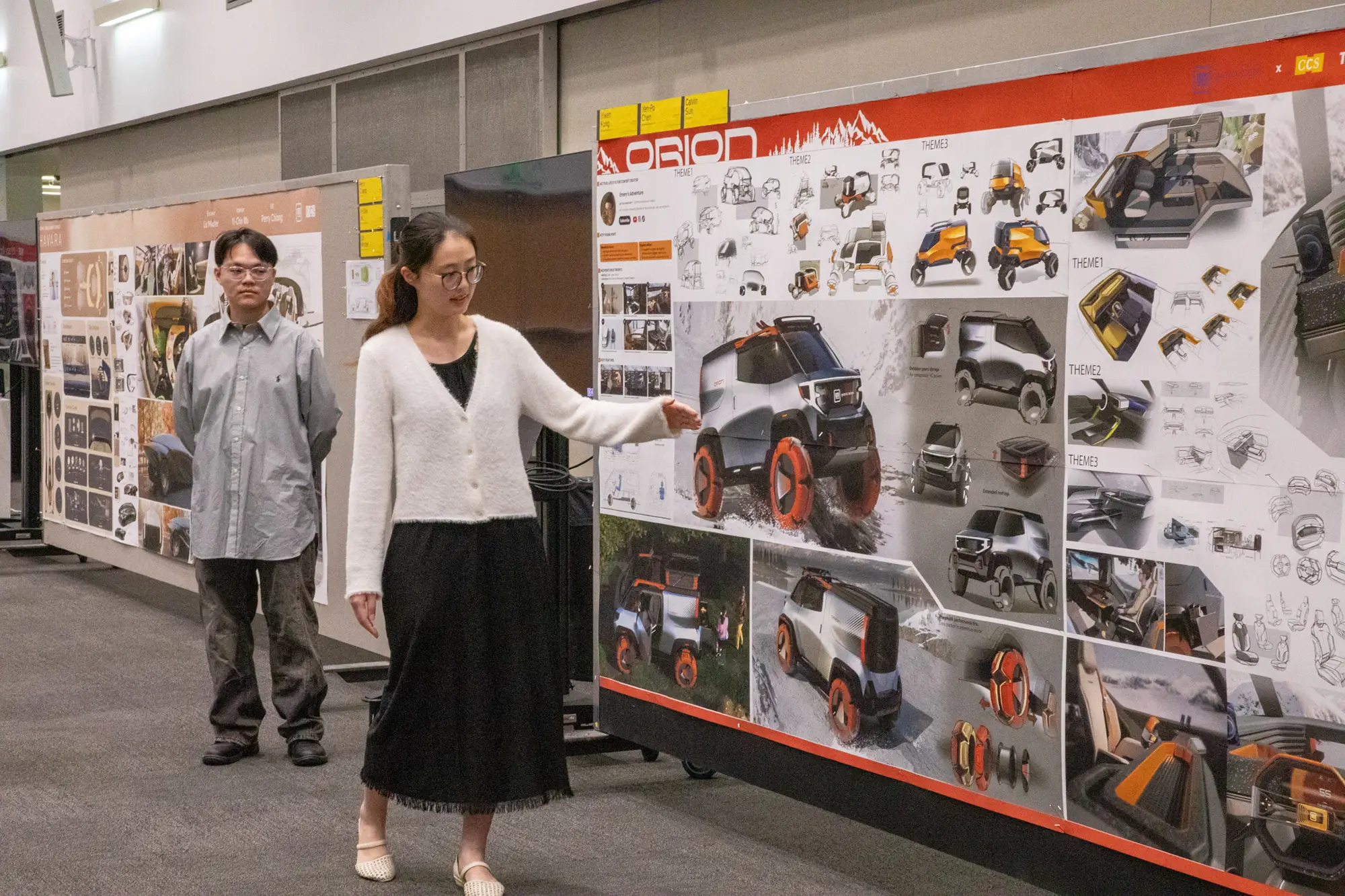
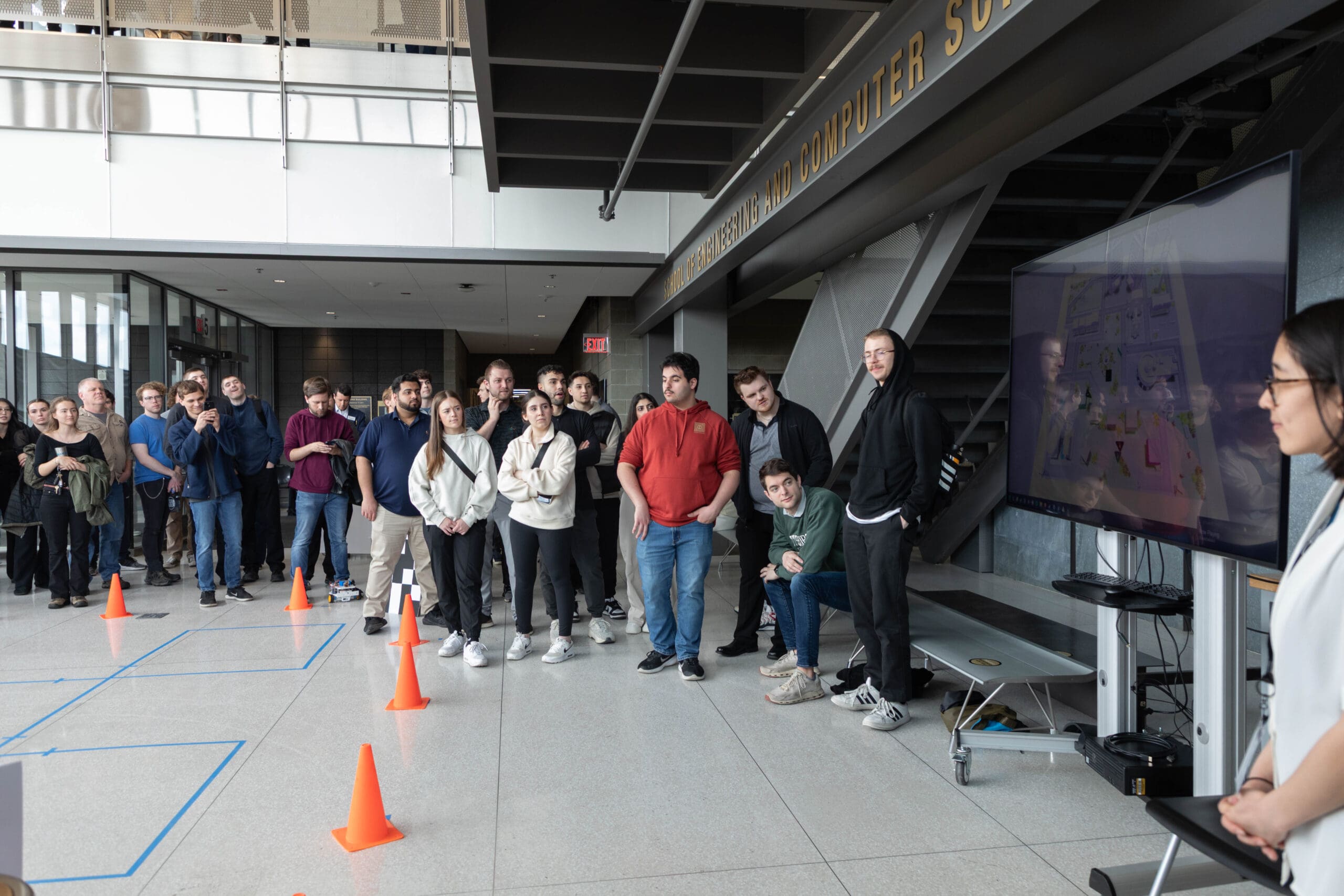
During the Winter semester, the College for Creative Studies hosted 14 sponsored projects, including a diverse range of sponsored projects and competitions that engaged a variety of academic departments. Students partnered with local and global brands to work on a specific project tailored to meet the needs of our industry sponsors. Educational partnerships at CCS are highly conceptual and allow CCS students the opportunity to participate in creative, research-based assignments, interacting with designers and staff from the collaborating company. Highlighted collaborations during the Winter semester include:
Augmented Reality Center (ARC) in partnership with Oakland University x Communication Design and Strategy, MFA User Experience Design and Entertainment Arts
Crain Communications – Automotive News x Illustration
313 Presents x Illustration
BorgWarner x Product Design
Covestro x MFA Transportation Design
Detroit Grand Prix x Illustration
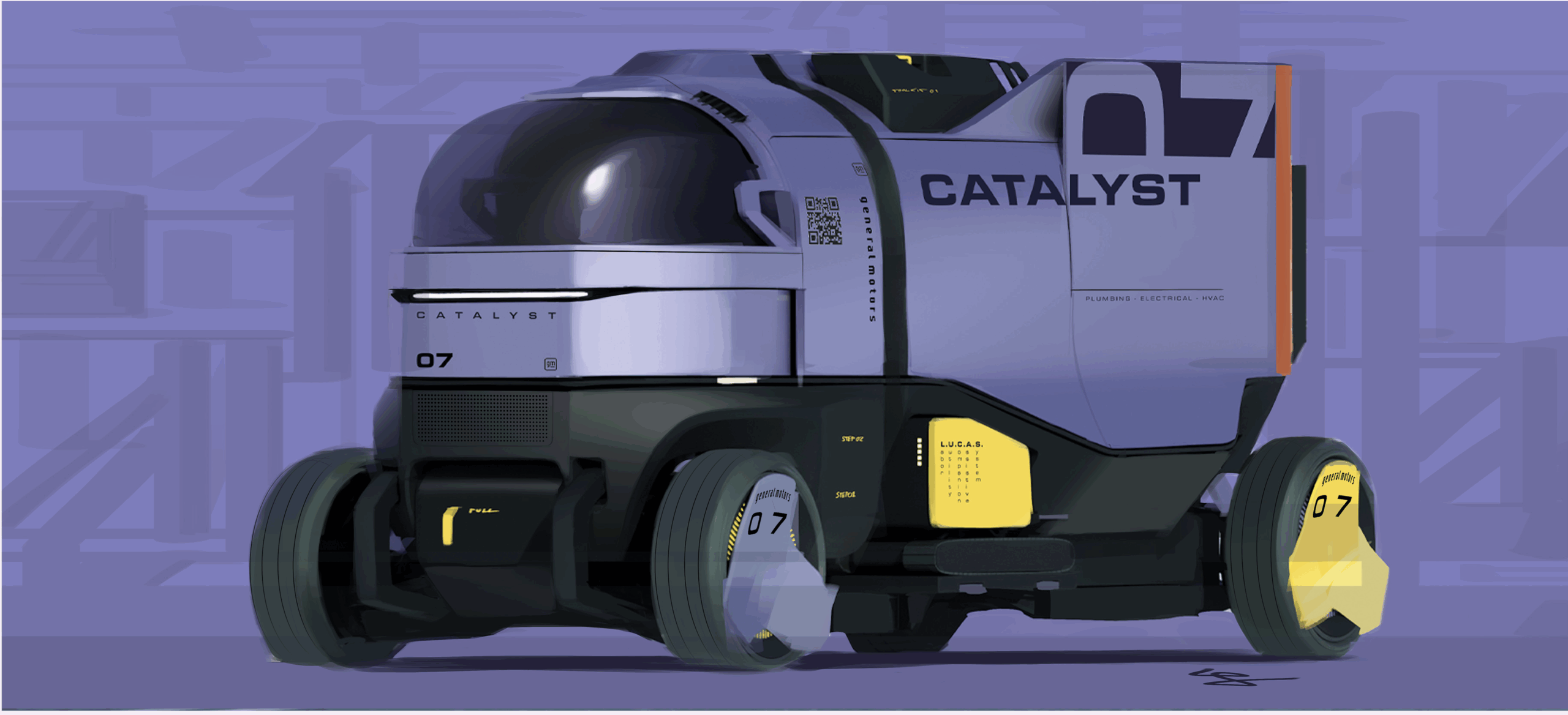
GM x BFA Transportation Design & MFA User Experience Design
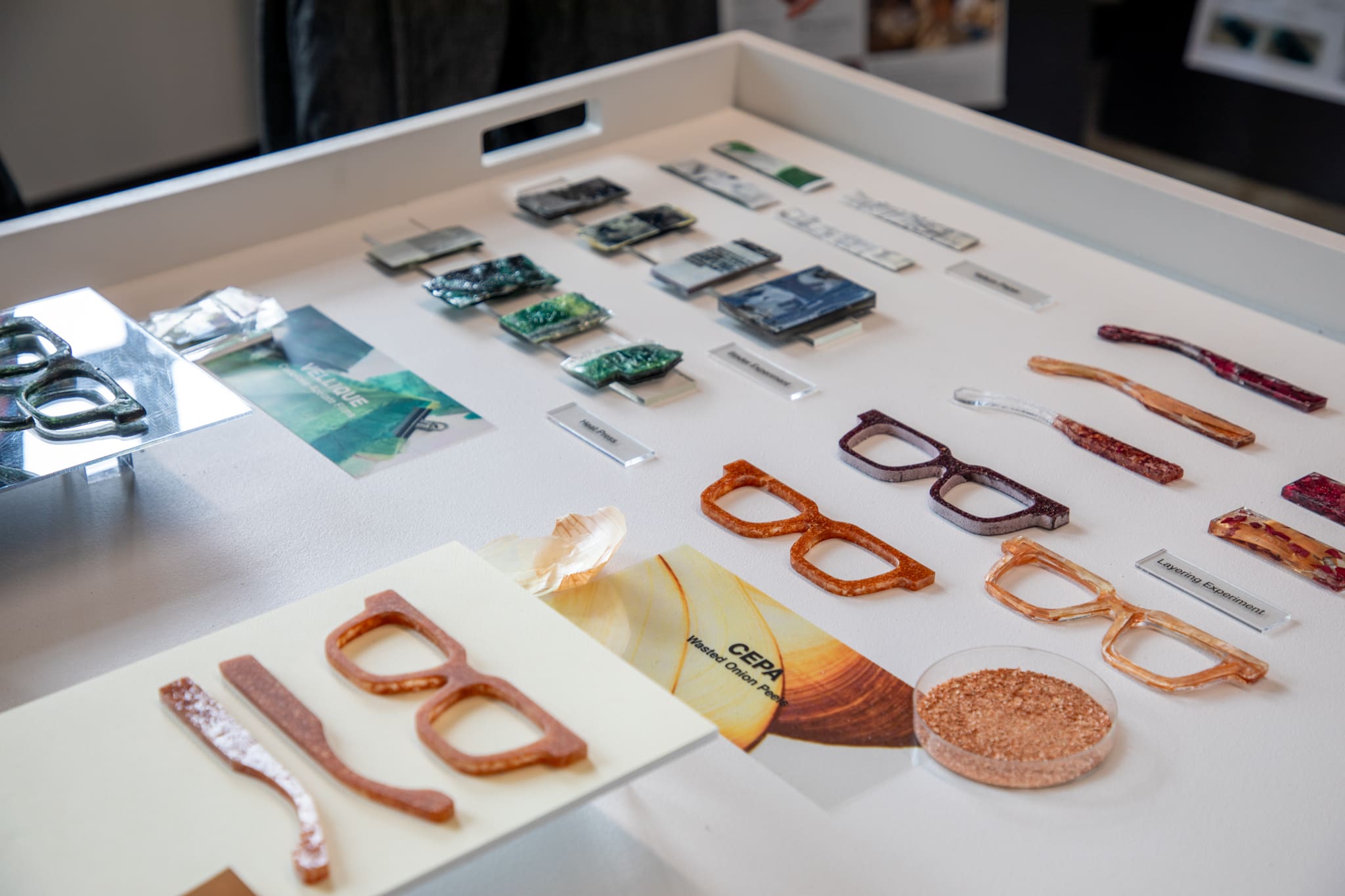
GODNII x MA/MFA Color and Materials Design
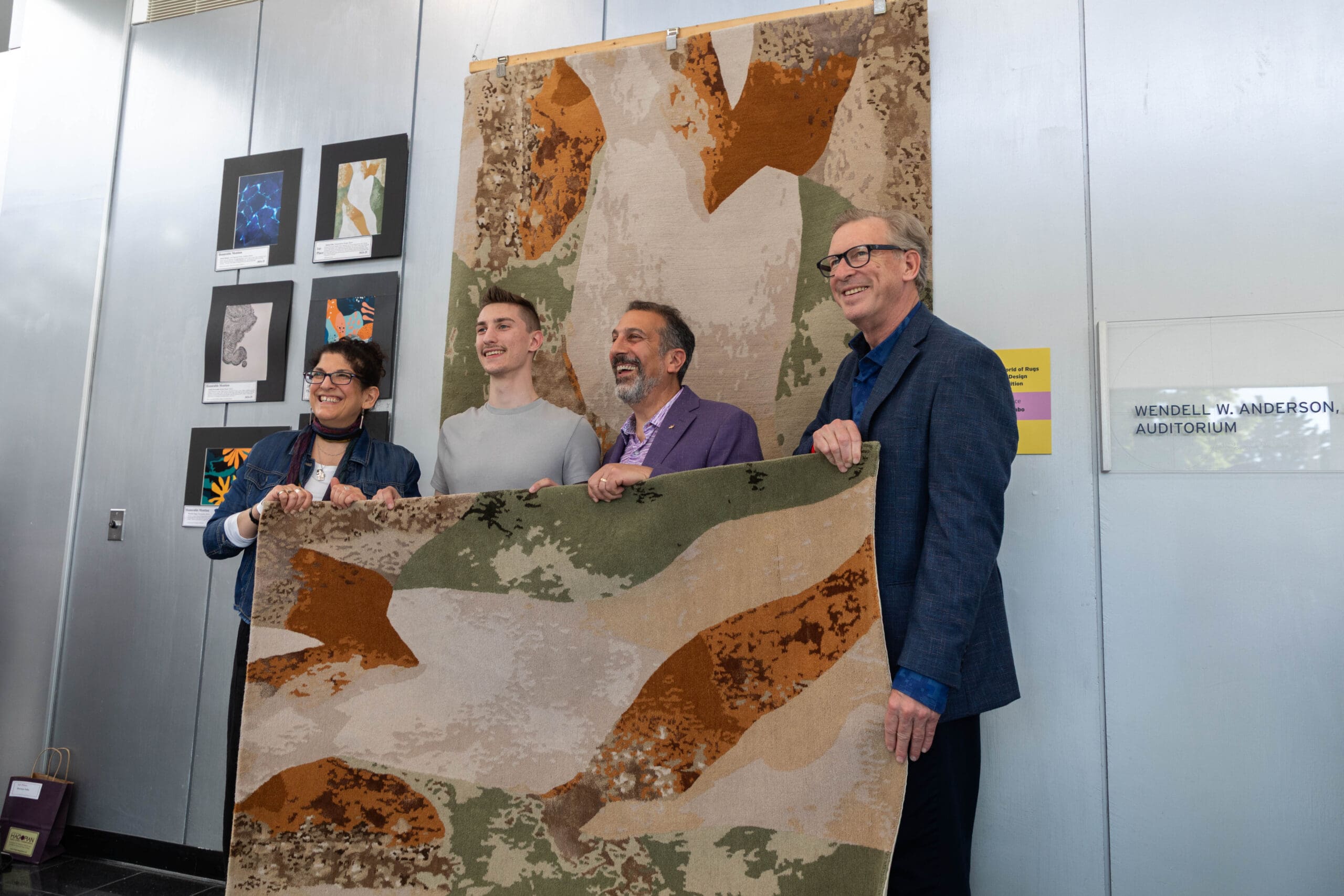
Hagopian Rug Competition x All Departments
Office of Future Mobility and Electrification with support from the Global Epicenter of Mobility x Transportation Design
MAWBY Sparkling Wines x Illustration
Trek Bikes x Product Design
University of Michigan Dearborn – Environmental Interpretive Center x Communication Design and Strategy & Interior Design
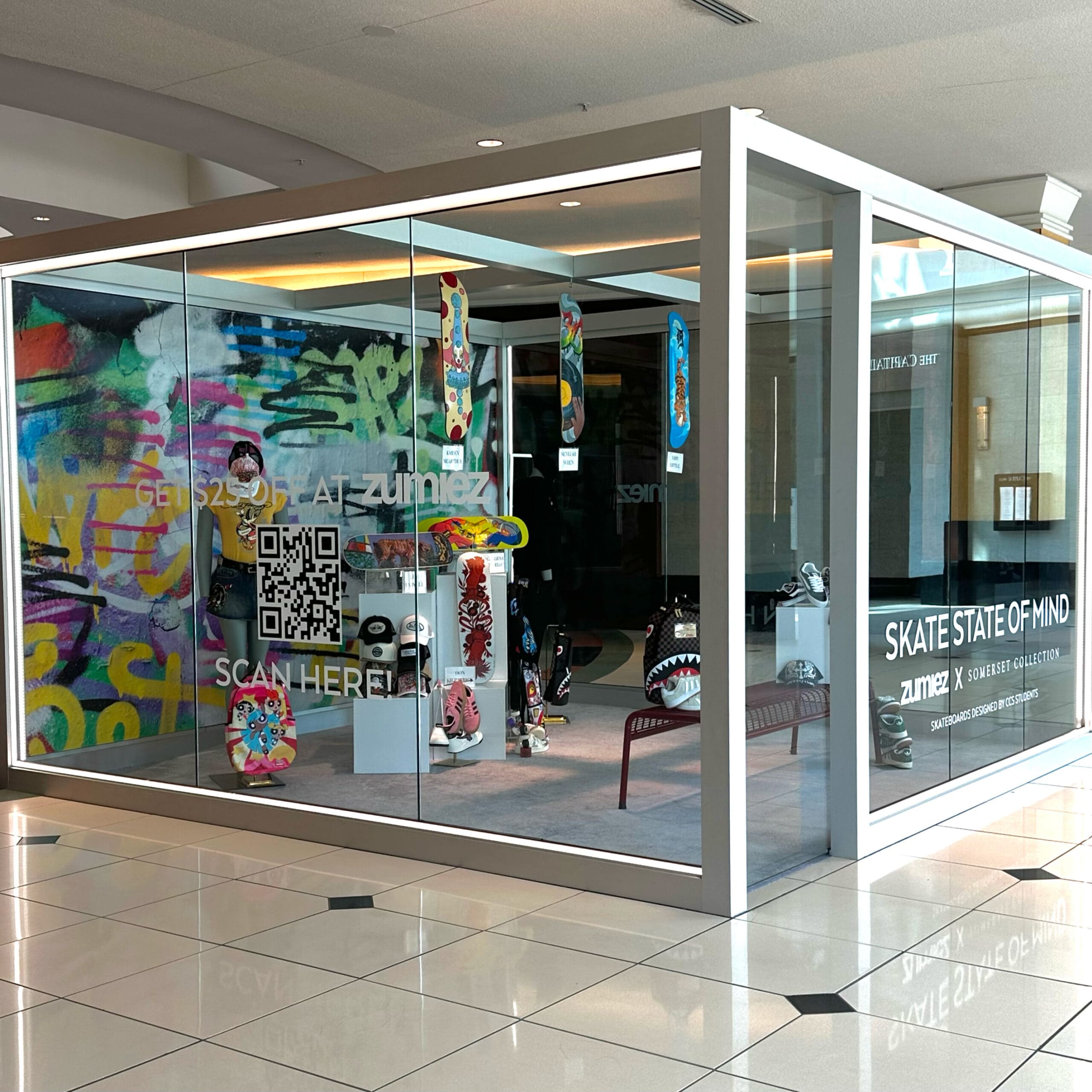
Zumiez and Somerset Collection x Illustration
“This project was pure inspiration,” said Ali Evans, Founder and Creative Director of GODNII. “Collaborating with CCS has been a longtime hope of ours, and it lived up to everything we imagined. The students brought forward deep research, bold ideas, and a clear vision for the future of sustainable fashion. Their work affirmed what we already believed—creativity with purpose can shift the industry. At GODNII, we’re excited to carry these insights forward as we continue designing not just for style, but for impact.”
CCS alumna and Trustee Molly Valade and her husband Mark Valade established the Valade Family Endowed Chair in Studio Art & Craft. The College for Creative Studies (CCS) is thrilled to announce a commitment to endow the position of Chair of Studio Art & Craft. The Valade Family Endowed Chair in Studio Art & Craft will ensure ongoing support for the College’s Studio Art & Craft Department, one of CCS’s most historic programs.
This transformative commitment reflects CCS alumna and Trustee Molly Valade’s deep connection to and belief in the legacy and importance of the Studio Art & Craft program, as well as her enduring belief in the power of a CCS education. Molly graduated from CCS’s Fine Arts program (now Studio Art & Craft) and has served on the College’s Board of Trustees since 2008, in addition to serving on CCS’s alumni council for 13 years. Over the years, her engagement with students, faculty, and staff has strengthened the program’s creative and academic environment, and this gift will ensure that impact continues into the future.
“Studio Art & Craft has been at the heart of CCS for more than a century,” said Don Tuski, President of the College for Creative Studies. “The establishment of this endowed chair will help ensure the department continues to evolve, inspire new generations of artists and makers, and expand opportunities for innovative studio practice well into the future.”
Founded in 1906, CCS, then The Society of Arts & Crafts, integrated rigorous courses with the progression of the art and design movements and world-class, contemporary exhibitions. Since its inception, the Studio Art & Craft program has carried on this tradition while continually building on this foundation and legacy. In 2026, the program is still rooted in traditional techniques, now enhanced by contemporary processes and innovative technologies. The department currently enrolls undergraduate students exploring the disciplines of Ceramics, Drawing, Fibers and Textiles, Fine Arts, Glass, Metalsmithing and Jewelry, Painting, Performance, Print Media, Sculpture, Digital Fabrication and Digital Media.
Under the leadership of Department Chair Valerie Jenkins, Studio Art & Craft continues to foster rigorous studio practice and distinct creative voices. The creation of the Valade Family Endowed Chair will further elevate that work, strengthening the program’s impact and vitality, ensuring its continued growth.
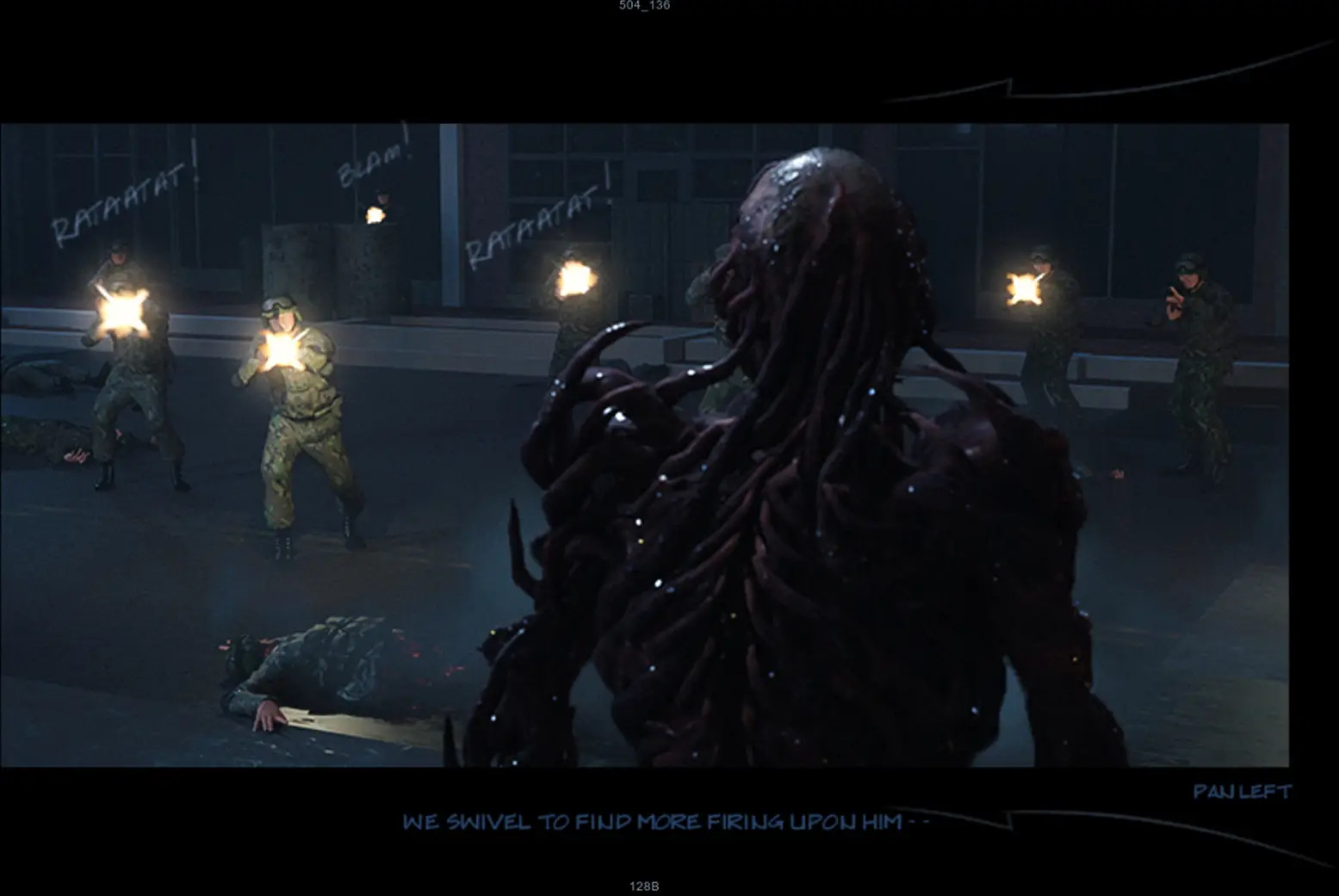
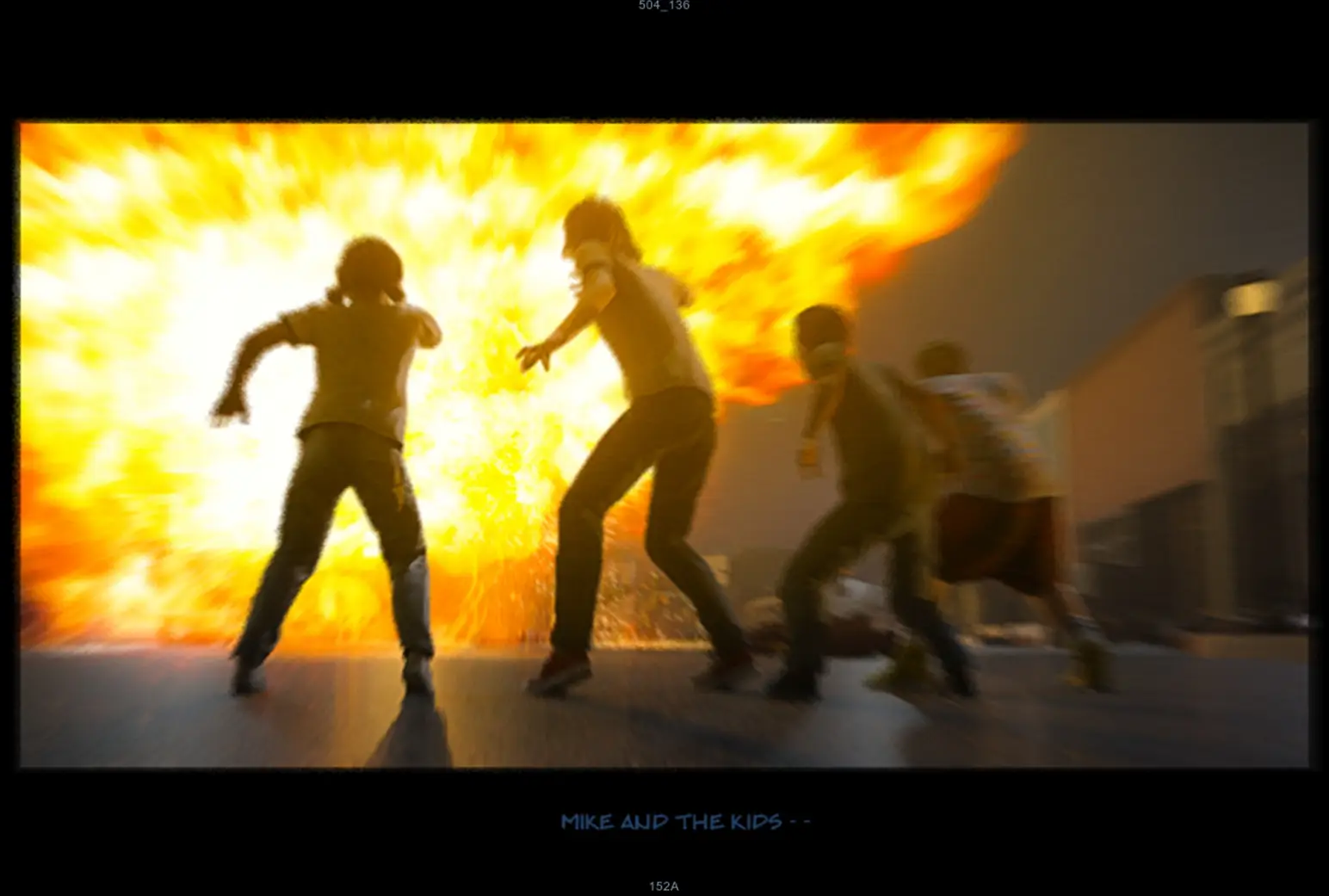
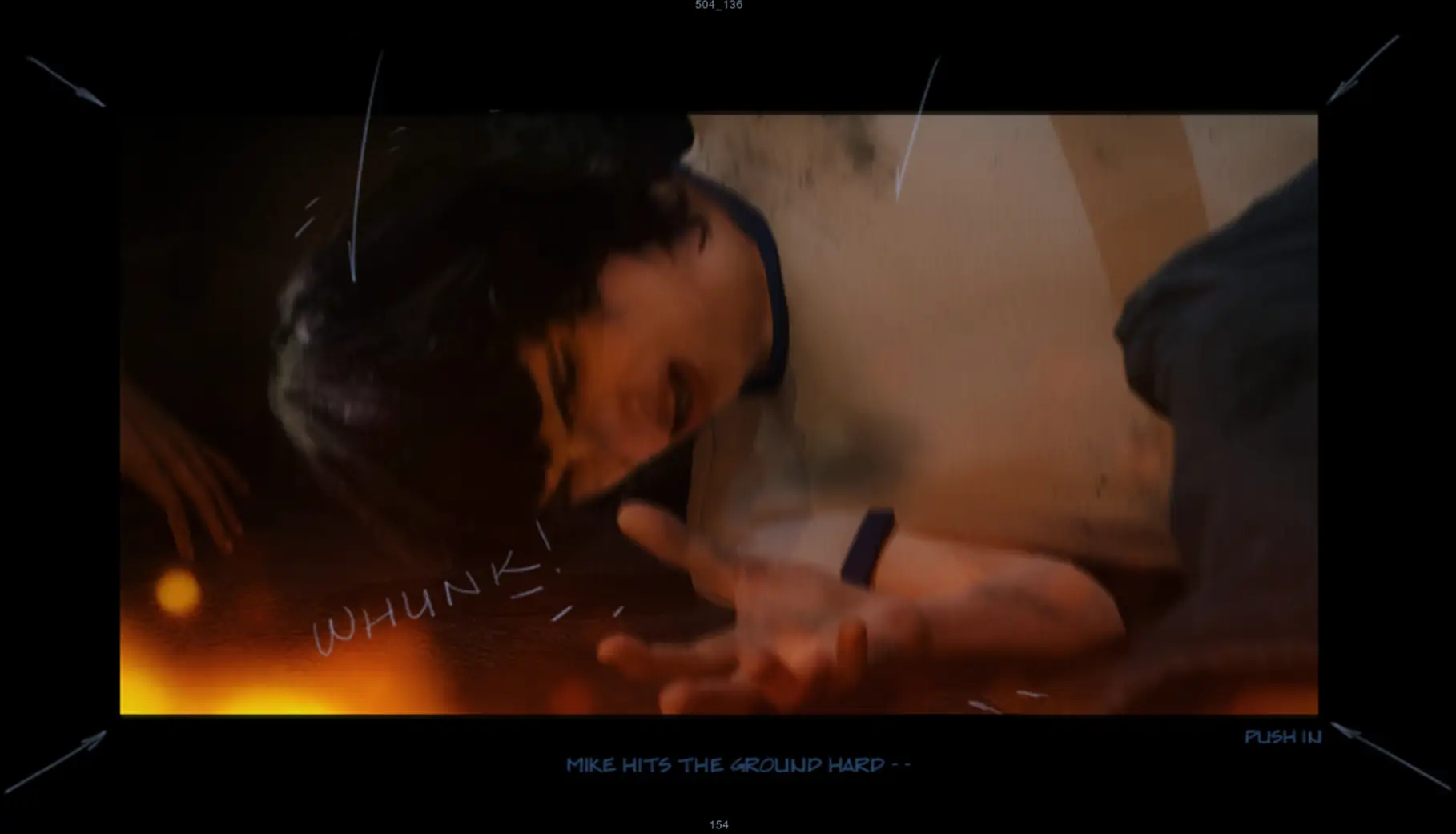
Michael Maher Jr. (’07 Illustration), is a storyteller at his core. And he’s living proof that with enough tenacity and a strong gut instinct, your creative voice can change worlds. What started as a job moving furniture on film sets has evolved into a decades-long career in the entertainment industry. From designing the iconic posters in The Ides of March and prop storyboards for the Oscar-winning Argo, to bringing the terrifying Vecna to life in Netflix’s Stranger Things, Michael’s journey is a masterclass in unlocking your creative potential.
I would love it if you would share more about how you started in the film industry.
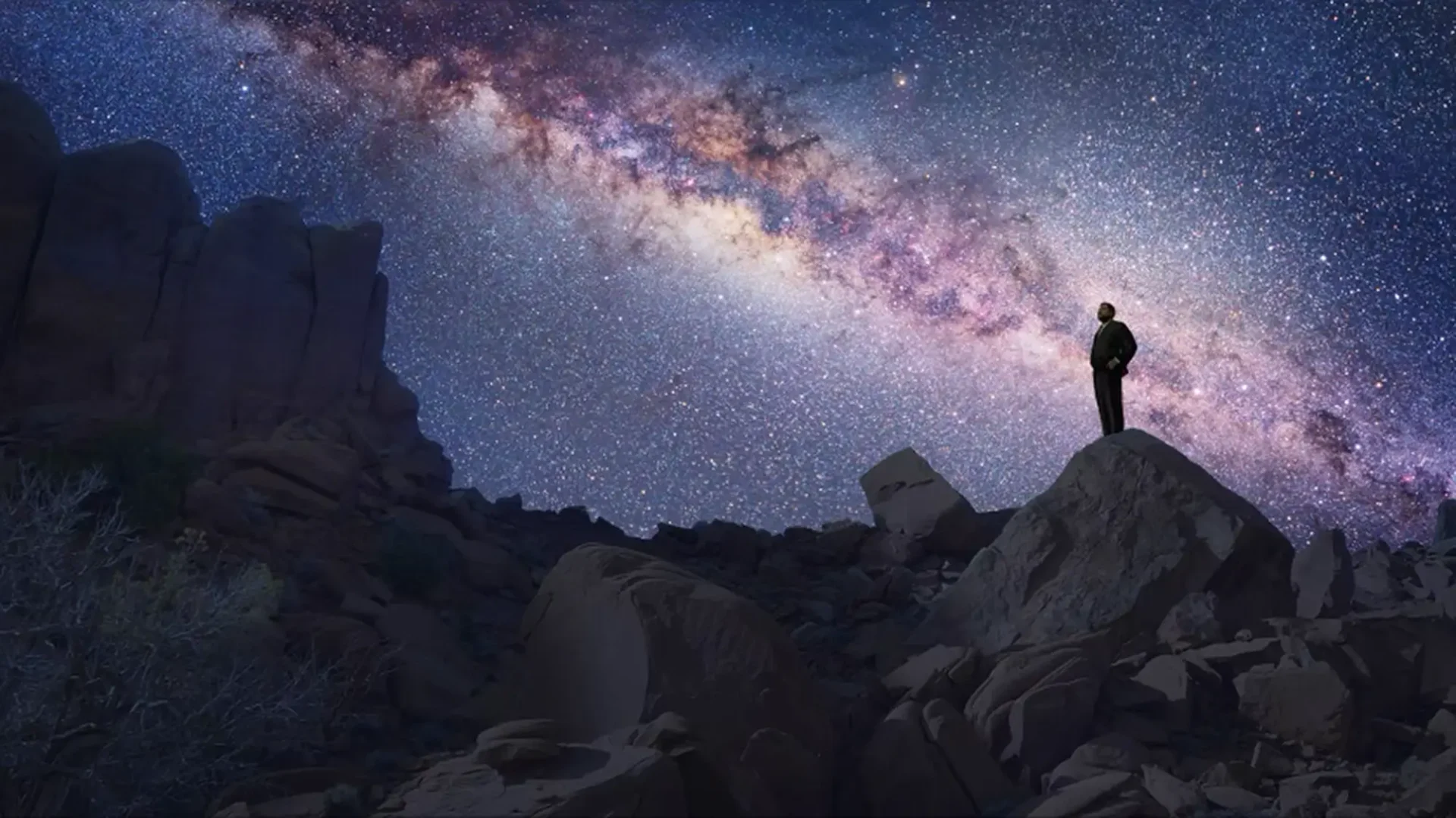
There was a tax incentive in Michigan at that time and it brought a lot of films, right at the moment I had gotten out of school. There was a professor at CCS named Keith Newton who worked in the Illustration department, and he was kind enough to encourage me to get my foot in the door on one of these films. Under the lead man are these guys named swings and they’re essentially furniture movers with an artistic eye, who know how to decorate and actually make a set look good. As a swing, in between one of the days where they were filming on location there were a whole bunch of extras there and I started drawing caricatures of them. Then that led to the production designer asking if I could do other things, like graphic design and illustration of any kind, because there are a lot of opportunities in the art department to create props and set deck items and things that are hanging on walls. So, I found a good home, you know? I think I worked for probably 10 or 11 movies after that in Michigan. There was just so much business coming to Detroit, and there weren’t a lot of locals with the experience in the art department that I now had. I was also doing a lot of logo design. My illustration design, wherever I could fork it into whatever was needed, whether it be a book cover that the actors were reading or a poster on someone’s bedroom wall, I was always eager to take those projects on. I would let everyone know I want to do some drawing. This really helped me throughout my entire career. It took almost 10 years to become an illustrator in film. It was a long road, but I had jobs, I was working creatively. And then – then I got a gig on Cosmos. So I moved from Michigan to Los Angeles. Cosmos was a big show for me because there were lots of opportunities to do really cool illustrations. That turned out to be one of the best jobs I’ve ever had.
That sounds like it was a huge moment for you. How did it feel when you were able to see that come to fruition?
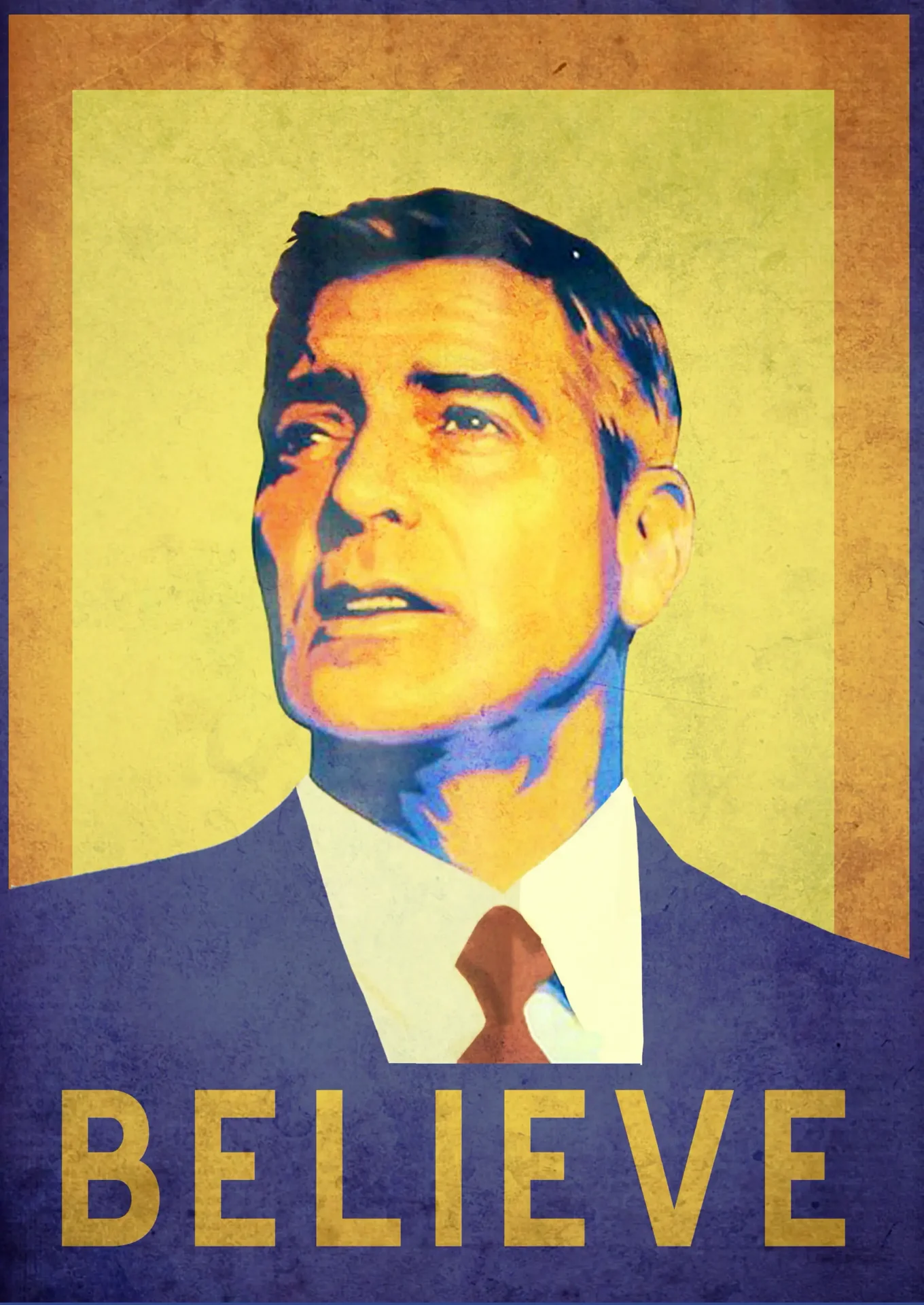
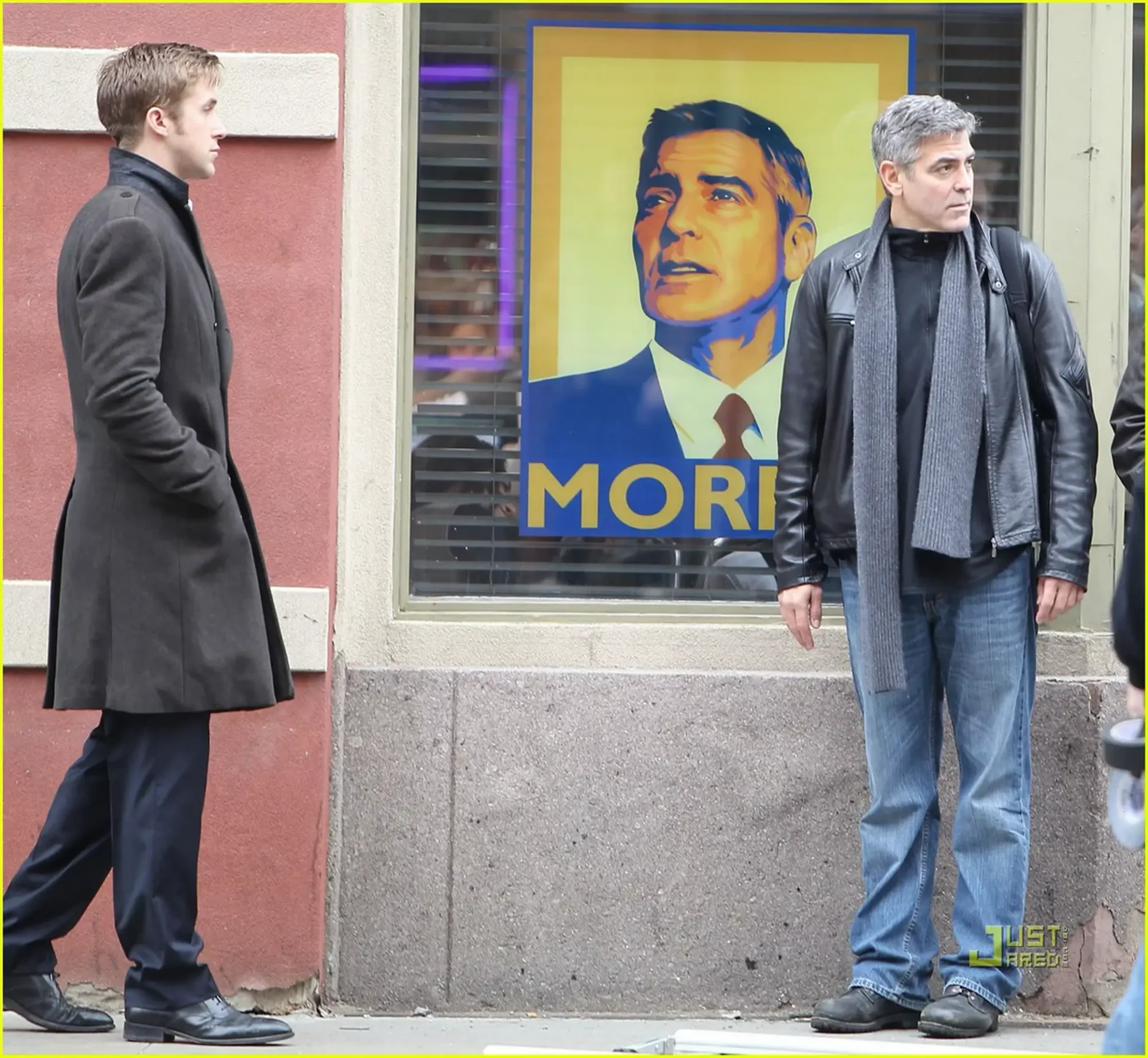
It’s very nerve-racking, actually. But before that, I had done a bunch of really important prop graphic design stuff that was going to be on camera for a number of different films. Ides of March with Ryan Gosling. I got to meet him and interact with him. George Clooney directed it, so I got to meet him as well. For that film, I did all the posters for the political campaign, which were supposed to sort of mimic Obama’s Hope posters. After that, I worked on Argo, which ended up winning an Oscar. Ben Affleck was directing, and I did a bunch of prop storyboards. They were prop storyboards in the film in 1979, and they were supposed to have been drawn by Jack Kirby, who was a legendary comic artist. Those actually ended up on camera because Ben Affleck’s character – and this is a true story, believe it or not – was showing it to the guards at the Tehran Airport to tell them that they were working on a movie to convince them to get on the flight to be able to escape with all the prisoners. So, that was a really big moment. And then finally, when Cosmos came, I was ready. That was really a great experience because we were a bit shorthanded. So, I got to do a little bit more than just concept art. I was doing some motion graphics, kind of pre-vis stuff. I even remember an early teaser trailer for Cosmos that we did where a buddy and I worked together and essentially made a whole shot out of something that I had illustrated. That was a huge thing for me. So, it was baby steps.
I pull from the fundamentals all the time. You are just always looking for complementary colors or how to make something pop with contrast, or the right composition to make you feel a certain way.
How did you hear about the College? What got you in tune with CCS to want to apply there?
I had seen some examples of commercial illustration around – one of my best friends’ dads was a commercial illustrator in Dearborn, Gary Ciccarelli, and he had actually taught at CCS at one point. I felt like he was a good one to emulate because he had a successful career, worked on a bunch of magazines for Cream, which was super popular back in the day. I felt like maybe editorial illustration, commercial illustration was the in. I got really lucky knowing him because he was influential; he said, “well, you know the place to go is CCS.” I think I told him that I was considering other options, and he was like, “it’s right in your backyard.” So, I took his advice and it just ended up being the right fit, right move.
That’s really nice. Have you and Gary ever had the opportunity to talk in recent years with everything you’ve done?
Every once in a while I get a text or something just saying, “I saw something that you’ve worked on.” He’s always been somebody in my corner. I feel like I’ve been really lucky to have him as sort of an early mentor. He even gave me some of my first little illustration gigs after school. I was kind of struggling to find work, and he was doing some children’s books, and he helped me out with that. So, I owe a lot to him.
Switching gears a little bit, how do you feel CCS prepared you for the jobs that you’re doing today or for your career in general?
It was very heavily traditional. Everything that I was doing at CCS was foundational, but even more than that, it was practical, oil painting and traditional media. I was lucky enough to have some professors that were into digital illustration and were fostering some of the first digital illustration courses around. You couldn’t find that anywhere. I remember working in the computer lab in the old illustration wing. That served me really well for the rest of my career. Not to mention, you know, the ability to not just draw and illustrate, but do graphic design and think about color and light in a certain way, all those fun fundamentals and the foundation was so strong. I pull from the fundamentals all the time. You are just always looking for complementary colors or how to make something pop with contrast, or the right composition to make you feel a certain way. That’s present in all of those core classes that I had with Dave Chow and Keith and everything that I learned from Gil Ashby. They’re all just super influential.
“I think to be a successful commercial artist, the collaboration actually comes before you even do any of the drawing.”
You can hear very clearly how passionate you are about everything that you’ve learned. What would you say you love the most about what you do, your job or what you’re working on?
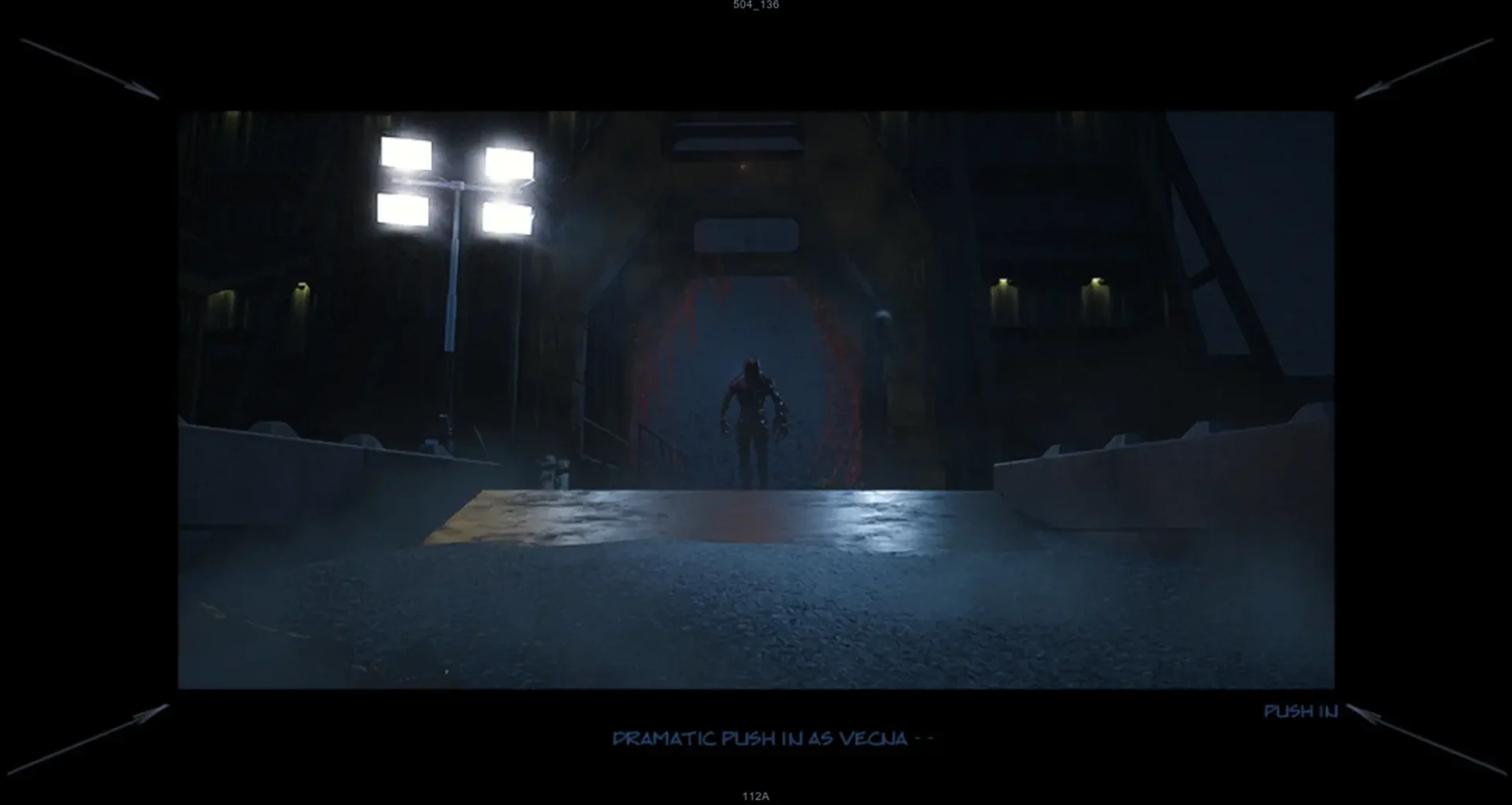
Oh man, it’s a roller coaster. The highs can be really, really high, you know? You can get a chance at designing a creature or a character, and for me, that was always the apex. Like, oh my god, I’m creating some character that’s going to be on screen, that’s going to be a living, breathing thing, that’s going to interact with characters. Vecna (from Netflix’s Stranger Things) was a huge one for me because even though it was a practical sculpt at first, it was the first real thinking character I got to do. That was so fun, just coming up with the design. I think I got a little overeager. I feel like I drew a couple hundred options for the brothers. Poor guys were looking at so many drafts of different options, and I didn’t want to leave anything on the table. Now, I think I would just trust my expertise and give them a few to pick from, but that was an important thing for me. That was something that I really cherish. The other thing would probably be doing storyboards for certain sequences that have become sort of iconic. Season 4 of Stranger Things, for example, when Max is in the mind layer, that red world and she’s running away from all the things falling out of the sky and heading towards the portal, and Kate Bush’s “Running Up That Hill” is playing, and all of that is happening, in my mind in a room where I’m just making these drawings. Then they put the drawings on a big board while they’re filming it and they literally cross off the drawings per shot. Then you have a sequence, and that becomes something that’s ingrained into what people think of when they think about the show. There have been so many sequences like that over the years that I’ve been lucky enough to be a part of. And it just starts with me reading the script and getting inspired and thinking, “What would be cool?” That’s me just making a little drawing. That’s where it starts. And then it’s on the screen. It’s crazy.
Do you feel like collaboration and teamwork is something that you enjoy when it comes to what you do?
Yeah, totally. I think for commercial art, collaboration is mandatory. You’re going to have somebody who will give you an assignment, and then you’ll have to iterate. Very rarely is it the first thing that works, especially in film. You have the art department, you’re talking with visual effects, and you want the director to have what they would like. You want to think about what the actors are going to do and give them some space to do their thing on the day, and you have to think about the complexities of the shoot, how fast it’s going to be. I think to be a successful commercial artist, the collaboration actually comes before you even do any of the drawing. I would search around for other people’s opinions on what they would want and synthesize everyone’s needs, and try to make it as smooth as possible. It’s such a mandatory obligation to be collaborative and eventually it just feels secondhand.
“Sometimes it’s not just the raw talent that gets you in the door. It’s equally important to be a little tenacious and go for what you want to do and not give up.”
I think it’s super helpful for current students in particular, but also potential students to understand duality and the need to be flexible. That trust within yourself and your decision-making, do you feel like that was innate within you, or do you think that that was something that you built over time?
I think that’s definitely something you come to trust, because early on in any career, in any discipline, you feel uneasy when given a task because maybe there are too many options. It’s hard to narrow it down. It’s hard to know where to start. It’s hard to know what to focus on. Anything with repetition becomes easier, and you won’t have that uneasiness inside when you’re stepping into whatever you’re endeavoring to do. I think it’s good to have those feelings first. There’s a saying that in storyboarding, especially in film, you can draw any different camera angle from any different place, but why? Why are you drawing it from that angle? You have to consider emotion, and feeling, and storytelling, and all that stuff. I think you kind of find yourself asking why all the time, and because of that I think it makes you a better artist. No matter what discipline, what is the intention behind something, and how pure can you get that intention? How crystal clear can you make that thing that’s just under the surface of what you’re doing? That’s what gets to be really fun, when there’s stuff that people don’t even think about, and if someone looks at something that was shot or something that you did, and they get a feeling, but they don’t really know why. You know, that’s cool.
More recently, you worked on Stranger Things. You had the opportunity to direct. Is that something that you’ve always known that you wanted to do as well?
No, not at all. By Season 3, I think I had done probably a thousand storyboards for the show. There were times when I remember drawing until my hand would bleed. I would draw so much and for so long. You present often enough that there’s a familiarity there. After a while, they’re like, okay, you know the tone of the show. You’ve presented and worked with multiple directors who are working within the same sandbox. You know all the characters; sometimes you know a little bit more or are thinking of things that we aren’t thinking of, and you earn a little bit of trust. I was really lucky that they took that trust and asked me to direct a few shots. I remember in Season 3 the big monster in the mall, trapesing around, smashing things, going through the gap, hunting the kids, all of that was me with some guy and a beach ball running around as the mind flayer, taking those camera angles and eventually, working with the vendors to create the monster and put it into the shot. I’d have to take a lot of intention with my storyboards, knowing where the monster is going to be, how it’s going to be framed. It takes it out of that two-dimensional storyboard into an environment where all of a sudden, you’re in charge of the way the camera moves. That was my first foray into directing and, again, a huge leap for my career. I have a ton of thanks for the Duffer brothers for having that trust in me to allow me to take that leap. Later on that led to directing 500 extras running around and shooting an entire army platoon searching for things throughout the base. Then they had me work with the main cast, and by the end of Season 5, a lot of the end battle is my stuff.
“You can listen to your gut, and it’ll tell you where to go.”
So, is this your ultimate goal, to do more of that? Is there something else that you want to try?
I do truly love all the aspects of it, and even when offered the opportunity to do concept art or design, I cannot pass it up. It feels like a natural progression in my career to move to the next. For the students out there or the people thinking about going into this – I had to take a leap of faith, and I had to invest in myself, and I had to say, yeah, I can do that. Because I had done it previously, but not to the extent that they needed, and I felt like it was going to be a challenge. I think that ended up paying off quite a bit.
Just like you have other people trusting you, it’s a moment of you showing yourself some trust, which is cool.
Yeah. Yeah, yeah.
If you had any advice to share with current students or potential students, what would you say?
One thing that I learned, not only through going to school, but even coming out of school, is that sometimes it’s not just the raw talent that gets you in the door. It’s equally important to be a little tenacious and go for what you want to do and not give up. I think that comes from a burning interest in doing something, which I was lucky enough to have. I was lucky to know relatively early on what I wanted to do. I wanted to draw, I wanted to illustrate. I wanted to tell stories in that way. And because I identified that early, I was able to take steps and build and work. Even though it wasn’t honed in exactly on storyboards, designing creatures, or directing from the get-go, I was always taking steps and building from the fundamentals, taking the courses at CCS – doing all the things that I could lean on later in design, and I think that really served me well. I don’t want to discourage any students who aren’t sure what they want to do and are kind of searching for something. For them, I would say, there’s an undeniable feeling you get when you’re doing something that feels really enticing. Like you could do this again and again, and maybe it’s not very obvious to you at first, but if time goes by and you’re in it, and you’re not noticing you’re in a state of flow, then I would pursue whatever that is. That has been the thing that I’ve propelled forward with, and it’s evolved over time. It doesn’t always have to be the one thing. You can listen to your gut, and it’ll tell you where to go. Interests change, you know?
The discipline and the skills and the trust you build in yourself and the creativity that you foster in yourself, the more you push it, the better life gets.
Were there ever any moments of doubt? Did you ever think maybe this isn’t it for me?
Oh my god. Yeah.
How did you overcome that?
When I came out of school in 2007, 2008 was the housing crisis. I didn’t always have work as an artist, so I would get other jobs here and there. Even if it was on the periphery, I always wanted to do something creative just to keep my mind in it. I worked at the DIA, for example. I heard about a job where they did these things called “Drawing in the Galleries.” They’d set up easels inside some of the galleries and kids would come through. You’d encourage the kids and the adults to sit down and draw what’s on the wall or draw something inside the museum. I sort of just stayed around it, always looking for opportunities to keep my mind thinking creatively. The longer you’re away from it, the more you start to get rusty, and it takes time to build the muscle again. That was just in the early part where there was some doubt and discovery, and it was difficult to stay creative, and I wasn’t on track in my career. But even when you are working in your career, you have these moments where you feel like all is lost. But the better you get at overcoming those challenges, the more you’ve had to hurdle things – that’s the tenacity that I’m talking about. That’s another skill to couple with your fundamentals that will serve you for the rest of your career.
“A lot of my experience at CCS I look back on really fondly. The people that I met there, I keep in touch with, a lot of the teachers, what they told me, and what we worked on, I apply every day.”
What would you tell your younger self?
Don’t be afraid to push it. Really push your skills and your discipline. A lot of stuff that you’ll do will not matter, but the discipline and the skills and the trust you build in yourself and the creativity that you foster in yourself, the more you push it, the better life gets. It took me a long time to realize that, and even at CCS, looking back, I wish I had maximized my potential, taken more courses in other places, and gotten more knowledge from different crafts when it was available to me. Now I’m doing not only digital illustration, but I was sculpting later in my career, and I never took a sculpting class at CCS. I was just so bummed about that. The amount of 3D modeling I do now, it’s insane. I only took one course in intro to Maya at CCS because I never expanded my interests while I was there. My regret would be that I didn’t try enough things or push the envelope on everything that I could creatively. When you have those electives, and you have a chance to take something different, you never know how it’ll serve you in the end.
Is there a specific memory you have of when you came to CCS, whether it was your first visit, your first day, or your last day, that sticks out to you?
Oh man, there’s a lot of those. I remember it very vividly. It was a really important step because, I was going to be an artist, you know, that’s huge. And even Robert Schefman’s (previous CCS Foundation Chair) first lecture is so daunting. It feels so scary. One of the first things he says – it’s been how many years I remember this like the back of my hand. He’s like, “You are probably one of the better artists in your small little community before coming to this school. Now you are basically just as good as everyone else. So, what’s going to make you a little bit better than everyone else? How are you going to advance?” And of course, he was trying to teach knowledge and expansion, and kind of scare the people out of there that don’t belong there, maybe. Taking that course and really listening to him and taking it to heart was a big deal. He probably doesn’t even know who I am. He would never even recognize me or anything – but that had a profound effect on me. You know, a lot of my experience at CCS I look back on really fondly. The people that I met there, I keep in touch with, a lot of the teachers, what they told me, and what we worked on, I apply every day. It was a really important thing for me to have been there when I was, and it was an important thing for me to launch out and do my own thing and go off to Los Angeles afterwards. I feel like I’m really lucky to have had the balance of learning from people in the place where I grew up and then exploring the world and finding what I wanted to do.
Veronika Scott, who turned a class project into an internationally recognized workforce development organization, is College for Creative Studies’ 2026 Distinguished Alumni.
“I don’t think I would’ve started Empowerment Plan anywhere else,” said Scott, ‘11 Product Design.
Upon the advice of her grandfather, Scott chose to attend CCS, which awarded her a scholarship and financial aid, rather than taking out student loans to go to Yale University. It was during her junior year that Product Design Professor Stephen Schock challenged Scott and her classmates to design a product that filled a specific need in the community.
Leaning into her own experiences with poverty and homelessness growing up, Scott spent three days a week for about five months at the Neighborhood Service Organization (NSO), a Detroit-based health and human services agency. Through conversations with those who’d been displaced, some for years, she learned more about the realities people who live on the street face and was inspired to design the first prototype of what is now the weather-resistant EMPWR coat.
“It was about creating something I wish had existed for my own parents,”
That prototype took 80 hours to create, and unlike the coat-sleeping bag version now distributed across the United States and to 22 other countries, Scott’s original design was a coat-tent.
“The tent part never panned out,” she said. “And it was hilarious.”
Once the project was complete, people Scott had spoken to through NSO began asking about where they could get their coats. “And I said, ‘Well, I don’t know. It takes me two weeks to make one and you don’t want the one I’m making because it’s not that great. I’m not a good sewer,’” she said.
Even though Scott had received mixed feedback, she decided to pushed forward. Her first challenge was startup capital, since she didn’t have the funds personally or even close family or friends to approach. Instead, she turned to CCS.
Scott met “with everyone that I could meet with as a student,” from professors to the legal team, who advised her to create a business plan. Figuring out that essential roadmap for any organization required the advice of more CCS staff members. She eventually connected with Imre Molnar, who helped guide her project through an independent study. The two met weekly, with Molnar — a former design director for outdoor gear maker Patagonia — eventually setting her up with Detroit-based Carhartt. “He truly believed that [Empowerment Plan] could be something, that it actually could be a business or an organization when I did not,” Scott said. “I didn’t know that it could be something like that. And I certainly didn’t think I was the right person either.” For early iterations of the EMPWR coat, Scott tried a variety of recycled materials, such as billboard fabric, construction fencing and door paneling from General Motors’ vehicles, as well as Tyvek. “You name it, I tried to sew with it,” she said. Learning to take feedback while at CCS was crucial to the development process, and to her role as CEO and founder of Empowerment Plan. “One thing that I took away from CCS was how to take a critique and learn from those critiques and continue to improve,” she said. After graduation, Scott began working with different partners, including Carhartt and RefrigiWear, an Atlanta-based company that produces garments for cold storage. According to Scott, Carhartt helped her to understand how to make long-lasting, durable apparel, and from RefrigiWear, what goes into clothing designed for temperatures as low as negative 40 degrees. But as it turns out, finding the perfect materials for the EMPWR coat and then producing and distributing the sleeping bag-coat was only part of what Scott would do through Empowerment Plan. Because one afternoon, as she was leaving NSO during those days of initial research, a woman had told her, “I don’t need a jacket. I need a job.” That stuck with her, and when it came time to hire employees, she sought people who would need to use the coat — with hopes of them never having to use the coat again. Empowerment Plan created a “paid-to-learn” model, pairing full-time employment with supportive services and programs. In addition to working as sewing techs, employees can earn their GEDs, gain financial skills and receive mental health services. Those early years of creating her organization wouldn’t have been possible if she’d incurred student loan debt, given that she didn’t collect a salary for two years. “Had I needed to worry about paying back student loans or deferring loans, I wouldn’t have been able to do it,” Scott said. “I think of that as [not only] another gift from my grandfather, but also CCS.” Empowerment Plan also wouldn’t have helped hundreds of employees and their families overcome homelessness or distributed its 100,000th coat in March. “I love my job,” Scott said. “What I’ve realized over the years is how lucky I am. I had an incredible experience [at CCS]. I had an incredible mentor and wouldn’t be the same without it.”
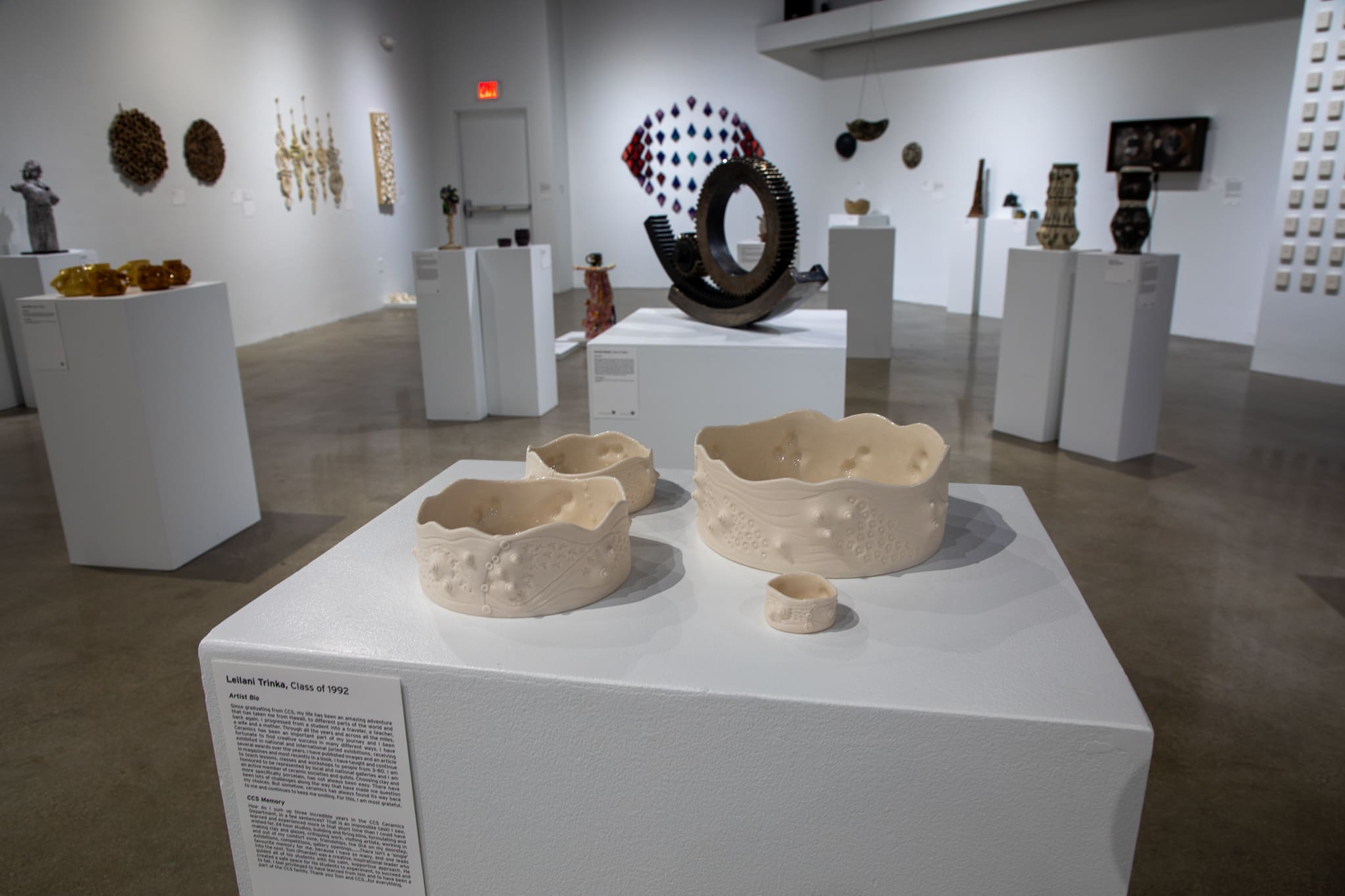
Echoes: CCS Alumni Voices in Clay brings five decades of CCS ceramics alumni to the international convening.
As the National Council on Education for the Ceramic Arts (NCECA) holds its first-ever conference in Detroit, the College for Creative Studies (CCS) presents Echoes: CCS Alumni Voices in Clay, an exhibition featuring over 30 CCS Ceramics alumni, on view March 20 – April 18, 2026, at Charach Family Galleries (formerly Center Galleries), located at 301 Frederick St.
While NCECA previously convened in Michigan in 1967 at Michigan State University in East Lansing, the 2026 gathering marks the organization’s first conference hosted in Detroit and is expected to bring thousands of ceramic artists, curators, collectors, and educators to the region for exhibitions, lectures, and citywide programming.
Bringing together alumni spanning more than five decades, Echoes highlights the national reach and evolving influence of ceramics at CCS. The exhibition reflects how CCS-trained artists continue to expand contemporary ceramics through sculptural experimentation, hybrid material practices, and interdisciplinary approaches to clay. It is part of a broader network of NCECA exhibitions and cultural programming taking place across institutions and galleries in Detroit.
“With Detroit hosting NCECA for the first time, Echoes is both a recognition of the generations of artists who have shaped contemporary ceramics and a celebration of the CCS alumni who continue to expand its language,” said Claire Thibodeau, Assistant Professor, Studio Art and Craft, Section Lead of Ceramics at the College for Creative Studies.
“This exhibition reflects the depth and strength of Detroit’s creative community while highlighting the lasting impact of our graduates within the broader ceramics field.”
Featured artists include Laith Karmo (‘04), Hayden Allison Richer (‘15), Kenneth Baskin (‘02), Elysia Vandenbussche (‘11), Joy Kin (‘19), Emily Duke (‘09), Kaiser Suidan (‘93), Katie Bramlage (‘11), Kara Thomas (‘13), and Sean Evans (‘01), among others. The exhibition includes alumni graduating from the late 1970s through 2025, reflecting the program’s sustained contribution to contemporary ceramic arts practice.
Exhibition Details Echoes: CCS Alumni Voices in Clay March 20 – April 18, 2026
Hours Tuesday–Saturday, 11:00 am – 5:00 pm; Extended hours during NCECA conference (March 25-28) Charach Family Galleries (formerly Center Galleries) 301 Frederick St., Detroit, MI 48202
Participating Artists Kenneth Baskin (‘02), Chrys Bonnay Lewis (‘10), Alexis Bratto (‘19), Katie Bramlage (‘11), Hailey Callahan (‘20), Emma Doppel (‘24), Emily Duke (‘09), Anna Edry (‘25), Jaminely Emmanuelli (‘19), John Gargano (‘92), Brett Gray (‘10), Steven Johnson (‘17), Laith Karmo (‘04), Karen Katanick (‘78), Joy Kin (‘19), Thea Lavender (‘24), Emily LoPresto (‘15), Melissa Mytty (‘04), Jane Plieth (‘14), Hayden Allison Richer (‘15), Drew Siering (‘24), Janelle Songer (‘08), Kaiser Suidan (‘93), Travis Grant Taylor (‘14), Kara Thomas (‘13), Karleigh Thompson (‘14, Fine Arts), Leilani Trinka (‘92), Elysia Vandenbussche (‘11), Bobby Veresan (‘20), Kailani Wolfe (‘25), Pierpaolo Zaldana (‘23, Illustration), Tyler Zibkowski (‘19), and Sean Evans (‘01).
About the NCECA NCECA supports and advances the field of ceramics by fostering education, research, and creative exchange within the global clay community. The organization’s annual conference is the largest international convening dedicated to contemporary ceramic art and education, advancing the field through exhibitions, scholarship, and professional development.
CCS alumnus Paul Mobley will be honored at a special evening conversation with CCS President Donald L. Tuski.
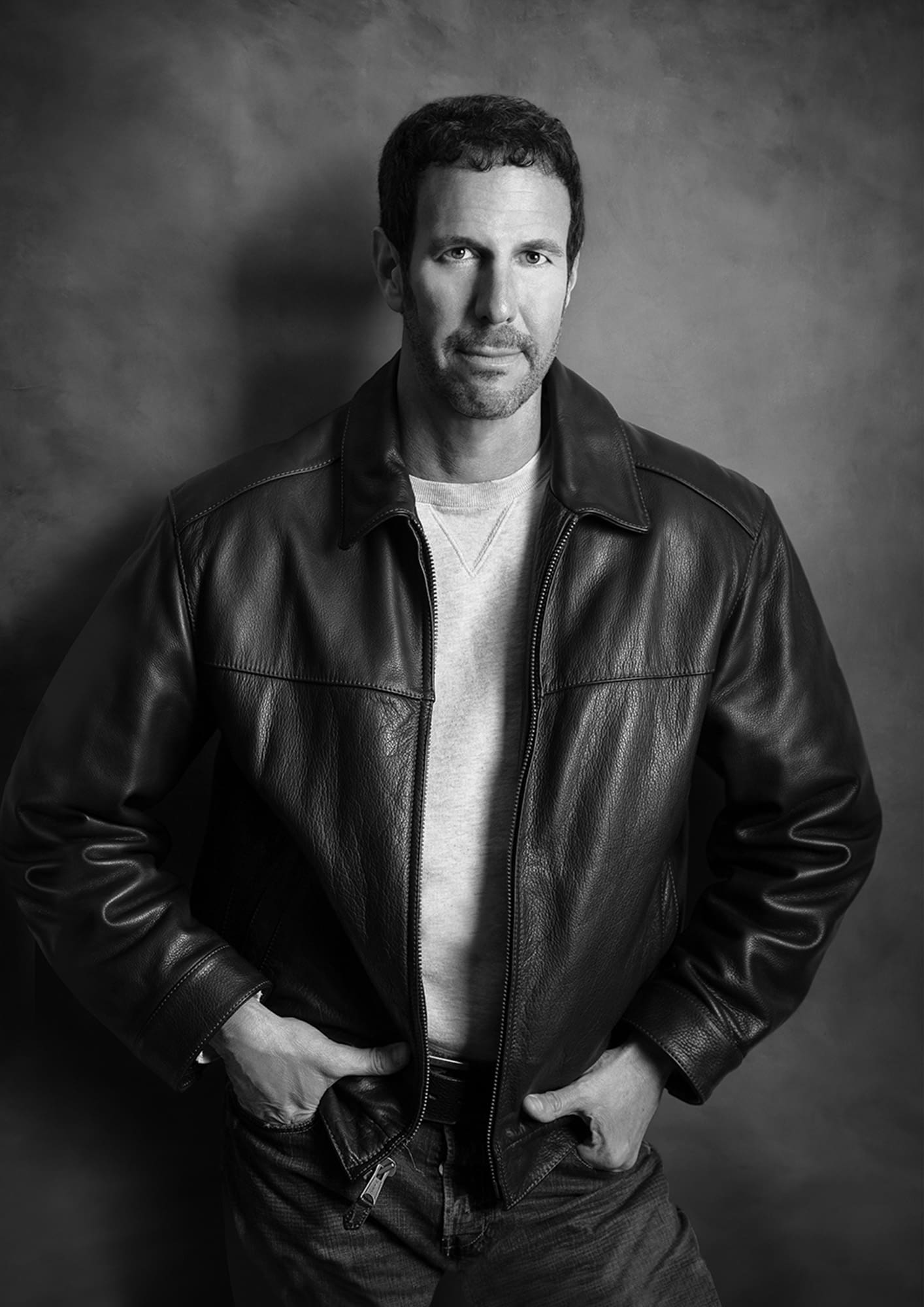
On Thursday, March 26, at 5:30 p.m., the College for Creative Studies is pleased to welcome renowned portrait photographer and CCS alumnus Paul Mobley (Photography, 1983) as the Honorary Doctorate of Fine Arts recipient for a special evening conversation with CCS President Don Tuski.
Paul Mobley is an American portrait photographer celebrated for creating intimate, timeless images that reveal the personality and spirit of his subjects. His commercial work spans corporate, editorial, and advertising photography, with clients ranging from major brands such as Apple, Microsoft, Ford, and American Express to celebrities and entertainers in film, comedy, and music. His portraiture is known for its emotional depth and authenticity, achieved through his ability to quickly connect with people of all walks of life.
“We are honored to welcome Paul Mobley back to CCS to receive an Honorary Doctorate of Fine Arts,” said Don Tuski, President, College for Creative Studies.
“His distinguished career in portrait photography and his commitment to documenting everyday Americans living extraordinary lives make him an inspiring figure for our students and the broader creative community.”
The event marks a significant milestone in CCS’s 120th anniversary celebrations, as the college honors distinguished alumni who have shaped their industries and exemplify the college’s legacy of producing world-class creative talent.
Mobley trained at CCSin Detroit and then moved to New York City, where he studied portraiture and assisted renowned photographers, including Annie Leibovitz and David Langley, before launching his own career.
“My time at CCS shaped everything about how I approach photography,” said Mobley. “I learned to focus on concept and storytelling, not just technique. The experience of honest critiques, experimentation, and risk-taking in those early years still influences my creative process today. Receiving this honor from the institution that launched my career is a powerful reminder of the impact great teaching can have — and the responsibility to pass that forward.”
In addition to commercial assignments, Mobley is widely recognized for his long-form personal projects and photography books. His first major project, American Farmer, became a touring exhibition and book that captured the lives of U.S. farmers and traveled for seven years, reaching over 500,000 people. Other notable projects include Everyday Heroes — portraits of Americans dedicated to helping others; If I Live to Be 100 — intimate portraits of centenarians from all 50 states; and American Firefighter — portraits and stories of firefighters across the country. These bodies of work reflect his deep interest in everyday people leading extraordinary lives and his commitment to storytelling through images.
Mobley’s If I Live to Be 100 project will be developed into a traveling exhibition and national museum tour by International Arts and Artists. The exhibition features full-scale portraits of remarkable Americans who have celebrated their 100th birthdays.
He has also served as a keynote speaker, sharing insights on creativity, connection, and the art of portraiture with audiences worldwide.
The event will culminate in the presentation of an Honorary Doctorate of Fine Arts, awarded to Mobley by CCS President Don Tuski. Mobley joins a distinguished group of CCS Honorary Doctorate recipients, including automotive design leader Michael Simcoe, architect Suchi Reddy, and artist Kevin Beasley, among others.
The evening will include a 90-minute conversation between Mobley and President Tuski, exploring Mobley’s formative years at CCS and his distinguished career in portrait photography, followed by an audience Q&A.
This lecture is presented in partnership with Fujifilm. Fujifilm representatives will be on site throughout the evening to showcase new products and answer questions.
The event is free and open to the public. Registration is required at Eventbrite. Free parking is available in CCS’s Brush Street parking structure. To see more of Paul’s work, visit paulmobleystudio.com.
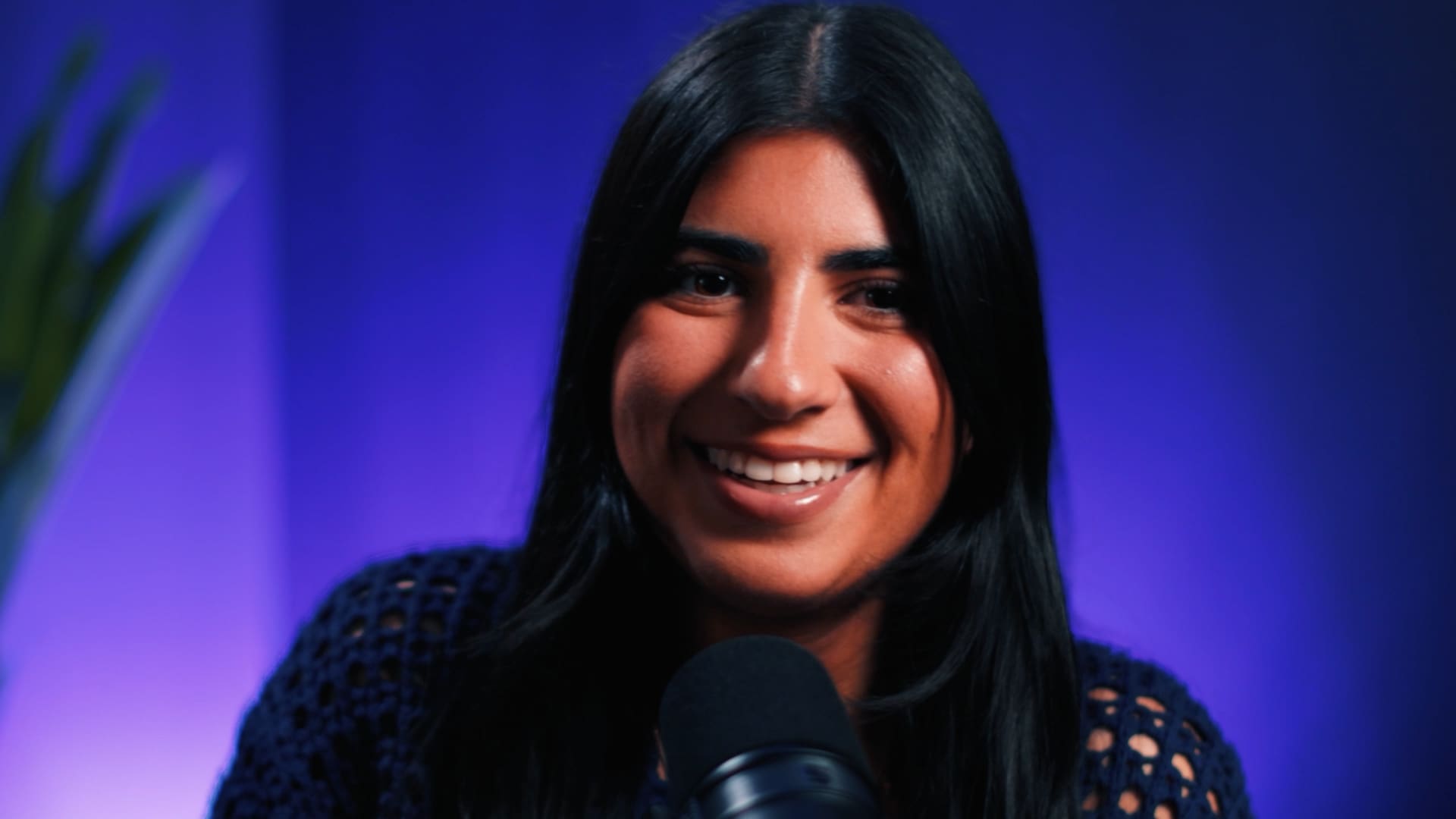
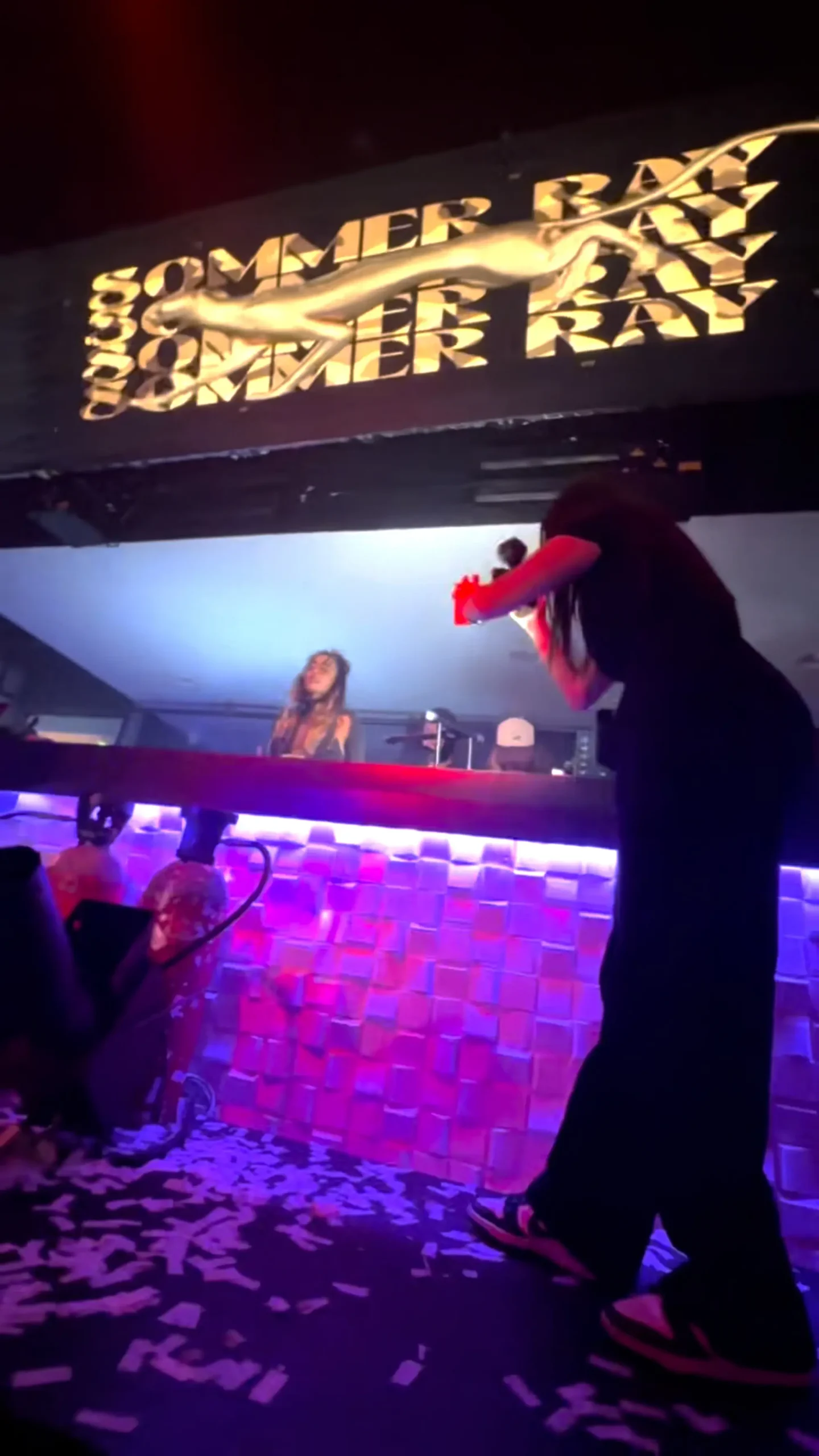
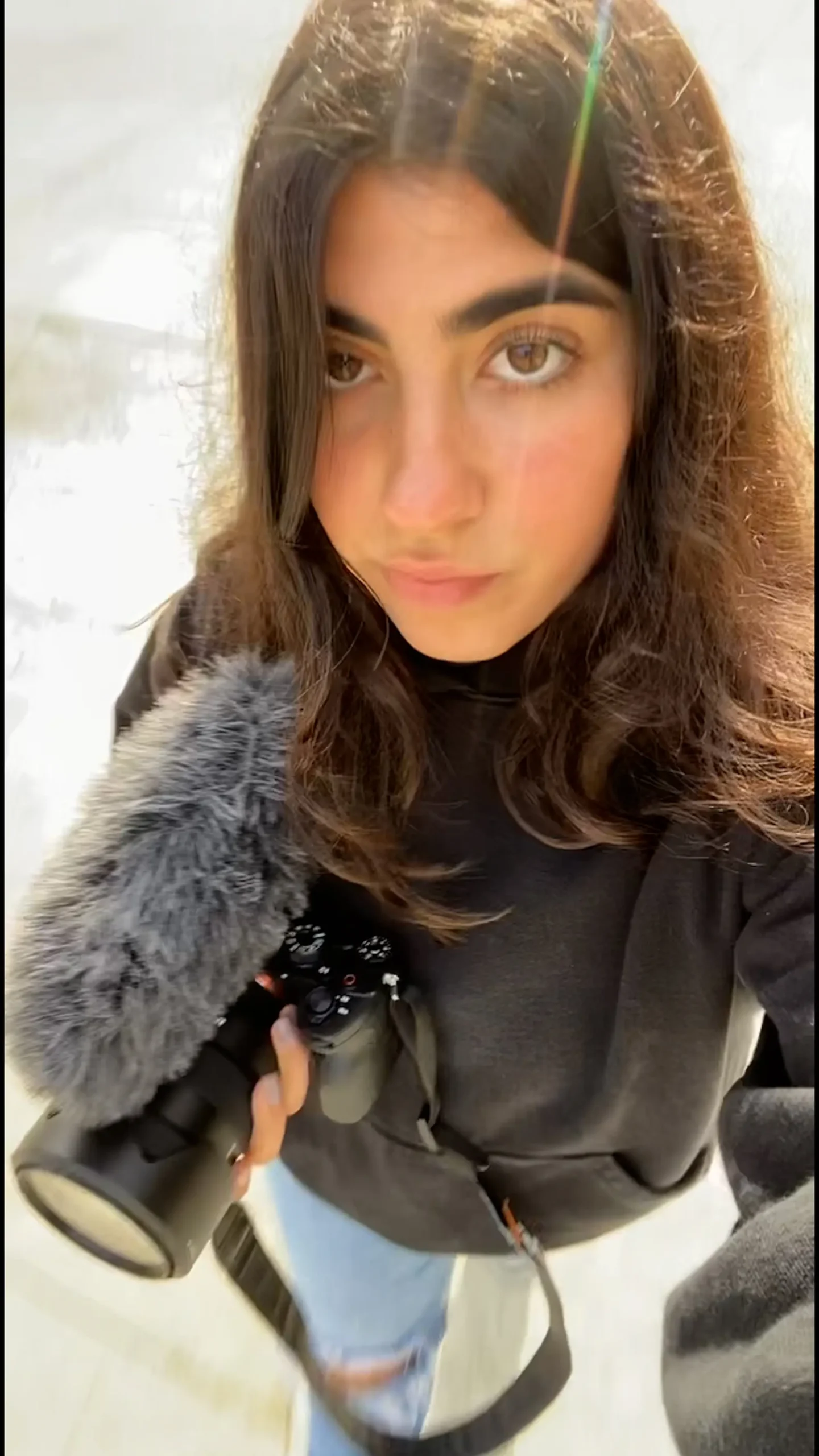
Annabelle Saco (’23 Film) has been holding a camera since she was just a kid. What started as sunshine-filled summer recap videos with friends evolved into a powerhouse career in social media – with over 62K followers on TikTok – and freelance videography. Annabelle’s freelance business, ShotByAnnabelle, has taken her from the sidelines with the Detroit Red Wings and Pistons to the sets of artists like Sexyy Red and Sommer Ray. Annabelle is the ultimate doer. She’s proof that when you combine a “try anything” attitude with professional skills, you don’t just follow a career path – you build your own.
Support the artists and designers in your life. Support everyone in the arts and the creative industries… honestly, we wouldn’t be anywhere without creatives, in my opinion.
How did you get here? When did you know this career path was for you?
When I was in sixth grade, I took a trip to California. I brought my camera and made a video. That was the moment when I thought there’s nothing else I’m going to do in life but film videos. I started off watching YouTubers – beauty gurus and bloggers, but also photographers like Peter McKinnon. That’s how I found an interest in both video production and photography, and content creation and social media. Then I started making videos with my friends during the summer. I’d make a summer edit every single year. I created a YouTube account and Instagram accounts focused on beauty and makeup. My cousin actually – she went to CCS – and I’d watch her make all these projects at home. I thought it was the coolest thing ever. That’s what struck me to go to CCS. I told my family that if I didn’t get into CCS, I wasn’t going to school. I’m very blessed that I knew at a young age what I wanted to do.
“I feel like everything I learned at CCS helped me with my editing now as a creator, which is really such an advantage, especially when it comes to working with brands.”
You have so many projects moving at once. How do you stay motivated?
One thing about me is I’m very family oriented. My family has done so much for me growing up. They’ve provided for me, and they’re my biggest supporters. So my drive to work hard every single day is my family, because one day I want to be able to provide that for them. Whether that’s tomorrow or 10 years from now, I know it will happen because it’s really what inspires me. They’re such hard workers. They came here with nothing and gave me everything.
Your content is all so diverse. Where do you find creative inspiration?
When I was younger making my summer videos, it was always the music that drove that. I love editing my videos to the beat of the music. I’m a perfectionist when it comes to it. So every little beat has to match. Songs that have really high energy, high beats are what I love. But then, as a content creator, it’s also watching other people’s content and seeing what they’re creating, which makes me want to create 10 times more. I think the two go hand in hand, and that’s what I love about it. Then when it came to school, that is what helped me grow as a creator and with my video production skills. One thing that I think really sets me apart as a creator is the technical background that I’ve gained from school. Even if it’s just me vlogging and doing a food review, I think about the lighting, and the way I want to cut my video. In social media everything’s so fast cut, and people don’t realize that no one wants to even hear you breathe. That’s something that I learned a little bit about in school. I am able to take the background of knowledge that I have and understand what I have to adjust for any situation. I feel like everything I learned at CCS helped me with my editing now as a creator, which is really such an advantage, especially when it comes to working with brands.
What’s it like seeing your work come to life?
Seeing my work come to life is really such a cool experience, especially in school. There was this one project that I still think about to this day. I show everyone it. I did a Red Bull commercial for fun. It was a four-day production with my friend, where I got to try so many different things that I never thought I could do. I literally wouldn’t stop talking about it, and I still don’t. It was awesome. It’s the same with my content creation work. Sometimes I don’t know what I’m filming until the day of. Then, when I get to the final edit, I watch it over and over and over again because I’m so proud of the work that I put out. One thing that I live by is, “You miss a hundred percent of the shots you don’t take.” I think it is what has gotten me this far. I’ve worked with organizations like the Detroit Pistons, the Red Wings and the Tigers. I’ve also worked with Lions’ players and other companies. Honestly, five years ago, I would’ve never imagined myself working with them. It is very rewarding. If you’re just sitting down and not taking the chances, you’re not going to get where you want to be. Going out and asking people for what I want, and not being afraid to get a “no,” has also led me to work with Sexyy Red, Sommer Ray, and other artists, athletes and influencers. I’s really eye-opening to how far you can go with something like this.
What is it that you love most about being a freelancer?
One thing I love about my career is the flexibility and freedom I have. Of course, I can go out and get a corporate job, nine-to-five – and that’s just as amazing – but I love being a freelancer because I’m not just stuck to one thing. I get to do so many different things. One day I’m sitting in a Lambo going 90 miles an hour, then the next, I’m filming videos for a restaurant or the grand opening for a med spa. I’m all for experiences and opportunities, and I love being able to do a little bit of everything.
You’ve gained quite the following online. What’s your ultimate goal?
My ultimate goal is to inspire others to go after their dreams. That’s one thing that I really do try to push. If you have a dream at such a young age, God would not put that in your heart if it wasn’t meant for you. That’s really what keeps me going. I don’t give up because I know it’s what I’m meant to do. I want to be that comfort creator for someone if they’re feeling down. I want to make others happy.
“I want to be that comfort creator for someone if they’re feeling down. I want to make others happy.”
Is there a “bucket list” goal you’re still chasing?
I’m striving towards working with the Detroit Lions. One day, I want to be on the field. I actually made a video that was pitching myself as a social media coordinator. I knew that I had to do something that was going to stick out, and that no one else had done. So I went on social media, like I do, and I filmed a video about why they should choose me. I actually got a lot of attention on both Instagram and TikTok. So many people, even Lions’ players, were reposting it. I love Detroit sports. There’s so much hype around them. One day I’ll be on that field, one day.
How do you feel CCS prepared you for this career?
There are so many ways that CCS helped me prepare for my career. The AVC (Audio Visual Center) was amazing. I got to work with different kinds of equipment, and knowing all of the advantages and disadvantages of equipment really helps as a creator. And the staff there, they’re so supportive. Jerome, Laurie and even Amber herself. All the people there are really amazing. They push you to keep trying. Having a social media presence wasn’t very normal in the film industry, just because it’s different than an experimental film or commercials – and those professors and staff really pushed me and said, “You’re going to make it so far,” and that stayed deep in my heart. I really appreciate them for that. As well as classes, like sound design. I always struggled in school to take what I learned to the next year with me. But now, I really try to think of every single thing about the lighting and sound for every shoot. Learning how to work as a team. That really helped me. Being able to work with others in the studio was really, really nice.
What would you say to a student or parent who is apprehensive about CCS, or to pursuing a creative career?
Nothing is guaranteed. I know being in a creative field, it’s very out of the norm. We’re all told to go to a nine-to-five. Get that job. Be in the corporate world. And, of course, those are great. I’m not downing it. I think those people work just as hard as we do. But I really do think it’s important that, if you have a dream, to not be afraid to do it. The only ones who fail are the ones who stop trying. And I think, if you really do love something, there’s no way you can fail. I was very blessed that my parents were very supportive of this. Especially in the Middle Eastern culture, we’re told to become a lawyer, become a doctor. My family saw the passion that I had for this, and they believed in me just as much. If you’re a friend or a parent of someone whose dream it is to go to a school like CCS, just try to be supportive. Because the only reason that they might not be doing it is that they don’t feel they have that supportive system. I really do think that, if they have a passion for it, they are going to make it so much further than anyone could ever imagine. Support the artists and designers in your life. Support everyone in the arts and the creative industries. All they want is a support system behind them. I think that’s what everyone deserves. Because creatives are – honestly, we wouldn’t be anywhere without creatives, in my opinion.
I would love to know what you would tell baby Annabelle – if you could go back in time.
I could cry thinking about this. If I had to say one thing to little Annabelle, it’s to not give up on your dreams, and look at how far you’ve come. I think it’s so beautiful that, even though you did have some bullies in the past, you didn’t let that stop you now. And nothing will stop me. No one is going to stop me from living out my dreams.