Christine Montalbano (’22, User Experience Design) has always been curious about how things work. A lifelong creative with an interest in making experiences both functional and intuitive, she found a career that brings together her creative and analytical sides. Today, Christine manages the Core Global User Experience Design Team for Stellantis’ in-vehicle infotainment system, helping translate complex technology into experiences that feel natural to drivers across its global brands. She also returns to CCS as an Adjunct Instructor, sharing what she has learned with the next generation of designers.

Can you tell us more about what you do at Stellantis?

At Stellantis, I currently manage the Core Interaction Design Team for our in-vehicle infotainment system. My team and I design the structure and framework of our user interface for all 14 of our global brands. We look at how every single element on the screen is communicating different vehicle functions to the user. We do the actual interaction. We understand the electrical engineering requirements, how the back end and the software work, and build the front end in a digestible way for the driver, passenger and anybody else in the vehicle.

How did you get where you are today?

I was born and raised in the Metro Detroit area. I have tons of family members who have been in the automotive industry. I kind of grew up consumed by going to the auto shows and different cars and coffee events with my family. My parents are big car people, so there was always something to drive or something to sit in growing up. After my undergrad, I went to CCS for my master’s, and I was just consumed by the automotive industry with different collaborative projects that we were working on. I kind of became a cliché. I’m from Detroit. I went to CCS. I went into the car design world, and that’s how I got here.

Honestly, I’m an experiences person. I love experiences. I love designing the best possible experience not only for other people, but myself. A lot of times, people make fun of me like, “Christine, we don’t need to experience that the exact way that you want us to.” But it’s in my nature. Designing the in-vehicle infotainment system, you really have to understand the entire vehicle experience – before you get in the vehicle, while you’re in it, when you get out, and even what you’re doing at home that prepares you for getting in. So I think it really comes down to being super experience-focused and doing something with purpose.

What are you most proud of right now in your career?

What I am most proud of in my career is overcoming fear. I used to be a very anxious person, and now I tell myself, “You just need 10 seconds. Don’t be afraid, just do it.”

It’s helped me a lot in overcoming some of those anxieties. Now managing a team, I’m able to help my team feel that as well. They’re so talented. They just need 10 seconds of that confidence, and we know what we’re doing. So I think it’s about sharing that experience of overcoming fear, gaining confidence through it, and seeing that confidence in my team’s faces as well.

What’s it like seeing your work come to life?

Being in the automotive industry, it’s just part of the gig that these vehicles have long product life cycles. Since I arrived at Stellantis, I’ve been working on the next generation of our in-vehicle infotainment system, and it still is not on the road yet. But I know the army behind it. There are so, so, so many people and brains that really go into it. I think seeing the end product, and it being so sharp and seamless, while knowing every little detail that went into every single pixel on the screen, is just mind-blowing – knowing how a car works and then seeing it in front of the user looking so mindless and simple, so elegant and not as technical as I understand it to be.
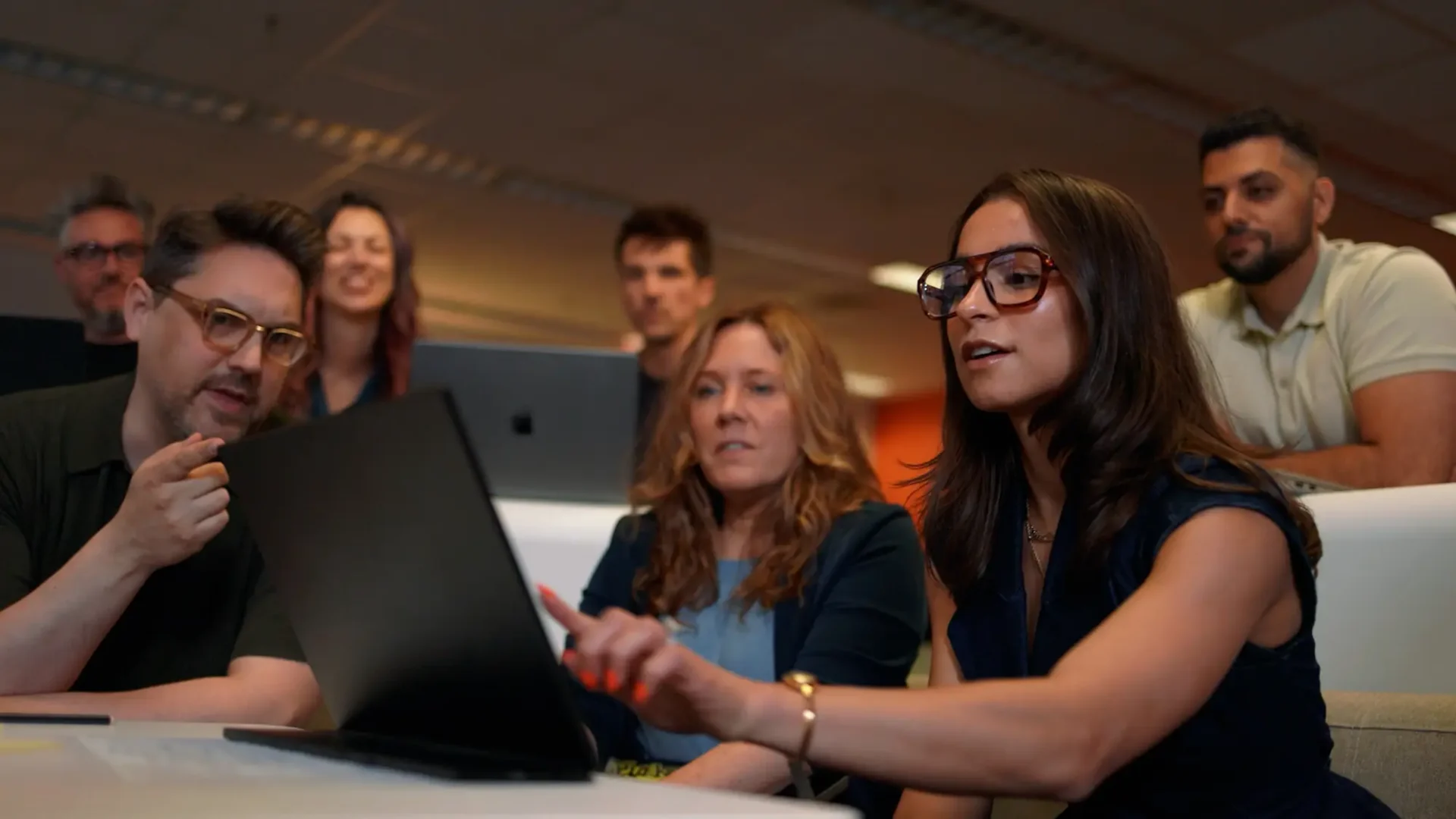
UX Design alum Christine Montalbano leading a team meeting at Stellantis headquarters
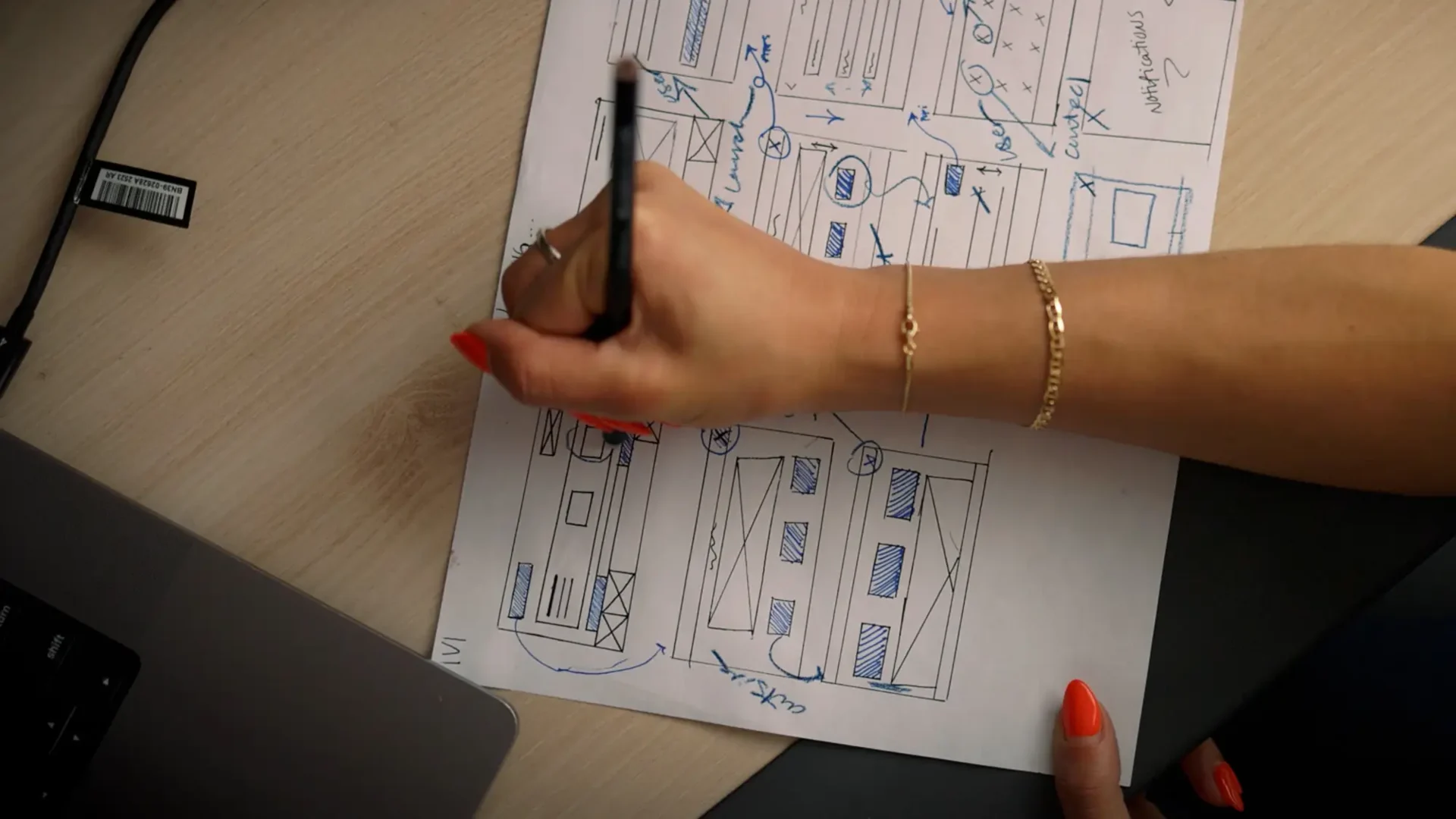
Top-down view of UX Design alum Christine Montalbano drawing website wireframe sketches and UI layouts on paper with a pen.
Was being creative something you grew up with as a kid?

Yes, I was always very creative. I was the person making the videos for my family after every family vacation. “Christine, make a video of it. Play it at the family reunion.” Which is every week in my family because I’m super Italian. Then I was always making invitations, different stationery and printed materials. In high school, instead of being in the advanced math classes, I was taking the art classes. I was designing the yearbooks. I was always into not only the visual communication side of things, but making things work and using different computer applications. I even taught myself the whole Adobe suite.

It’s something that I’ve always been chasing. And who knows where it’ll go because I still chase my creativity every day. I always want to do more. I think that’s just who I am as a person.

What would you say to someone who is apprehensive about chasing their creative path in life?

If I could say anything to someone who’s apprehensive about chasing a creative path in life, I would say don’t be. When I was in high school, the traditional careers were always advertised, which is great, but sometimes I wonder if part of my brain is analytical and then the other part is super creative – hence user experience design.

I would say, don’t be afraid to chase it. I’m sure that’s the answer they hear all the time when they talk to people like me, but at least start exploring it because the opportunities are endless. When you think of a big corporation, you don’t realize that there’s always a creative team behind it, whether it’s internal or external. Just thinking of how cars are designed, right? I went to school with people who were studying sculpture, and they now are working on the clay models of the cars. You just don’t know what you don’t know. Definitely explore it. And if you have an itch to explore something, scratch that itch. I think I’ve scratched a lot of itches that I’ve had, in all directions – professionally, personally and creatively. Scratch that itch.

Is there something specific about user experience design that you love most?

The big picture in interaction design, specifically in automotive, is you’re driving a car at 75 miles an hour. It just has to work. You don’t have time to tinker through multiple apps and look for something. If you need to know where your tire pressure is within a second, you need to be able to find it instantly. I think what I love is understanding the technical side of it and being the bridge that translates that into a digestible way for a human being. It needs to feel emotional. It needs to feel like you’re working with the car and the human driving it, not a piece of technology.
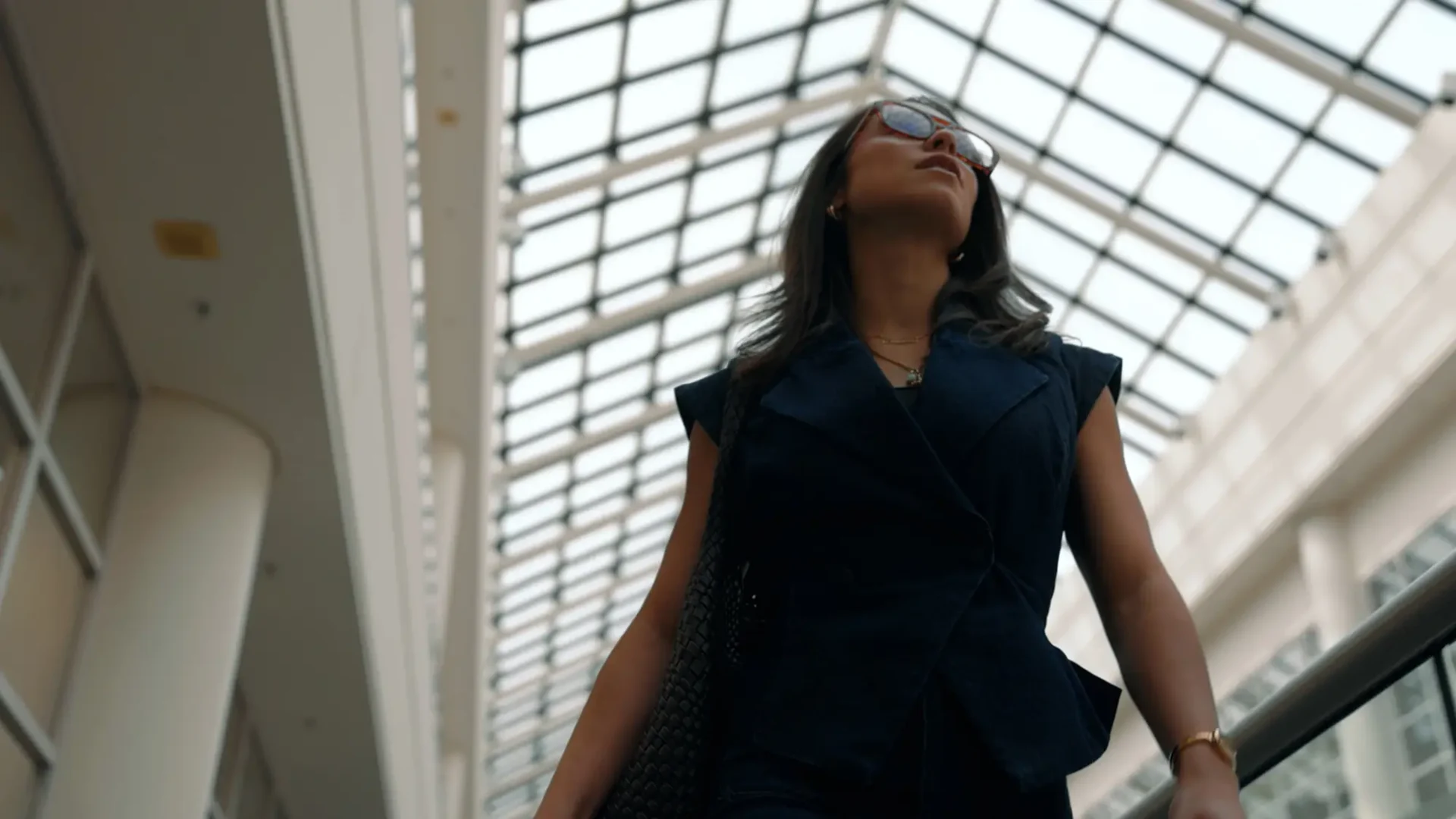
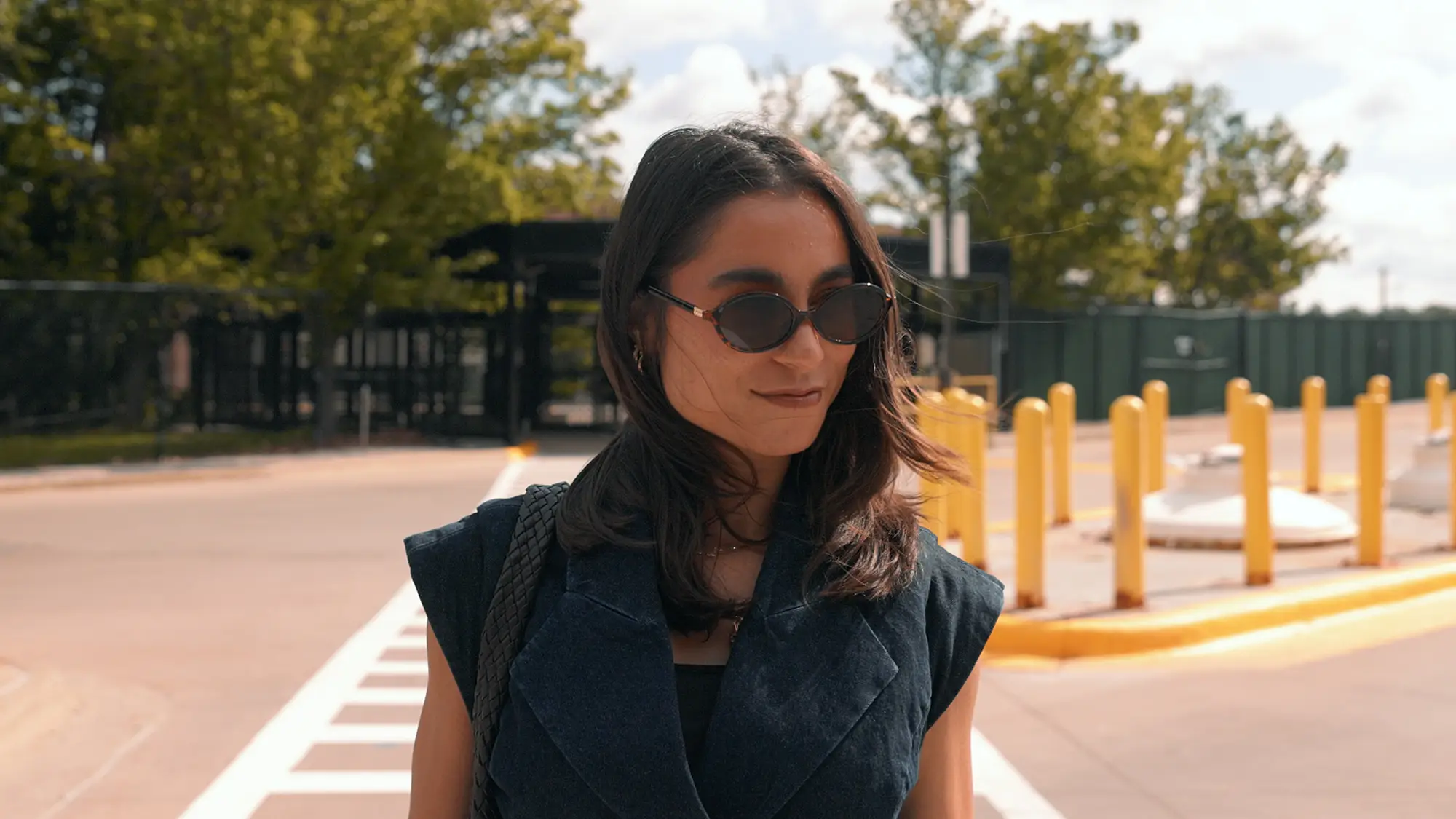
Christine Montalbano walking through the halls at Stellantis headquarters with white walls and a glass ceiling above her
What is it like going back to CCS as an Adjunct Instructor after being a student there?

Going back is super rewarding. I remember myself in those students’ shoes, and I can see the stress on their faces. Being able to reassure them that you’re doing this for a reason, you’re here for a reason, you chose to be here and the hard work will pay off is always something that excites me about being there. I love the energy of school and all the opportunities that are presented to students and all the blue-sky possibilities you have as a student.

It also humbles me at work. I think when you get into the industry, there are certain practices or day-to-day things that you learned about your craft that you may forget to practice on a daily basis. Being an Adjunct, I hold myself accountable to the practices that I’m teaching my students, the practices that I learned as a student. Then I’ve been able to give back. So over my time at Stellantis, we’ve hired a few of my students as either an intern or a full-time hire as well. So it’s been a super rewarding experience on my end.

How did CCS help prepare you for where you are right now?

CCS helped prepare me for where I am now in so many ways. I realized in studying user experience design that I’m not designing for me or my classmates. I am designing for whoever is going to be interfacing with the product, system or service. Beyond that, CCS really helped me hone in on the craft. I gained a lot of technical skills in addition to creative thinking. I think combining the two is awesome.

I love being creative, but at the same time I want to understand how things work.

I’d also say that my professors at CCS were super inspiring. When I was working on my thesis and research, I spoke with the College about some of the specific areas I was interested in, and CCS was able to connect me with influential people in those fields. I didn’t know it at the time, but my thesis focused on programming hardware and software and having it output to a graphical user interface. With the help of my professors, we came up with this awesome outcome, and here I am doing a larger-scale version of what that thesis project was. So it really came full circle.

What would you tell your younger self?

I think when I was younger, I put myself in a box. I always said, “Oh, you’re just not smart.” I was never a math or science person. That wasn’t me. I was the creative one, and I was just groomed to think that you had to follow the traditional career path. I would go so hard trying to figure out math and science. I remember my mom used to give me these at-home tests, and I would tell myself, “I’m just not smart enough for this. I don’t know what I’m going to do with my life.”

And I think looking back, it’s not that I wasn’t smart enough. I just wasn’t following something I was interested in. Once I found that interest, the opportunities were endless. I’m good at this. There’s so much I can do with this, learn and even teach. I think I stayed curious, and I’ll always remain curious. It’s helped me a lot throughout the years, and we’ll see where it continues to take me.
The College for Creative Studies expands its User Experience and Color & Materials Design programs to include the College’s first online and part-time graduate programs, better serving designers seeking opportunities in this growing field.

Detroit, MI, October 17, 2025 – College for Creative Studies (CCS) is proud to announce the launch of new online and part-time graduate degrees in User Experience (UX) Design and Color & Materials Design (CMD). These programs are designed to make high-quality art and design education more accessible to working professionals and those seeking flexible learning options in the rapidly growing fields of UX and Color, Materials and Finish (CMF) Design. The new offerings complement a strong portfolio of existing full-time graduate programs at CCS, including: Color & Materials Design (MFA), Design for Sustainability (MA/MFA), Interdisciplinary Design & Media (MA/MFA), Transportation Design (MA/MFA), and User Experience Design (MFA).

“The MPS and part-time MA curriculum additions mark a significant step in CCS’s commitment to accessible education,” said Carla Gonzalez, Dean of Enrollment at CCS. “We understand the evolving demands of today’s professional landscape, and these options were designed to provide working professionals with the cutting-edge skills they need to excel in their current and future roles. This is particularly relevant in fields like digital design, where, according to the U.S. Bureau of Labor Statistics, employment of digital designers and web developers is projected to grow 8 percent from 2023 to 2033.”

The new online and part-time programming is a part of CCS’s graduate school:

  • Master of Professional Studies (MPS) User Experience Design, fully online (enrolling for Fall 2026)
  • Master of Arts (MA) User Experience Design, part-time in-person (enrolling for Fall 2026)
  • Master of Arts (MA) Color & Materials Design, part-time in-person (enrolling for Fall 2026)

With the increasing demand for UX and CMF professionals, CCS’s programs offer a unique pathway for individuals looking to advance their careers in design, technology, and user-centered solutions. The curriculum emphasizes ethically, socially, and environmentally responsible practices, combining theoretical knowledge with practical application. Graduates will be well-prepared to enter the workforce and make an impact in the fields of User Experience (UX), User Interface (UI), Color, Materials and Finish Design (CMF) and emerging technologies.

www.ccsdetroit.edu/wp-content/uploads/2025/10/480×5145-rev.jpg www.ccsdetroit.edu/wp-content/uploads/2025/10/480×5142.jpg www.ccsdetroit.edu/wp-content/uploads/2025/10/480×514.jpg

Program Details

The MPS in UX Design is an 18-month, fully online program focused on developing skills in user-centered research, interface design, smart mobility, user testing, augmented reality, and data visualization. The program is designed for working professionals, offering an affordable and convenient option for students who need to balance their studies with life commitments.

The MA in UX Design is a two-year, part-time program that includes studio and research-based courses focusing on strategy and theory. The program foregrounds skills in design thinking, user-centered research, prototyping and communication. Here, students learn to design technologically-mediated systems, experiences, and human interactions with objects, spaces, and interfaces.

The MA in CMD is a two-year, part-time program that is the only accredited graduate-level CMF design program worldwide, attracting designers globally from the fields of product, transportation, fashion, interior, user experience, textile, and animation, as well as fine art, crafts, architecture, engineering, and the natural and social sciences. The curriculum prepares students to cultivate a mindset where forward-thinking color, material, and finish strategies are framed to connect functional and emotional meaning to products, environments, and experiences — with the understanding of user needs and preferences — across a wide range of industries.

Founded in 1906, CCS has distinguished itself as one of the premier institutions of higher learning in the world for more than a century. By offering these degrees online and in a part-time format, CCS is committed to breaking down barriers to education in the creative fields. CCS invites prospective students to learn more about these exciting new programs and how they can enhance their careers in design. For additional information, please visit www.ccsdetroit.edu.

www.ccsdetroit.edu/wp-content/uploads/2025/10/1024×514.jpg

ABOUT THE COLLEGE FOR CREATIVE STUDIES The College for Creative Studies (CCS) is a nonprofit, private college accredited by the Higher Learning Commission and authorized by the Michigan Education Department to grant Bachelor’s and Master’s degrees. CCS, located in midtown Detroit, strives to provide students with the tools needed for successful careers in the dynamic and growing creative industries. CCS fosters students’ resolve to pursue excellence, act ethically, engage their responsibilities as citizens, and learn throughout their lives. With world-class faculty and unsurpassed facilities, students learn to be visual communicators who actively use art and design toward the betterment of society. The College is a major supplier of talent to numerous industries, such as transportation, film and animation, advertising and communications, consumer electronics, athletic apparel, and many more. Its graduates are exhibiting artists and teachers, design problem solvers and innovators, as well as creative leaders in business.

Located in the heart of midtown Detroit, CCS’s prime location offers unparalleled opportunities for art and design collaboration. Our students have found countless ways to make a positive impact on local metro Detroit businesses through innovative art and design problem-solving.

Last year alone, CCS students collaborated to problem-solve timely topics for 15 metro Detroit businesses and nonprofit organizations. They addressed a range of issues in healthcare product design, sustainability, mobility, and even emerging augmented reality technology.

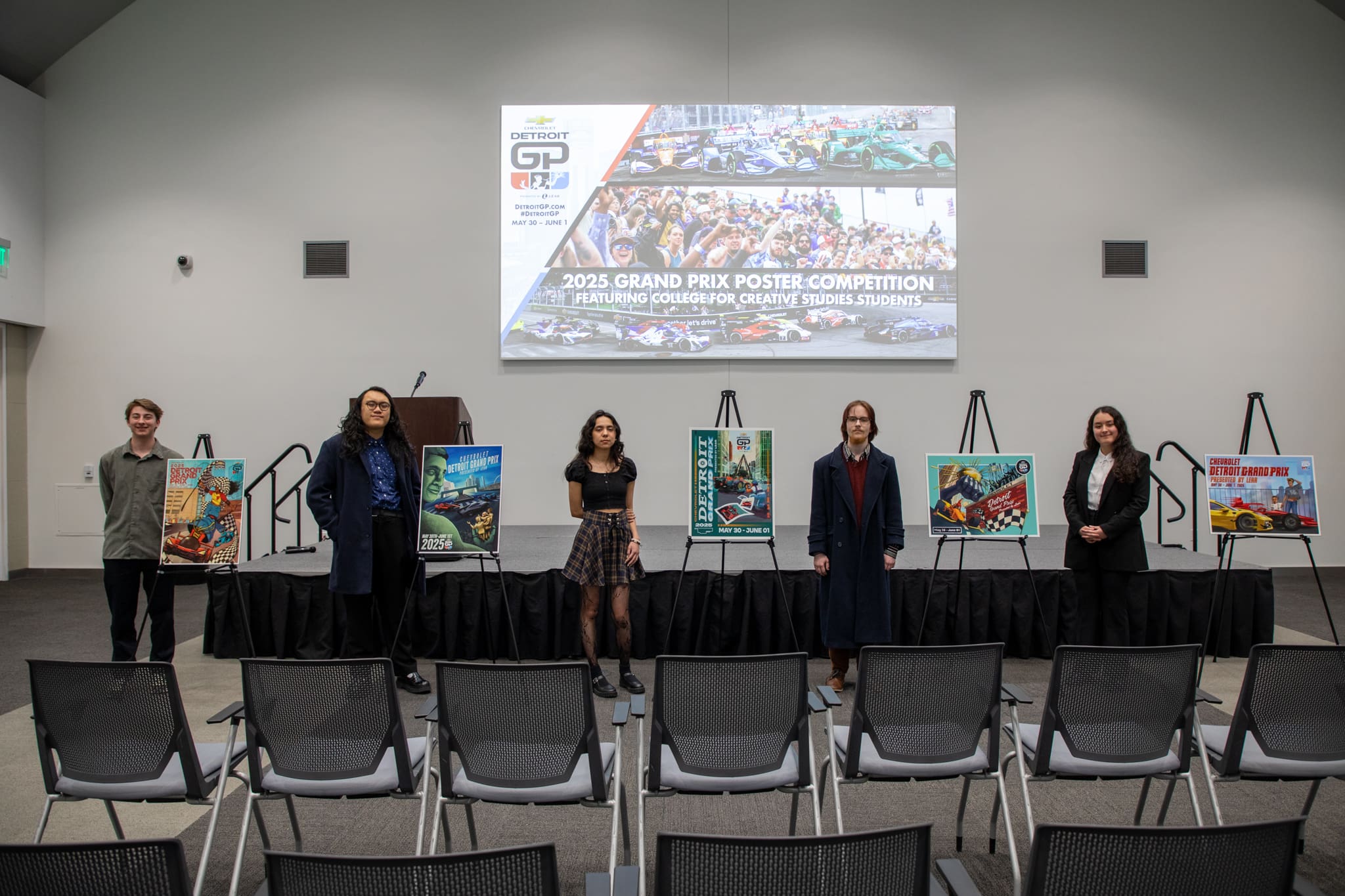
Embracing the city’s rich history of cultural and sporting events, students continue to participate in annual design competitions to create the newest posters for iconic Detroit events such as the Chevrolet Detroit Grand Prix Presented by Lear, the Movement Music Festival and the 313 Presents Pine Knob concert series.

Here’s a look at some of the partnerships:

  • Augmented Reality Center (ARC) in partnership with Oakland University x Communication Design & Strategy, Graduate User Experience Design and Entertainment Arts
  • Crain Communications – Automotive News x Illustration
  • 313 Presents x Illustration
  • Detroit Grand Prix x Illustration
  • GM x Transportation Design & Graduate User Experience Design
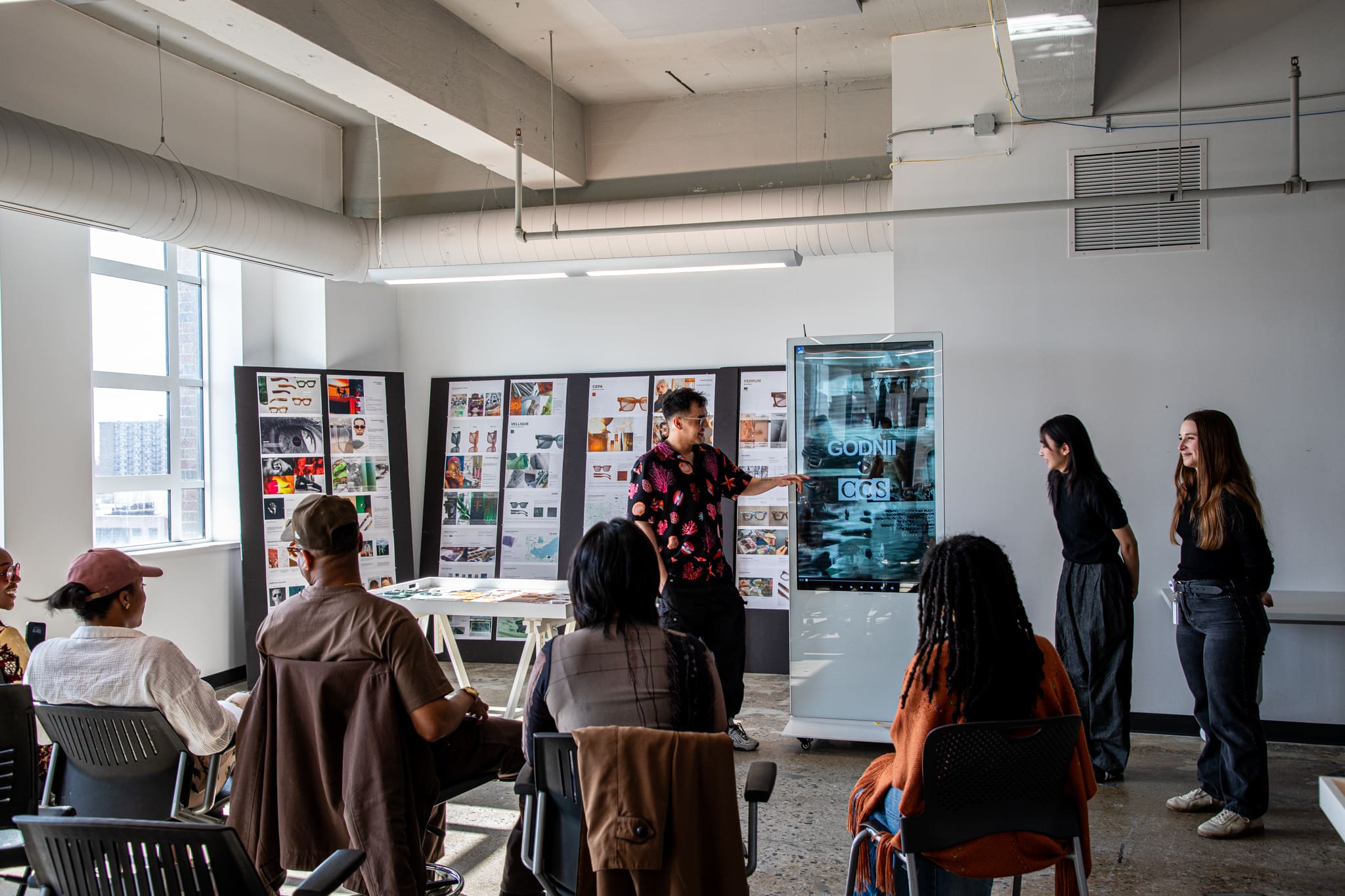
  • Godnii x Graduate Color & Materials Design
  • Hagopian Rug Competition x All Departments
  • State of Michigan Office of Future Mobility and Electrification with support from the Global Epicenter of Mobility x Transportation Design
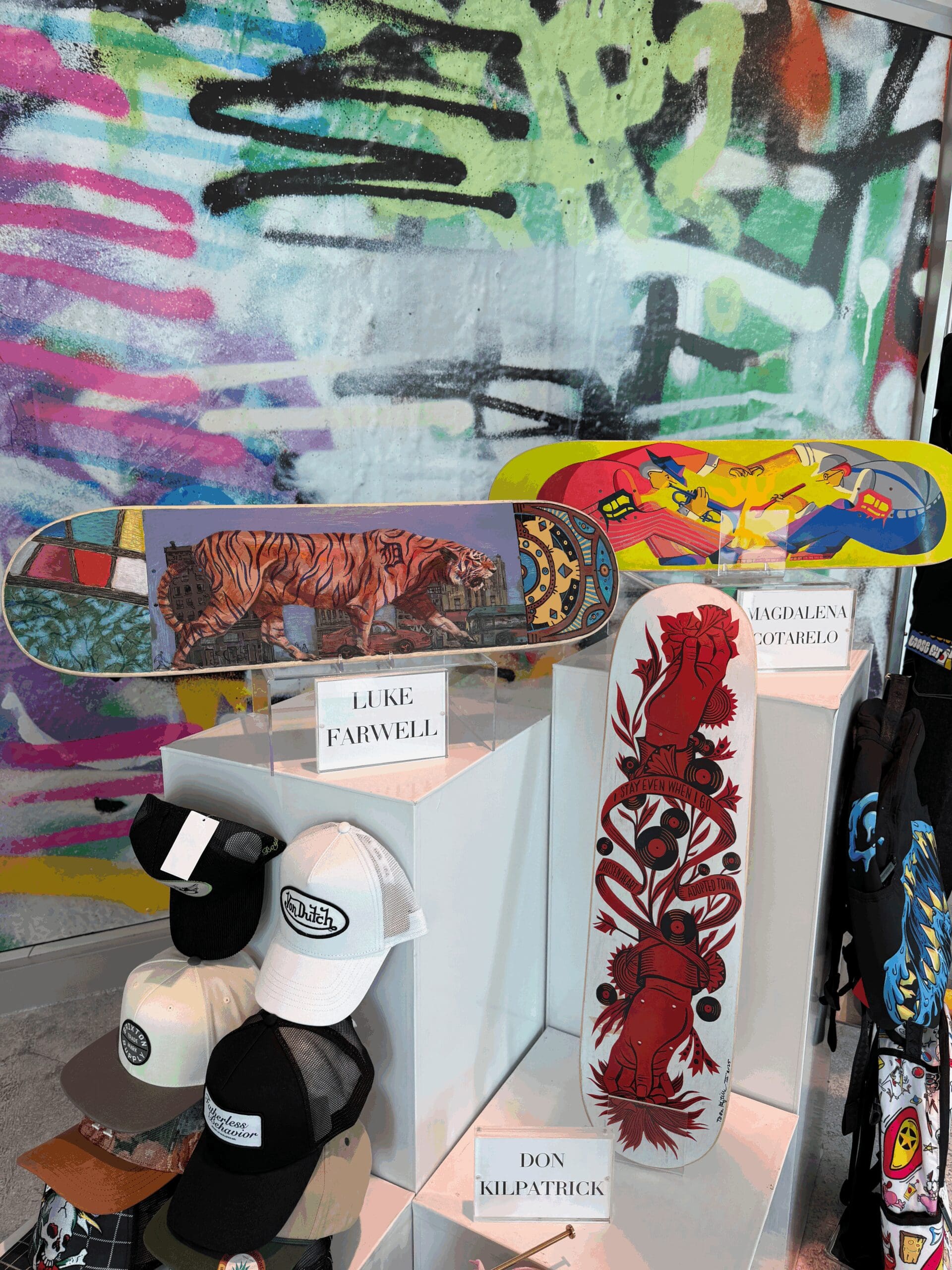
  • Zumiez and Somerset Collection x Illustration
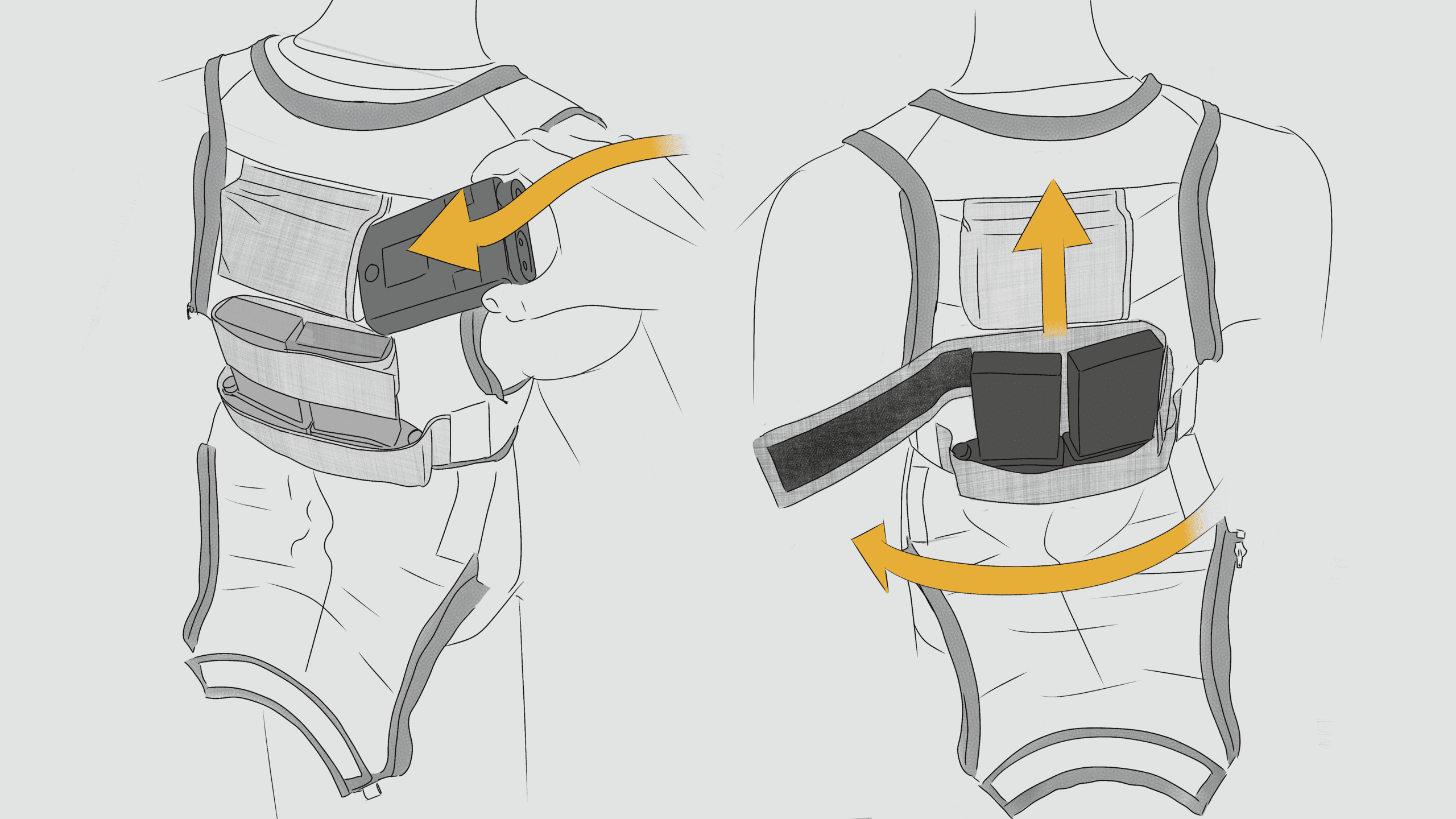
  • BorgWarner x Product Design
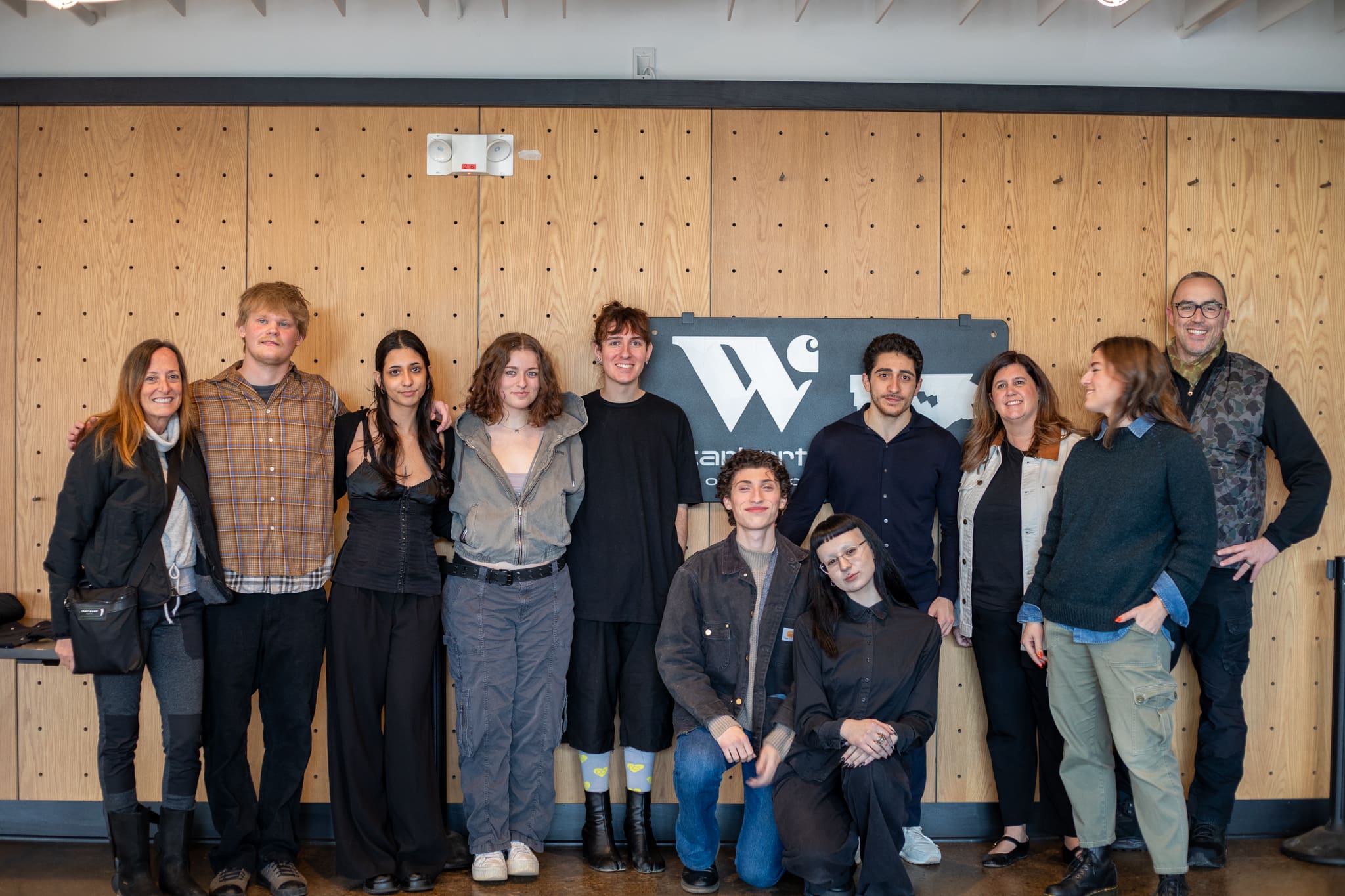
  • Carhartt x Fashion Design
  • Henry Ford Health x Product Design
  • Changing Lives and Staying Sober (C.L.A.S.S.) x Interior Design and Graduate Color & Materials Design

The Apple Foundation Program at CCS will welcome its first cohort in October 2025, offering a free introductory app development course with access to laptops and additional devices.

The College for Creative Studies (CCS) is excited to launch the Apple Foundation Program, a free app development program coming to the College’s A. Alfred Taubman Center for Design Education in collaboration with Apple. This technology lab and educational program will be available in October 2025 at no cost to students and community members. Additional details are available here.

This cutting-edge program offers a series of one-month courses, with daytime and evening classes to accommodate diverse schedules. Participants will be introduced to the fundamentals of Swift, Apple’s programming language, and the principles of app design and development, helping them to expand their technology skills and foster creativity. Apple devices will be provided to participants for the duration of the program, at no additional cost.

Registration is first-come, first-served. The first cohort will welcome 15-30 participants with a minimum of eight sessions over the year. Participants must be 18 years or older, and registration is open to metro Detroit residents, no prior coding or technology experience is required to participate.

“At CCS, we’re excited to welcome the Apple Foundation Program to our campus and provide cutting-edge learning opportunities for our students and for metro-Detroiters looking to continue their education,” said Don Tuski, President of CCS. “We are always looking for new ways to activate our local community and provide them with valuable resources. Detroit is the perfect place to pilot this excellent program.”

ABOUT THE COLLEGE FOR CREATIVE STUDIES The College for Creative Studies (CCS) is a nonprofit, private college accredited by the Higher Learning Commission and authorized by the Michigan Education Department to grant Bachelor’s and Master’s degrees. CCS, located in midtown Detroit, strives to provide students with the tools needed for successful careers in the dynamic and growing creative industries. CCS fosters students’ resolve to pursue excellence, act ethically, engage their responsibilities as citizens, and learn throughout their lives. With world-class faculty and unsurpassed facilities, students learn to be visual communicators who actively use art and design toward the betterment of society. The College is a major supplier of talent to numerous industries, such as transportation, film and animation, advertising and communications, consumer electronics, athletic apparel, and many more. Its graduates are exhibiting artists and teachers, design problem solvers and innovators, as well as creative leaders in business.

Hakha Mashayekhi’s path to becoming Director of Product Design at Max is a story of bold pivots, creative growth and a passion for leading future designers.

Starting his journey in industrial design, he found the process enriching but too slow for his taste. Seeking faster-paced, user-centered work, Hakha transitioned to digital product design, where ideas can come to life almost instantly. At CCS, he immersed himself in Integrated Design – a field blending interaction design, business strategy and technology – and discovered his passion for UX design. From working on impactful projects for high-profile brands to nurturing young creatives on his team, Hakha finds his purpose in creating experiences that bring people joy and pushing his skills in a dynamic, fast-evolving field.

The Interview

“One of the joys of my work is when people talk about HBO and Max. I cannot take credit for the actual content, but I have a good feeling when people are happy on Sunday night, you know.” –Hakha Mashayekhi

Did you always know you wanted to go into UX Design?

For my undergrad, I studied Industrial Design, and I worked as a physical product designer for a year. It was very cool, but it was not a perfect match for me because I’m not patient. Industrial design is amazing, but it has a slow process. From when you design something until the moment that you see it in the hands of customers, it could be a year if you’re lucky.

But with digital product design, UX/UI, you can have an idea, and within two hours, you can have an experience available. That’s the main reason I decided to come to CCS.

What does it feel like when you see a product that you worked on coming to life, in the hands or in the homes of everyday users?

It feels really good. One of the joys of my work is when people talk about HBO and Max. I cannot take credit for the actual content, but I have a good feeling when people are happy on Sunday night, you know.

The funny thing is, it hasn’t been like this forever. I have been an in-house designer for five years now. Before that, I was in the consulting and agency world. When you’re a consultant, you just come in, fix the problem and move on. You never have the joy of seeing the product that you’ve created in the hands of a customer. That was actually the main reason that I left the consultancy and agency world and went in-house.

Learn More about CCS’s Programs →

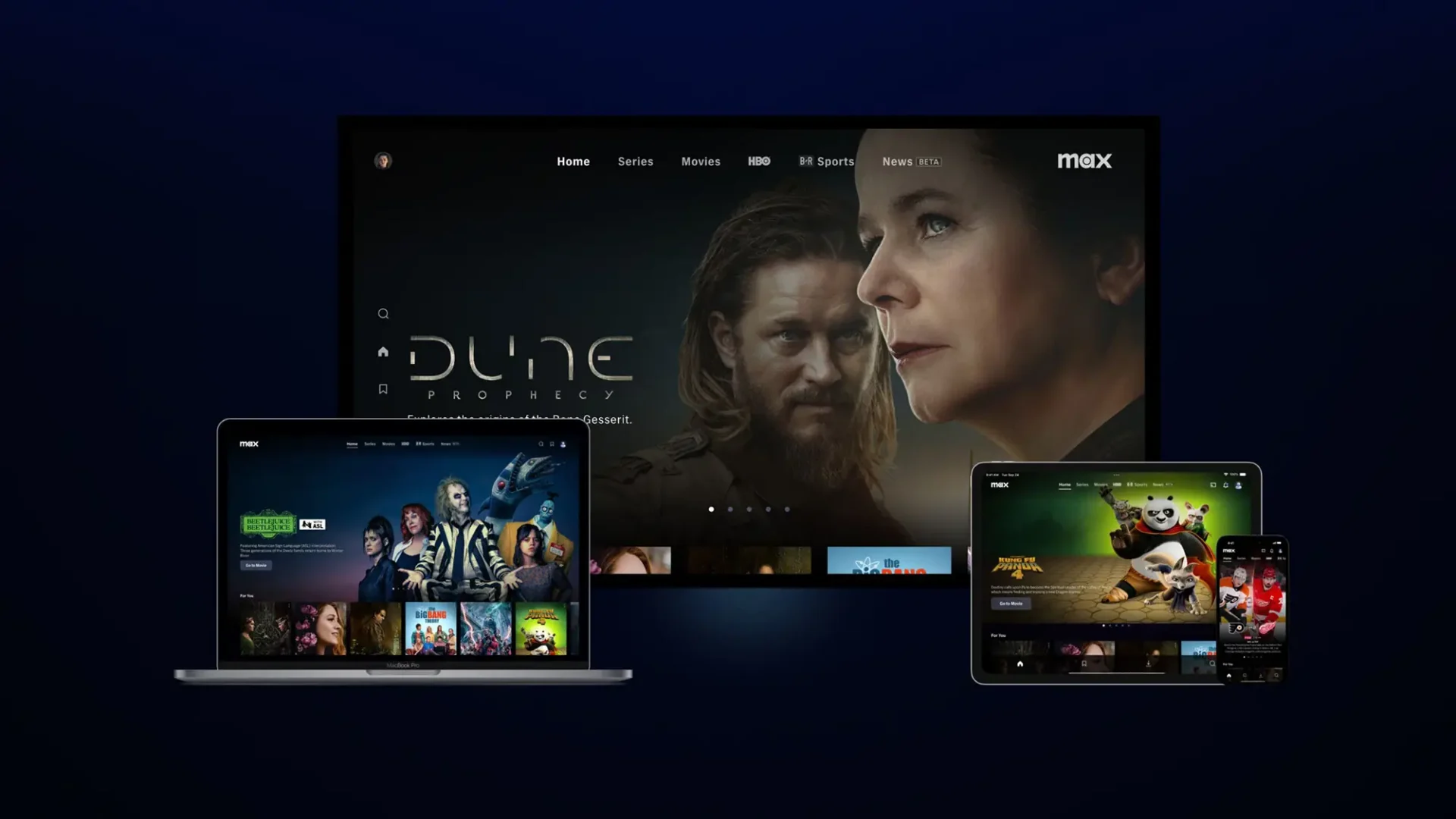
A laptop, ipad, iphone and TV mockup showing the HBO max interface

What do you love most about your job?

My answer now is different compared to two years ago, three years ago.

Three years ago, I was an individual contributor – I was basically a designer. At that time, my only joy was the project I was doing, and if it was a high-impact/high-profile project I was enjoying it, but if it was a very small feature, it was so boring, you know.

So I decided to change my career direction to become a people manager. That was a switch in my entire mindset. Now I’m enjoying my new responsibilities and delivering good work.

I have this designer on my team, who first started out at Max as a project manager, and one day, he said, “Can I be a designer?” We then spent six months training him, making sure he understood design thinking and design tools. We sent him to a bunch of courses and conferences. After that six months, we transitioned him to a product design role. Now, he’s a product designer – and he’s amazing.

These are talented people. I need to be there to support them, be a mentor for them and make sure they have a path to grow. And they are killing it.

Is that something that you’re interested in, nurturing a young creative and helping the next generation?

A part of me is always curious about college, like, “What’s going on? What’s the coolest thing? How are they doing their projects?” Especially now with AI, I’m very curious about how these students are figuring out ways to use AI in their day-to-day work to deliver their projects because they always come up with awesome, original ideas. I’m just curious to see what’s going on at CCS, what’s the coolest, latest thing. The students’ final projects are very inspiring. Especially for a master’s degree, it’s a super passionate project for them, so they go above and beyond. You get to see very cool research, very cool ideas, very cool execution, and awesome prototypes. I’m always surprised when I go to those—whether it’s interviews or thesis advising. I’m definitely into that.

What do you miss most about CCS?

The things I’m missing most about CCS are the things that I didn’t know the value of when I was there.

When I was there it was so intense, you know. There were a lot of projects, and the Chair of our department was so precise about everything, we couldn’t deliver a half-assed project. Everything had to be perfect.

One of the things that I didn’t really enjoy [during that time] was making connections, not only with the students, but with the professors that we had there. There were a lot of great people in different majors, different groups, and now, it’s a regret that I didn’t connect with them. I didn’t use my time to build relationships with them.

If I could go back to that time, I think I would try to balance my time in a way that I could free up time to build more connections.

How do you feel CCS prepared you for your career?

To be honest, Maria Luisa was very specific and she had a lot of experience with real projects. She always was looking through the lens of a professional, not a teacher.

The most important project that I did at CCS was a sponsored project. It was so valuable to get real feedback from working professionals. That’s something that you never get in school. The combination of Maria Luisa and the sponsored projects were the key.

Learn More about CCS’s Programs →

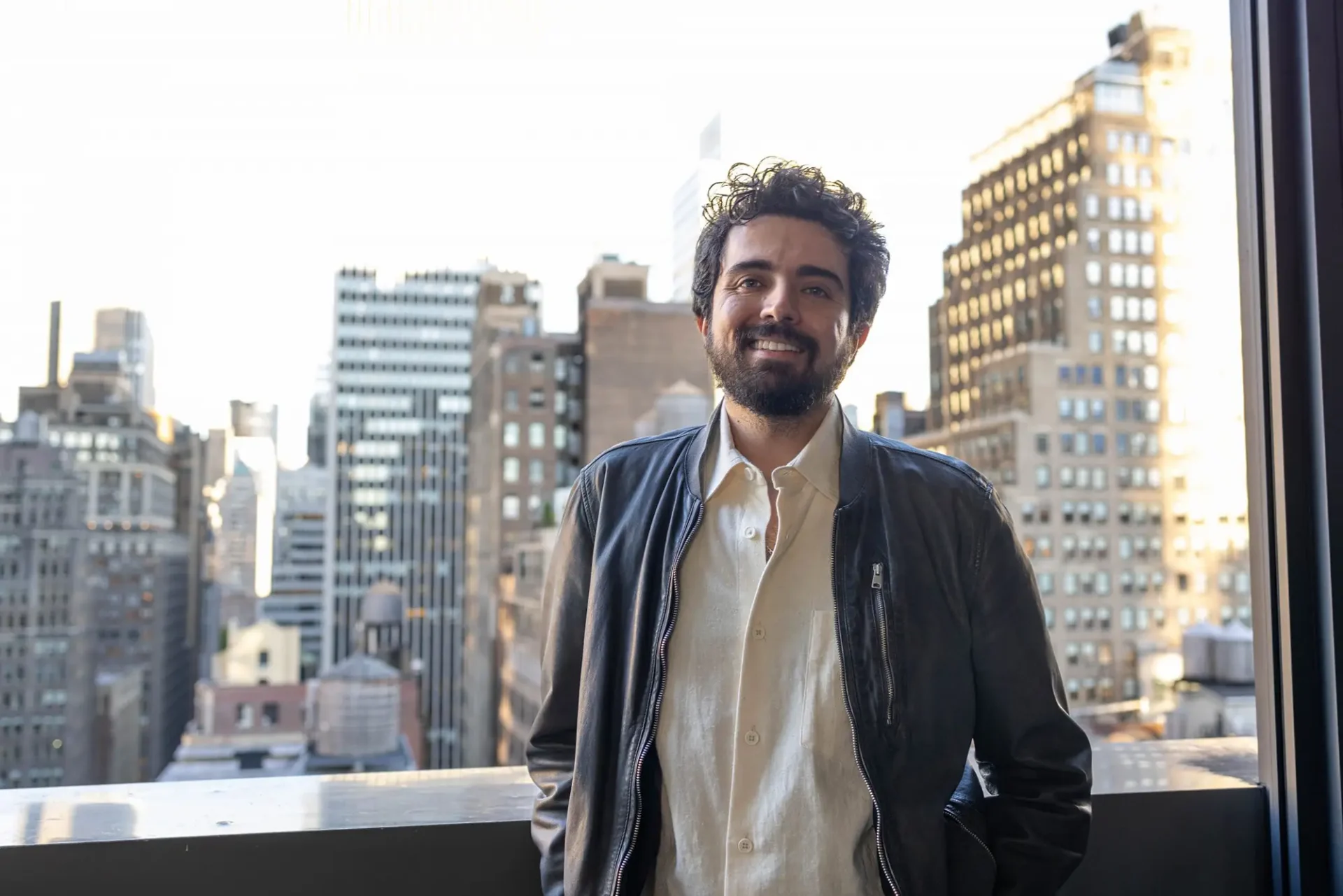
Hakha smiling in front of a window of the city