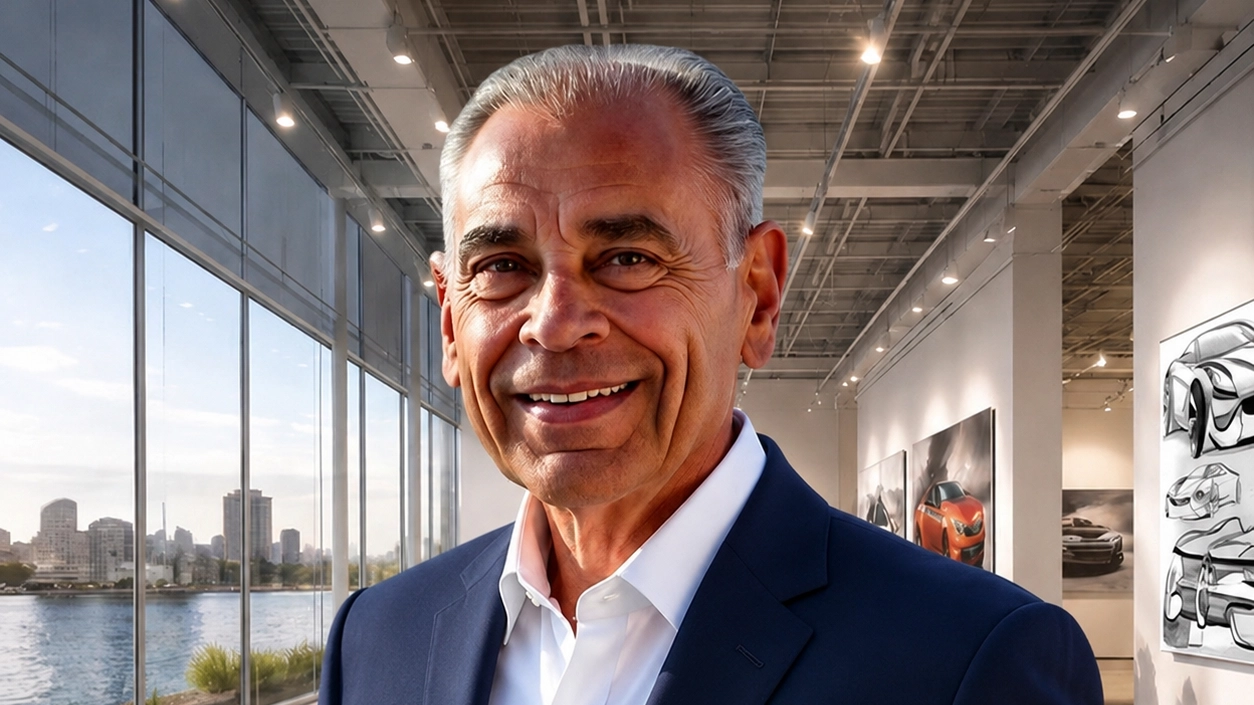
Design and education. Two words that have driven John Manoogian’s life and career.

So when Manoogian recently read about former GM colleagues who had established scholarships at the College for Creative Studies, it sparked an idea. After a 35-year career in automotive design and years spent teaching the next generation of designers at CCS, this was another way he could give back.

“What better way to give back and help talented students?” he said.

Earlier this year, Manoogian established the John Manoogian II Endowed Scholarship to support aspiring Transportation Design students who might not have the financial means to pursue and complete their education.

The decision was a natural extension of Manoogian’s long relationship with design education and with CCS, a relationship that began well before the College had become the internationally recognized source of transportation design talent he knows today.

An Early Connection

After earning a bachelor’s degree in Product Design from Michigan State University, Manoogian landed a job as a clay sculptor at Ford Motor Company. But he still hadn’t achieved his goal of becoming a car designer.

Someone suggested he take a Transportation Design class taught by legendary designer and instructor Homer LaGassey at the Detroit Society of Arts and Crafts, now CCS.

At the time, Transportation Design classes were taught in the basement of an old house on Kirby Street. The program itself was just getting started and had not yet become the established source of design talent it would later be.

Manoogian enrolled in LaGassey’s night class and asked him for help developing a portfolio for admission to ArtCenter College of Design in Los Angeles.

“LaGassey had a powerful teaching method. He was a practitioner of tough love. He set the bar very high and expected his students to extend themselves beyond what they thought they were capable of. His exacting expectations helped transform my portfolio for entrance into ArtCenter, and gave us a taste of what to expect in real-life professional design studios.”

Manoogian’s work with LaGassey helped him take that next step. He was accepted to ArtCenter and graduated with honors.
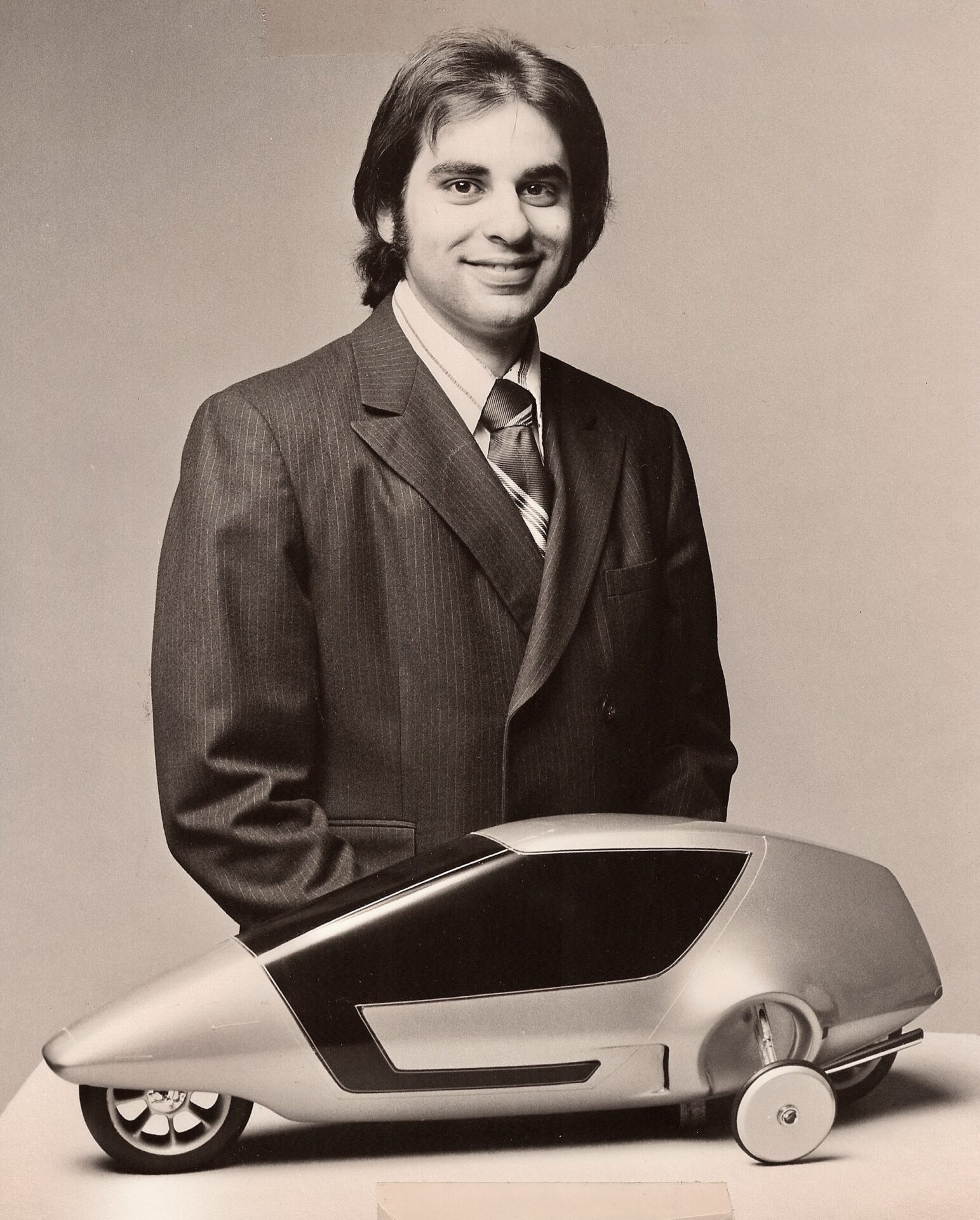
Black-and-white portrait of a young John Manoogian smiling in a suit, standing behind a sleek, futuristic silver model car with dark tinted windows.
John Manoogian at his ArtCenter graduation (with a model car)

From there, he joined General Motors Design, beginning a career that would span 35 years.

For more than 25 of those years, he also served on GM Design’s Portfolio Team, searching for and interviewing talented graduates to join the company. The experience took him to design schools around the world and gave him an unusual opportunity to evaluate both the state of design education and the students those institutions were preparing for the profession.
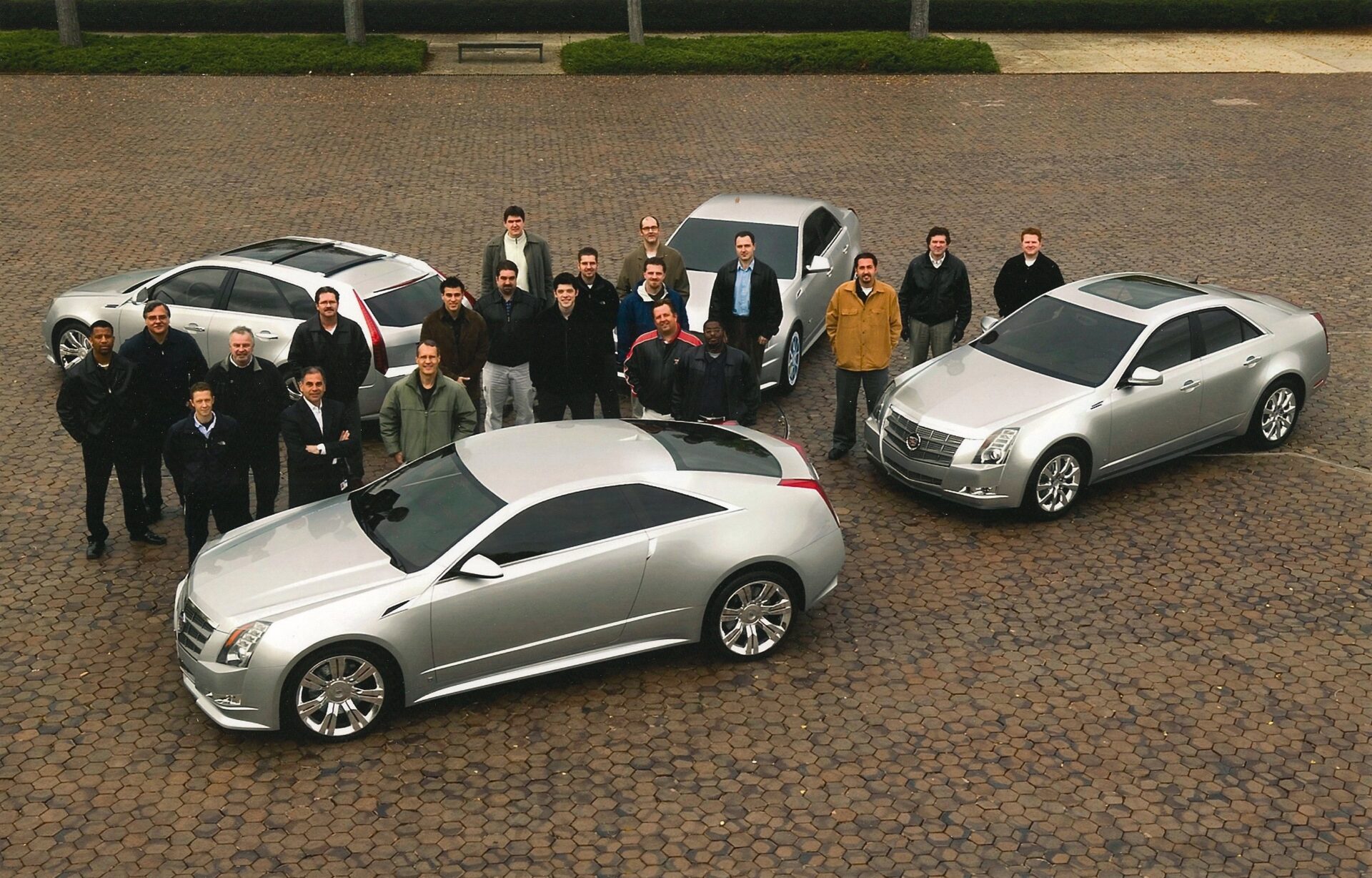
The Cadillac design team poses outdoors on a cobblestone plaza alongside three silver Cadillac CTS models: a Coupe in the foreground, a Wagon on the left, and a Sedan on the right.
Director of Cadillac Design Team photo with Cadillac CTS Coupe/Sedan/Wagon and design team

Over those same years, he watched the College for Creative Studies evolve.

“CCS had become a source of incredible design talent and had established itself as one of the premier international transportation design educational institutions,” Manoogian said.

After several years evaluating student portfolios, it became apparent to Manoogian that CCS had become an emerging source for design talent. The students not only possessed the technical drawing/design skills, but were being trained to be problem solvers and storytellers. Necessary skills for success in the professional design studios.

Returning to CCS

When Manoogian’s 35-year career at GM came to a close in 2009, he returned to CCS, this time as an adjunct instructor teaching senior Transportation Design students.

“Here was an opportunity to give back to the profession that I had been blessed with for so many years,” he said. “I could help and guide future mobility designers in preparing for the challenges facing them in the future.”
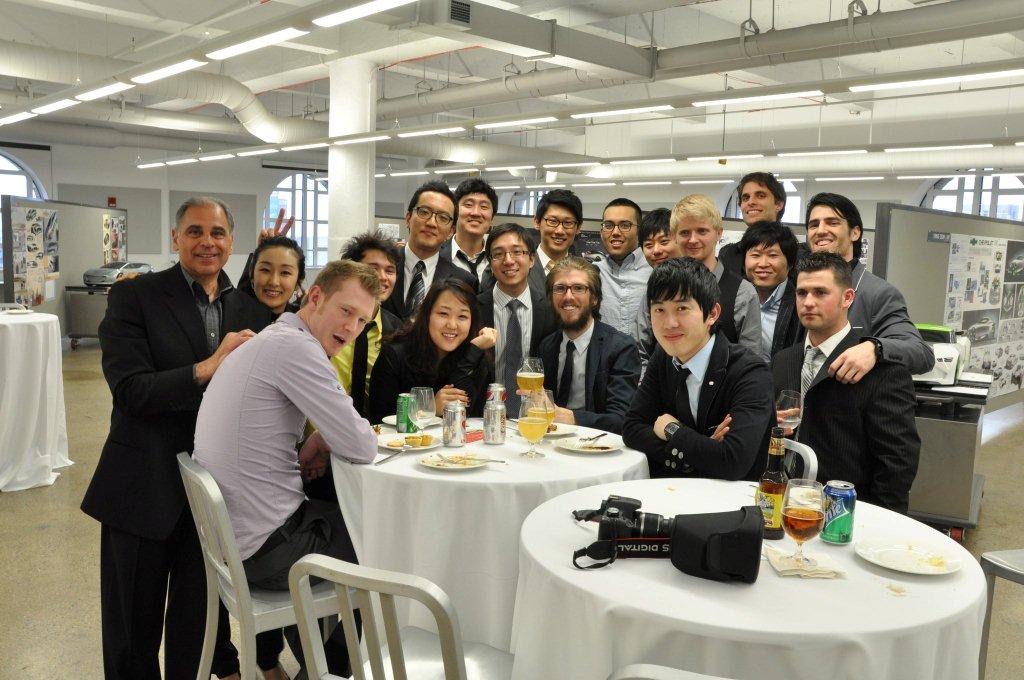
John Manoogian poses with a large group of smiling transportation design students gathered around a round table in a bright, modern studio room.
Manoogian with CCS senior Transportation Design students celebrating the end of the term

For Manoogian, preparing those students means developing more than technical skill.

“I believe problem-solving and the thinking process are key to providing well-rounded designers who will make meaningful contributions. CCS excels at developing that thought process, and I wanted to build on that discipline.”

He also sees an important advantage in where that education takes place. With CCS located in Southeast Michigan, students have access to generations of design talent and an industry that continues to evolve around them.

Creating Opportunity

For Manoogian, establishing an endowed scholarship brings together the two forces that have shaped his life.

A CCS class helped him take an early step toward becoming a car designer. His career gave him the opportunity to evaluate and hire emerging designers from around the world. Later, CCS gave him the chance to teach and mentor students preparing to enter the profession themselves.

Now he can help make that path possible for someone else.

“As an adjunct professor, I saw firsthand how the expense of completing a design education was a daunting prospect, and I wondered how I might help deserving, talented students reach their goals. A conversation with Dick Ruzzin made me aware of the possibility of creating a scholarship, and subsequently I read that Crystal Wyndham had created a scholarship. Those two made me aware of how I might help”

“My personal design journey had been anything but straightforward, so I thought I would do whatever I could to help an aspiring student reach their goals without the worry of financial constraints.”

“With my sponsored scholarship, I will have satisfied my desire to help the next generation achieve their dreams as I had been able to do,” Manoogian said.

His commitment to automotive design continues in another way as well. Manoogian is currently working on the development of a facility on Detroit’s riverfront celebrating the art of the automobile and the people who have shaped it. He sees that work as connected to educating future designers, preserving the legacy of the profession while helping inspire those who will carry it forward.

For Manoogian, it all comes back to the two things that have driven his life and career from the beginning.

Design and education. Full circle.


Interested in supporting students through a scholarship?

There are many ways to create a scholarship at CCS and shape it around what matters most to you. Contact Katie Rusak, Senior Director of Major Gifts, at [email protected] or 313.664.7861 to learn more.
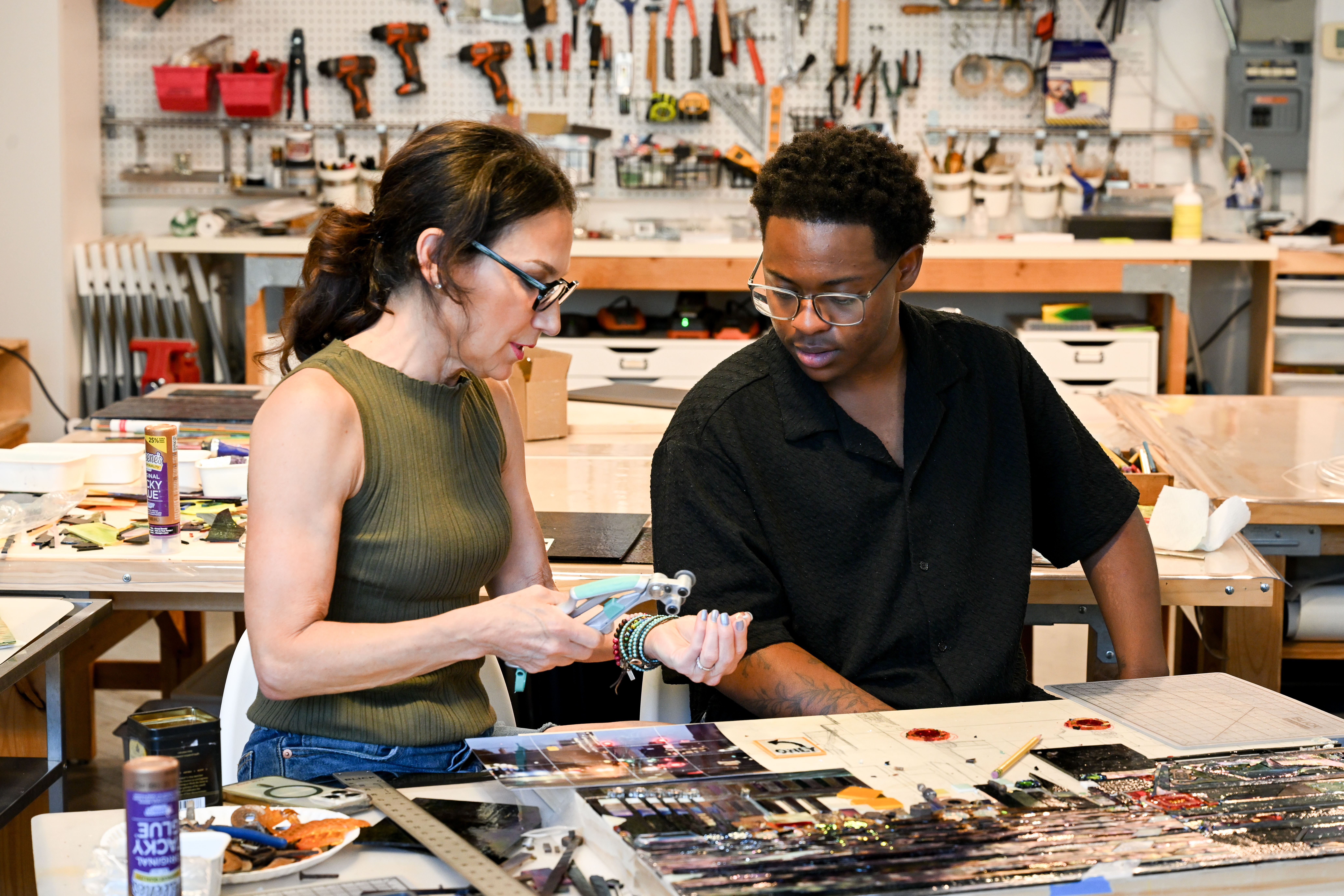
A conversation during CCS Industry Days brought together two artists more than 20 years apart in their CCS journeys. What followed is a story about mentorship, creative community – and what can happen when one person sees possibility in another.

When Darcel Deneau, ’02 Fine Arts, first came to the College for Creative Studies, she couldn’t afford to stay.

Drawn by CCS’s reputation, she enrolled about a year after graduating from high school. But the cost of continuing was more than she or her family could manage, so she left school, married and started a family.

Then, in her 30s, she came back. A scholarship helped give her the opportunity to return to CCS and finish what she had started. That journey gave Darcel a perspective on opportunity that has stayed with her ever since.

“I know firsthand how much support can change someone’s path,” she said.

Returning to CCS opened the world Darcel had wanted to be part of years earlier. She developed her artistic voice, became part of Detroit’s creative community and discovered something else she still associates with CCS: people willing to help one another.

“People tend to be nurturing, compassionate, generous with their time and willing to help one another,” Darcel said.

More than 20 years after graduating, Darcel has remained connected to CCS through the Alumni Council, mentoring, volunteering and attending Industry Days. Hosted by the Office of Partnerships, Industry Day events bring alumni and creative professionals back to campus to review student work, share advice, and help emerging artists and designers prepare for careers in the creative industries – reflecting something that has long defined the CCS community: alumni returning to invest in the next generation.

It was during one of those visits that Darcel met graduating Senior Neo Hopkins, ’25 Studio Art & Craft.

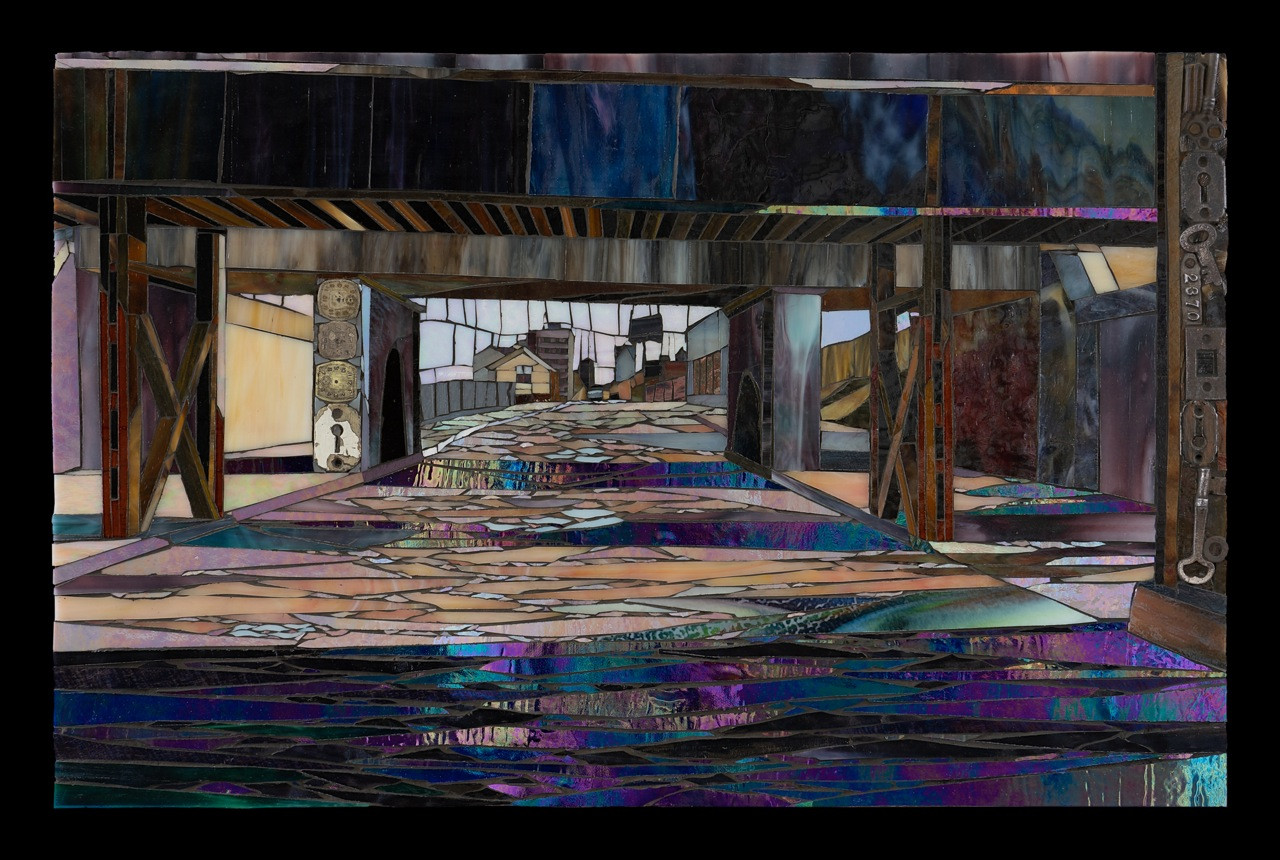
Stained glass mosaic artwork depicting an urban streetscape viewed through the dark structure of an overpass or bridge.
Artwork by Darcel Deneau

One Conversation

Neo was approaching graduation when his paintings and collage work caught Darcel’s attention. She could envision his ideas translated into another medium: glass. So she extended an invitation.

“I was excited when Darcel invited me to her studio, but I was also nervous,” Neo remembered. “Sometimes people say, ‘Come by sometime,’ but you don’t always know if they really mean it.”

The timing made the invitation even more significant. Graduation was approaching, and Neo was trying to determine what would come next. He wanted mentorship and people he could turn to as he began navigating life as a working artist.

“From the very first day I visited her studio, everything felt easy,” Neo said. “She was incredibly welcoming and generous.”

That first visit led to another, and then another. A professional connection became a creative partnership and, ultimately, a friendship.

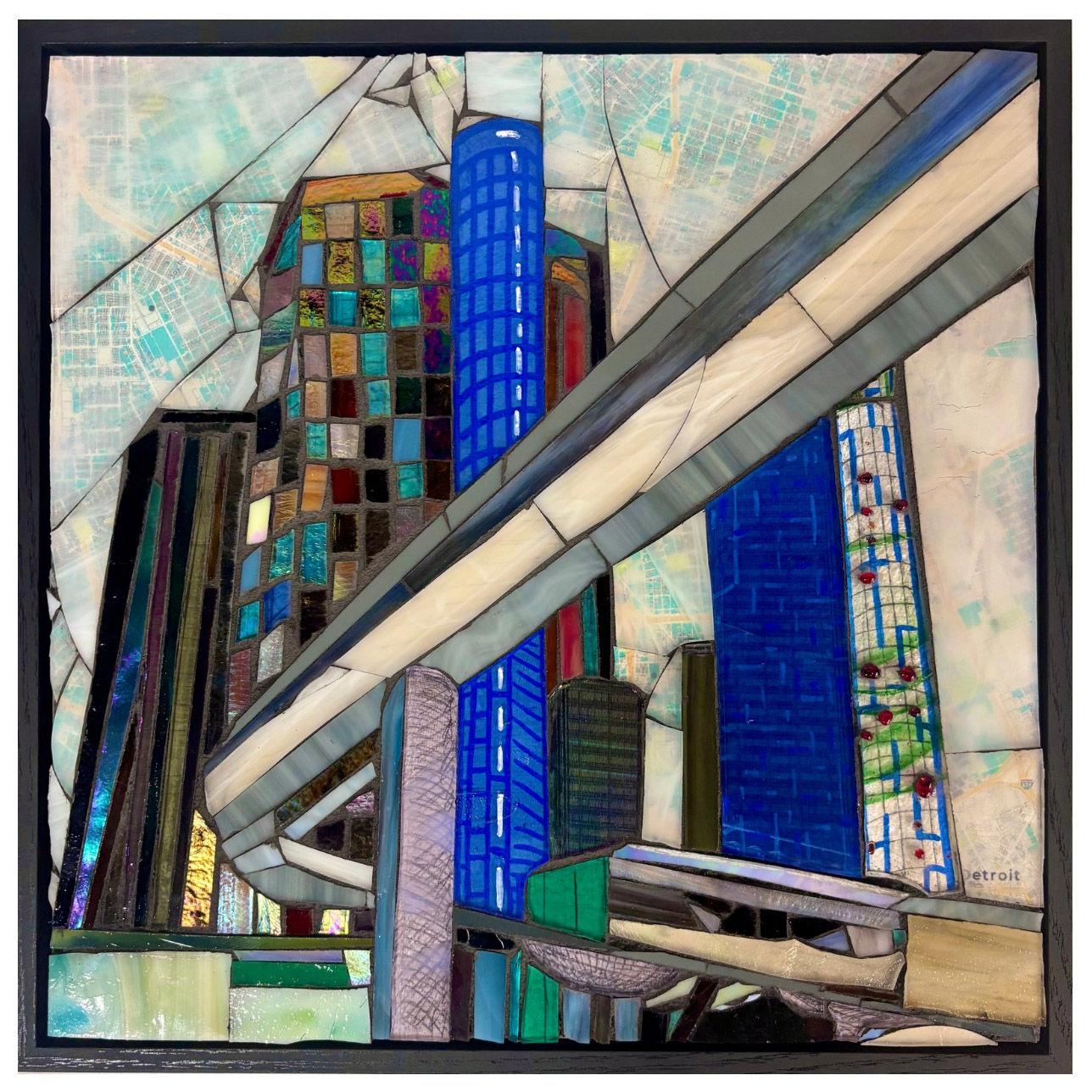
Artwork by Neo Hopkins

Seeing What’s Possible

During those early studio visits, Darcel introduced Neo to glass and taught him glass portraiture. As he explored the medium under her guidance, he began to see how it could complement his own artistic ideas.

“Darcel showed me possibilities in the medium that I hadn’t seen before,” Neo said.

What began as artistic instruction grew into an enduring mentorship. Darcel became someone Neo could call while navigating commissions or trying something new. When he needed his first studio space after graduation, she helped make that possible, too.

Today, the two artists work in the same building, exchanging ideas and continuing to learn from one another. Looking back, Neo can draw a remarkably straight line from that first invitation to where he is now.

“I probably wouldn’t have started working in glass without Darcel,” he said.

His career is growing in other ways, too. Neo works full time as a Brand Identity Coordinator for the Detroit Economic Growth Corporation while continuing to develop his studio practice, take commissions and pursue new creative opportunities.

People often describe mentorship as a one-way relationship, but Darcel believes both people grow through the experience.

“Neo inspires me just as much as I hope I’ve encouraged him,” she said.

If Denise Thomas could pick up the phone and call every single College for Creative Studies alum and tell them their alma mater appreciates them and is there for them, even long after they’ve obtained their degree, she says she would.

Both alumni and donor relations are top priorities for Thomas, who was appointed Vice President for Institutional Advancement in October 2025, shortly after former Vice President Tracy Muscat retired that summer. Through her new role, Thomas is committed to developing fundraising efforts that are tied to CCS’s mission and vision, and building up a sustainable community of alumni.

The last seven years have prepared Thomas for this VP role. In 2019, she joined Institutional Advancement as the Director of Campaigns and Major Gifts. She was excited to once again work alongside Muscat, whom she had worked for in a previous role and considers a strong fundraiser with a gift for connecting and empowering people.

“At CCS, I could see where I could really help move the bar, leveraging my experience to make a difference, and I knew I would have opportunities to contribute in meaninful ways,” Thomas says on why she came to the College. “I was going to work for an organization that is incredibly important to the Detroit community, and be able to make a difference.”

As CCS grappled with the Covid-19 pandemic that began just months after Thomas started her director position, she focused her attention on raising funds to secure the resources students needed for their studies, which was done through cultivating new and existing donor relationships.

Once Thomas began managing the alumni relations program, she knew it was time to transition from previous event-based fundraising efforts to more “mission- and vision-connected fundraising.” That involved identifying the College’s key events as well as new ones that could engage alumni and donors. The Institutional Advancement office also wanted to increase communications with alumni and donors.

“It’s about finding out who loves and believes in CCS, sharing the mission and vision, and finding out what problem we could solve together,” Thomas says, adding that at one point, the team met with every CCS Board of Trustees member via Zoom for their insights. “Philanthropy is not just about raising money; it’s building community, pride and a shared responsibility for where we’re going.”

These efforts proved successful. Thomas helped the team learn how to track alumni engagement through key areas, including interaction with their communications, volunteering, donations and event attendance. The Office also participated in the Council for Advancement and Support of Education’s (CASE) Alumni Engagement Survey in TK year(s). Thomas and the team learned CCS ranked 21%, higher than the international average for alumni engagement and higher than their peers.

Thomas also says the average open rate for their alumni e-newsletters tripled over time, going from around 13% to as high as 40%. And to continue strengthening the alumni network, Thomas and the Institutional Advancement team created a role dedicated to that work and hired alumna Lesley Mason in 2024.

As Thomas transitioned to the VP role, she recalls the experience being a seamless one, crediting her time working with Muscat and the solid team they built. She wants to continue fortifying those alumni and donor relationships that will support CCS for decades to come.

“When I think about my vision for these next couple of years, a lot of it is about continuing to build that pride and connection, that community of people that are going to have a shared responsibility for where CCS goes,” Thomas reiterates. “It will lead to philanthropy, but it’s really about building that community of our biggest fans.”

CCS alumna and Trustee Molly Valade and her husband Mark Valade established the Valade Family Endowed Chair in Studio Art & Craft.
The College for Creative Studies (CCS) is thrilled to announce a commitment to endow the position of Chair of Studio Art & Craft. The Valade Family Endowed Chair in Studio Art & Craft will ensure ongoing support for the College’s Studio Art & Craft Department, one of CCS’s most historic programs.

This transformative commitment reflects CCS alumna and Trustee Molly Valade’s deep connection to and belief in the legacy and importance of the Studio Art & Craft program, as well as her enduring belief in the power of a CCS education. Molly graduated from CCS’s Fine Arts program (now Studio Art & Craft) and has served on the College’s Board of Trustees since 2008, in addition to serving on CCS’s alumni council for 13 years. Over the years, her engagement with students, faculty, and staff has strengthened the program’s creative and academic environment, and this gift will ensure that impact continues into the future.

“Studio Art & Craft has been at the heart of CCS for more than a century,” said Don Tuski, President of the College for Creative Studies. “The establishment of this endowed chair will help ensure the department continues to evolve, inspire new generations of artists and makers, and expand opportunities for innovative studio practice well into the future.”

Founded in 1906, CCS, then The Society of Arts & Crafts, integrated rigorous courses with the progression of the art and design movements and world-class, contemporary exhibitions. Since its inception, the Studio Art & Craft program has carried on this tradition while continually building on this foundation and legacy. In 2026, the program is still rooted in traditional techniques, now enhanced by contemporary processes and innovative technologies. The department currently enrolls undergraduate students exploring the disciplines of Ceramics, Drawing, Fibers and Textiles, Fine Arts, Glass, Metalsmithing and Jewelry, Painting, Performance, Print Media, Sculpture, Digital Fabrication and Digital Media.

Under the leadership of Department Chair Valerie Jenkins, Studio Art & Craft continues to foster rigorous studio practice and distinct creative voices. The creation of the Valade Family Endowed Chair will further elevate that work, strengthening the program’s impact and vitality, ensuring its continued growth.

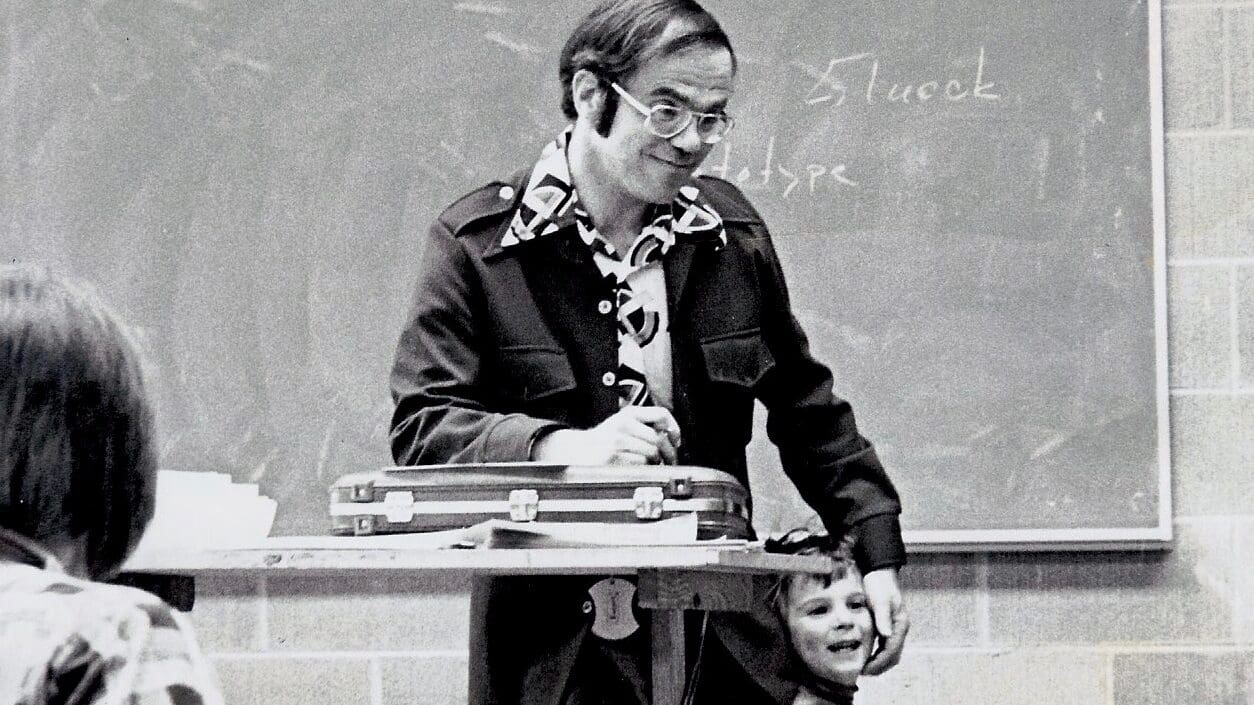
When Jim Goldwasser’s three-year-old son darted into a CCS classroom mid-lecture to wrap himself around his father’s leg, a photography student captured the moment: a laughing little boy, a delighted professor and a room full of smiling classmates taking in the unexpected happening. The photo lives on in the Goldwasser family album — an unscripted snapshot of the warmth and humanity that Professor James S. Goldwasser brought to the College for Creative Studies.

“He had a genuine interest in his students, a devotion to the classroom, and a deep appreciation for fine literature and well-crafted writing,” recalls his wife, Judy Goldwasser.

Making Writers Visible in an Art & Design College

For three decades, Goldwasser championed the idea that the same thinking process behind writing is not only essential to producing the visual arts, but it also has much in common with the very core of creative output.

As he once wrote in “Topic and Talk,” a publication of the Art School of the Society of Arts and Crafts (the forerunner of today’s College for Creative Studies):

“The sound created by walking on the parking lot cinders or the view from the window of a classroom on a spring day may prove to be the original catalyst that produces your photography, your painting or my short story or novel.”

After earning his MFA from the University of Iowa Writers’ Workshop — where he studied under literary greats such as Kurt Vonnegut, Nelson Algren and Richard Yates — he spent four years teaching English at Wayne State University before he joined CCS. He quickly became part of the CCS fabric: advising students, chairing the General Studies Department and various committees, and showing up for nearly every exhibition and event throughout Metro Detroit.

Creating a Living Tribute

When Jim passed away in 2000, his family, friends and colleagues came together to ensure his influence would continue. Their generosity established the James S. Goldwasser Award for Excellence in Writing, a lasting tribute to his belief in the power of language. Each spring, the award, presented at the CCS graduation and judged by CCS Liberal Arts faculty, recognizes two graduating seniors for exceptional fiction writing. It honors the rigor, empathy and imagination Jim brought to his teaching.

“The James S. Goldwasser Award celebrates Jim’s love of words, stories and students,” observes Dorene O’Brien, CCS creative writing instructor and longtime contest judge, who enjoyed many years as Jim’s colleague. “Jim would appreciate the award benefits that have remained constant throughout the past 25 years: validation of writing excellence; positive career impact; encouragement of innovation and risk-taking; and preservation of the uniquely human act of storytelling. Jim would have been proud of every hopeful entrant for this prestigious award.”

For the winners, it’s far more than the prize money and recognition. It’s a reminder that language, like design, can change how we view the world.

Scholarship in Action

This year, Illustration Senior Lily Jarnac captures the empathy and imagination Jim inspired in his classrooms with her winning story, “The Glowing Tree.” She describes the experience of winning the writing award as a moment of affirmation:

“I’m very thankful for this award. It is hard for me and for most students to comprehend that they deserve that title, that they are professional artists, writers, or photographers, no longer the children who spent their time admiring the world around them. The Goldwasser Award cemented this idea in my mind. It reminded me that I am allowed to take up space in the creative world, that I am capable enough, and that people might actually care about the words I put on a page. They are words so personal and private that I often forget there is someone out there who feels them as deeply as I do.”

For fellow award winner Fiona McCabe, Concept Design Senior, the recognition brought a new sense of confidence:

“I have never been a very confident person, always doubting myself and my writing skills. As much as I love writing, I always thought that I didn’t have what it takes to make compelling stories that people would be invested in. I wasn’t even going to apply to the Goldwasser writing competition until my professors, friends and family heavily encouraged me to do so. I’m an artist and designer, and I had begun to think that maybe that’s all I would ever be good at, that maybe I should just stay in my own lane. But when I was notified that I was a winner, it was an eye-opening moment for me. Winning this award has given me new confidence and shown me that I don’t have to stay in my lane of visual arts. I can move forward knowing I can expand outward and find success in another form of storytelling that I deeply love.”

Together, their reflections speak to the spirit of the award, encouraging students to trust their voices, take creative risks, and recognize the value of their own storytelling. The award continues the work Jim did best: noticing talent, encouraging creativity and helping writers feel seen.

A Legacy of Presence and Mentorship

Jim’s students have vivid memories of their times with him both in and outside of the classroom.

“When I think of Jim, it’s always with a smile,” observes Mary Haddad Raveane, Advertising Design BFA ’79, who took several of his classes. “He was an integral part of my education, and he had a way of connecting writing to art. His approach to writing in Composition 101 helped me see that writing quick essays was the equivalent of gesture poses in life drawing, and he used the art studio method of having students read each other’s essays and critique them in class. His American Novels class helped me develop a lifelong love of reading.”

“In addition to being a great teacher, Jim was a wonderful human being. He had a sparkling, dry wit that was contagious. He was just fun to be around. When we had evening classes, Jim would often join students and Fine Arts faculty members for picnic dinners. I always thought of him as the jovial parent in a group of adolescents.”

Looking Ahead

Now, as CCS marks the 25th anniversary of the James S. Goldwasser Award for Excellence in Writing, the College celebrates more than a competition. It celebrates a legacy — one that continues to nurture artists who write, writers who design and creatives who use words to see the world more clearly.

The award stands as a living tribute to Jim’s life and teaching — a reminder that words, when chosen with care, have the power to shape not only art, but lives.

For more information about establishing a scholarship or to learn more about the College for Creative Studies, please contact Katie Rusak at [email protected] or 313.664.7861.

Crystal Windham can still remember the day she decided to attend the College for Creative Studies (CCS).

“I was fortunate — I had excellent college options,” said Windham (Industrial Design ’94). “My parents said, ‘This is up to you. This is your decision where you want to go.’”

Since they’d saved for her and her brother to attend college, she hadn’t needed to base her choice on finances. Unlike other schools she was accepted to, CCS hadn’t offered an initial scholarship — although that support would come during the second semester of her freshman year.

Windham always realized what a gift her parents had given her, and she aimed to do the same for her children, both college students. But in 2025, the executive director of Global Industrial Design at General Motors went one step further — endowing a scholarship to give a talented student the opportunity to realize their dreams at CCS.

Besides the minimum gift requirement, Windham made an additional contribution so the endowment could begin distributing funds right away. She chose to do this with a retention scholarship, meaning it can be renewed for up to three years, helping CCS retain the student.

Windham felt strongly that the scholarship not fully cover tuition. This was partly inspired by her own work-study experience in the Transportation Design department, which changed the course of her studies — and her life.

She recalled how one day, Carl Olsen, the department chair, had watched her sketch a still life for homework. He’d asked, “Have you ever thought about drawing cars?”

When she replied that she hadn’t, Olsen had told her that both women and people of color were underrepresented in that design area. He’d then offered to pay for Windham to take an introduction to automotive drawing class to see if she liked it.

“I fell in love,” she said of automotive design. “It was a product that would impact the lives of so many people. I didn’t look back from then on.”

After being accepted into the program, Olsen found scholarship funds for Windham — but still, not a full ride. She acquired an internship her sophomore year with Ford Motor Co., and then with General Motors her junior year. GM put her right in the design studio where she learned about designing interiors and then, before graduation, offered her a full-time position.

Windham hopes her scholarship gives recipients a similar CCS experience. “It really does mimic what was offered to me to keep me going,” she says. “You have people communicating to you that you belong, you have the talent, and here’s a little to help you along the way.”

By focusing her scholarship on marginalized applicants, Windham hopes to continue diversifying her industry.

 “If we can help support more people of color, more women through this endowed scholarship to feed that pipeline, I think it’s a win-win for all”

“They don’t necessarily have to look exactly like me, but industries like to reflect their customer base — and we’re their customers” she said. Although establishing a scholarship had been in the back of Windham’s mind for years, she never considered it a real possibility until a peer shared about endowed scholarships. Then serendipitously, a family member with personal knowledge about endowments reviewed the process and encouraged her to “just get started.”

“It’s so meaningful to get to a point in life where I could do it, and I have my husband, who supports me,” she said. “My children support me. I’ve talked to them, and they understand the importance of this and why I have allocated some of our funds to do that.”

Windham’s family also understands the impact CCS has had on her — something she hasn’t taken for granted since day one. “I still believe choosing CCS for an art-based career was one of the best decisions I made in my life,” she said.

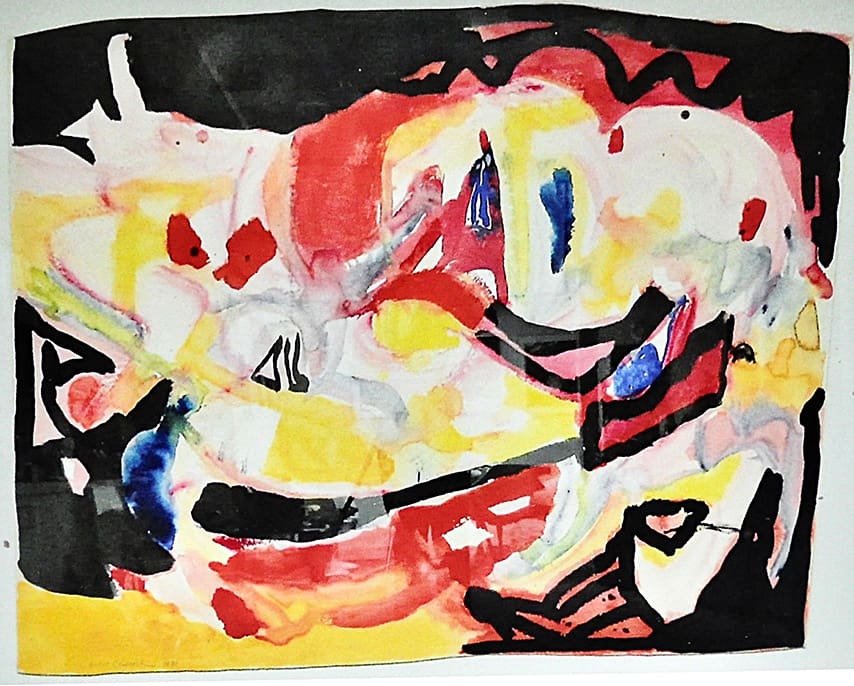
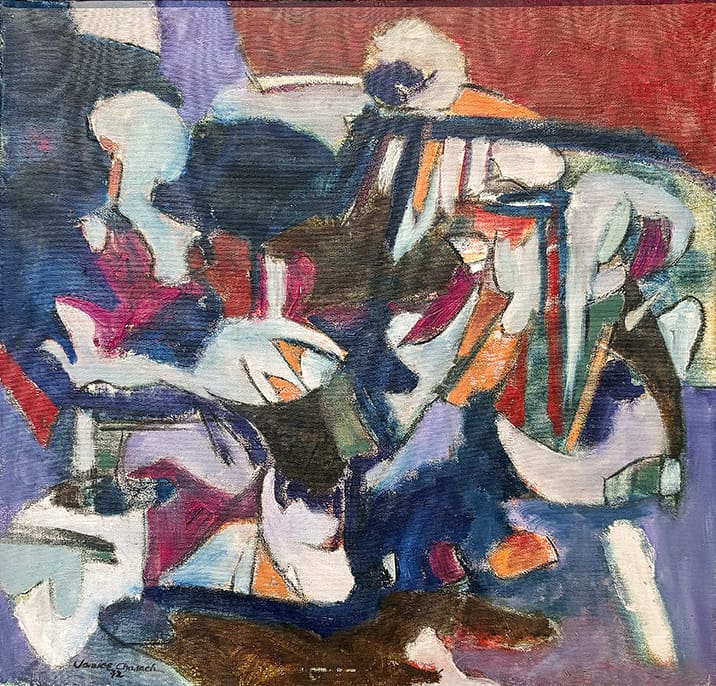
When artist Janice Charach (’73 Advertising Design) arrived at the College for Creative Studies, she quickly found what so many CCS students discover: a place where creativity, curiosity and belonging converge. Her years at the College shaped her as both an artist and a person. Janice immersed herself in studio courses, experimenting with materials and ideas that would later define her work. After earning her BFA, she continued to paint, exhibit and study, building a life devoted to artistic expression. When Janice passed away in 1989, her family found comfort in the world that had always connected them – art. Through the Manat Foundation, established by her parents, Natalie and Manny Charach, they began creating spaces where art could uplift others, including the Janice Charach Gallery in West Bloomfield. What began as an act of remembrance became a lifelong family commitment to celebrating creativity as a force for healing, connection and joy.

This year, that legacy has come full circle as the Manat Foundation has made a special gift to CCS to honor Janice’s life and her connection to the College, establishing two lasting initiatives: the Charach Family Galleries (formerly Center Galleries) and the Janice Charach Endowed Scholarship for students in the Studio Art & Craft department.

Honoring a Life Through Art

“CCS was where Janice’s artistic journey began,” said one of Charach’s cousins.

“Supporting today’s students and the galleries that showcase their work feels like the most meaningful way to honor her.”

The newly named Charach Family Galleries, located in the Manoogian Visual Resource Center, will continue to serve as a vital exhibition space for CCS students, faculty, alumni and visiting artists. The Manat Foundation’s gift provides immediate and ongoing support to enhance lighting, accessibility and the overall visitor experience. An endowed fund will also ensure the galleries’ long-term sustainability.

The Charach family’s decision to support CCS is rooted in legacy and love. The galleries stand as a tribute to Janice and a living space for creative exchange – a place where art continues to inspire connection, conversation and community.

A Family Legacy of Generosity

The story of the Manat Foundation begins with Natalie and Manny Charach, whom their nieces describe as “extraordinary ordinary people.” First-generation Americans of Eastern European Jewish families who put down roots in Detroit, they built their lives through hard work, perseverance and an unwavering belief in helping others.

Manny, a World War II veteran decorated for his service in France, and Natalie, who began working at 13 to help support her family, carried their early experiences of resilience into a lifetime of philanthropy. They founded the Manat Foundation in 1970, naming it for their shared initials, and spent the next five decades supporting causes close to their hearts: children’s health, education, veterans’ services and the arts.

“Natalie and Manny believed their true legacy was their philanthropy,” said their nieces.

“They taught all of us that giving back is both a privilege and a responsibility. We are proud to continue their work in ways that reflect who they were and what they valued.”

“This scholarship will empower future artists to take creative risks and explore their craft with confidence,” said Valerie Jenkins, Chair of the Studio Art & Craft department. “The Charach family’s generosity sustains the heart of CCS: our students and the spaces where they learn, create and share their voices.”

Speaking on behalf of the College, CCS President Don Tuski shared his gratitude: “We are deeply grateful to the Charach family and the Manat Foundation for this extraordinary gift. Their generosity honors Janice’s creative spirit while shaping the future of CCS in profoundly meaningful ways. By investing in both scholarships and the reimagination of our galleries, the Charach family is ensuring that creativity continues to thrive—opening doors for emerging artists and enriching the spaces where our community gathers to experience art. This gift embodies the very heart of our mission and will inspire generations to come.”

A Legacy That Lives On

Today, the Manat Foundation completes the philanthropic mission of its founders. These gifts reflect the family’s shared belief that creativity and compassion are deeply intertwined.

Through this partnership with CCS, that belief finds new life. The Charach Family Galleries and the Janice Charach Endowed Scholarship will ensure that future generations of artists – much like Janice herself – can learn, create and grow in an environment that values imagination, generosity and purpose.

Within the walls of the galleries that now bear her family’s name, Janice’s spirit endures. Her art, and the legacy it inspired, continue to remind us that creativity has the power to connect, to comfort and to carry us forward.

Photo Credit: Elayne Gross

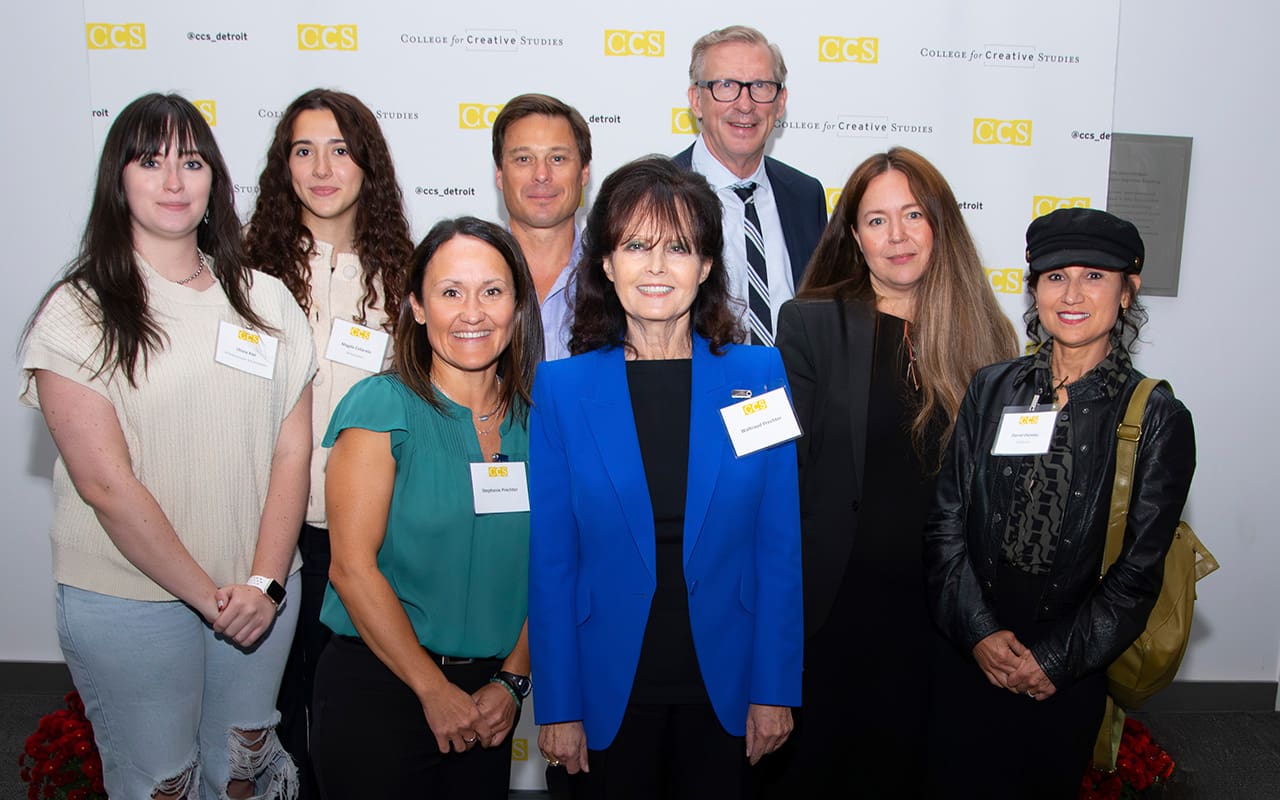
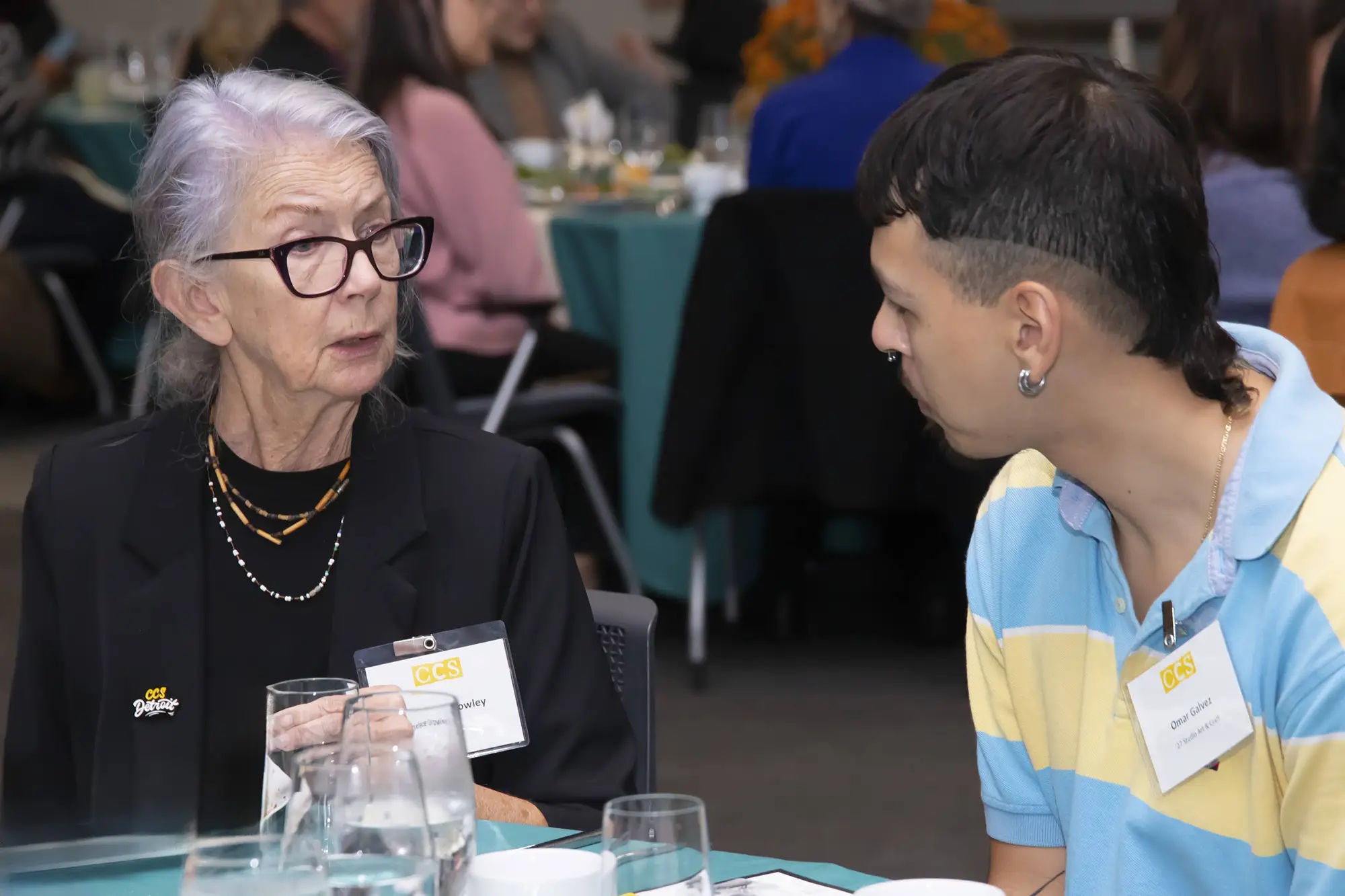
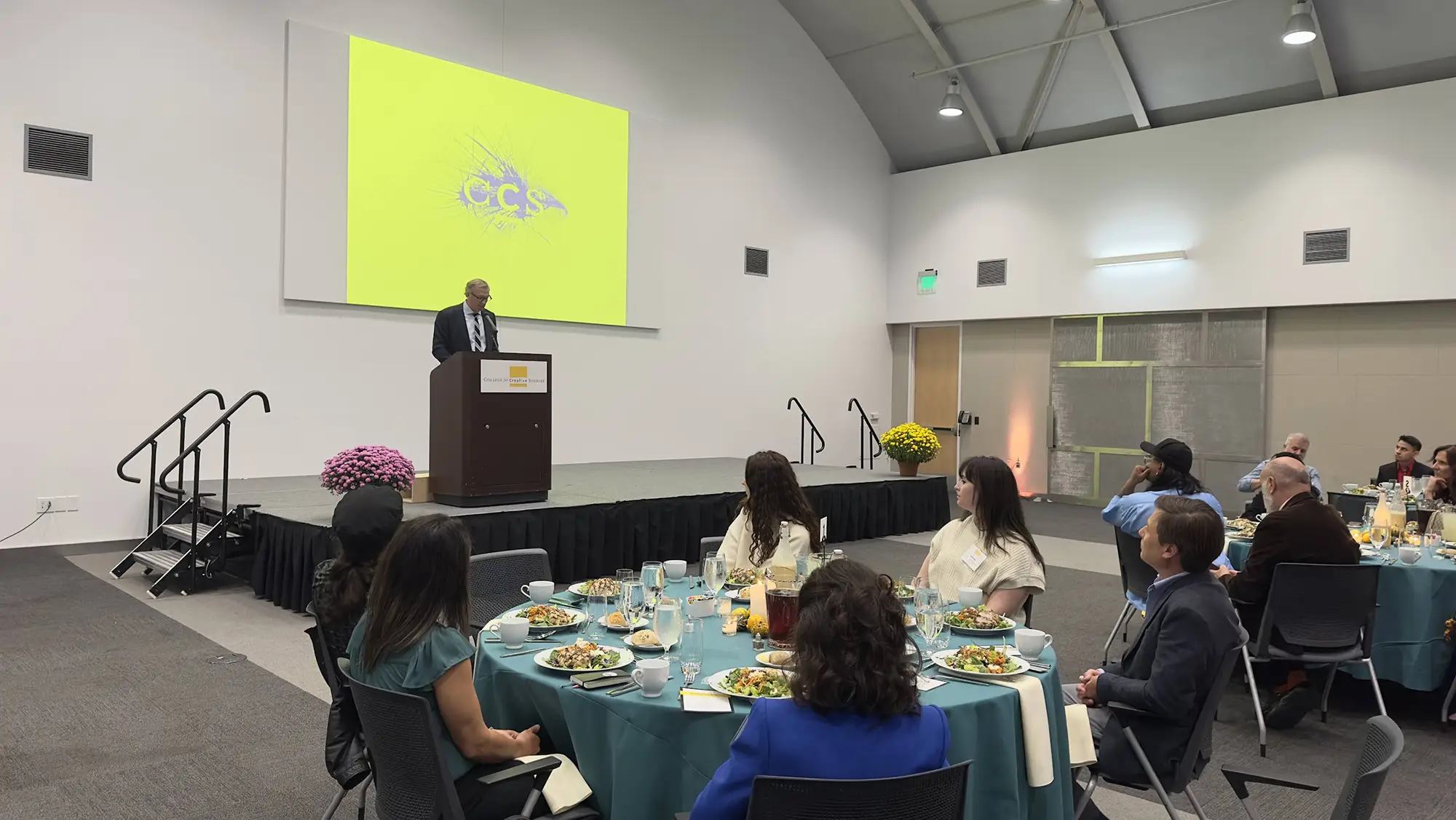
The College for Creative Studies welcomed donors, trustees, alumni, students, faculty and friends to the second annual Donor Appreciation Scholarship Celebration Luncheon on October 7, in the General Motors Auditorium at the A. Alfred Taubman Center for Design Education. The event honored the generosity of those who make scholarships possible and celebrated the creative futures those investments help shape.

Serving as emcee, Katie Rusak, Director of Advancement Operations, opened the program by thanking attendees for their belief in CCS students and in the power of creativity. “This event is about connection,” she said. “It’s a celebration of generosity in action, and of the students whose dreams are made possible because of it.”

A Celebration of Commitment and Creativity

Trustee Jody Ingle (’08, Industrial & Product Design) welcomed guests on behalf of the CCS Board of Trustees, recognizing the importance of scholarships and the community of support behind every student.

“Any graduate of CCS will attest, the journey to become a creative professional is not for the faint of heart,” Ingle said. “Every day, and very likely every night, students at CCS work. They compete, collaborate and create in a relentless pursuit to express their ideas, to push the boundaries and ultimately make the world a better place.”

His words set the tone for the afternoon, one of shared purpose and pride in CCS’ creative community.

President Don Tuski followed with remarks highlighting the enduring impact of donor generosity. “This luncheon captures what our College is all about, our students, our alumni, our faculty, and the generosity of donors and partners who believe in the power of creativity,” he said.

Tuski noted that 42 percent of CCS students graduate with no debt, crediting scholarships for empowering them to take creative risks and pursue careers with confidence. He also shared that emergency retention scholarships recently helped 73 students stay enrolled or graduate, a testament to how donor support changes lives in real time.

“Our graduates are shaping culture and industry at every level, from Detroit studios to Nike, DreamWorks and beyond,” Tuski said. “Your support makes those stories possible.”

Honoring the Legacy of Heinz C. Prechter

The luncheon also recognized a transformational moment in CCS’ philanthropic story. In 2024, Waltraud “Wally” Prechter made a $2 million endowed gift in memory of her late husband, Heinz C. Prechter, creating three endowed scholarships that will support generations of CCS students.

Wally and her daughter Stephanie Prechter spoke movingly about Heinz’s journey, from his early years in Germany to founding the American Sunroof Corporation (ASC) and revolutionizing the automotive industry.

“Heinz was a gifted innovator who believed in continuous improvement and the power of opportunity,” Wally shared. Stephanie reflected on her father’s creativity, faith and resilience, and on the family’s ongoing work to advance bipolar research at the University of Michigan. “We see his legacy living on through these scholarships,” she said. “It’s a gift for us to give back in his name.”

Guests were invited to explore original ASC marketing booklets on display near the entrance and to visit the Designing Detroit exhibition in the Valade Gallery, where a moonroof prototype and motor designed by Heinz is on loan from the Detroit Historical Museum.

Stories of Impact

The luncheon also featured reflections from two scholarship recipients whose stories illustrated how philanthropy directly shapes student success.

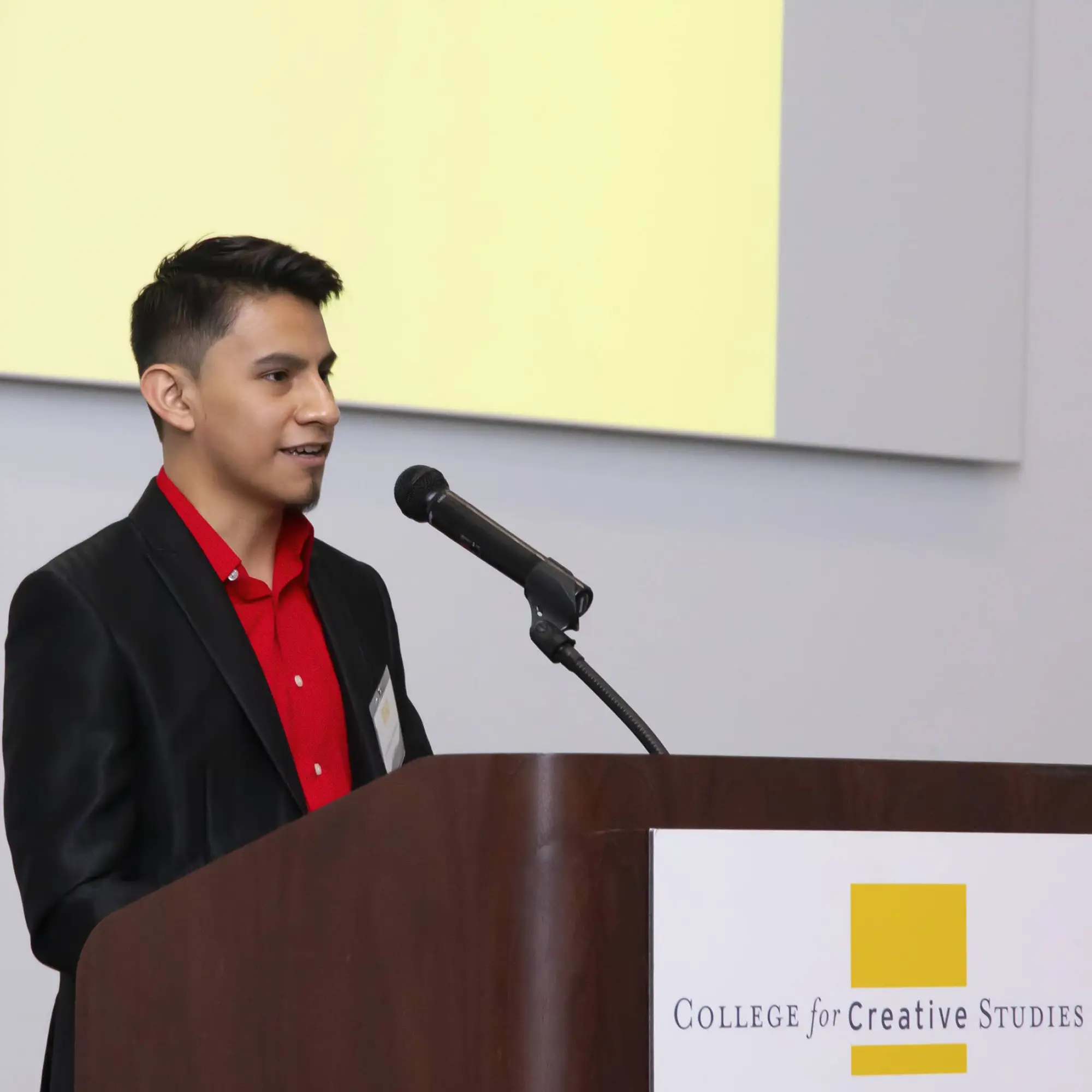
Chris Romero Hernandez (’27, Illustration), recipient of the Gilbert Family Foundation Endowed Scholarship, spoke about how the scholarship has lifted financial pressure and given him the confidence to pursue his dream of working in the entertainment industry.

“Receiving this scholarship has had one of the most significant financial impacts on my life,” Hernandez said. “It allowed me to focus more on my studies and less on worrying about how I would pay for college. With this scholarship, I not only gained financial assistance, but also received personal support and confidence in my work.”

He shared that the support has inspired him to aim higher: “It’s been my life’s dream to work for the Walt Disney Company as a concept artist. This scholarship was my extra push toward that dream – it was the boost I needed to succeed.”

The Gilbert Family Foundation, a transformational partner for both CCS and the city of Detroit, has invested deeply in creating multi-year scholarships that remove barriers and open doors for Detroit students to thrive in art and design. Their ongoing support has directly impacted students like Hernandez, whose talent and drive embody the mission of both organizations.

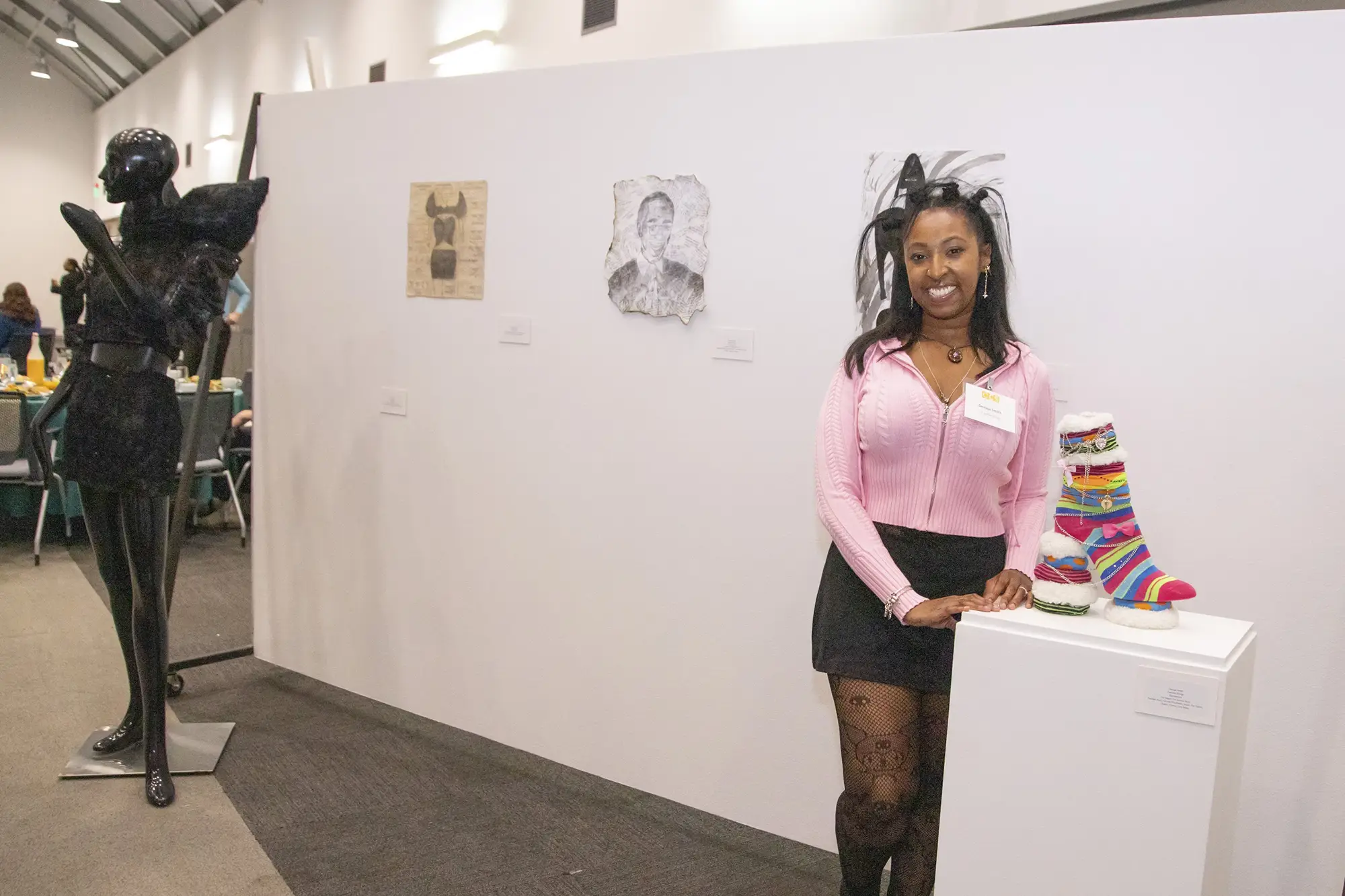
Denaja Smith (’26, Fashion Design), recipient of the Anna Sui Endowed Scholarship, shared her journey of returning to school while working full-time and raising her son.

“Being chosen for this scholarship made me feel seen,” she said. “It gave me the freedom to focus on my art, and it inspired me to want to give back one day, too.”

She reflected on how CCS has shaped her artistic identity, saying the experience helped her embrace her creativity in new ways and gain confidence as both a designer and an artist. The Anna Sui Endowed Scholarship was established to ensure that future fashion design students at CCS can pursue their education without financial barriers. Created by celebrated Detroit-born designer Anna Sui, the scholarship reflects her commitment to nurturing new voices in the field and expanding access to design education in her hometown.

The Power of Generosity

In closing, Rusak reflected on the spirit of the day, a gathering that linked legacy, philanthropy and creative ambition. “Your belief in our students empowers them to believe in themselves,” she said. “And their creativity reminds us why generosity matters, because it shapes not just careers, but the world we share.”

The afternoon concluded with conversation, connection and photos – a celebration of creativity sustained by generosity.

For more information about establishing a scholarship or supporting CCS students, please contact Katie Rusak at [email protected] or 313.664.7861. View the full photo gallery from the event here.

When Dick Ruzzin stepped onto the CCS campus more than a decade ago to support a design project, he had no idea it would spark a lasting connection with the College — or that it would eventually inspire him to create the Dick Ruzzin Endowed Scholarship.

Ruzzin, a Michigan State graduate and celebrated automotive designer with decades at General Motors, was invited to help facilitate a collaborative studio between CCS and a Chinese wheel company exploring U.S. design partnerships. His involvement quickly grew. “I thought I was just going to observe a student review,” he recalled with a smile. “But the instructor had me jump right in.”

That moment — and what happened next — would stay with him.

“I saw a young guy from Detroit rush in to set up his project. He’d been working and couldn’t take time off.

I thought here’s someone trying so hard — that’s who I want to help.”

Years later, when he considered giving back, that memory became the driving force.

“The students that I want to help are the ones who can’t afford it when they get close to graduation. The ones who get down to the end and don’t have enough money. That was the inspiration, where the idea came from.”

Creating Access for Talent That Belongs

With the help of CCS’s advancement staff, Ruzzin established what began as an annual scholarship and later evolved into a permanent endowed fund. His intent was clear: to support committed, creative students who might otherwise be forced to leave their education behind.

Though not a CCS alum himself, Ruzzin has long admired the College’s impact. “Every time I visit campus, I see something that jumps me into the future. You take a step forward as a designer,” he said. “It’s amazing.”

Scholarship in Action: Martina’s Story

One of the students supported by Ruzzin’s gift was Martina Lasku, a Communication Design major in the Class of ’25.

In 2023, Martina’s family experienced a devastating house fire. “Suddenly, my future at CCS was uncertain,” she said. “With so many unexpected expenses, I wasn’t sure if I’d be able to afford to stay in school.”

Receiving the Dick Ruzzin Endowed Scholarship made all the difference.

“Because of that support, I was able to focus on what really mattered — rebuilding, staying in school, and working toward my dream of becoming a Creative Director.”

Martina graduated from CCS in spring 2025 and has shared her story in the hopes of inspiring others.

Ruzzin, upon hearing it, simply said:

“That’s great. That’s exactly the kind of student I had in mind.”

www.ccsdetroit.edu/wp-content/uploads/2025/09/Martina.jpg Martina Lasku

https://www.ccsdetroit.edu/wp-content/uploads/2025/09/IMG_3180.gif https://www.ccsdetroit.edu/wp-content/uploads/2025/09/IMG_3181.gif https://www.ccsdetroit.edu/wp-content/uploads/2025/09/IMG_3182.jpg https://www.ccsdetroit.edu/wp-content/uploads/2025/09/IMG_3179.jpeg www.ccsdetroit.edu/wp-content/uploads/2025/09/IMG_3183.jpg Martina Lasku’s Work

A Legacy of Generosity and Mentorship

Over the years, Ruzzin has mentored numerous young designers, both formally and informally — often encouraging them to pursue their creative dreams against the odds. He believes in the power of sharing knowledge, asking for help, and staying connected through community.

“There’s nothing more fun to me than meeting and talking with another designer,” he said. “You share a tremendous history. You understand each other.”

He also believes authenticity is more important than ever.

“We’re inundated with information, and a lot of it’s phony. Authenticity matters — it’s everything.”

Looking Ahead

From his work on iconic vehicles at GM to authoring a book on design leadership, Dick Ruzzin has spent a lifetime shaping the creative world. But what gives him joy now is helping students launch their own journeys.

“These young people are launching their lives. If I can support someone who deserves to be there — who just needs that extra help — I’m glad to do it.”

For more information about establishing a scholarship or to learn more about the College for Creative Studies, please contact Katie Rusak at [email protected] or 313.664.7861.

When colleagues think of Tracy Muscat, Vice President for Institutional Advancement at the College for Creative Studies (CCS), they think of her innate ability to form meaningful connections and partnerships between students, alumni, faculty, staff and donors. They are fond of her commitment to the students and how she prioritizes their experience. They know that she works diligently to engage the College’s alumni community, making sure graduates know they will always have a home at CCS. And colleagues know that Muscat is dedicated to intentional philanthropy and making sure donors know their impact is felt throughout the entire institution.

Leader

“If you live in this community and you love it, CCS is no stranger,” Muscat says. “The stars aligned, and I said, ‘This is what I want to do.’” – Tracy Muscat

As Muscat prepares for her retirement from CCS, effective Aug. 22, 2025, all of this and more will be missed by the CCS community. She has served in her VP role since 2019, leading the Institutional Advancement office, and the broader College, to new heights.

Muscat’s career began almost 35 years ago in Detroit, and she has since held high-level roles in media, higher education and healthcare. She worked at organizations and institutions including Detroit Public Television, Wayne State University, Hospice of Michigan and University of Michigan Health.

But Muscat will tell you she doesn’t call these positions “roles” or consider them a “career.” Rather, she’s just been “having fun” for nearly three-and-a-half decades.

Muscat knew she wanted her work to come full circle in Detroit, the city she considers home. So, when the opportunity came six years ago to join CCS’s Institutional Advancement office, she was eager to take it. “If you live in this community and you love it, CCS is no stranger,” Muscat says. “The stars aligned, and I said, ‘This is what I want to do.’”

Muscat led the College’s fundraising efforts and cultivated alumni and donor relations. She and her team in the Institutional Advancement office worked closely with the Board of Trustees, senior administration, faculty and staff to achieve CCS’s strategic goals.

As with any good incoming leader, Muscat spent her early days in the role just listening, observing and getting to know stakeholders. “I was thinking, ‘What are the needs of this institution? What’s our case for support?’” she says. “We have incredible alumni and talent that work here; incredible students that want to come be that next generation. My role is helping to connect all those dots to meet the needs and move us forward.”

www.ccsdetroit.edu/wp-content/uploads/2025/09/KONeill_CCSNoelNight23-74-scaled.jpg

Muscat believed the keys to success were the wonderful teams that kept everything going, great constituents, volunteer leaders who are passionate about the work and having a clear vision. And those around Muscat took notice of her commitment to this mindset. From the start, Jim Nicholson, Chair of CCS’s Board of Trustees, admired Muscat’s ability to understand the core needs of running a development department, and says she did a great job professionalizing the organization.

“We were looking for someone who could have great personal relationships; we’d found that was a successful way to think through the fundraising process,” Nicholson says, reflecting on the hiring process for the VP role.

Nicholson joined the College’s Board of Trustees in 2007 and became Chairman of the Board in 2019. Not long after being appointed Chair, Nicholson interviewed Muscat for the role within the Institutional Advancement Office. The Board of Trustees approves Muscat’s budget each year, identifying which projects would be supported through CCS or through philanthropy. Nicholson says Muscat attended every board meeting and he enjoyed working alongside her to strategically determine how philanthropy could support the institution’s goals as well as how the board could effectively communicate CCS’s value.

“What Tracy brought is this knowledge of how a department should be organized and what data and process it should follow, so that it could measure itself effectively and explain what it was doing — not only to the Board of Directors, but also to its other constituents.”

Champion

CCS President Don Tuski commends Muscat for the new data collection and organization systems she’s implemented for the Institutional Advancement office. He applauded her engagement with major donors and how she empowered her colleagues to be stewards and champions of the College and its fundraising efforts.

“She really transformed our fundraising to raise more money and to focus on the right things: important, strategic donor relationships,” Tuski says. “There’s an art, science and thoughtfulness to fundraising, to putting it all together, and Tracy and her team are very good at that. It’s been really great to work with Tracy and her team the last six years.”

Above all, Muscat believes philanthropy is simply a conversation over time – and that gifts of all sizes matter. It was important to her for the College to transition from event-based, transactional philanthropy to transformative, sustainable philanthropy. There are a few pivotal moments during her tenure where this transition was evident.

In 2023, in celebration of the iconic designer and former boutique owner Linda Dresner, CCS announced its first endowed chair position, the Linda Dresner Chair in Fashion Design. Aki Choklat, renowned footwear designer and the founding chair of the College’s Fashion Design program, was given this distinction. Through this role, Muscat says Choklat is able to give more scholarships and opportunities to students. “Scholarship dollars have increased over the years by focusing on initiatives and programming that directly impact the students most,” she says.

www.ccsdetroit.edu/wp-content/uploads/2025/09/IMG_9536.jpg

In Studio Art & Craft, Muscat facilitated the stewardship between the department’s chair Valerie Jenkins and Molly Valade, a CCS alum and Board of Trustees member. The esteemed Valade family made an endowed gift to the College and the Valade Scholars were born. Through this award, each year, one rising sophomore in the Studio Art & Craft department receives a $50,000 scholarship to complete their education at CCS.

And when the College was in the throes of the pandemic-induced lockdown, it was the efforts of Muscat, her team and the Board that secured the virtual infrastructure students needed for remote and asynchronous work — an effort that was fully funded by philanthropy.

“Relationships are built over time. Philanthropy and fundraising are not about going in and asking for a gift,” Muscat says of what makes successful donor support. “It’s about listening, being your authentic self, listening to what’s important to that family or person, the impact they want to make and following them over time, and knowing when’s the right time to have a natural gift conversation. But also having that vision at the top, so you can align donor interests with the needs of an organization.”

Connector

Alumni relations is another area that Muscat equally poured her heart into as the Vice President for Institutional Advancement.

She and her team worked diligently to engage CCS grads in ways that felt meaningful to them, beyond just inviting them to events and encouraging them to make gifts. Whether someone was part of the 7,277 alumni who reside in Metro Detroit, or the additional 4,600-plus alumni that reside worldwide, Muscat and her team worked closely with the Alumni Council to create “an opportunity for all alumni to connect, share and celebrate the CCS community,” as the Council’s Strategic Plan outlines.

For Muscat, this meant more meetups for alumni to expand their network, additional free or low-cost educational opportunities to participate in, and for the Council to go directly to the communities that alumni are in, listening to their stories and connecting them back to the College.

These efforts proved successful, as alumni engagement increased from 15 to 21% under Muscat’s tenure, outperforming peer institutions. This includes growth in volunteer participation, donations, event engagement and communications metrics, based on best practices and benchmarking data set by the Council for the Advancement and Support of Education.

www.ccsdetroit.edu/wp-content/uploads/2025/09/DSC_6361-scaled.jpg

“She’s really good at forming individual relationships and making individual connections,” says Darcel Deneau, CCS alum and President of the Alumni Council. Deneau adds that Muscat provides a cheerful environment for the Council meetings and intently listens to each member’s ideas. Beyond that, Muscat will remember personal details you may share, from your child’s name to a specific trip you went on. “It’s that individual contact that makes her so special and makes you feel like she is your friend, in a genuine kind of way.”

Those genuine connections Muscat formed with students, colleagues, donors and alumni are what she’ll miss most as she closes this chapter of her life. She knows the Institutional Advancement office is more than capable of continuing the great work that they’ve started.

“When I was younger, I asked my dad, ‘How do you know if you’ve done a good job?’” Muscat says. “And he would always say, ‘You know you’ve done a good job when someone else comes in right behind you or alongside you, and can pick up where you left off and make it even better.’”

“I hope that I’ve helped in my little piece along the way. We have brought so many people into this conversation and in the collaborations. I hope my dad would say, ‘Good job, Tracy. You did your job, and someone came next to you and is going to pick it up and make it even better.’”

“There’s an art, science and thoughtfulness to fundraising, to putting it all together, and Tracy and her team are very good at that. It’s been really great to work with Tracy and her team the last six years.” – Don Tuski, CCS President