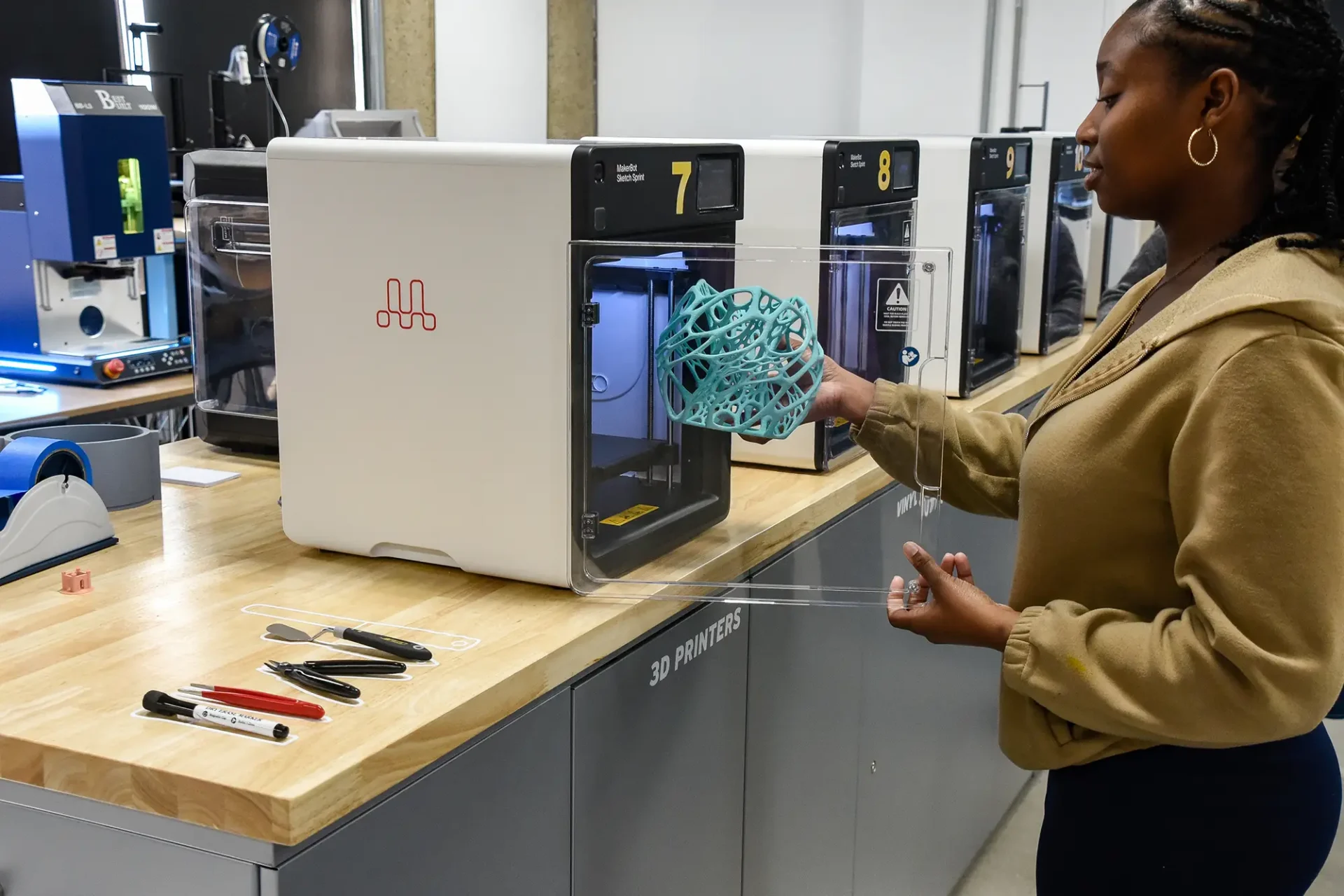
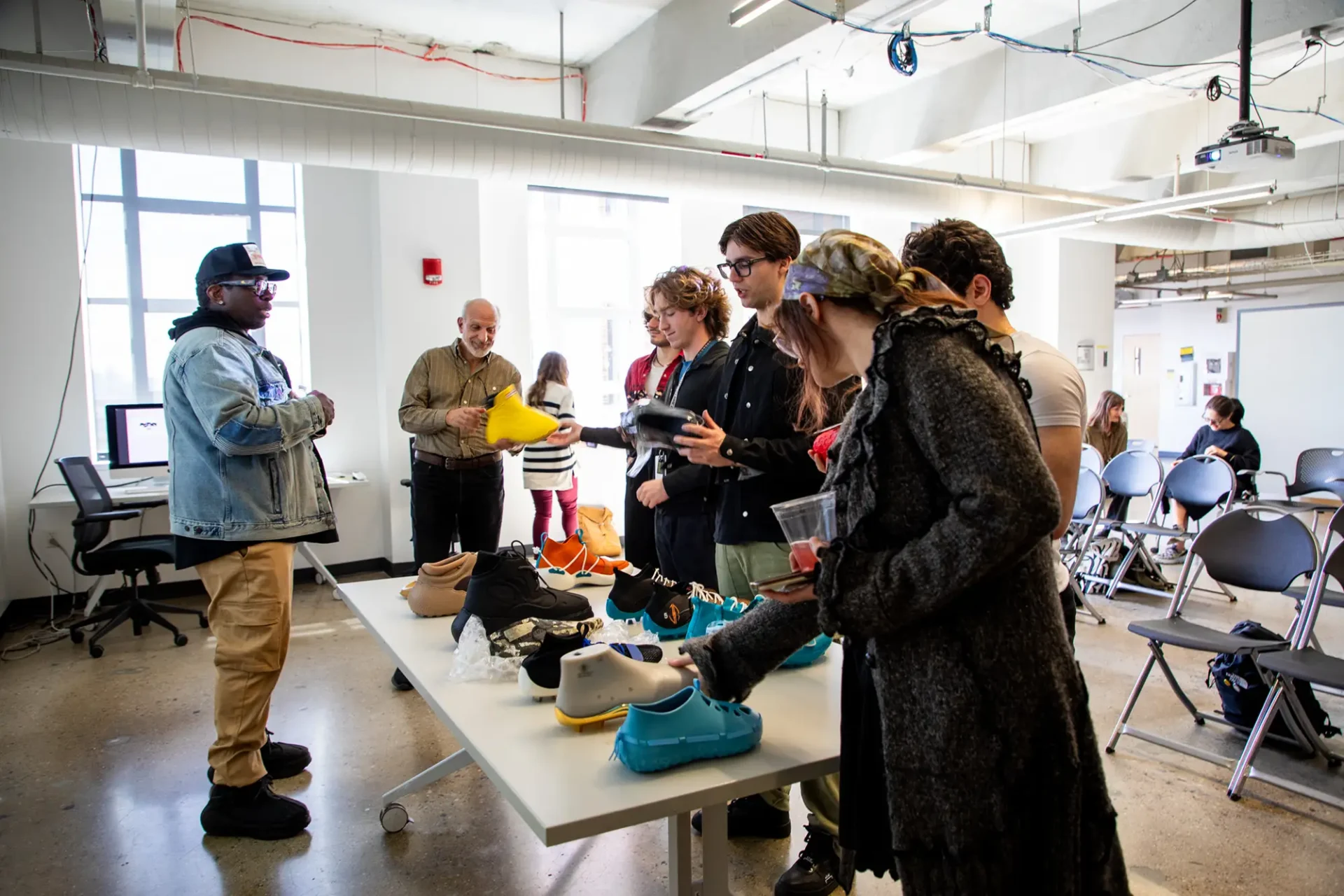
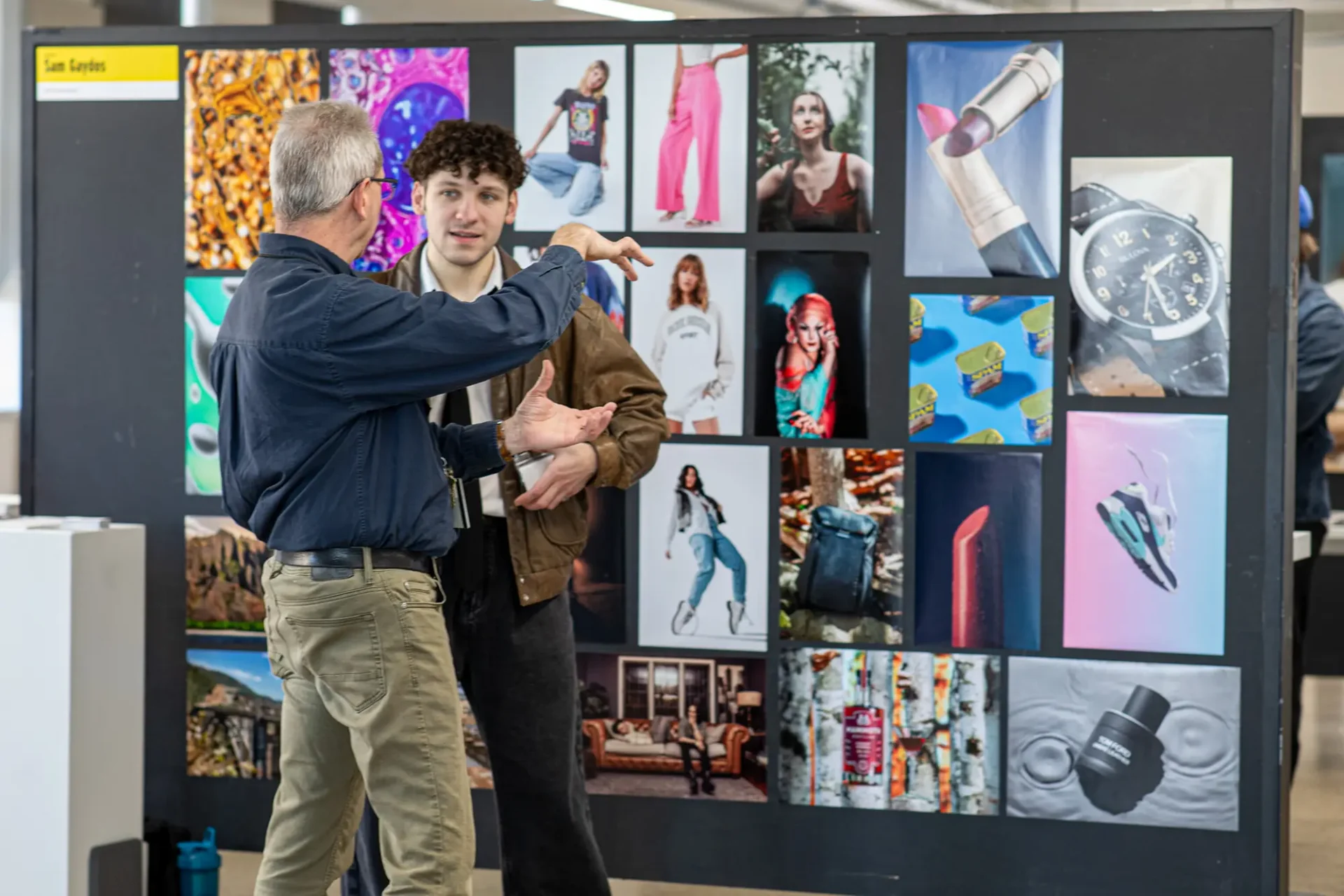
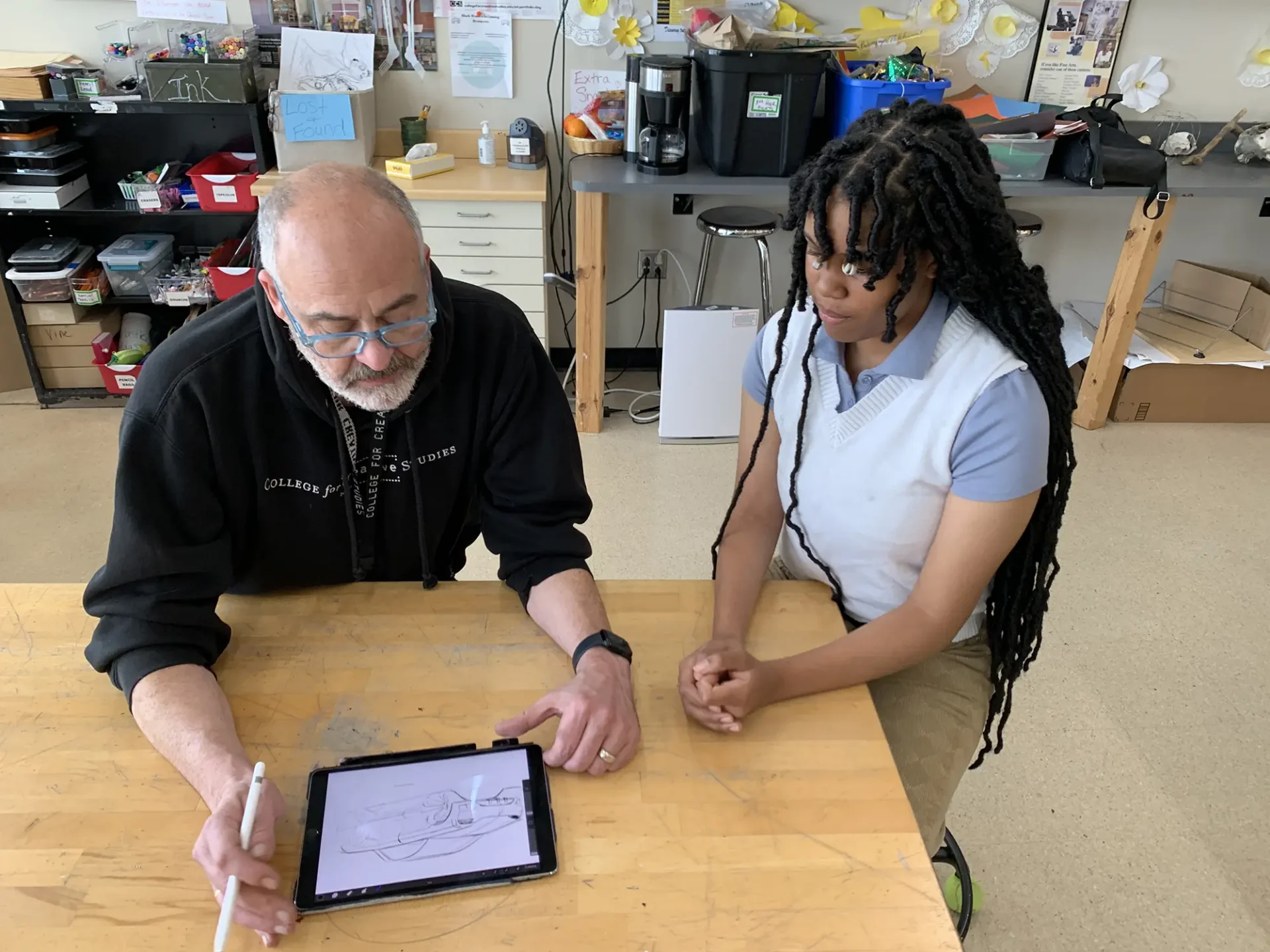
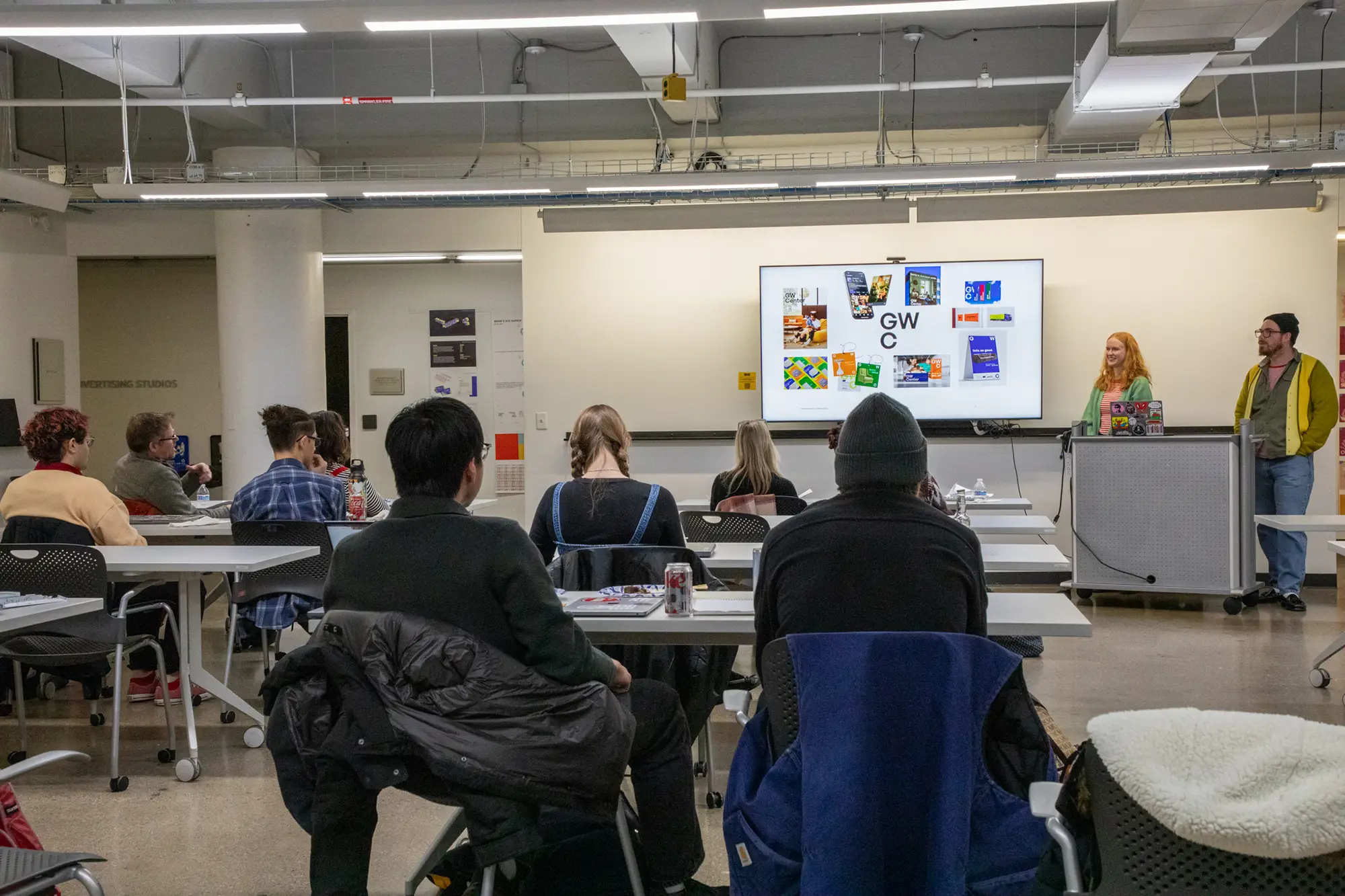
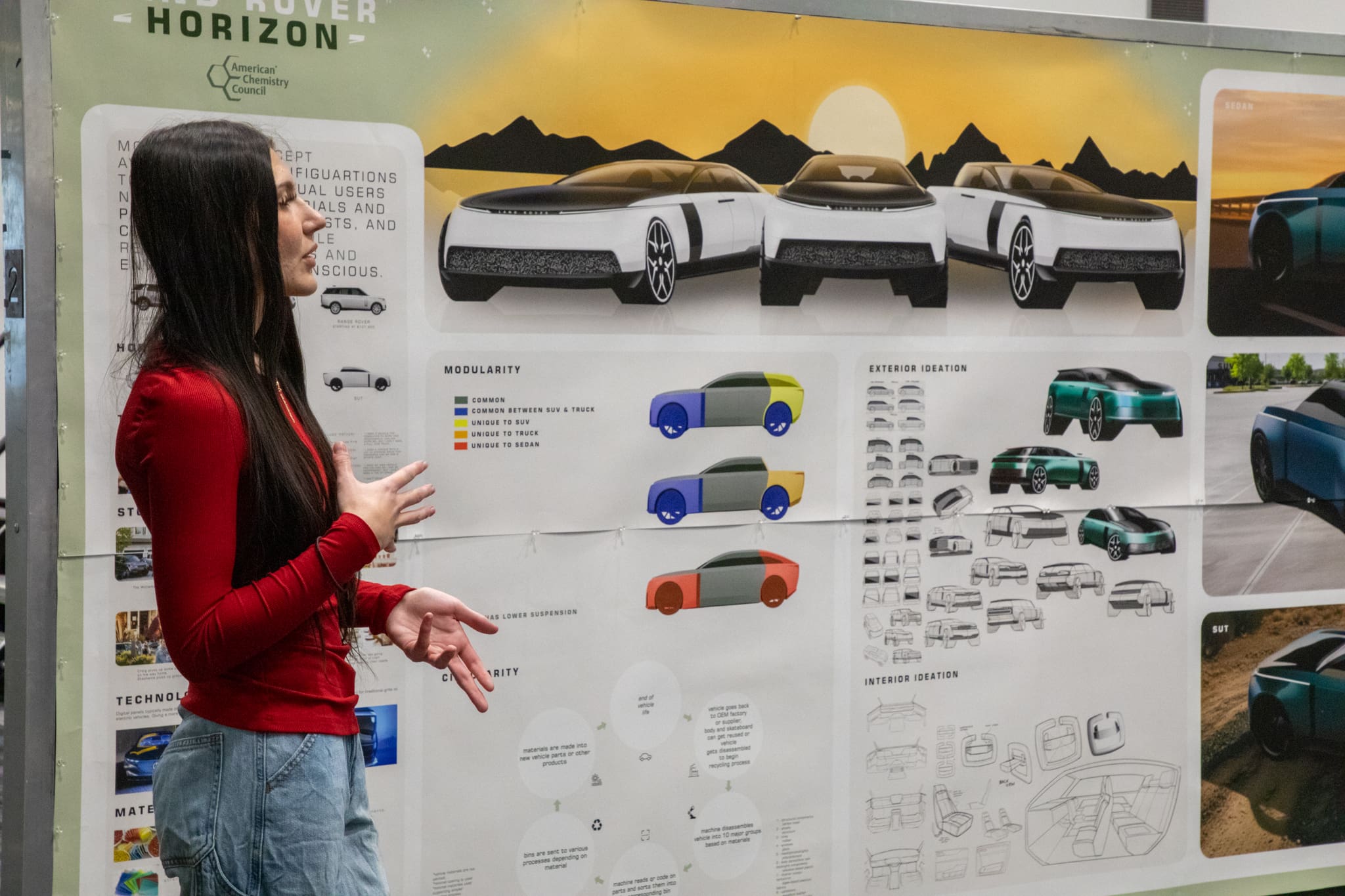
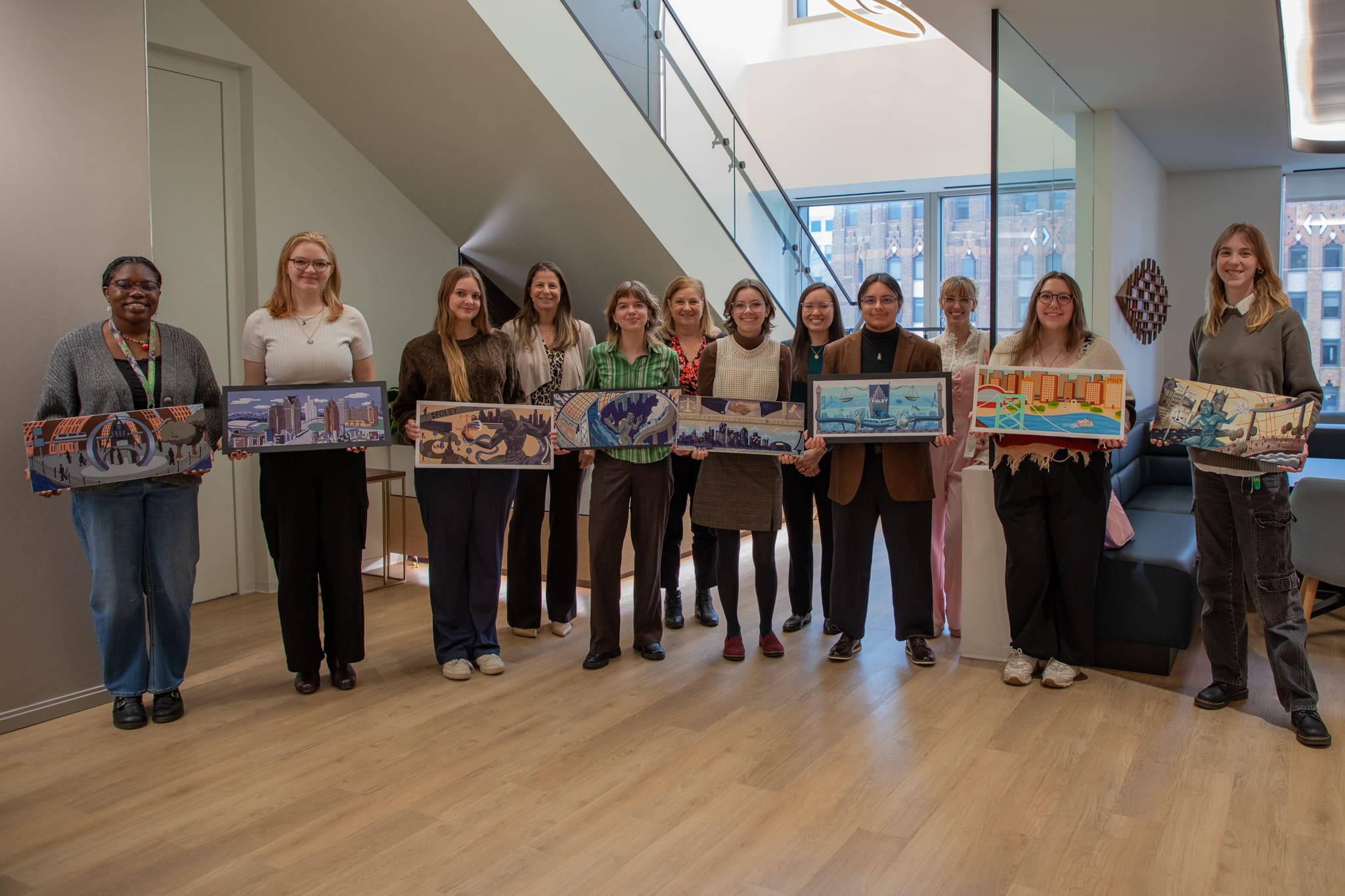
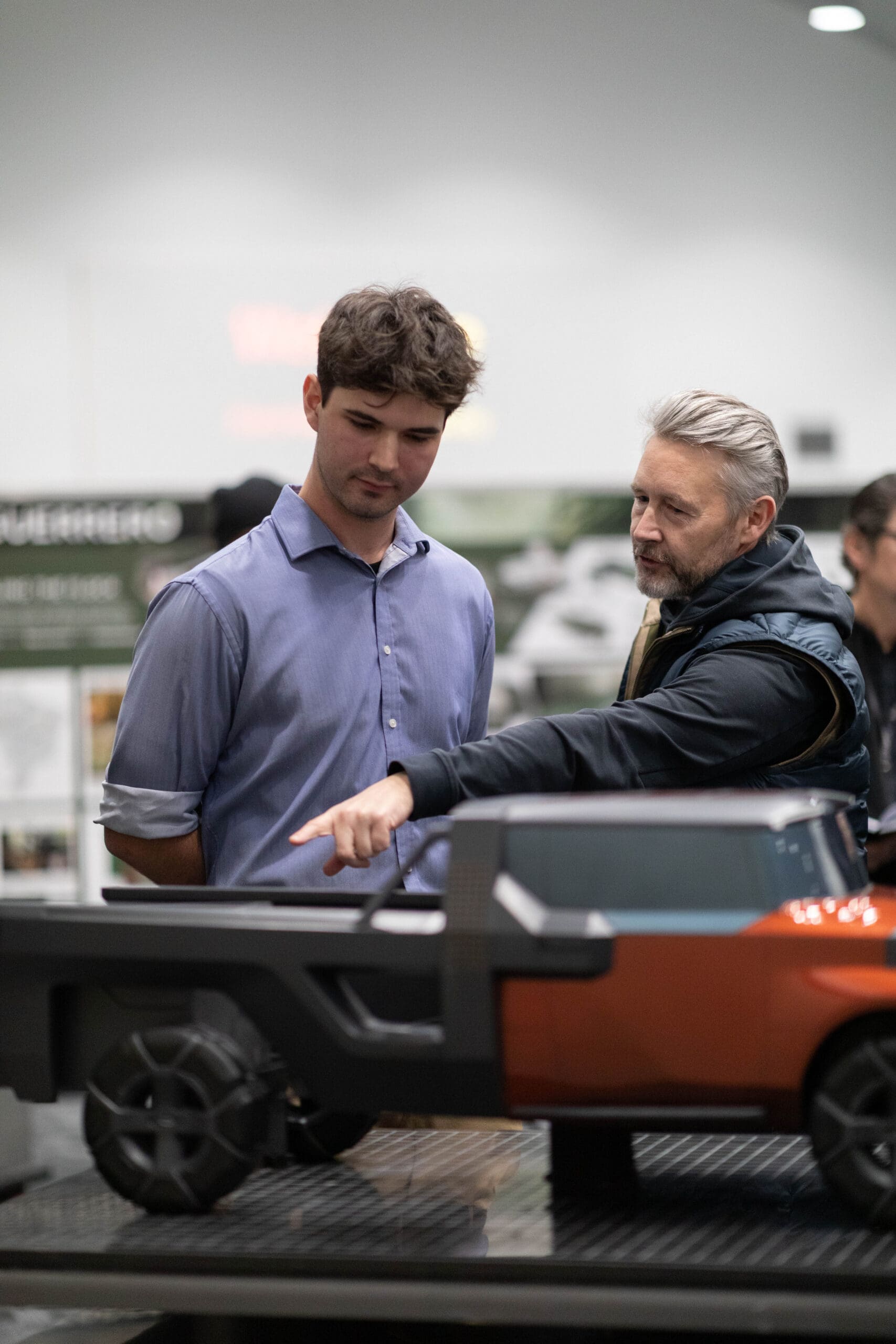
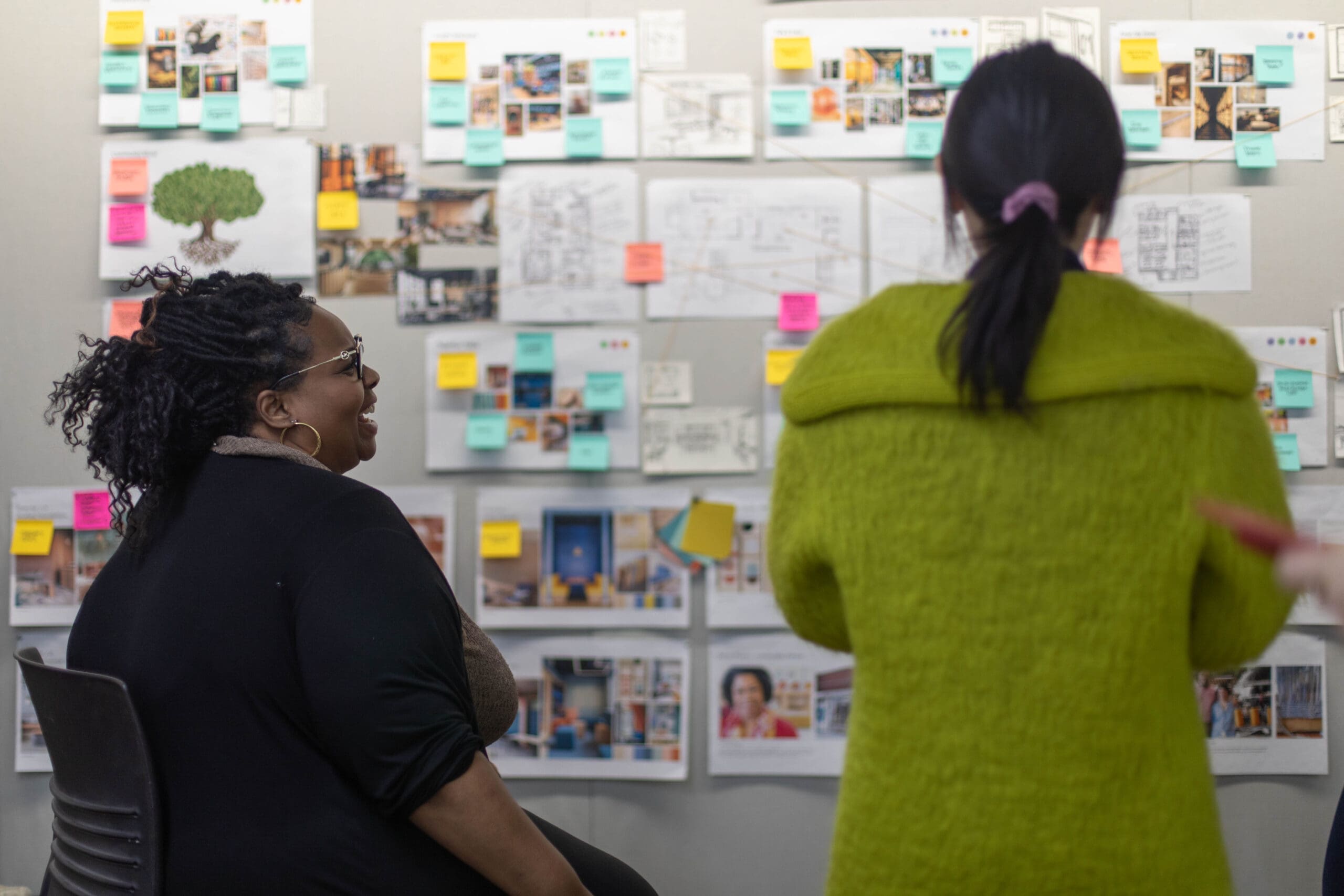
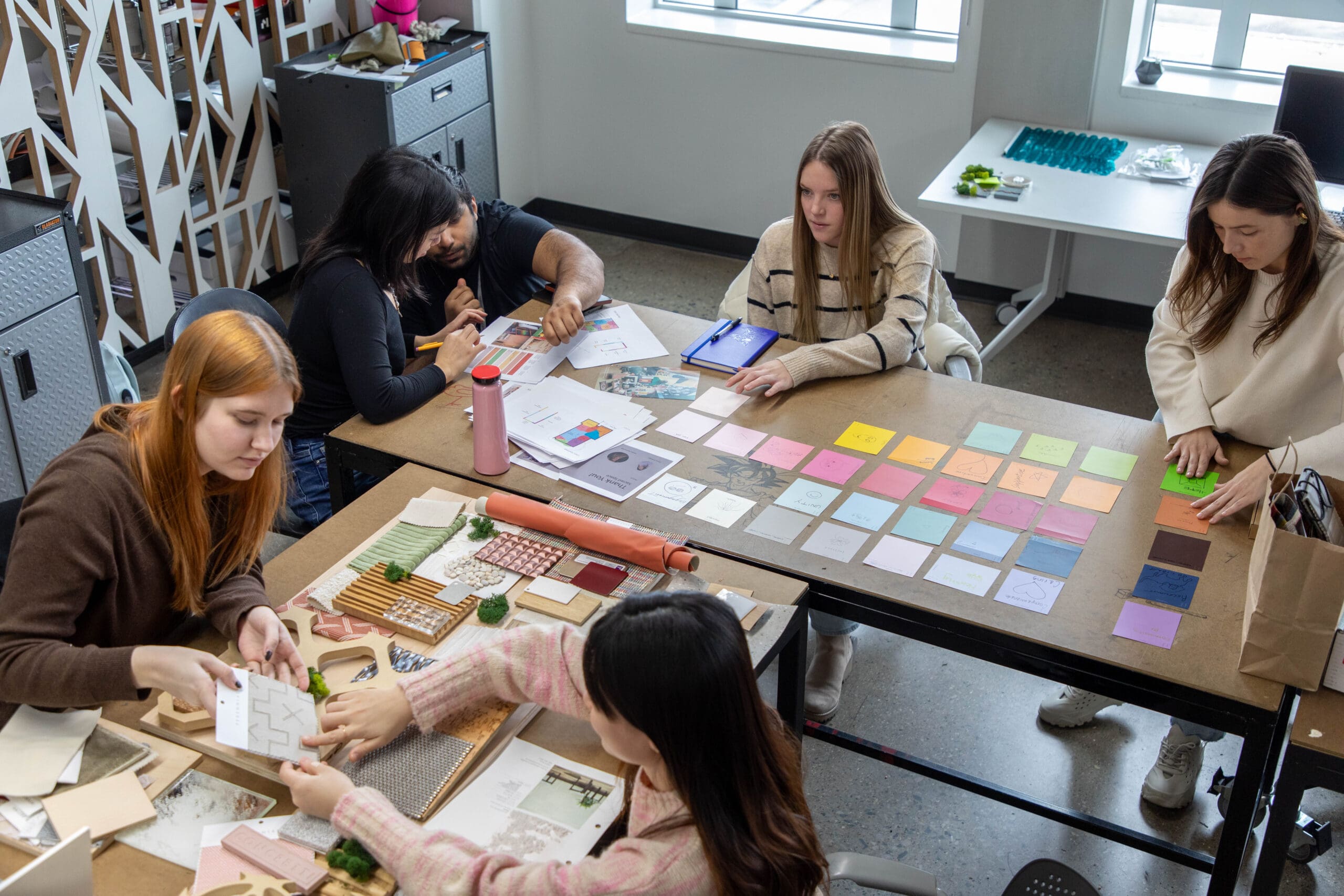
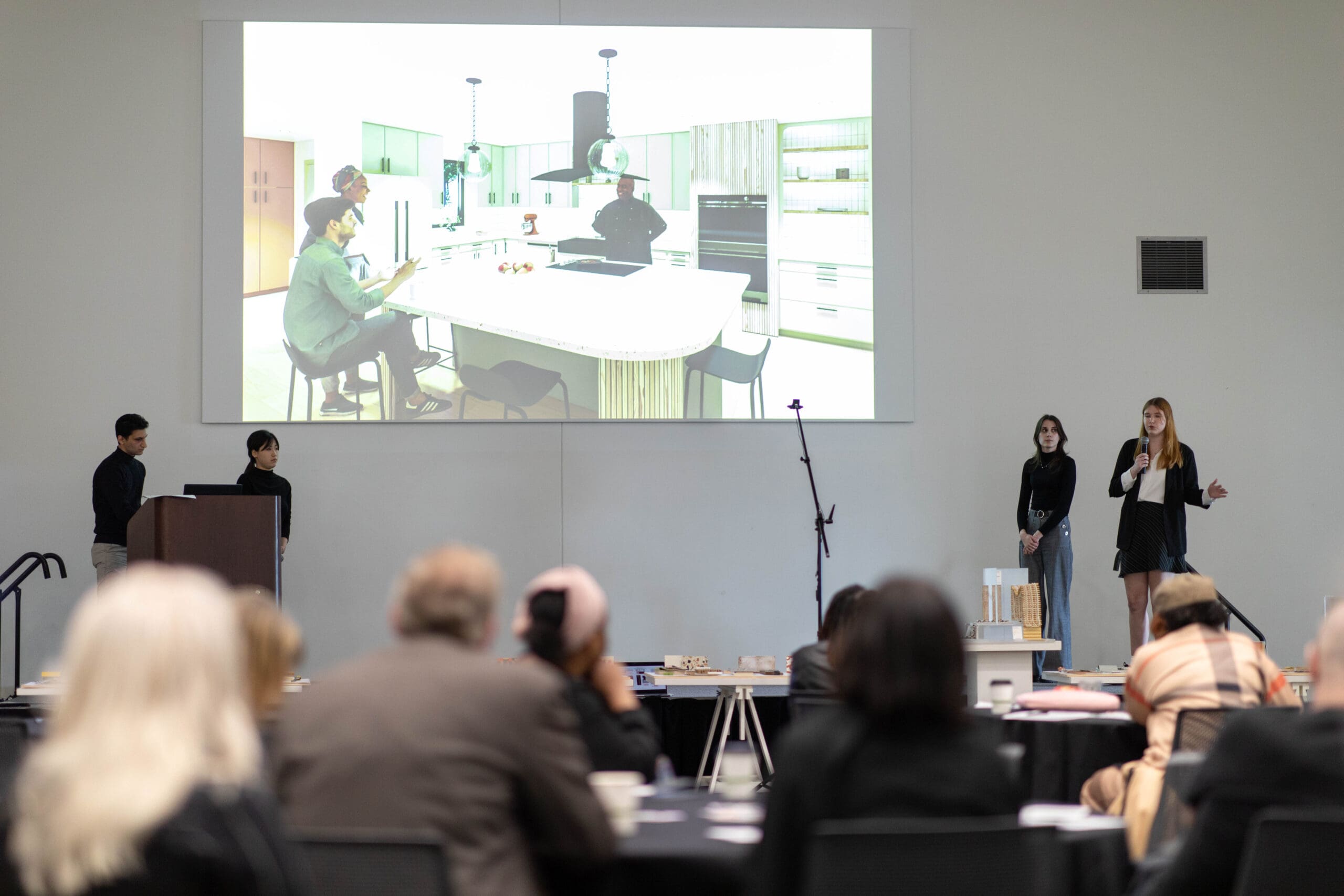
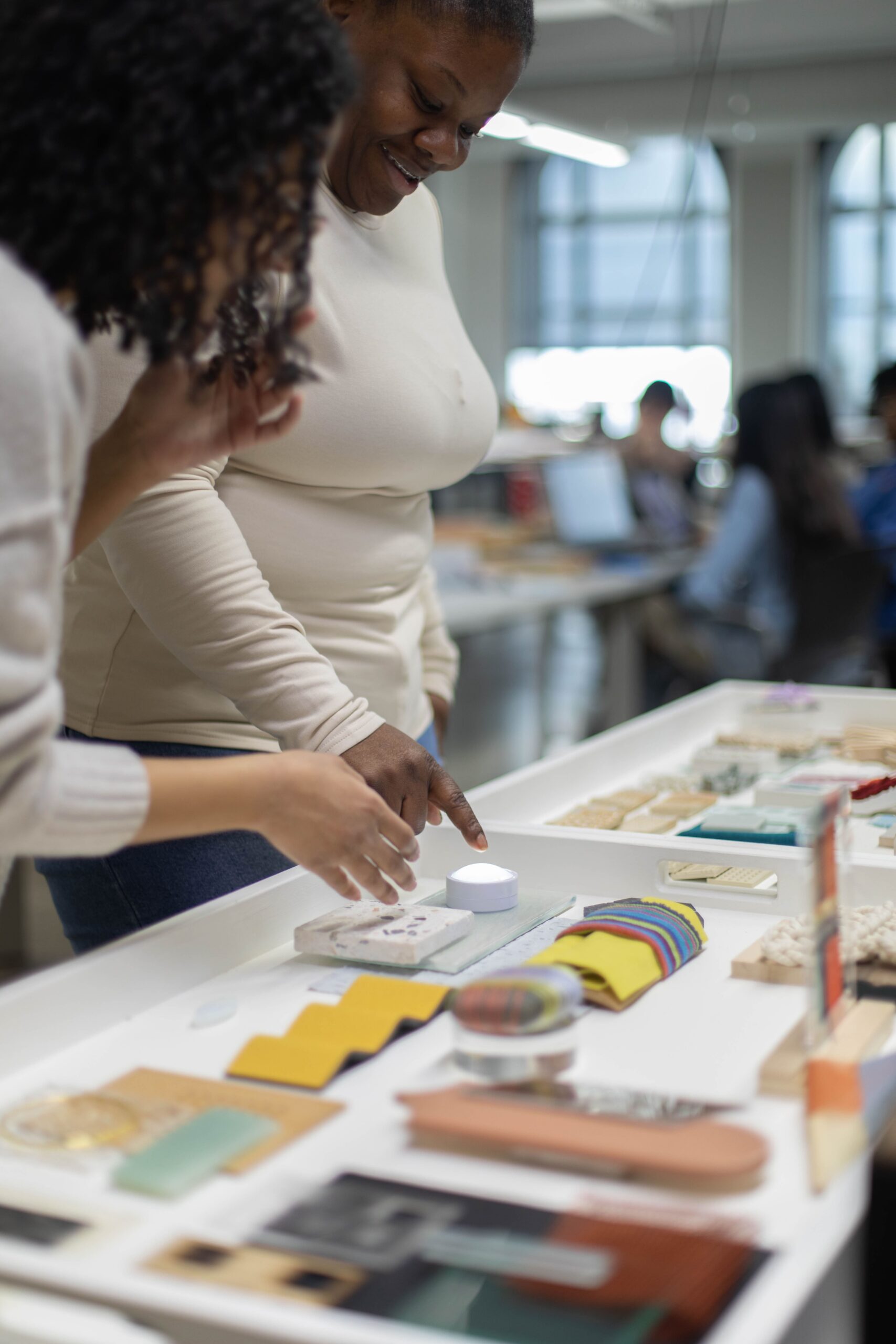
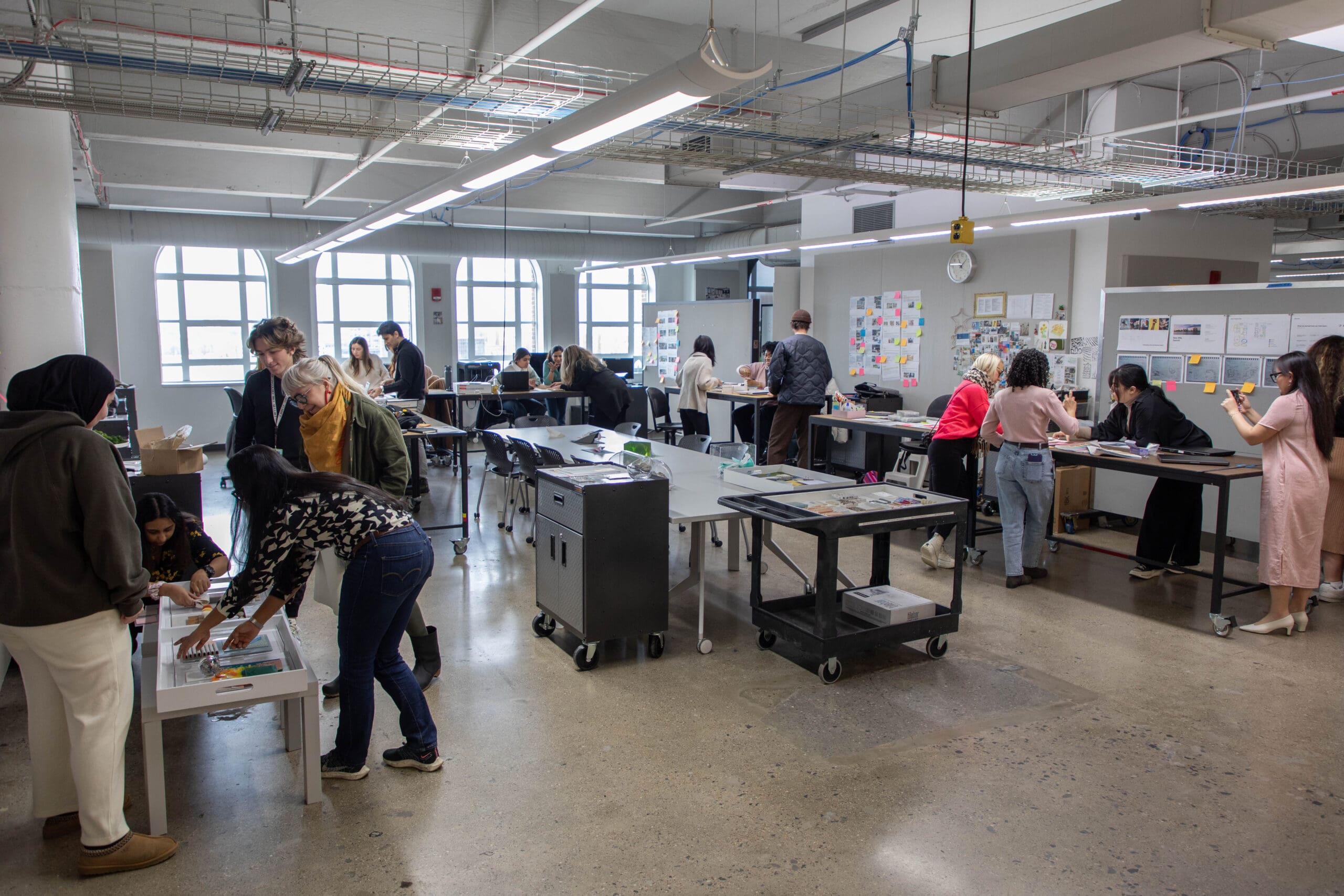
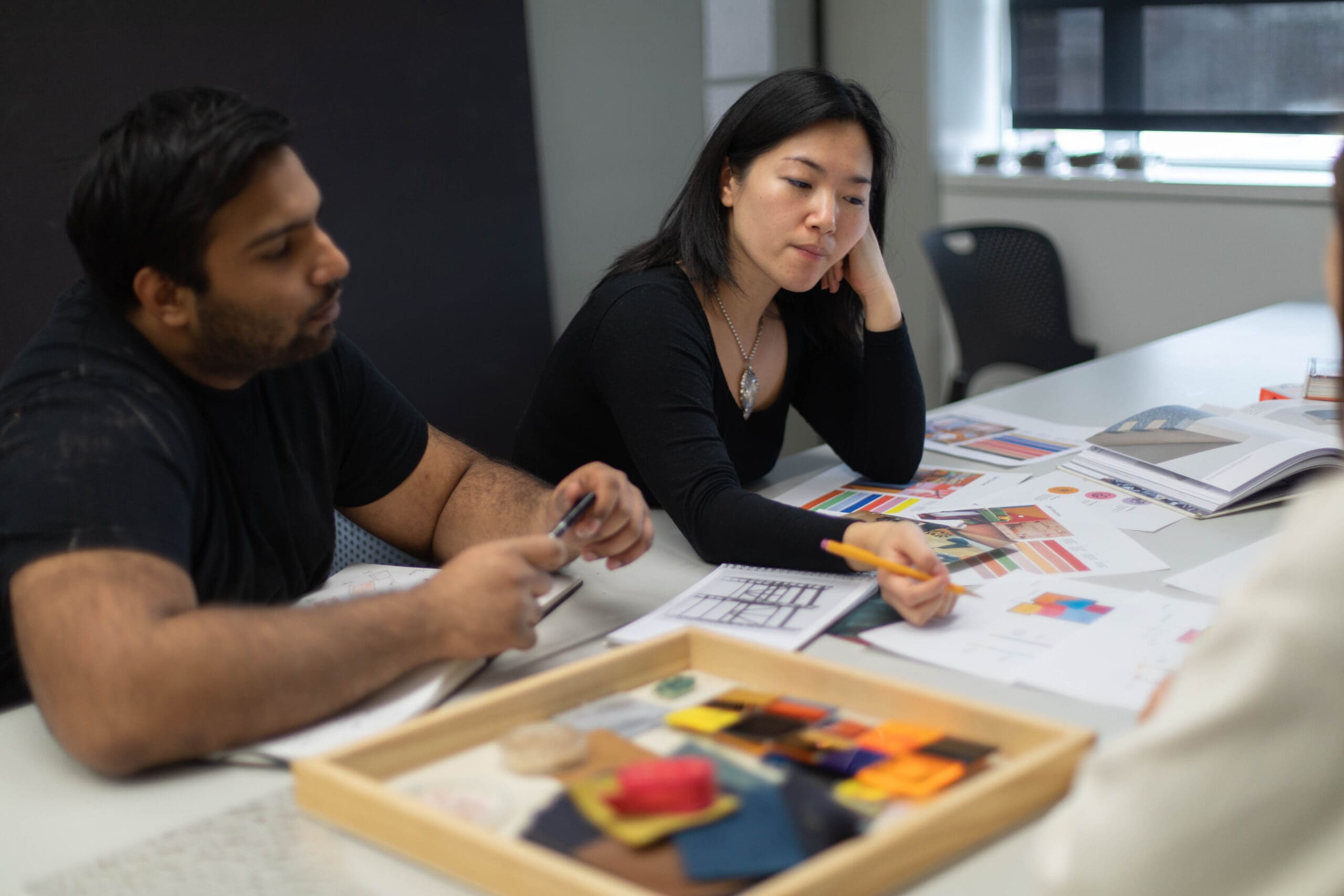
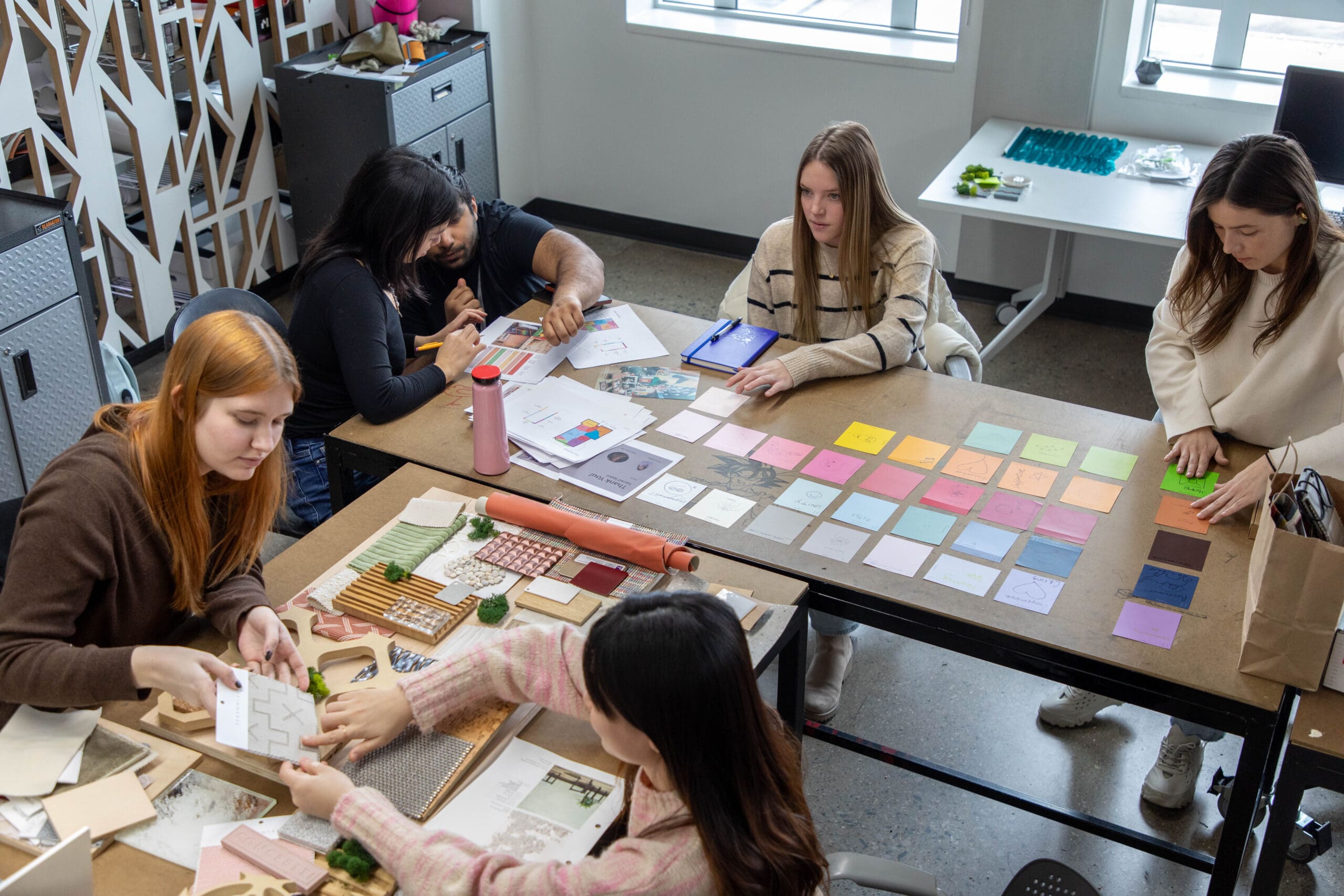
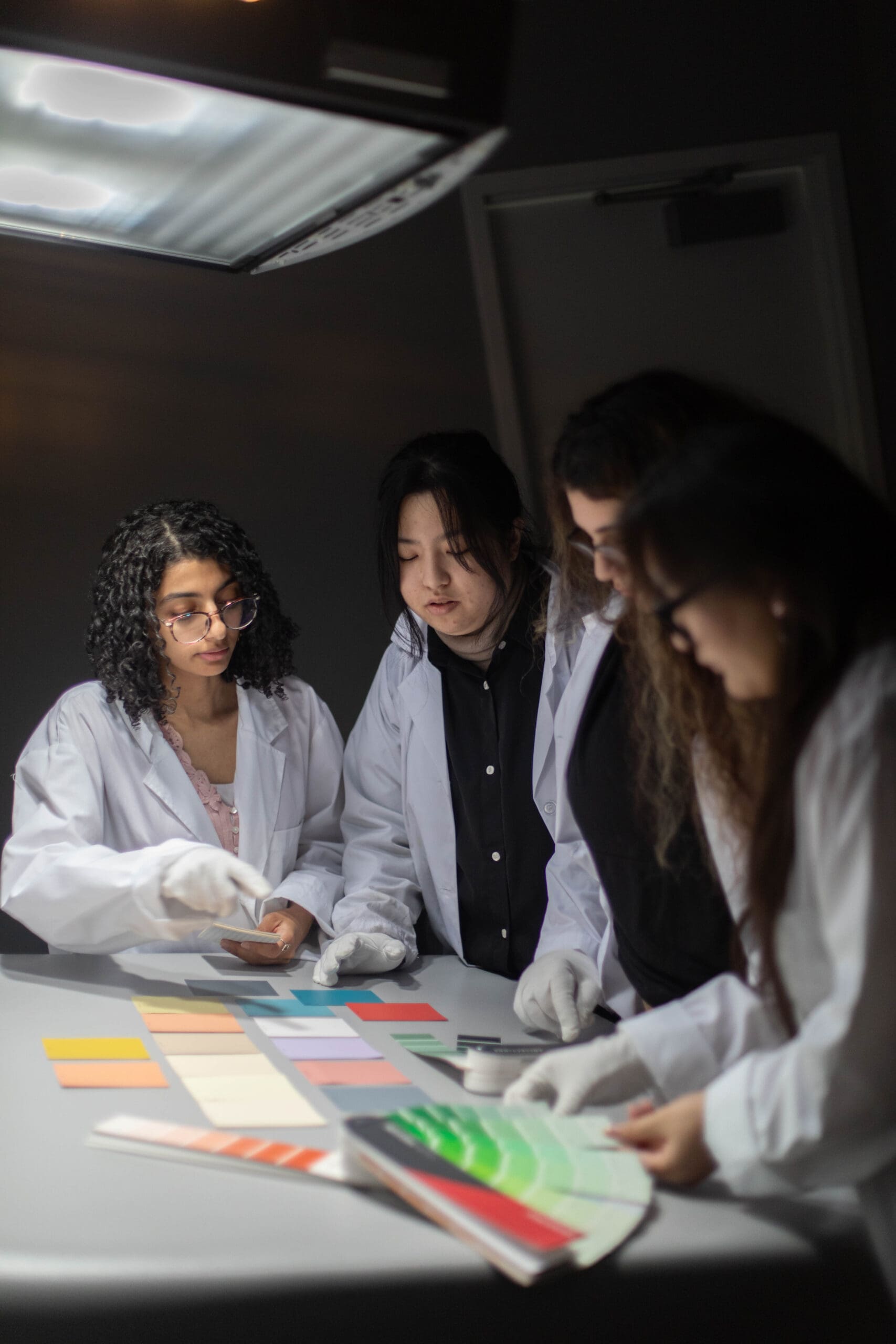
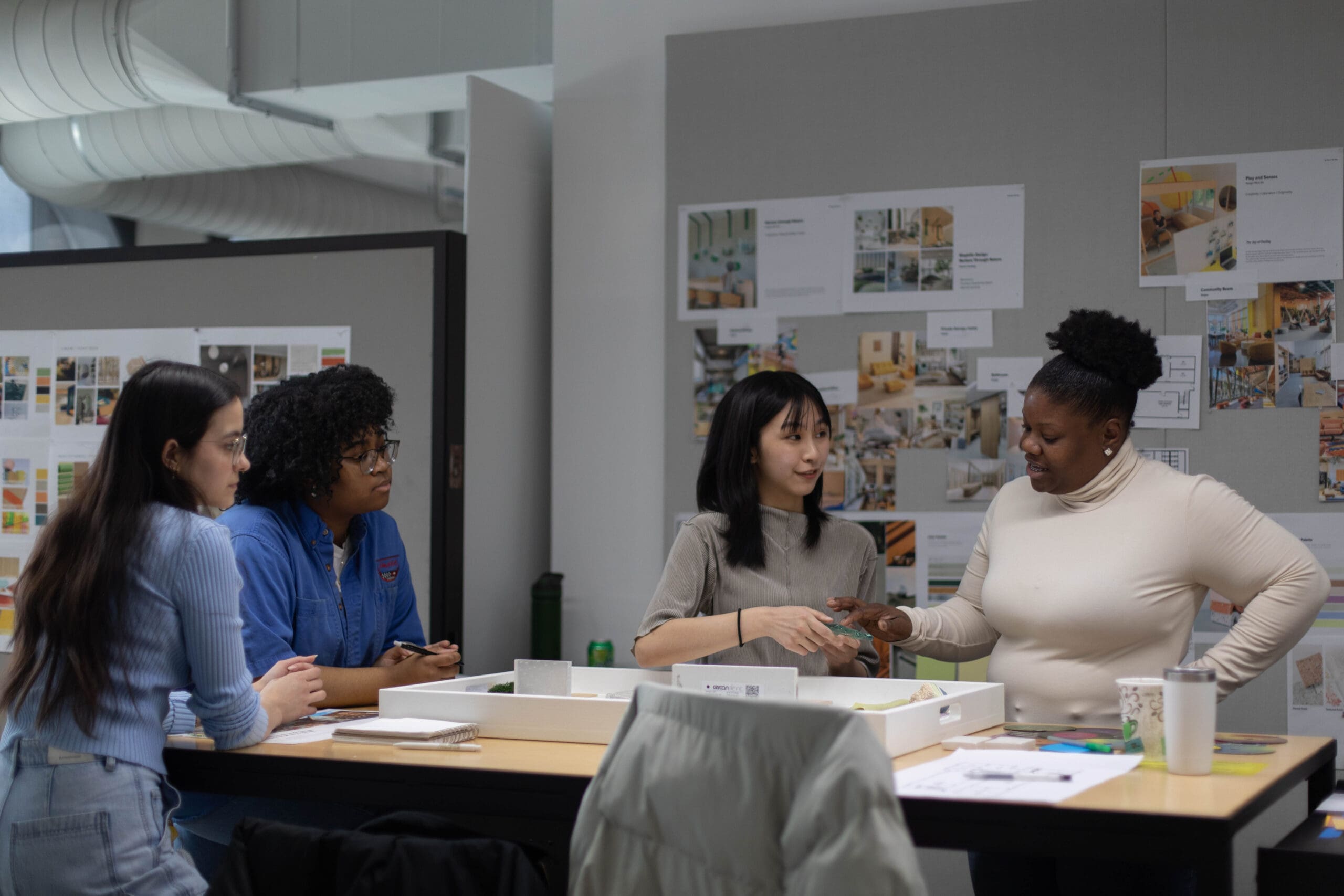
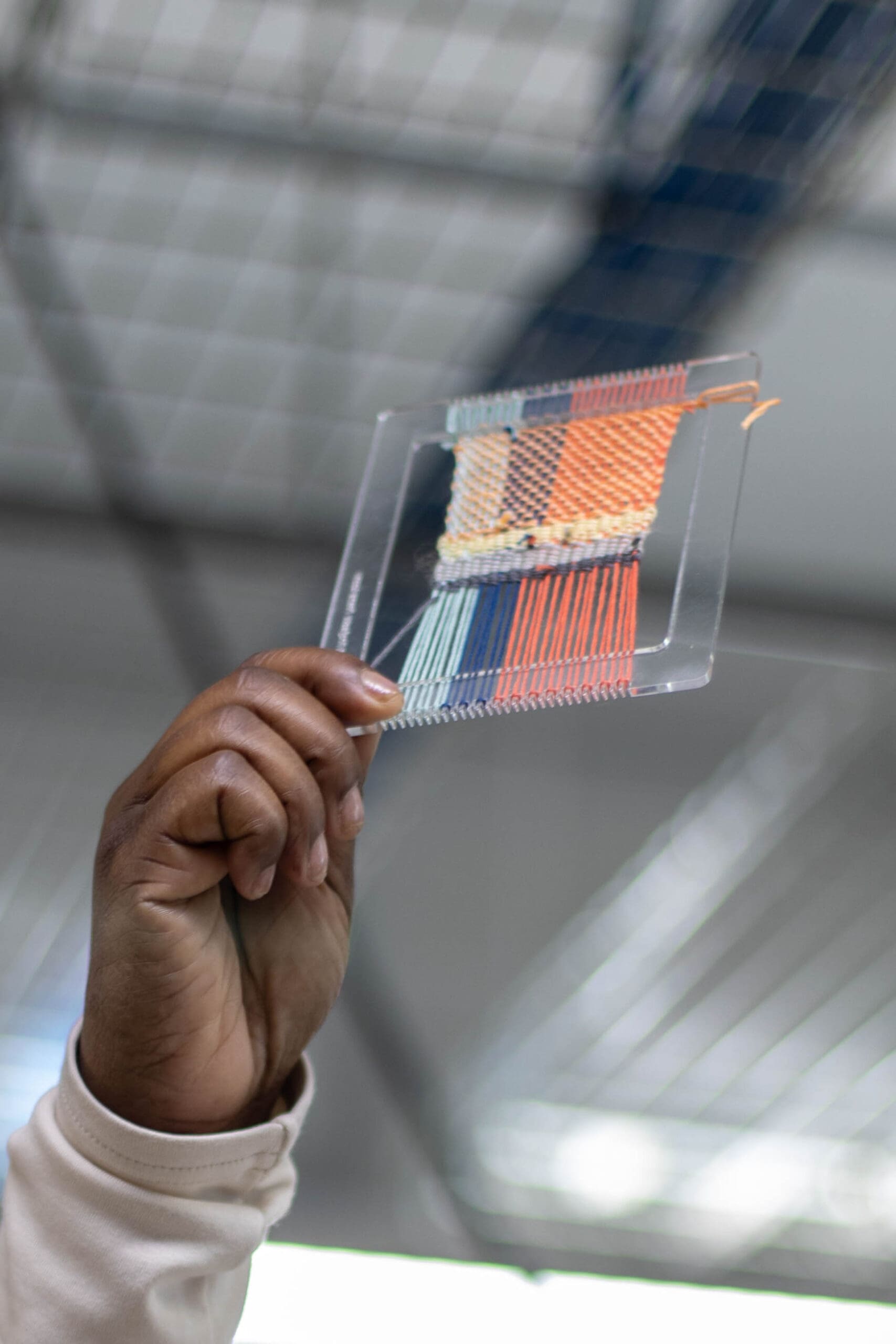
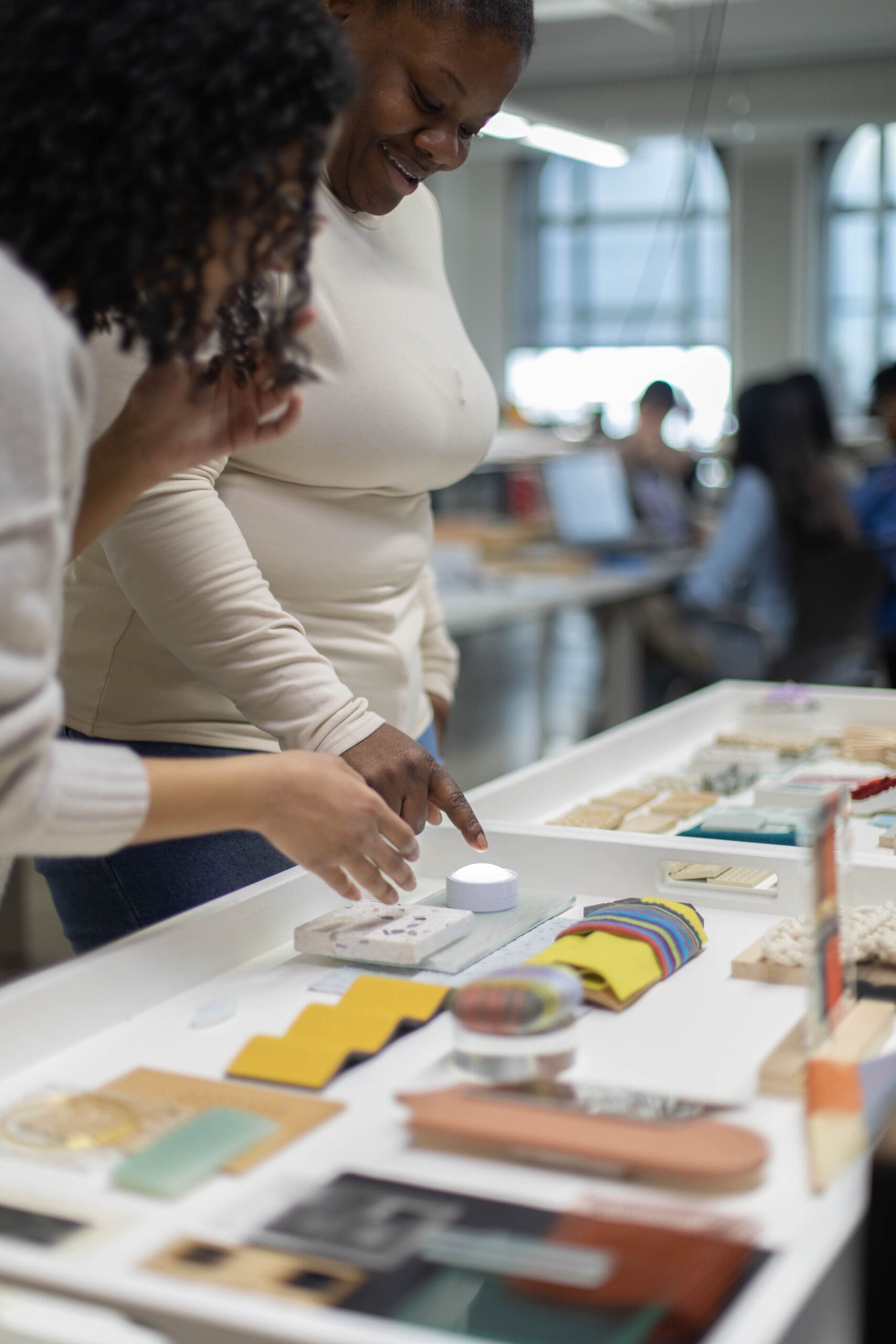
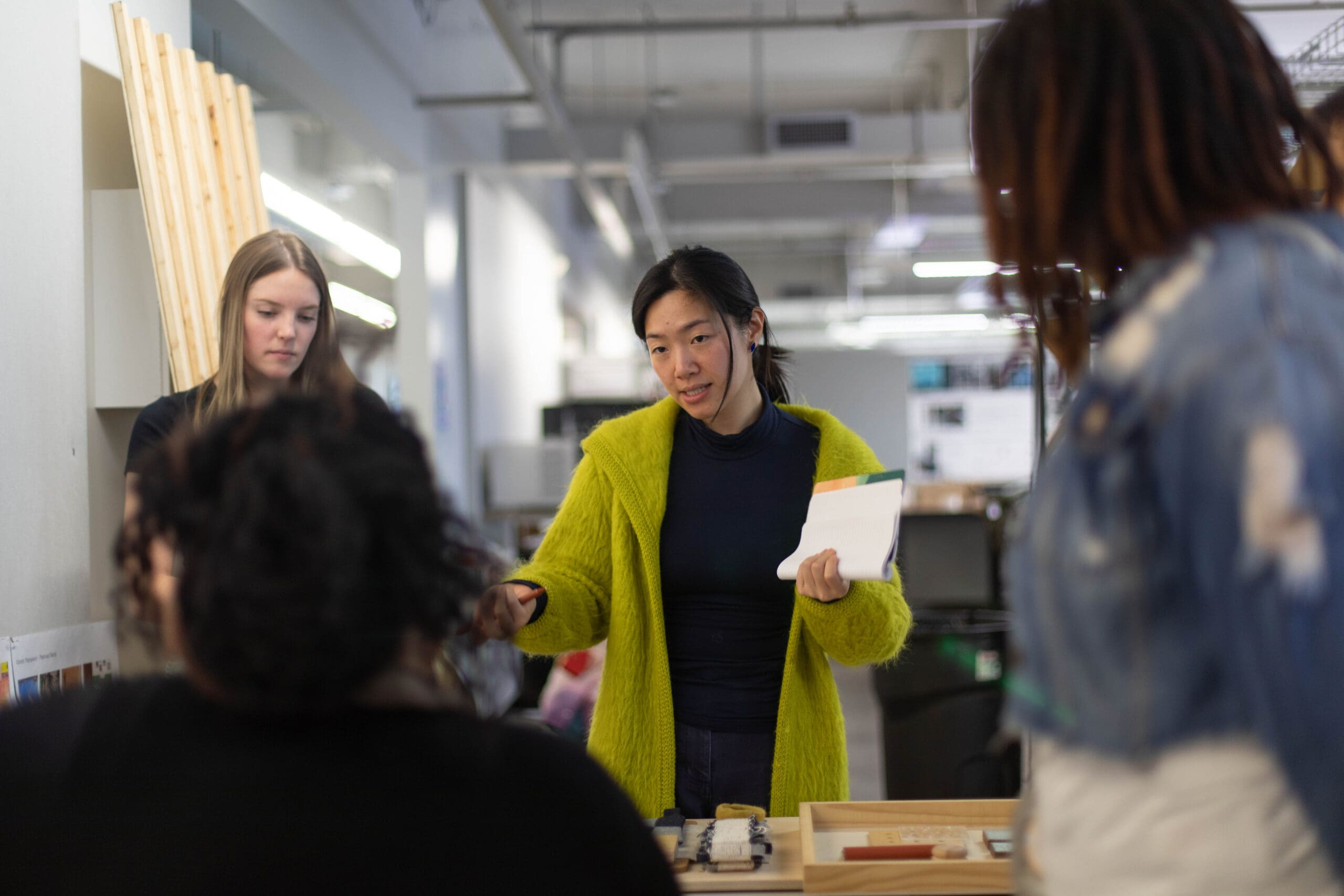
During the Fall semester, the College for Creative Studies hosted 13 educational partnerships, including a diverse range of sponsored projects and competitions that engaged a variety of academic departments. Students partnered with local and global brands and Detroit community non-profits to work on projects tailored to meet the needs of our partners. Educational partnerships at CCS are highly conceptual and allow CCS students the opportunity to participate in creative, research-based assignments, interacting with designers and staff from the collaborating partners. Highlighted collaborations during the Fall semester include:
American Chemistry Council – Plastics Division x Transportation Design
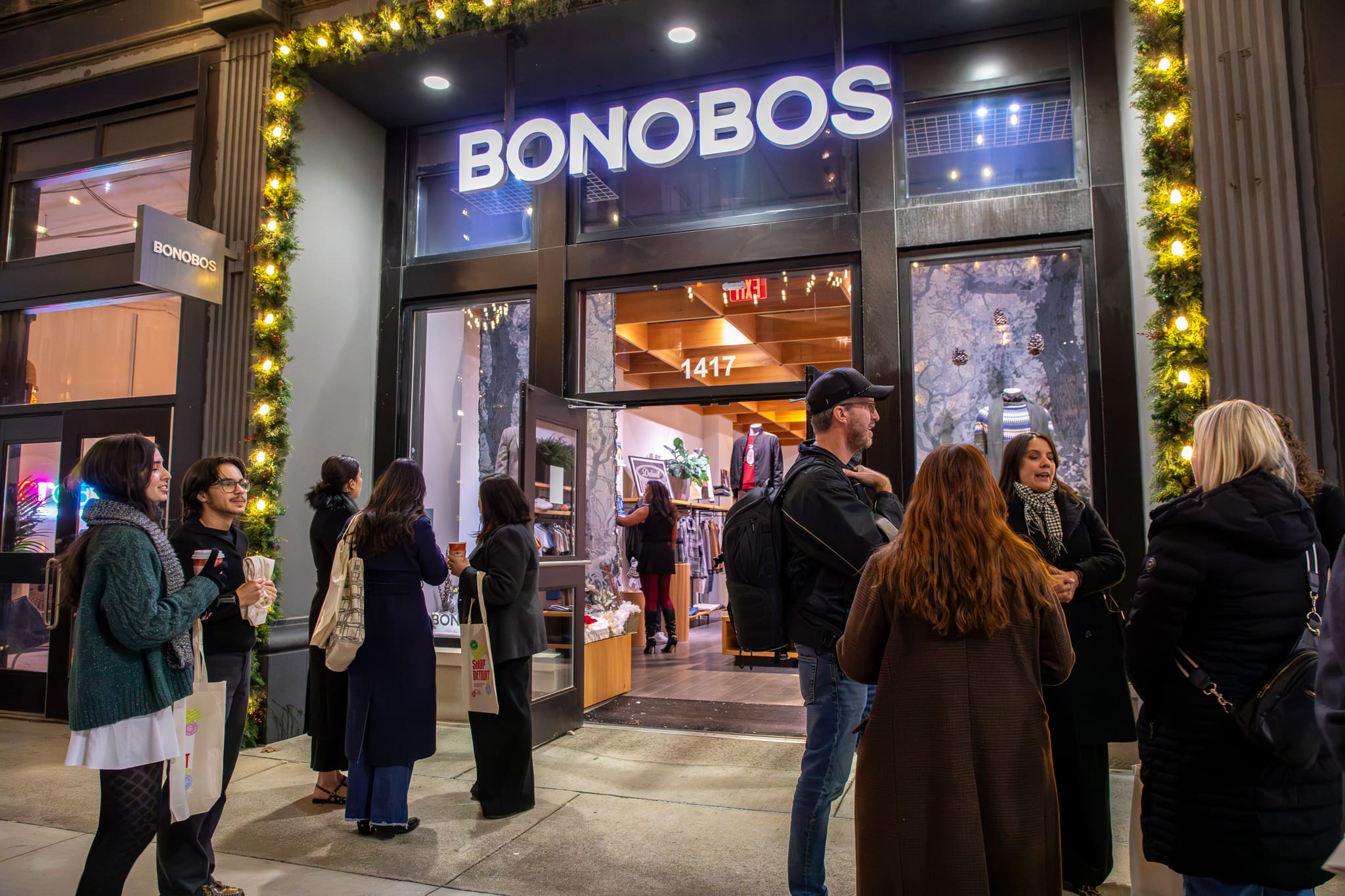
Bedrock x Communication Design and Strategy, Interdisciplinary Art + Design, Interior Design and Fashion Design
BRP International Design Challenge x Transportation Design
DSC Design Sprint x Product Design
Foley & Lardner LLP x Illustration
Ford Motor Company x Transportation Design & Graduate Studies Color & Materials Design
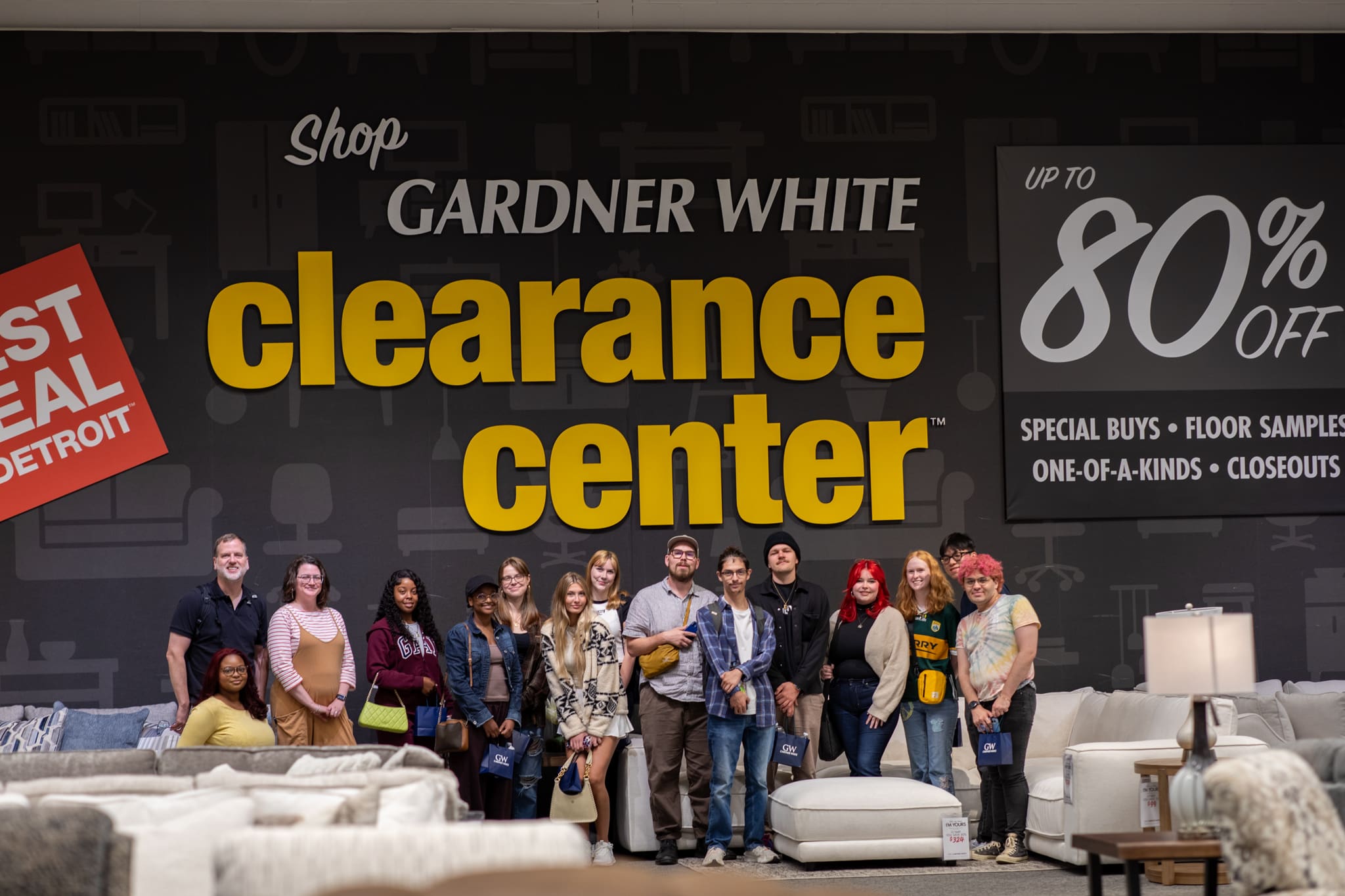
Gardner White x Communication Design & Strategy
Hagopian x CCS
Movement Festival x Communication Design & Strategy
New Balance x Product Design and Graduate Studies Color & Materials Design
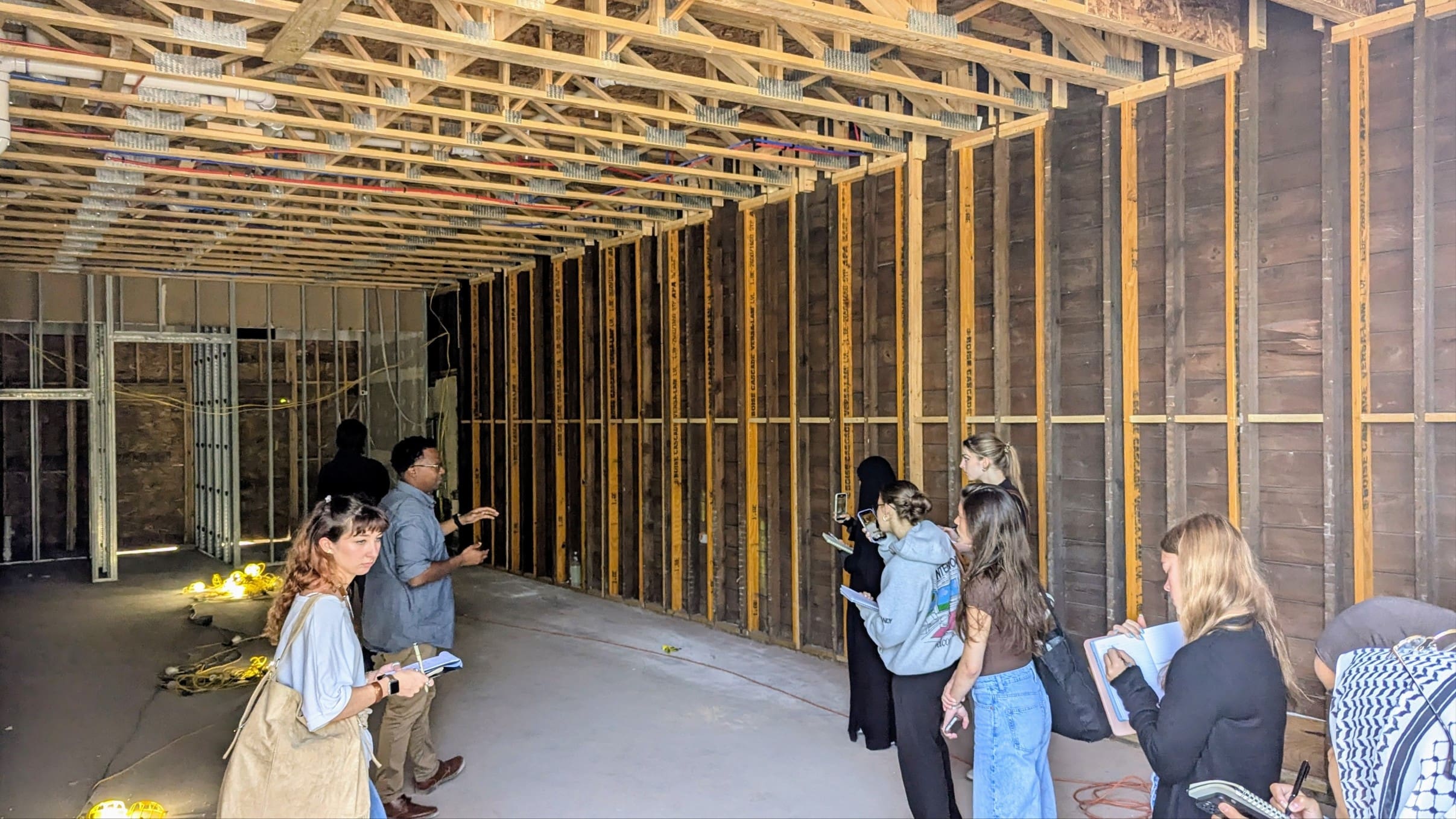
Stafford House x Interior Design
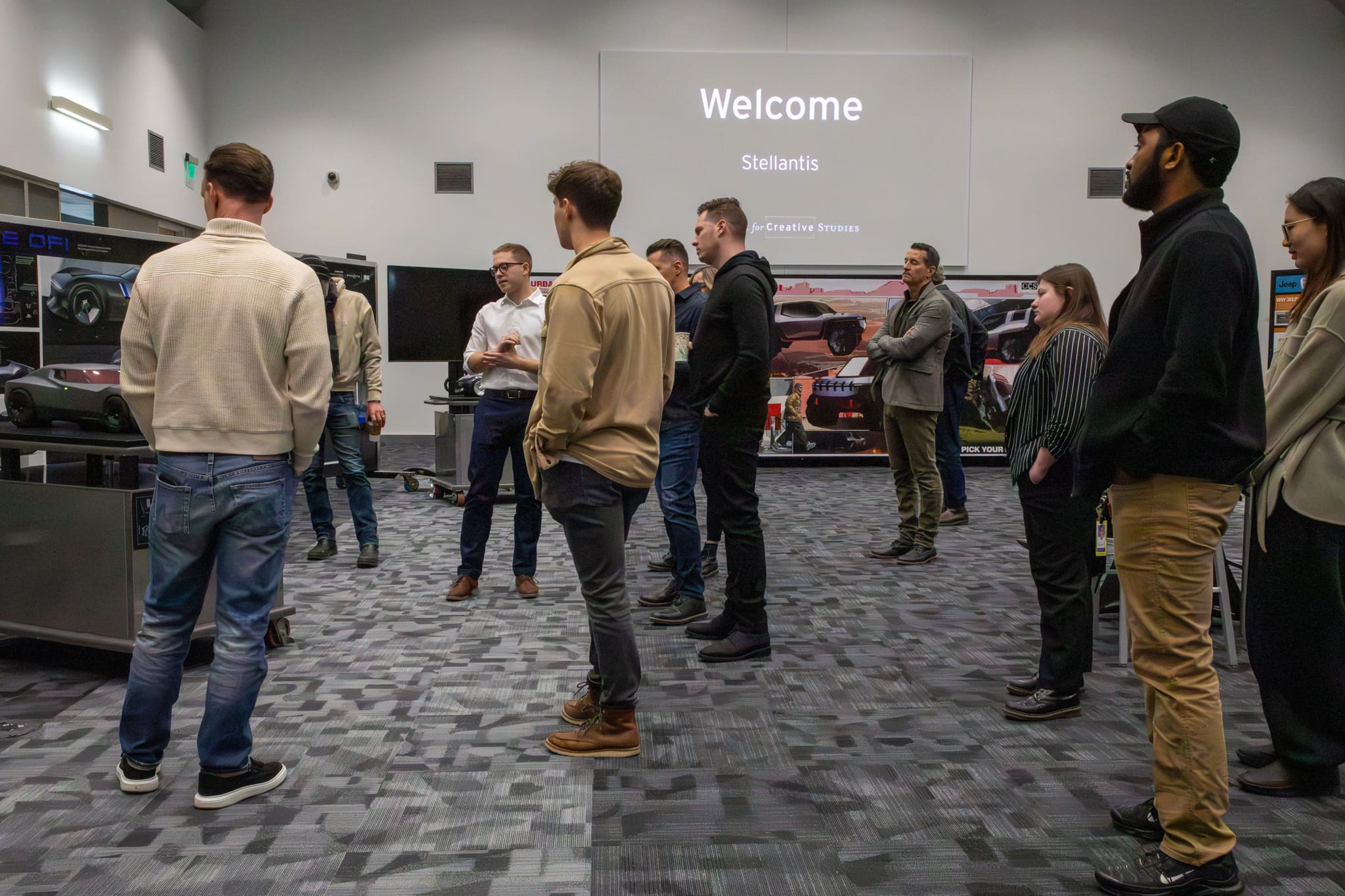
Stellantis x Transportation Design
Urban Electronic, Inc. x Entertainment Arts
“Partnering with the College for Creative Studies during the holiday season on Windows on Woodward provided the opportunity to support emerging creative talent while strengthening connections between our downtown retailers and Detroit’s vibrant arts community,” said Francesca Eid, Bedrock Vice President, Experience. “Initiatives like this allow students to bring their creative ideas to life while contributing to the energy and spirit of the Lower Woodward corridor. We value these collaborations with local institutions and civic partners as an important way to nurture the next generation of creatives as they help shape Detroit’s future.”
This season, College for Creative Studies and Bedrock are transforming downtown with “Windows on Woodward,” a festive storefront gallery for everyone to enjoy.
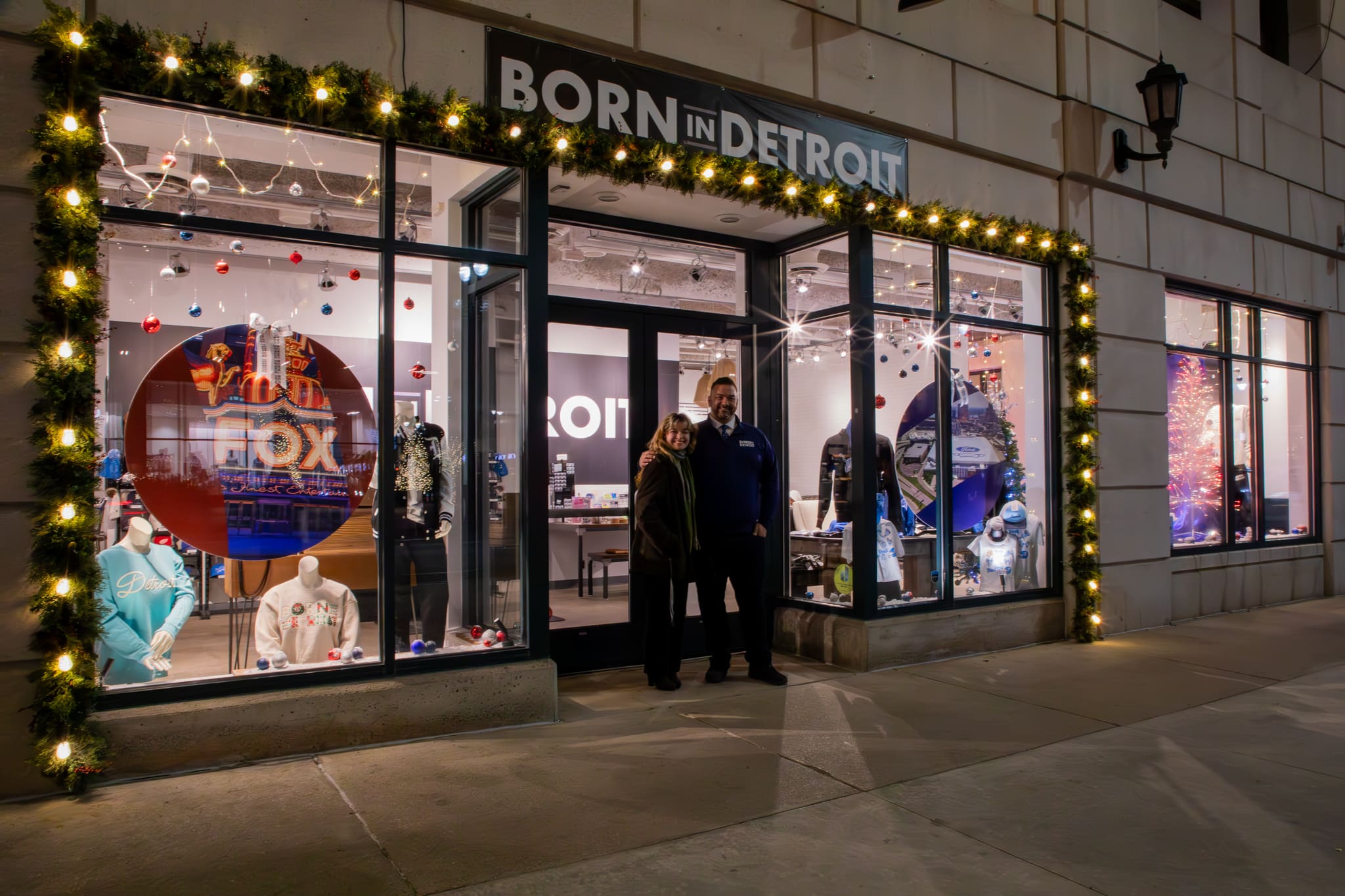
Select Bedrock retail tenants along Woodward Avenue, including Born in Detroit, Bonobos, The Lip Bar, 6 Salon and Woodhouse Day Spa, have collaborated with CCS students to design and unveil custom holiday window displays.
“Windows on Woodward is where imagination, craftsmanship and creativity meet community,” said Rhonda Rouse, Senior Manager, Tenant Experience at Bedrock. “As part of the holiday season in downtown, our festive, walkable window showcase amplifies Detroit’s next generation of talent as they shape the city’s future.”
Each window is a collaboration between student designers and the retailers, merging professional mentorship with real-world experience and bringing fresh, local talent to one of Detroit’s most iconic corridors.
“This project gave our students invaluable hands-on experience in design collaboration, project management, and fabrication,” said Shannon McPartlon, Executive Director of The Office of Partnerships at CCS. “We are grateful to Bedrock for their partnership and the opportunity to be part of this historic moment. The results are truly representative of what CCS students are capable of achieving when they apply their talents to a real-world, high-profile challenge.”
Participating Students: Isabella Avila-Recillas (Interdisciplinary Art and Design) Levi Mooney (Interdisciplinary Art and Design) Autumn English (Interior Design) Katelyn Welchko (Interdisciplinary Art and Design) Brandi Witek (Communication Design & Strategy) Miracle Hubbard-Wray (Interior Design) Griffin Mesner (Fashion Accessory Design) Olivia Draus (Interdisciplinary Art and Design)
Located in the heart of midtown Detroit, CCS’s prime location offers unparalleled opportunities for art and design collaboration. Our students have found countless ways to make a positive impact on local metro Detroit businesses through innovative art and design problem-solving.
Last year alone, CCS students collaborated to problem-solve timely topics for 15 metro Detroit businesses and nonprofit organizations. They addressed a range of issues in healthcare product design, sustainability, mobility, and even emerging augmented reality technology.
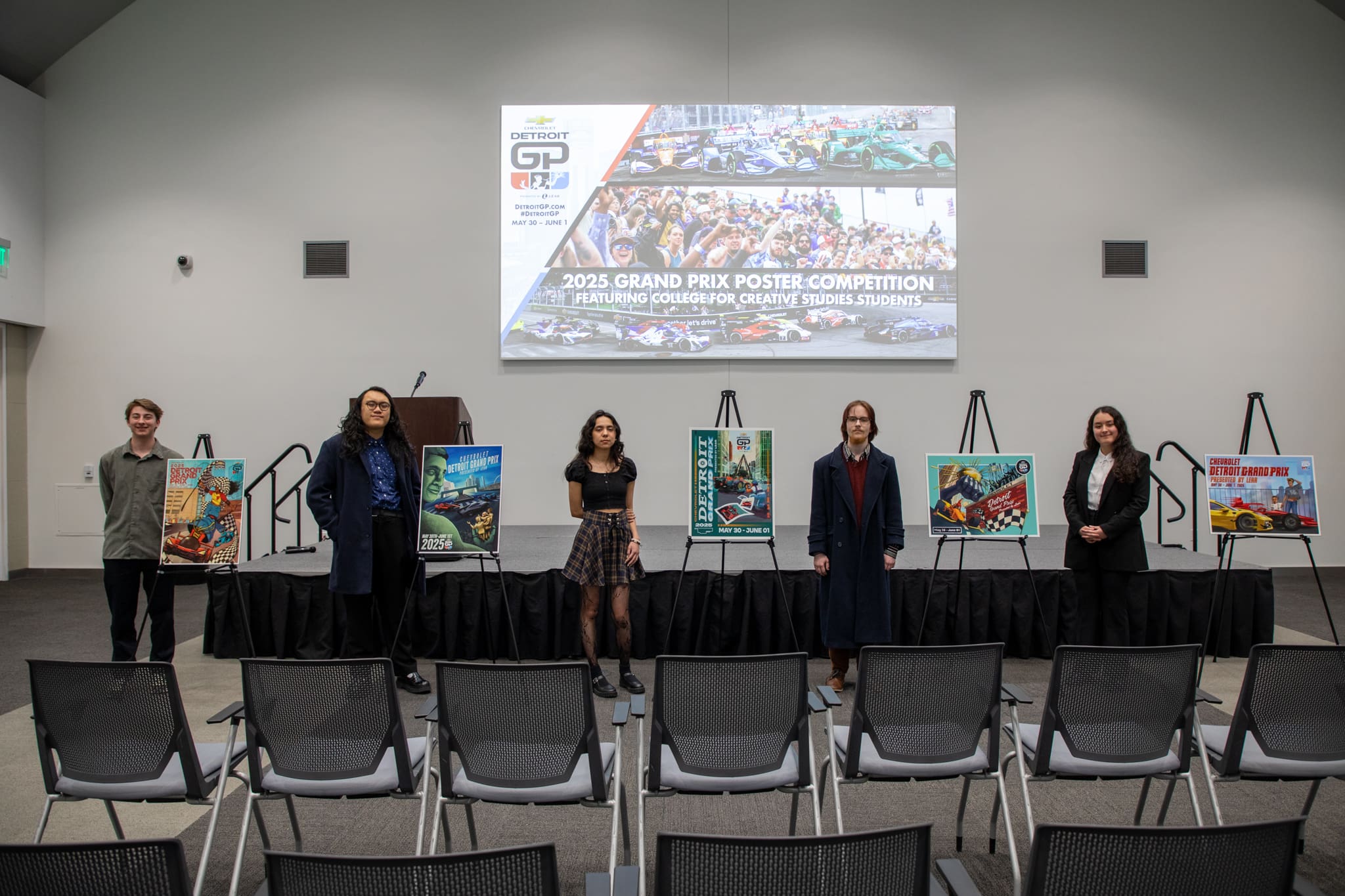
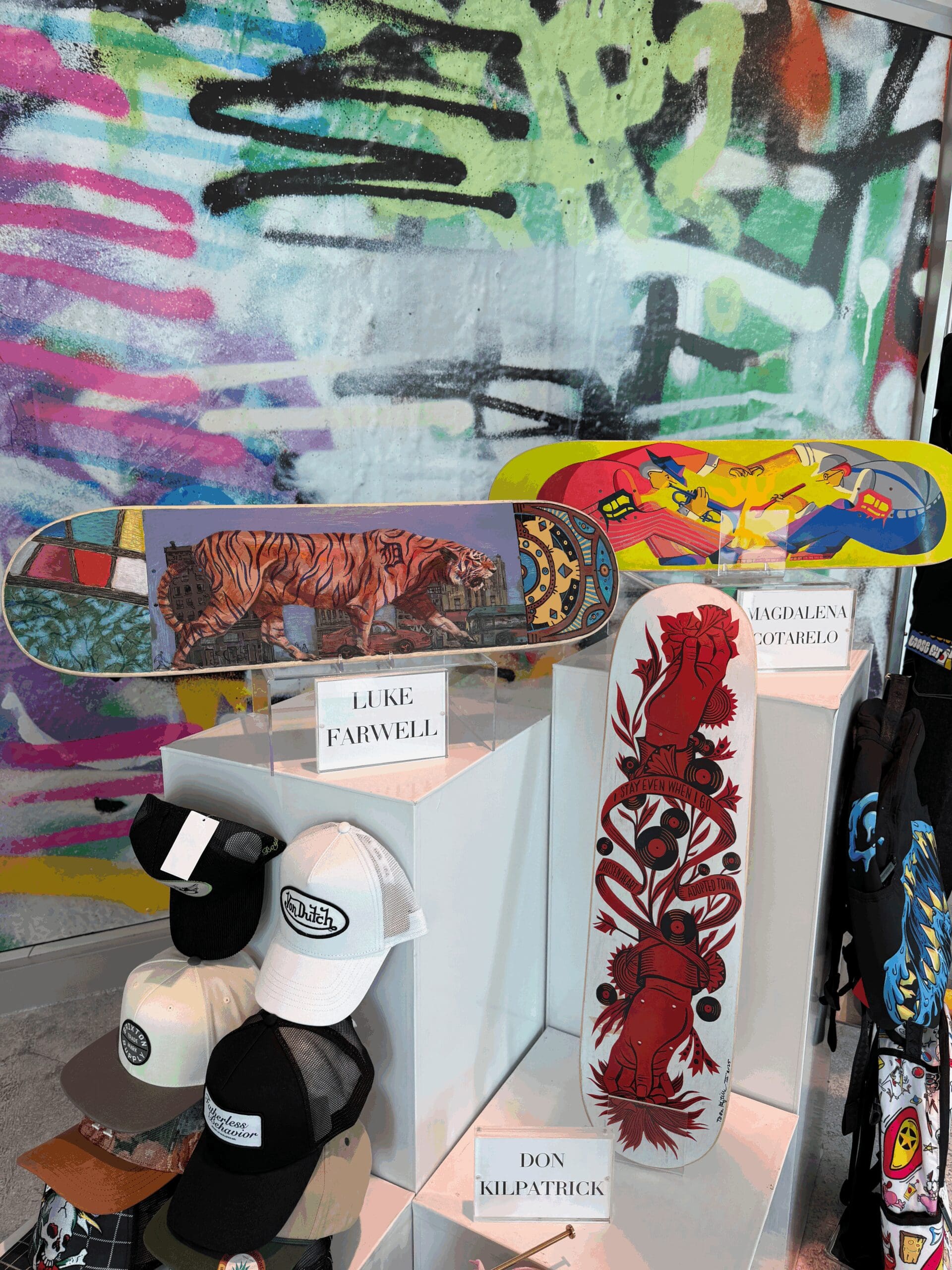
Embracing the city’s rich history of cultural and sporting events, students continue to participate in annual design competitions to create the newest posters for iconic Detroit events such as the Chevrolet Detroit Grand Prix Presented by Lear, the Movement Music Festival and the 313 Presents Pine Knob concert series.
Here’s a look at some of the partnerships:
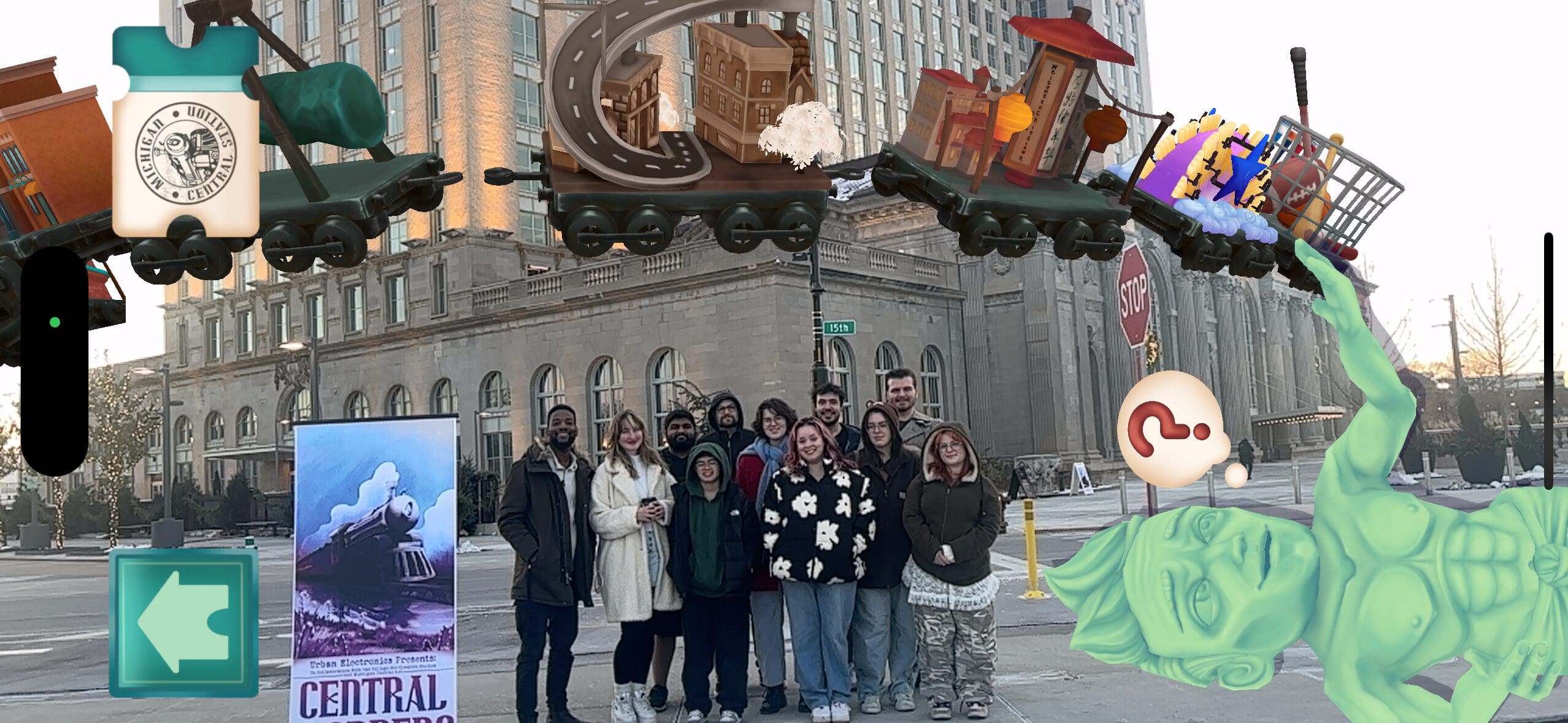
Augmented Reality Center (ARC) in partnership with Oakland University x Communication Design & Strategy, Graduate User Experience Design and Entertainment Arts
Crain Communications – Automotive News x Illustration
313 Presents x Illustration
Detroit Grand Prix x Illustration
GM x Transportation Design & Graduate User Experience Design
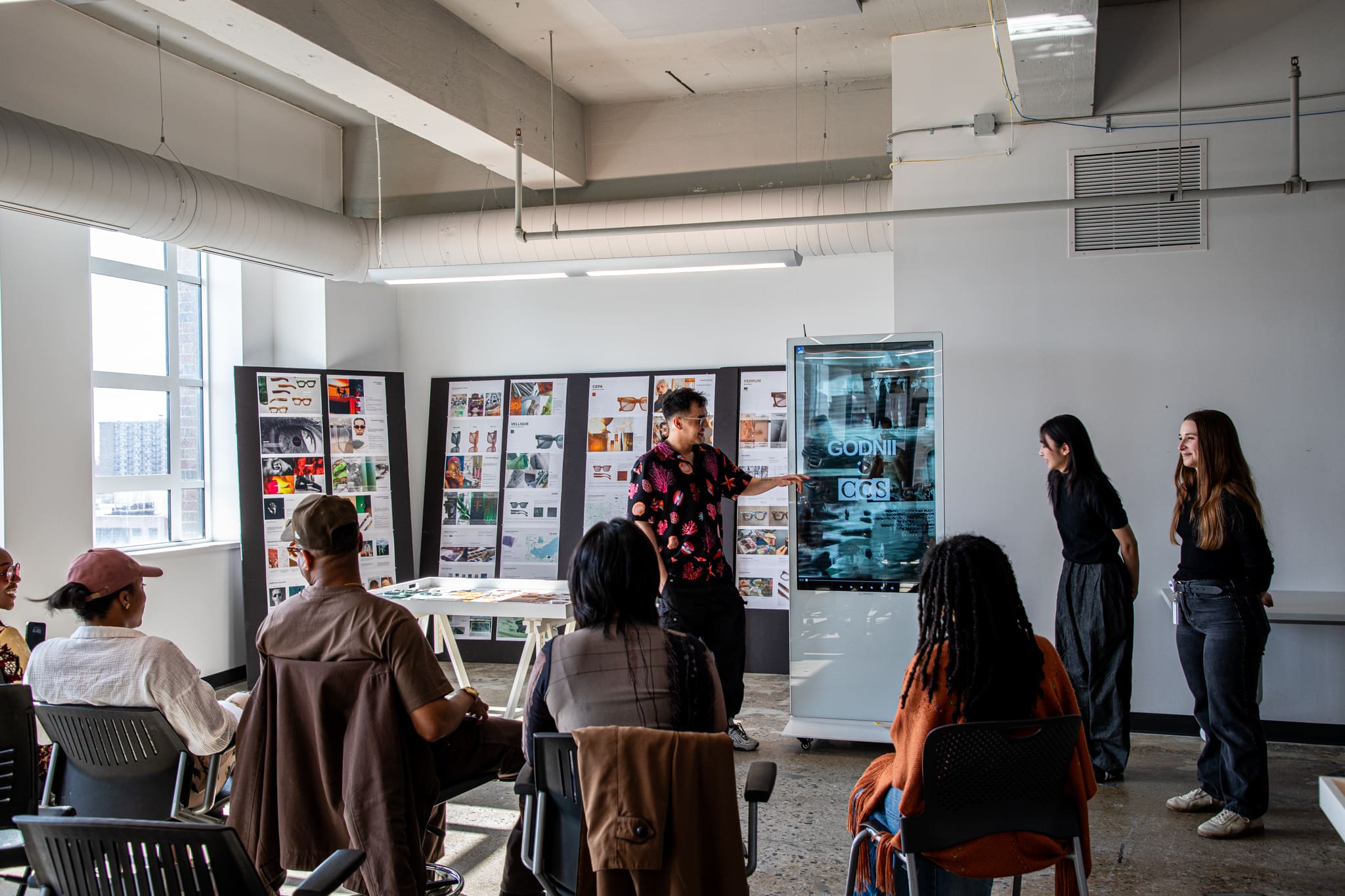
Godnii x Graduate Color & Materials Design
Hagopian Rug Competition x All Departments
State of Michigan Office of Future Mobility and Electrification with support from the Global Epicenter of Mobility x Transportation Design
Zumiez and Somerset Collection x Illustration
BorgWarner x Product Design
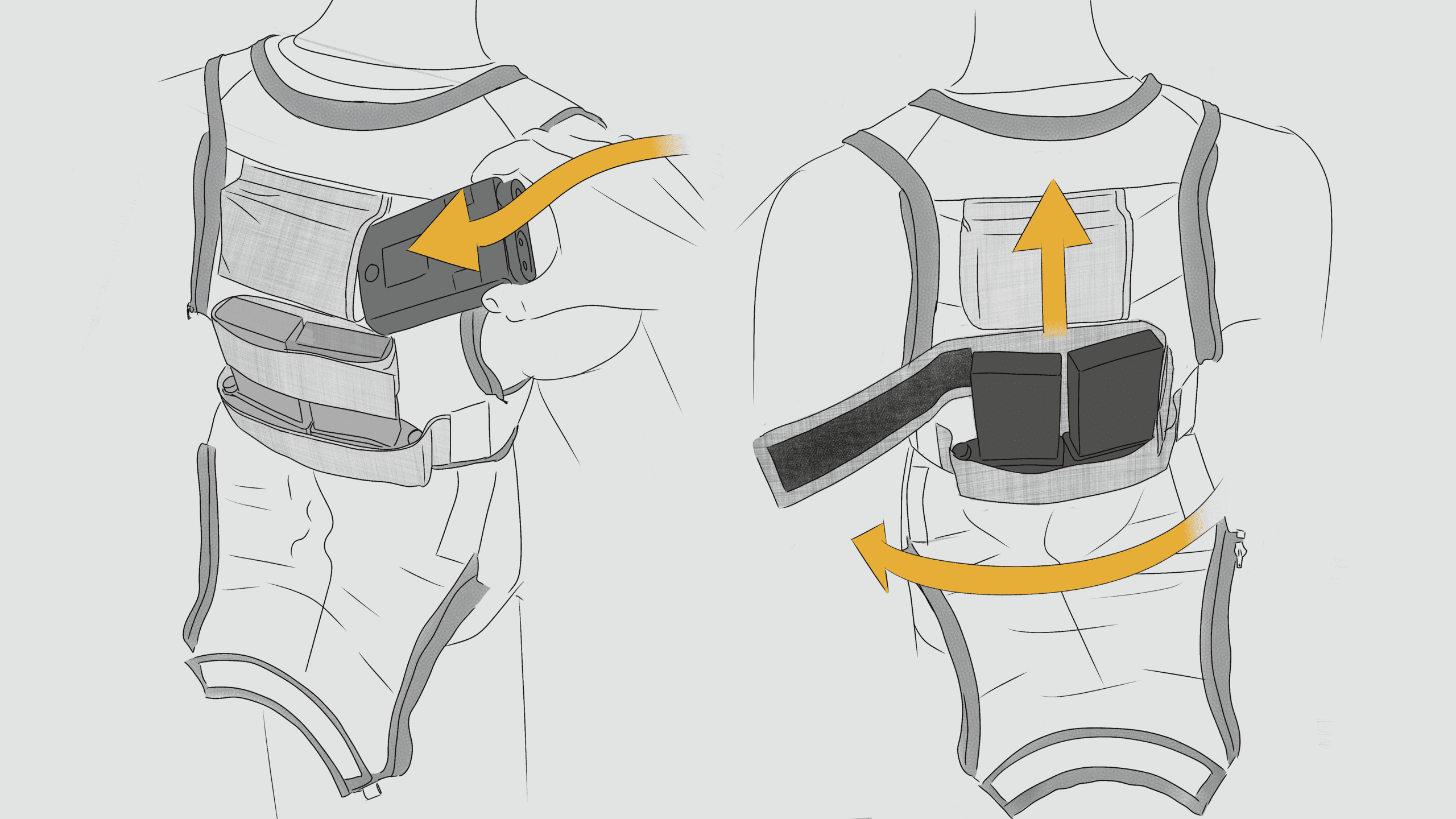
Carhartt x Fashion Design
Henry Ford Health x Product Design
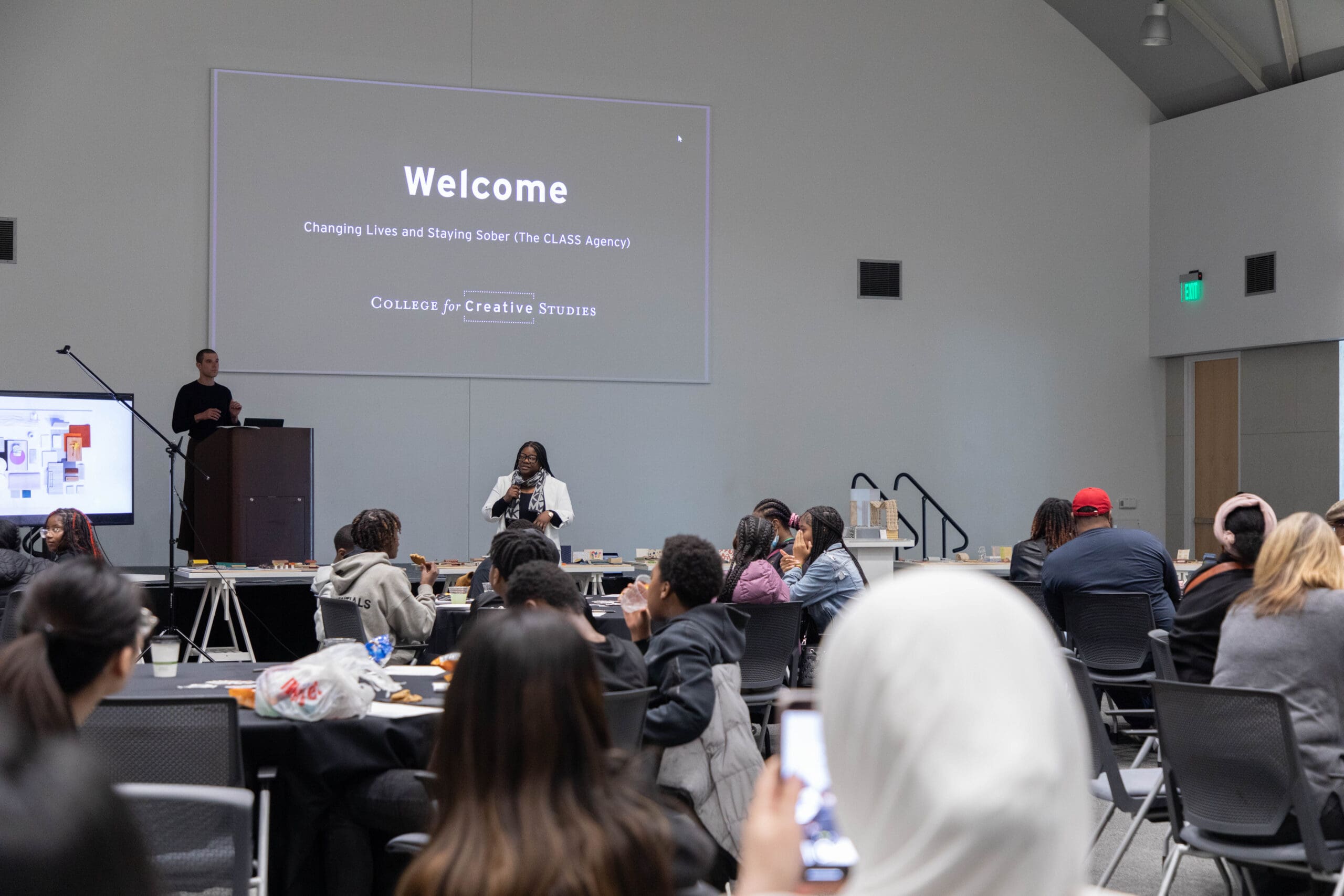
Changing Lives and Staying Sober (C.L.A.S.S.) x Interior Design and Graduate Color & Materials Design
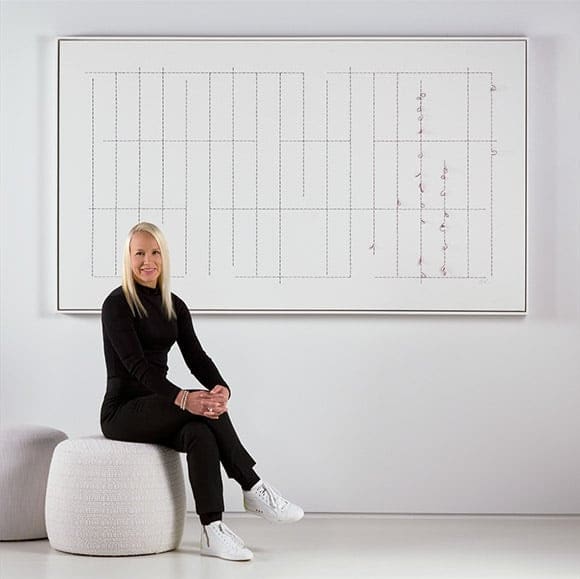
CCS alumna Elizabeth Salonen made waves at NeoCon 2025, partnering with Bernhardt Design to create a captivating experience in their showroom, Space 320 at The Mart. Salonen, a distinguished multidisciplinary artist-designer, has unveiled “Meditations on Canvas,” a series of seven meticulously hand-stitched large-scale works that truly embody her unique Finnish design ethos: functional beauty intertwined with a deep connection to materiality.
Salonen’s creative journey is extensive. She founded Mottoform, her design studio, in Helsinki in 2005, later moving its base to Ontario, Canada. Her expertise spans a wide array of disciplines, from product design, ceramics, and textiles to interiors, lighting, and the crafting of collectible art and objects.
Her innovative work has garnered international acclaim, including the prestigious honor of being named Industrial Designer of the Year in Finland in 2012. She graduated from CCS with a degree in Industrial Design.
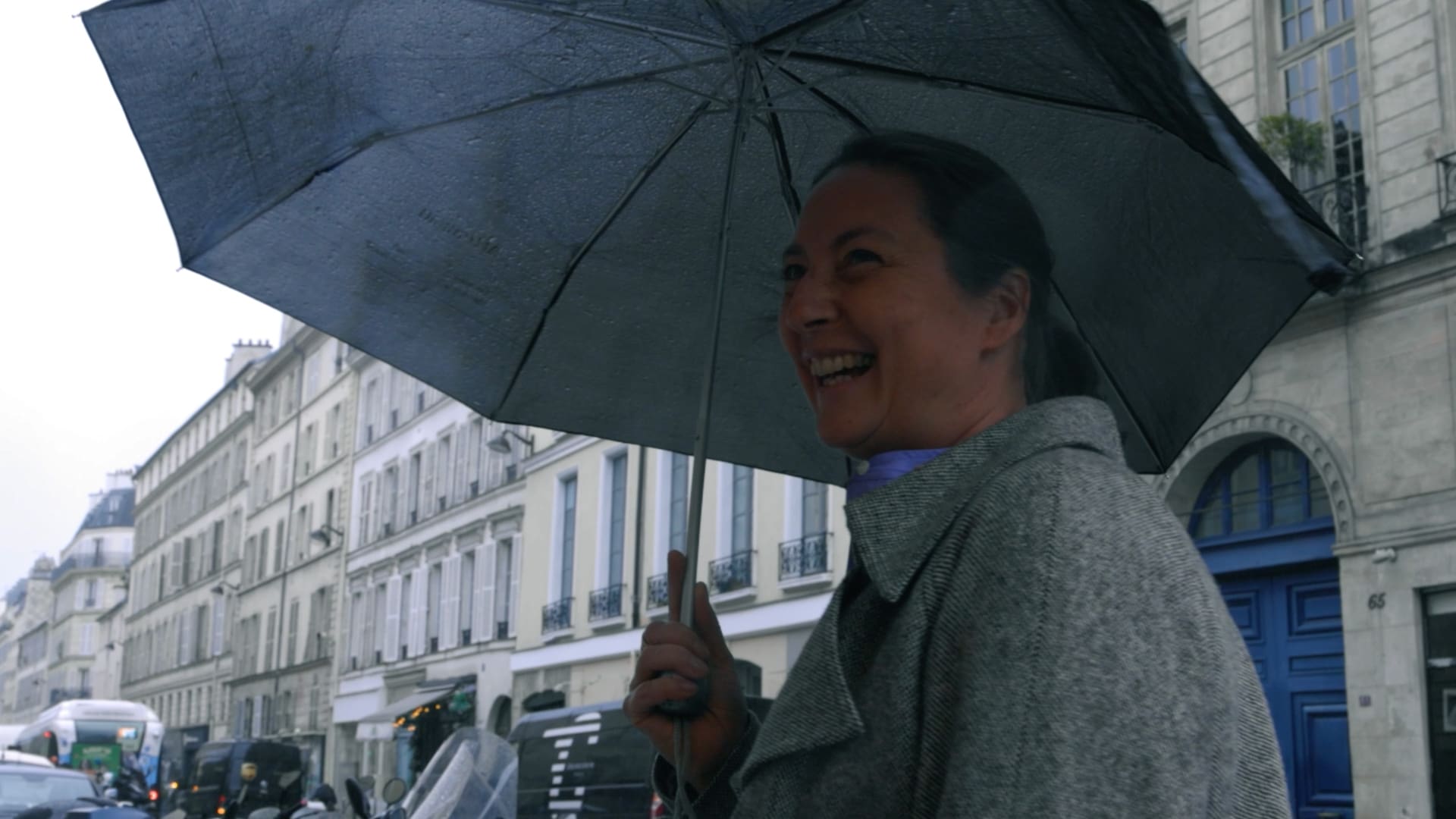
Sometimes when you meet someone, you just click. For Stephanie Kalb and Chair of Interior Design, Sandra Olave, a shared elevator ride at College for Creative Studies was that moment. And it would prove to be pivotal in paving a career pathway for a lifetime passion for interior design.
I love this job because I love to draw things and then make it into reality.
What sparked your interest in interior design?
I was taking evening classes at CCS. At the end of the semester, I came to this exhibition just to see it with my friends. As I’m getting out of the lift, I see this fantastic woman – this charismatic woman coming at me. She said, “You are Stephanie Kalb.” I was like, “Whoa. I don’t know this woman.” And that was Sandra Olave, the head of the Interior Design department. She said, “I want you in my class.” I have to tell you that this little sentence, for me, was very boosting. It really boosted my interest in interior design and materials. Then I studied for four years at CCS in the Interior Design department.
Did you always know that you wanted to go into interior design? Or is this something that you realized later in life?
I believe I knew it, but I didn’t understand it at the beginning. When I was younger, I started to study marketing for five years or so. But I was very interested in interior design. I was going to all the fairs in Europe. I was visiting all the construction sites that I could. Going and seeing and imagining the different rooms that it could be. I’ve always been very open to design.
How does it feel now to see your designs realized in front of you?
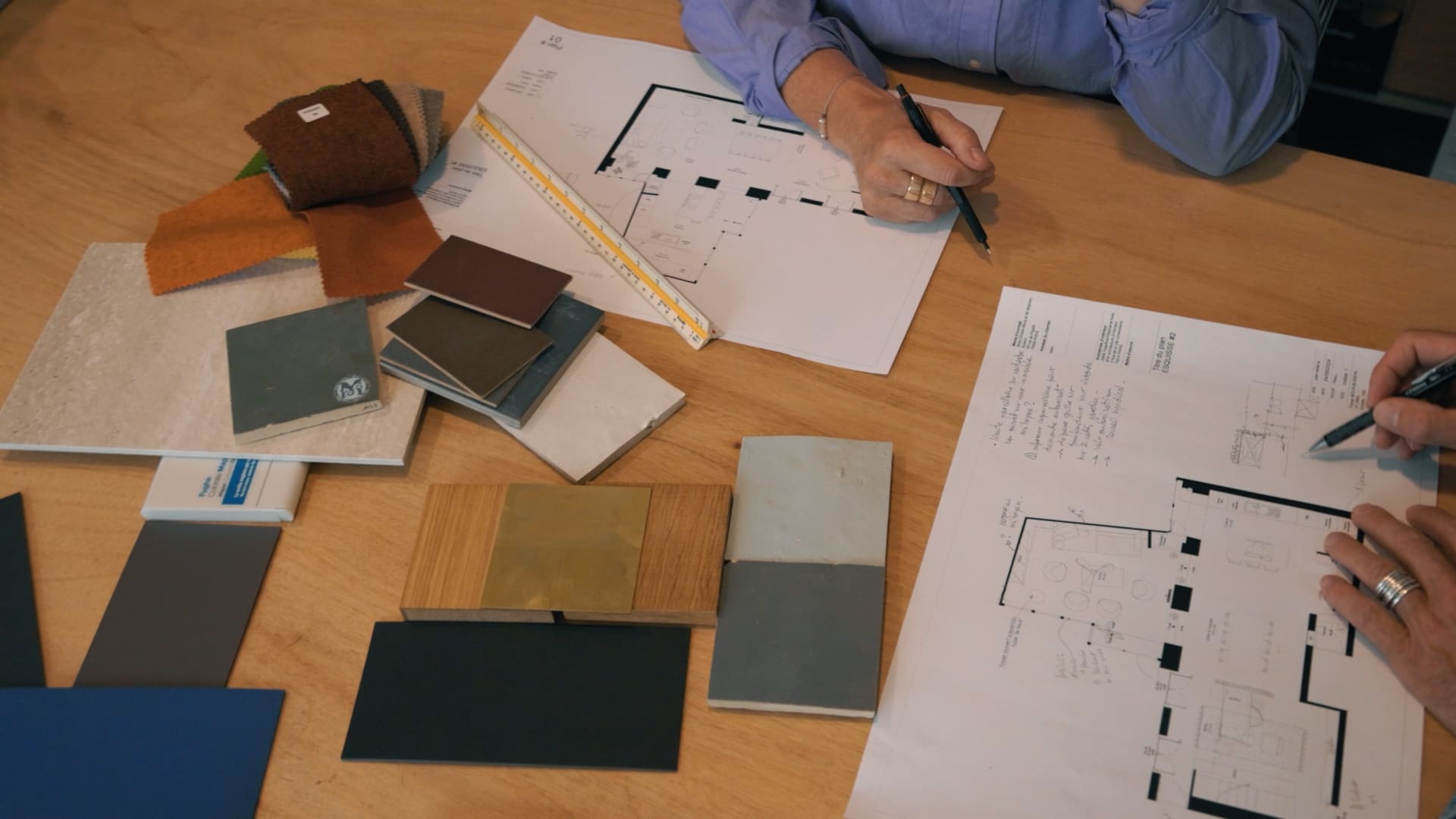
This is fulfilling to me. I love this job because I love to draw things and then make it into reality. This is my passion now. I love to see how drawings can become reality. Fulfilling the customer’s needs. We need to understand the ways they live when we’re doing residential, when we are doing offices, and the way they want the strategy to be put into walls. Because of my background in marketing, I’m very, very interested in this part as well.
What do you love the most about what you do?
Starting the project on-site. This is an exciting moment. You’ve been doing the conception for two months, three months, sometimes even longer, and then it turns into reality, into technical problems, into, “How am I going to work with this facade?” Then working with the workers and having them understand what you want to reach, and understanding their problems as well, is an interesting part for me. Plans are plans, but when you are in it, for example, this apartment was a big challenge because we had so many surprises, and we had to deal with so many problems. I love that.
If you could go back in time and talk to your younger self, what would you say?
Start studying interior design as soon as possible. Don’t waste your time. I have to say that going back to studies when you’re 35 – I was 35 at this point, with three kids – I had different problems from the other students. For me, at the beginning, it was quite a challenge, especially with all the software. I mean, the computer part was pretty tough. I had to work many, many nights on top of days as a mom.
“I would start right away, and not be afraid of this kind of career.”
How do you feel CCS prepared you for a career in interior design?
I have to tell you that I really loved their way of teaching. I could compare it with France, for example. France was very conceptual. Till the end, I mean, I did the last year in France, and it was very conceptual, while CCS was more technical. I love this part as well. Sandra is a great enhancer of talent and concept. She’s very good at bringing you to the end of your concept, and I loved this. And you’ve got other teachers teaching you technical things that are very fundamental when you start to work because you might have very good ideas, very good drawings, but if you cannot make it into reality, it’s a problem. I really loved the two parts of CCS, the conceptual and the technical.
At the end of the four years you transferred, why is that?
I was an expat in Detroit. My husband came to the end of his contract, so we had to go back to France. I couldn’t go on with the CCS studies, and on top of that, I wanted to study in France, because I knew I would practice in France. It’s a different system – electrical system, different rules, of course, different materials. I really wanted to have a graduation in France. So I completed four years at CCS with one year in Paris.
What’s your ultimate goal or dream?
I would love to work in the U.S., actually. I would love to do a project with my European background and to put it back in the U.S. with what I know from there.
Karlee Szczesniak (Interior Design, ‘25) was awarded a $30,000 Angelo Donghia Foundation scholarship for a project completed during her Junior Independent Study course.
While completing her second internship with Walt Disney Imagineering in Orlando, Florida, Karlee received the news of a lifetime. Her father called her from their home in Michigan to let her know she received a letter from the Angelo Donghia Foundation. “Immediately, I was filled with both excitement and fear, knowing this letter had the potential to change my future,” Karlee said. She asked him to open it and read it to her. At that moment he let her know that she was one of only fifteen scholarship recipients chosen this year.
“I was overwhelmed with emotion. I knew at that moment all of the stress, sleepless nights, and passion I poured into the project were undoubtedly worth it. To know that the judges found my work worthy of such a prestigious award was the greatest affirmation of my growth and confidence as a designer.”
The Angelo Donghia Foundation was established by the late Angelo Donghia, an internationally recognized design icon. The Foundation focuses on the advancement of education in the field of interior design. For more than 20 years, they have awarded senior student scholarship awards to benefit deserving students entering their last year in a baccalaureate degree program in interior design at accredited universities, colleges, and schools.
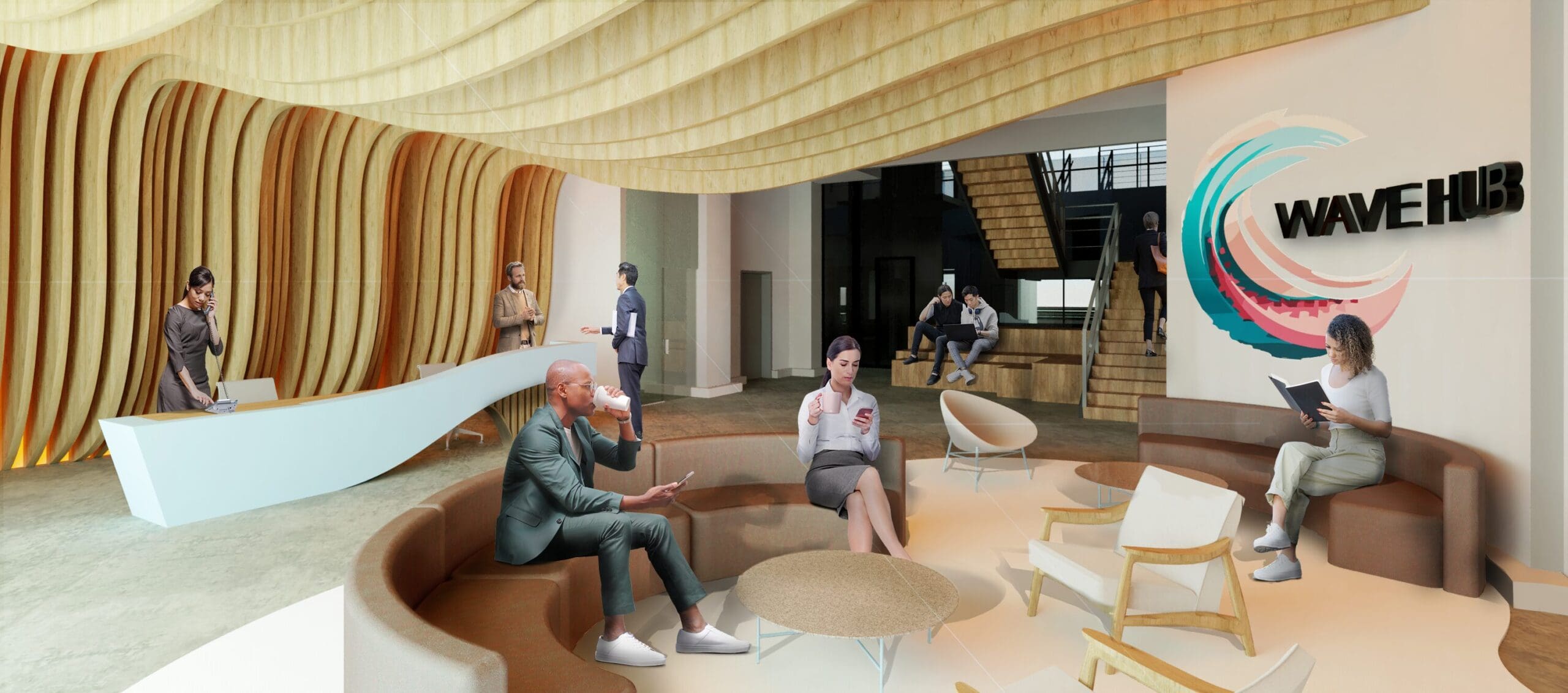
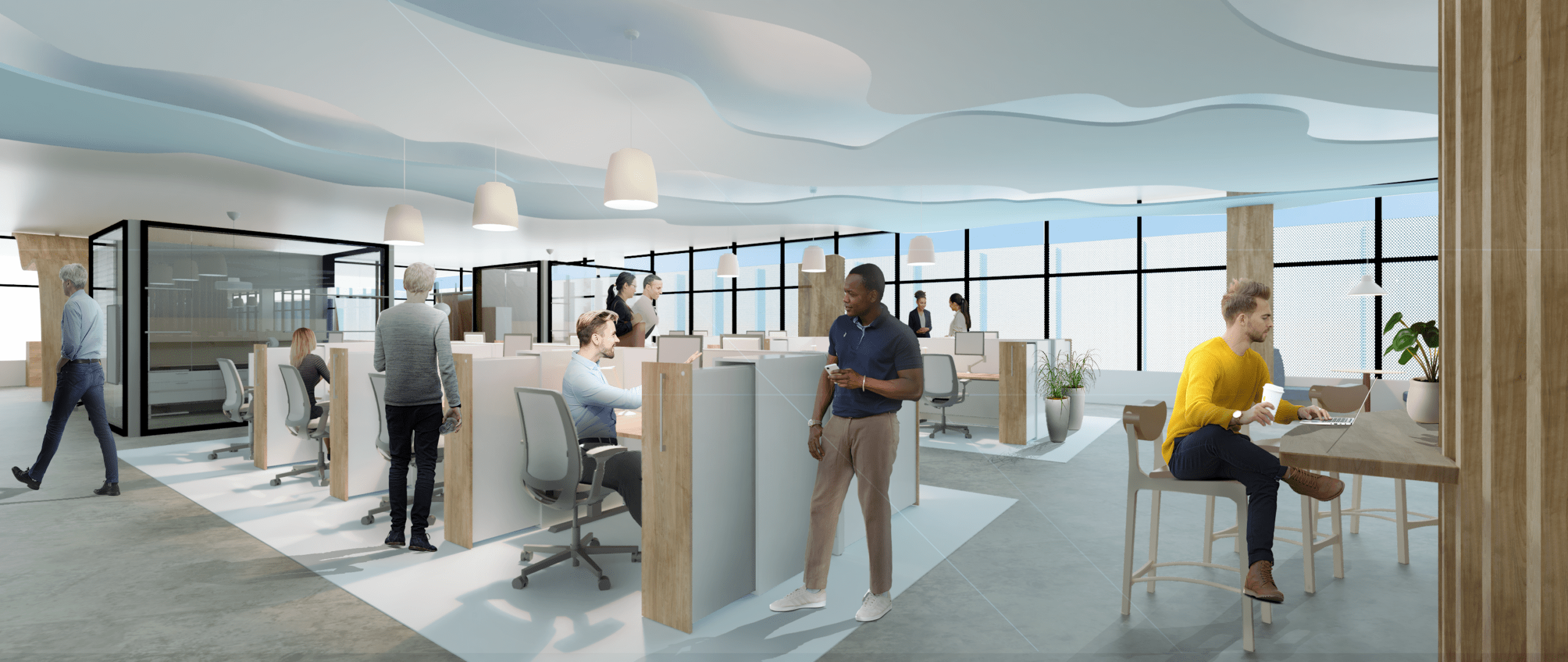
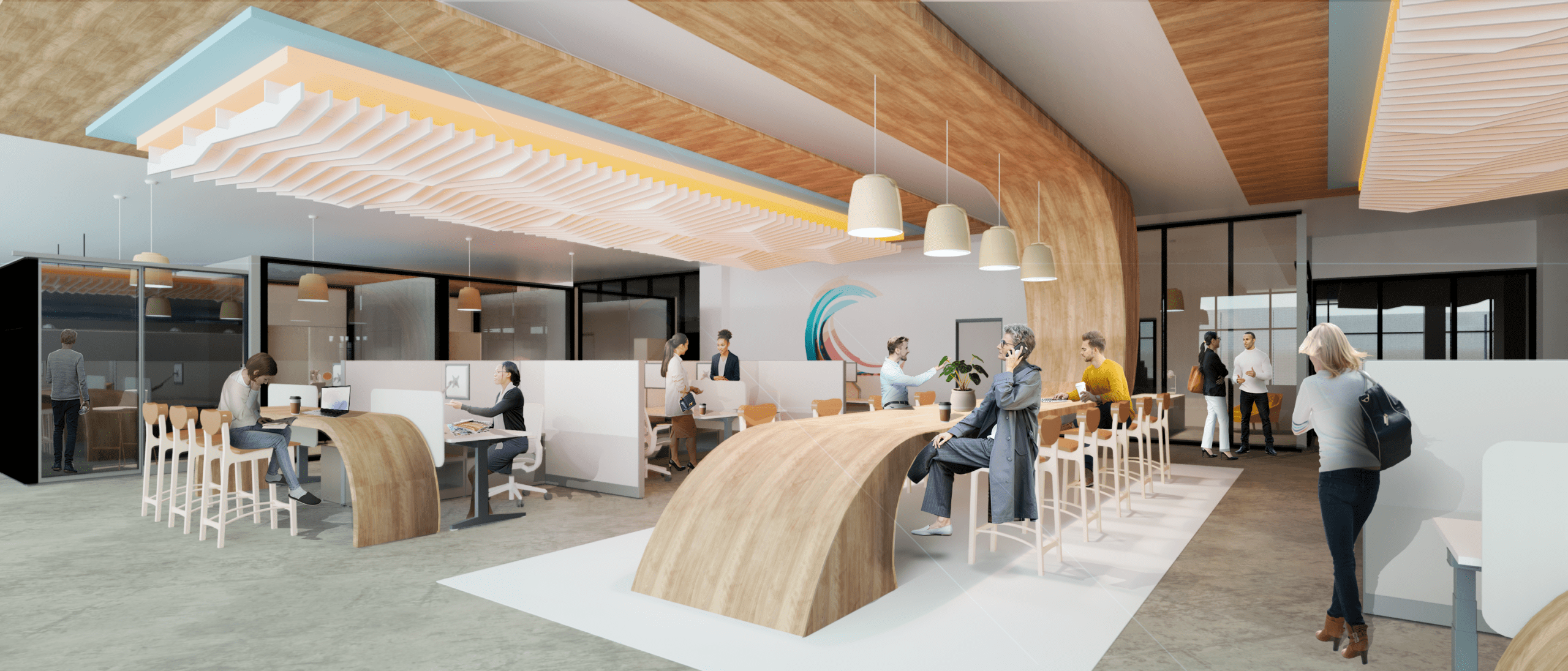
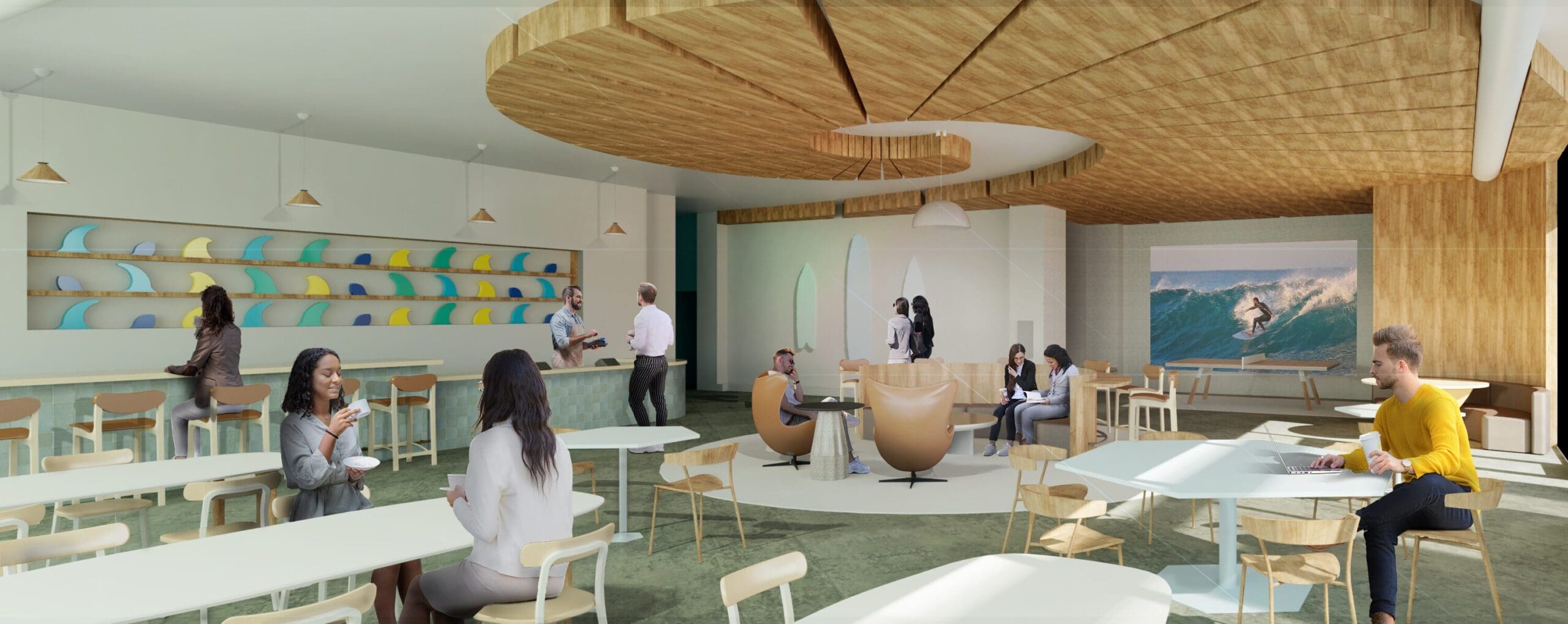
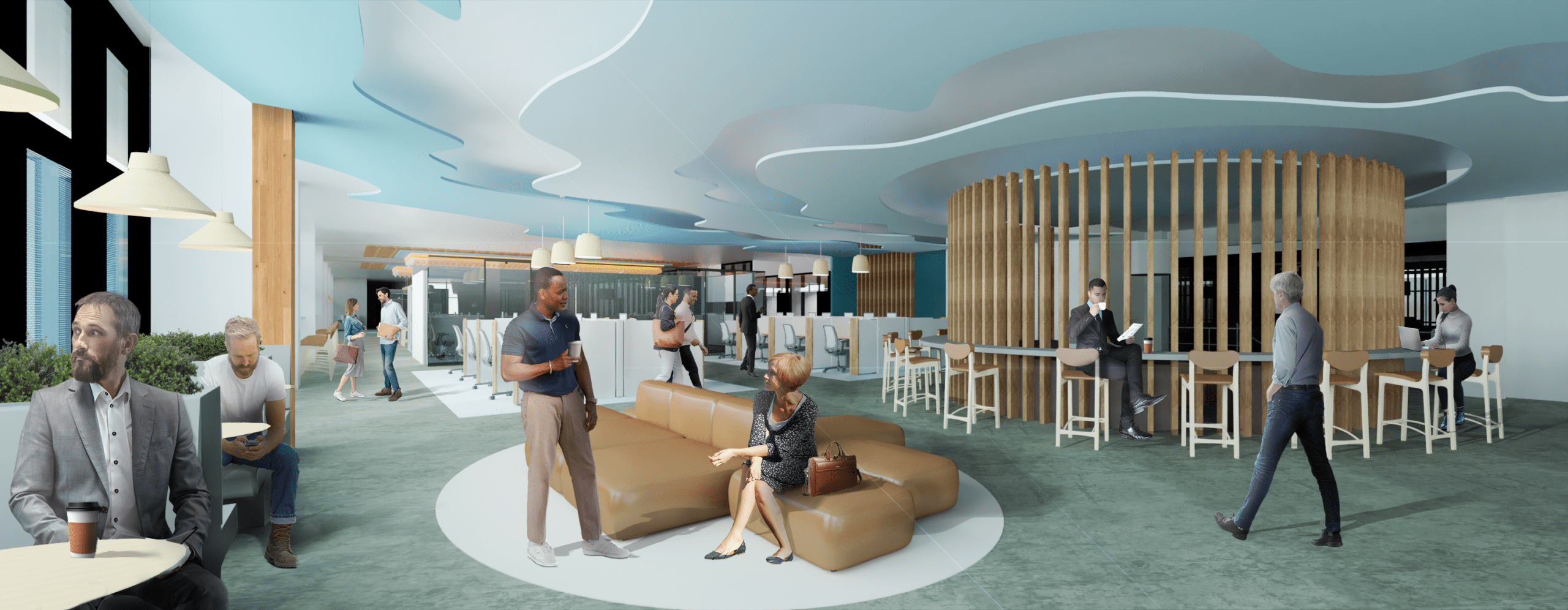
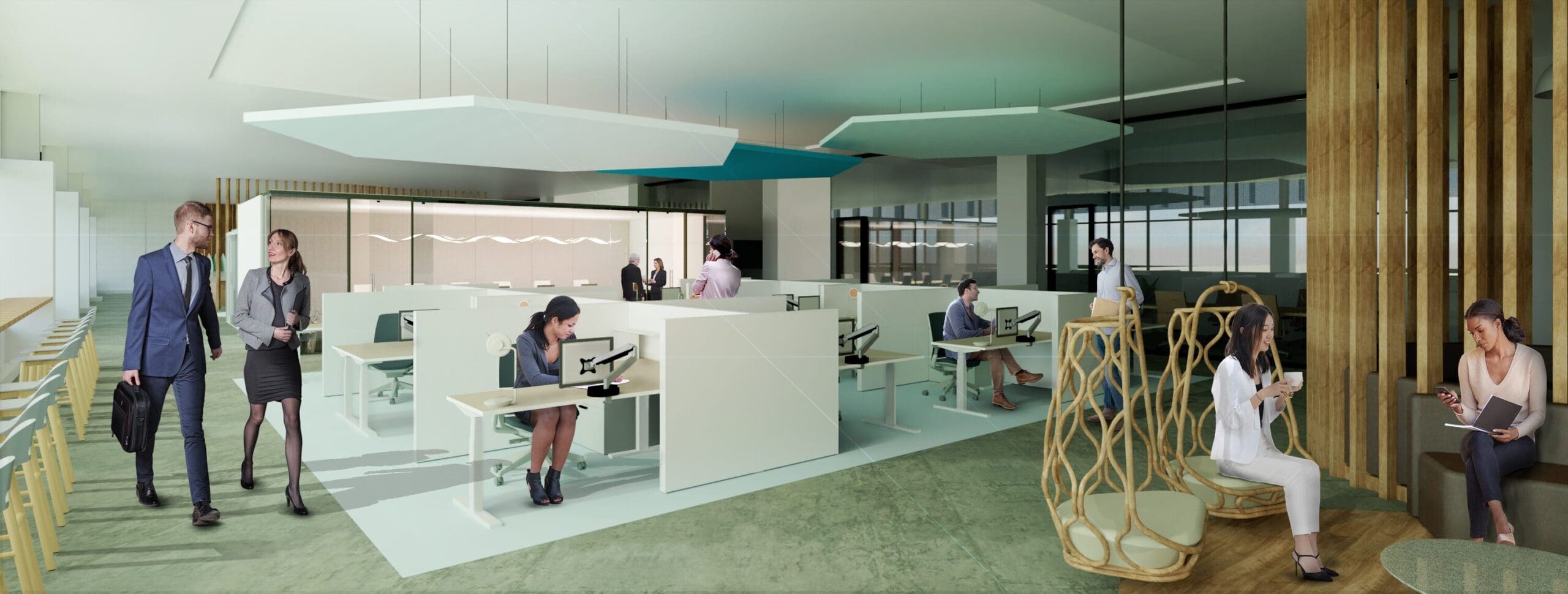
Karlee’s winning project, The Wave Hub is a surfboard and apparel company dedicated to sustainability and ocean cleanup. The inclusive design embraces neurodiverse individuals in their workplace through the areas of concentration, collaboration, and comfort zones to create a sense of belonging. The Hub integrates LEED-certified materials and natural elements like sunlight and clean air to enhance physical and mental health.
“Karlee has consistently demonstrated an exceptional commitment to her design process. She is highly attentive to feedback, applying it diligently to enhance the discipline of her projects through each iteration,” said Sandra Olave, Chair of Interior Design. “She has a firm grasp of human-centered design as evident in her work, as she develops innovative solutions and keenly understands and highlights the profound impact these solutions have. This award is a testament to her dedication, skill, and insight.”
Karlee is open about her past struggles with confidence and finding her place in the vast interior design field. She believes this scholarship award has given her the boost of confidence she needed going into her senior year. “Receiving this scholarship has given me a new sense of self-assurance, and it has allowed me to focus on how I can push myself to the next level as a designer.”
Continuing its expansive work serving communities in Detroit and beyond, the CCS Practicing Design Center supports nonprofit organizations through partnerships offering design solutions from CCS faculty and students
The College for Creative Studies (CCS) is pleased to announce the launch of its Practicing Design Center, partnering nonprofit and community organizations with CCS students and faculty to tackle community challenges using the transformative power of art and design.
“At CCS, our focus on experiential learning and working within our community is of the utmost importance,” said Don Tuski, President, College for Creative Studies. “The Practicing Design Center brings these two initiatives together by pairing the innovative art, design and strategy work students are doing with non-profits and community organizations that offer exciting and challenging opportunities. This expands CCS’ impact in the community.”
CCS has worked with over 200 organizations through its existing Educational Partnerships program between 2017 and 2024. However, the current partnership model poses financial and capacity barriers for nonprofits and small businesses to participate. Thanks to support from Ford Philanthropy, Gilbert Family Foundation, Mercedes-Benz Financial Services, and Detroit Public Library Foundation, CCS has been able to work with nonprofit organizations like C.L.A.S.S. Agency, COTS Detroit, Forgotten Harvest, InsideOut Literary Arts, Life Remodeled, and others.
Learning from those experiences, CCS is organizing its social impact work with students and faculty via the new Practicing Design Center. The center will offer three benefits:
A streamlined process for nonprofits and small businesses to collaborate with CCS students and faculty through classroom projects, design sprints and internship opportunities.
Accessible way for funders and civic leaders to connect their interests to the creative and problem-solving skillsets offered by CCS faculty and students.
Enhanced interdisciplinary opportunities for students to develop comprehensive skill sets through real-world experiences working with nonprofit and entrepreneurial partners.
With support from Ford Philanthropy, the Practicing Design Center is launching its first call for interest for Winter 2025 projects starting on Thursday, September 26, 2024. Interested organizations can complete a brief application form on the College’s Practicing Design Center website. Submitted proposals will be reviewed by a CCS committee and selected based on their alignment with the following criteria: experiential learning and educational value, project impact, project feasibility and scope, partner capacity for support and collaboration, and alignment with College’s mission and principles. Recent examples of CCS’s prior social impact work include the following partnerships:
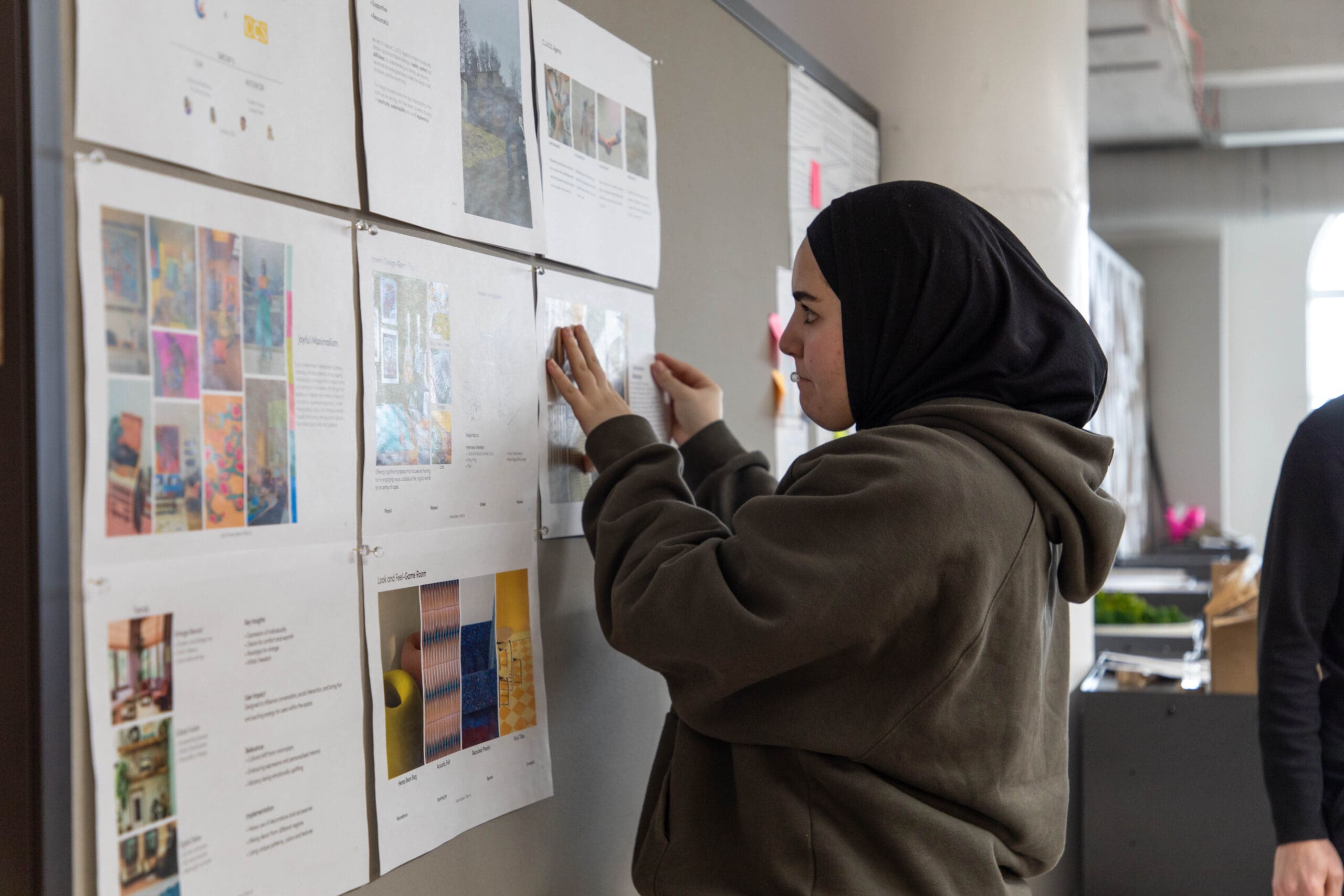
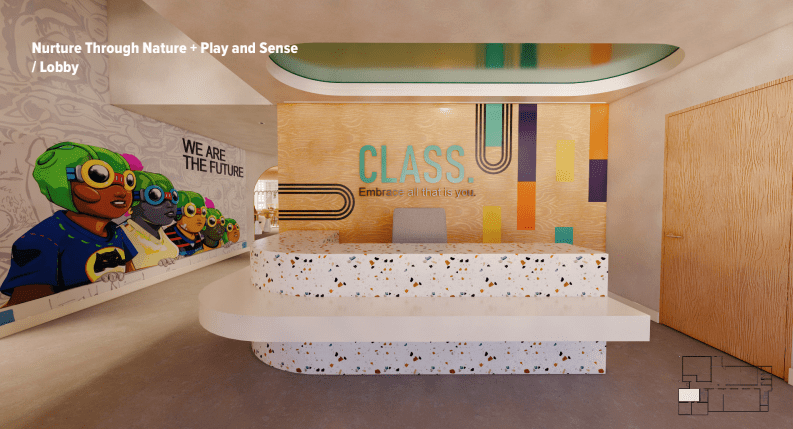
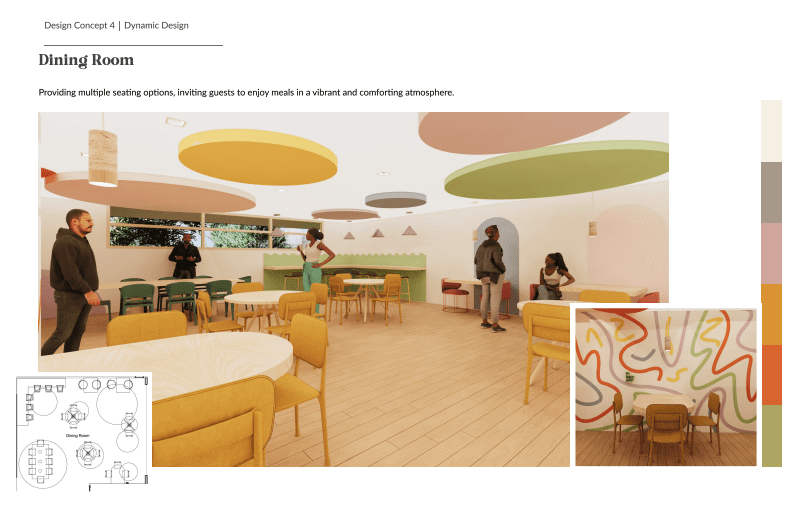
C.L.A.S.S Agency: In the Winter 2024 semester, Undergraduate Interior Design and Graduate-level Color & Materials Design students worked together to develop a comprehensive design for a vacant building that C.L.A.S.S. wants to repurpose for a safe house and resilience hub for youth and young adults. The students created visual assets to help the organization demonstrate a vision for its future.
Life Remodeled and Durfee Innovation Center: In the fall 2020 semester, Communication Design students created brand identity strategies that could function across multiple media platforms in order to meet Life Remodeled’s diverse communication needs and to support the multifaceted nature of the Durfee Innovation Center’s role in Detroit’s west-side neighborhood. Through the Practicing Design Center, CCS will place two students this fall at Life Remodeled to help strengthen their brand as they expand into new programming.
“Since our founding in 2010, Life Remodeled’s neighborhood revitalization work has evolved significantly over our first decade. However, a number of branding challenges remained, and we were unable to afford professional assistance,” said Chris Lambert, CEO of Life Remodeled, a CCS nonprofit partner. “Our partnership with CCS Communication Design students was not only a fun process for our team, but the final outcomes were just what we needed.”
“I am ecstatic about the possibilities uncovered by the youth. I am also proud to know that CCS is a gem in the city that anchors an incredible amount of creative genius,” said Dr. Karla Mitchell, Executive Director of C.L.A.S.S. “What the students were able to envision and reimagine after connecting to our mission gives our staff and youth great hope for the kind of community this project will create. The passion and connection to the work that C.L.A.S.S. does was evident at every encounter, every design review and we loved it.”
PRACTICING DESIGN CENTER LAUNCH EVENT
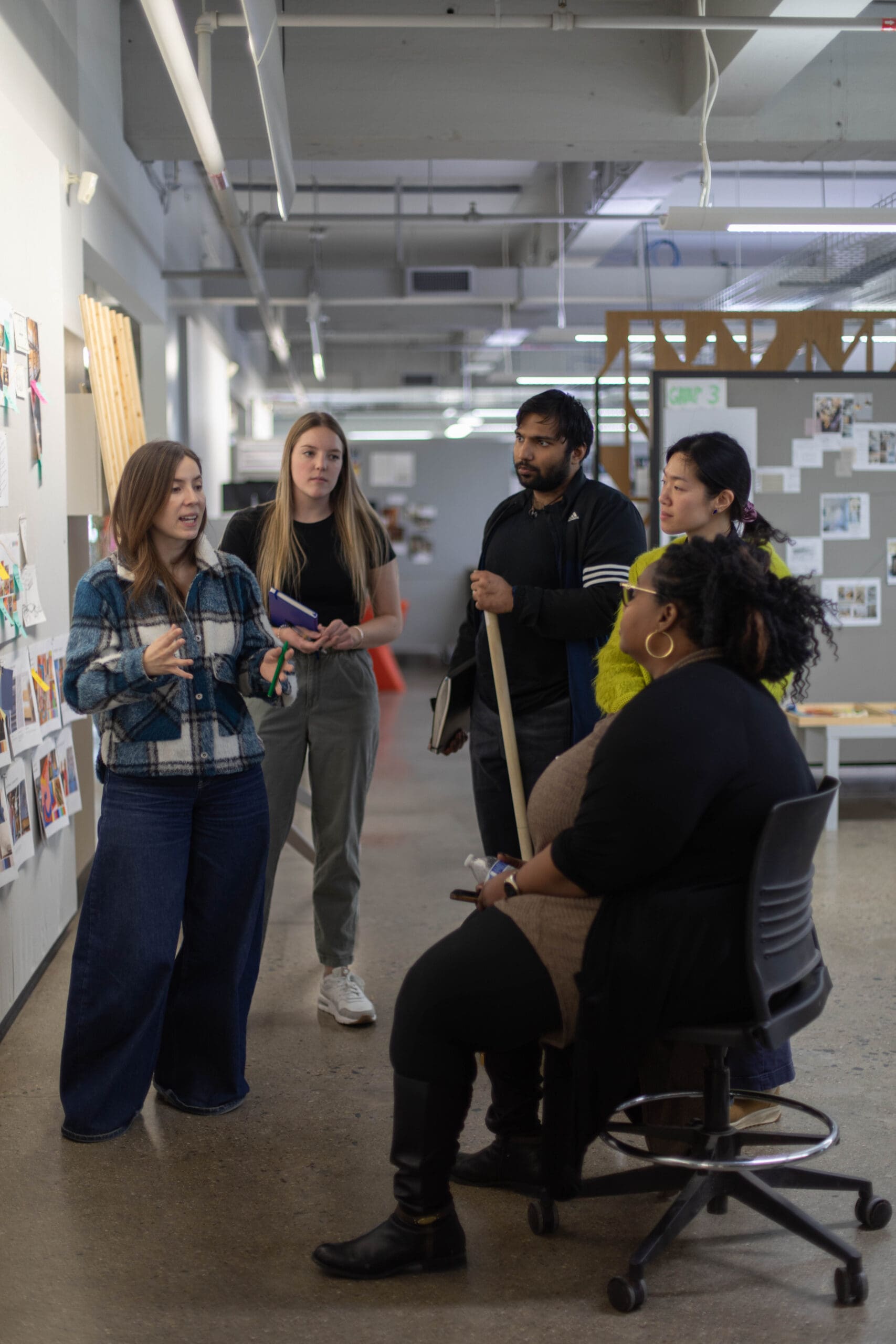
Practicing Design Center launched officially on September 26, 2024 with a pop-up exhibition as part of Detroit Month of Design, The C.L.A.S.S. Project: Transformative Connection with Space and Matter, at the Gensler Detroit office. The exhibition featured design work from CCS students, including Undergraduate Interior Design and Graduate Studies in Color & Materials Design. Students collaborated with C.L.A.S.S. Agency on a project aimed at enhancing systems, environments, and lifestyles of stakeholders through restoration, revitalization, and renewal.
For 20 years, the C.L.A.S.S. Agency has supported outpatient treatment for adults, teens, and children living in the 48219 zip code and its neighboring communities providing vital prevention, intervention, and substance use disorder treatment. Their mission is to provide strategies and treatment services for families focusing on improving quality of life.
“Designing for C.L.A.S.S. brought me out of the city center to look at how other neighborhoods build up their local connections. Through research, we found out how under-resourced some of these places are. Designing for this project gave me a new understanding and opportunity to really do something for the city that we are living in.” – Yuya Cheng, MFA Color & Material Design
Dr. Karla Mitchell, executive director of C.L.A.S.S., explains that understanding the CDC’s Distressed Communities Index is crucial to grasping the necessity of C.L.A.S.S. in Detroit. The index provides a detailed view of economic well-being at the zip code level, highlighting widespread distress across the city. She also notes that their office location is among the areas most affected by suspected opioid overdoses, closely correlating with the index’s measures of social vulnerability.
For Dr. Mitchell, the nonprofit’s mission is deeply personal.
“Both of my parents had addictions. I recall there being no support for the children and families in a system of services with diminished access and quality. I have an understanding of how support for youth impacted by trauma, distress and social vulnerability should look.”
A newly acquired residential property will serve as the nonprofit’s safe haven for prevention, intervention, and substance use disorder treatment for adults and children. CCS students worked closely with C.L.A.S.S. to design their new headquarters.
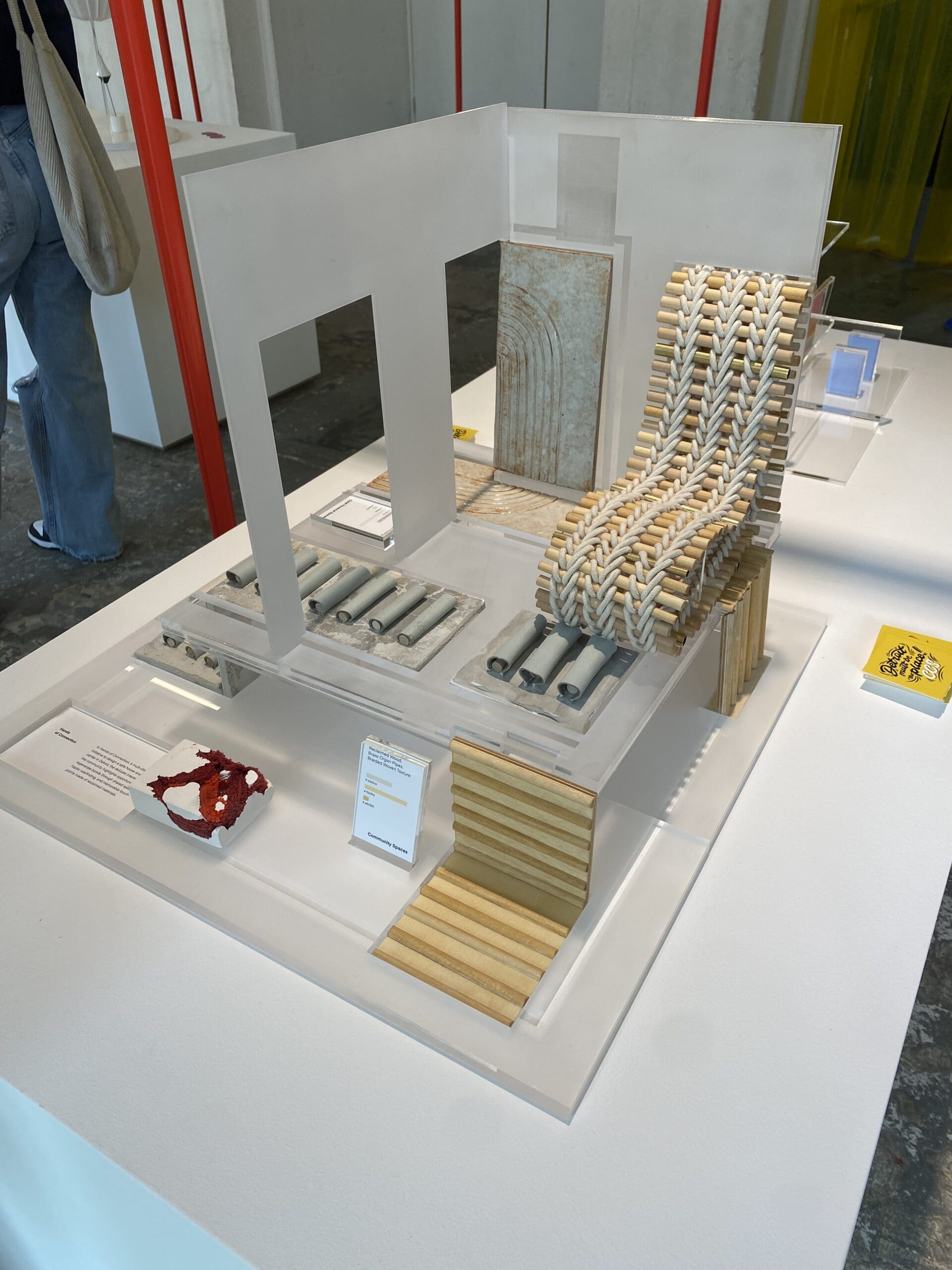
The design brief required students to design for regeneration with a focus on actively restoring and renewing ecosystems, communities, or cultural aspects to enhance health and vitality. The aim was to improve overall well-being by emphasizing sustainable practices, mindful materials, and increased capacity for positive development.
Through in-depth interviews, field research, and creative collaboration, CCS students created final projects that put the needs of the nonprofit’s at-risk community first.
In The Third Space by Caden Musa (Interior Design), Dalaa Kain (Interior Design), Tanaya Kotasthane (MFA Color & Materials Design), and Tanushka Karwa (MFA Color & Materials Design) the group took a residential design approach to the project brief, creating a space that feels like home. While Bridge to Belonging by Laura Lin (MFA Color & Materials Design), Yasmin Childs (Interior Design), and Alejandra Castañeda Gomez (Interior Design; exchange student from Spain) focused on interconnectivity through themes of nature and play that encouraged a greater sense of belonging and ownership among visitors.
Each of the final six group projects presented left C.L.A.S.S. incredibly impressed.
“I am ecstatic about the possibilities uncovered by the youth. I am also proud to know that CCS is a gem in the city that anchors an incredible amount of creative genius,” said Dr. Mitchell. “What the students were able to envision and reimagine after connecting to our mission gives our staff and youth great hope for the kind of community this project will create. The passion and connection to the work that C.L.A.S.S. does was evident at every encounter, every design review and we loved it.”
Chair of Interior Design, Sandra Olave, was thrilled with the students’ final outcomes. “This sponsored project was notable for its strong focus on human-centric design. Working with C.L.A.S.S. and Dr. Mitchell greatly contributed to this emphasis, enabling our students to develop empathy for real-life scenarios encountered in day-to-day experience design.”
“This project is C.L.A.S.S Agency’s dream and reaching out to us was like them entrusting us with their ‘field relay batons’ of hope. We got to work on a project that has a more direct impact on students’ current landscape and got the chance to really interact with the environment as well as the community. I thought this project was a really valuable experience and unfolded many facets of what it means to design for humans.” – An Luu, Interior Design
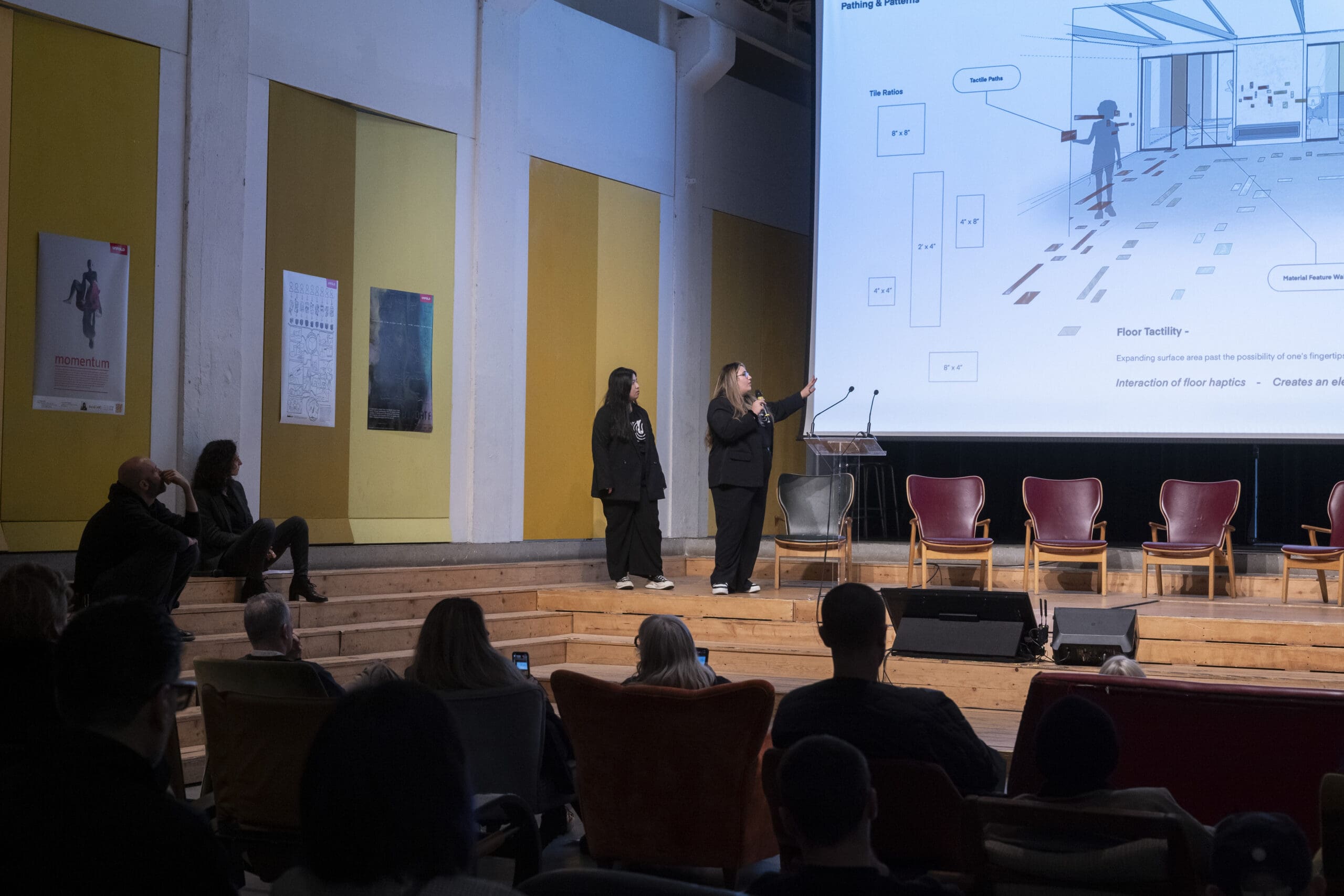
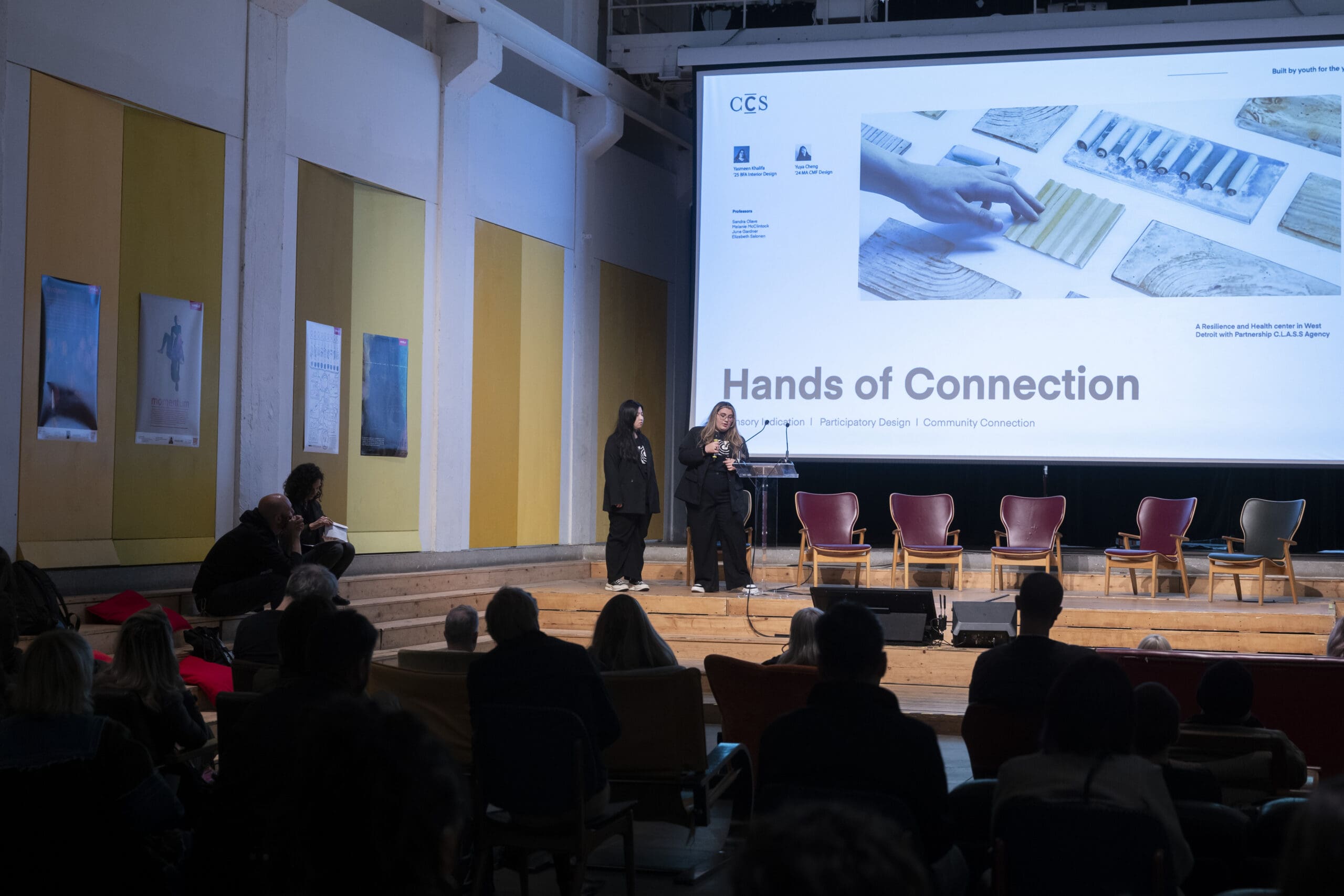
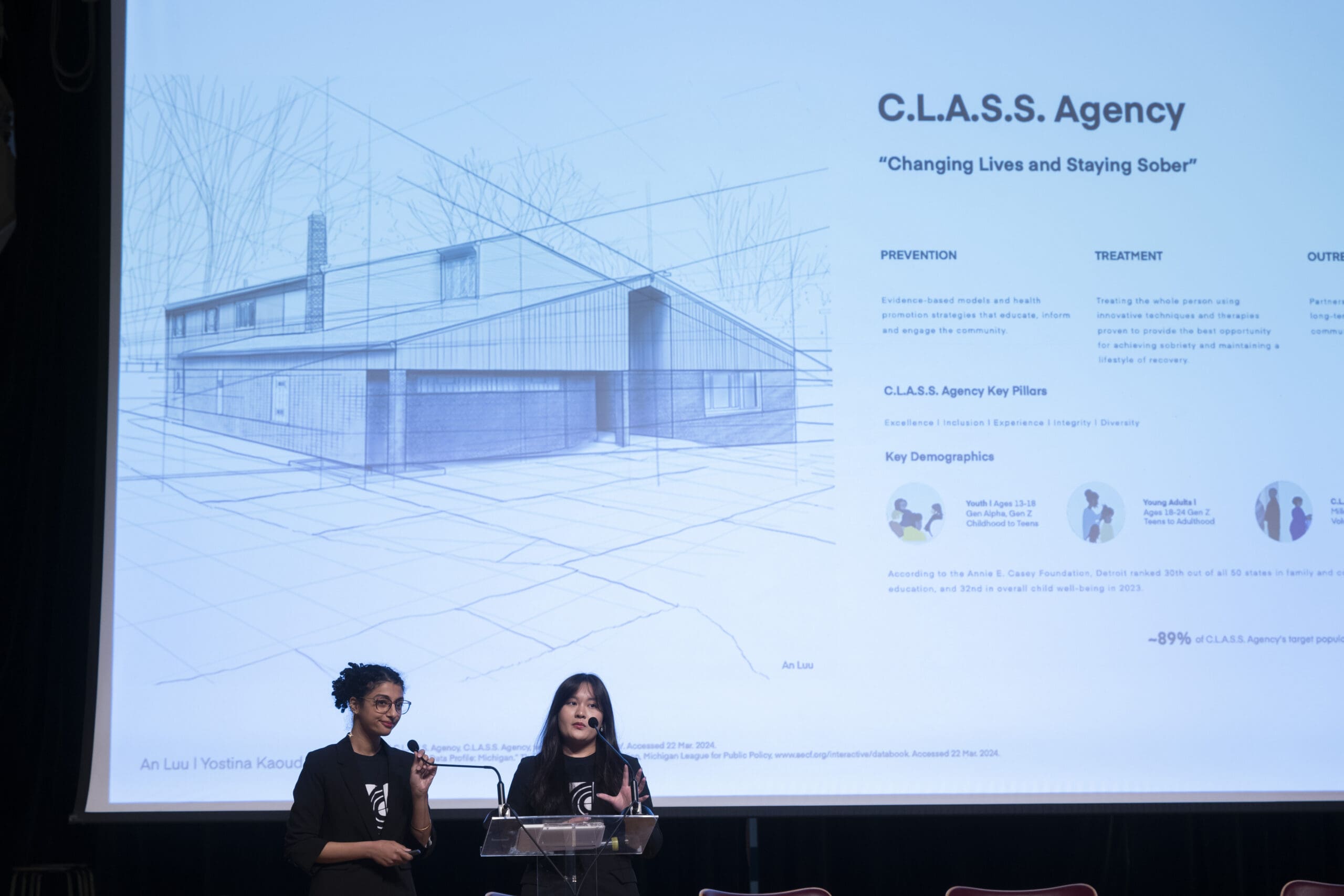
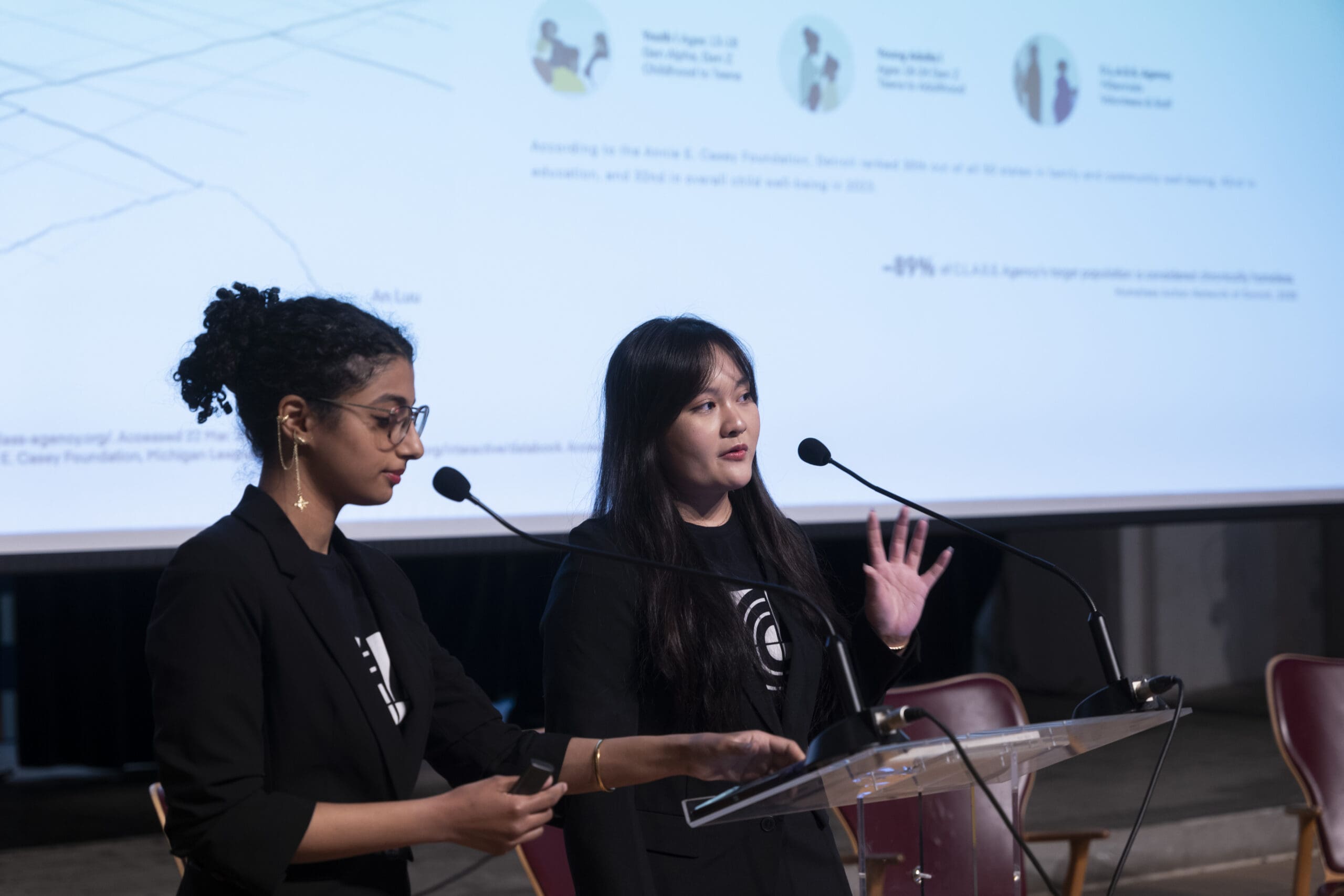
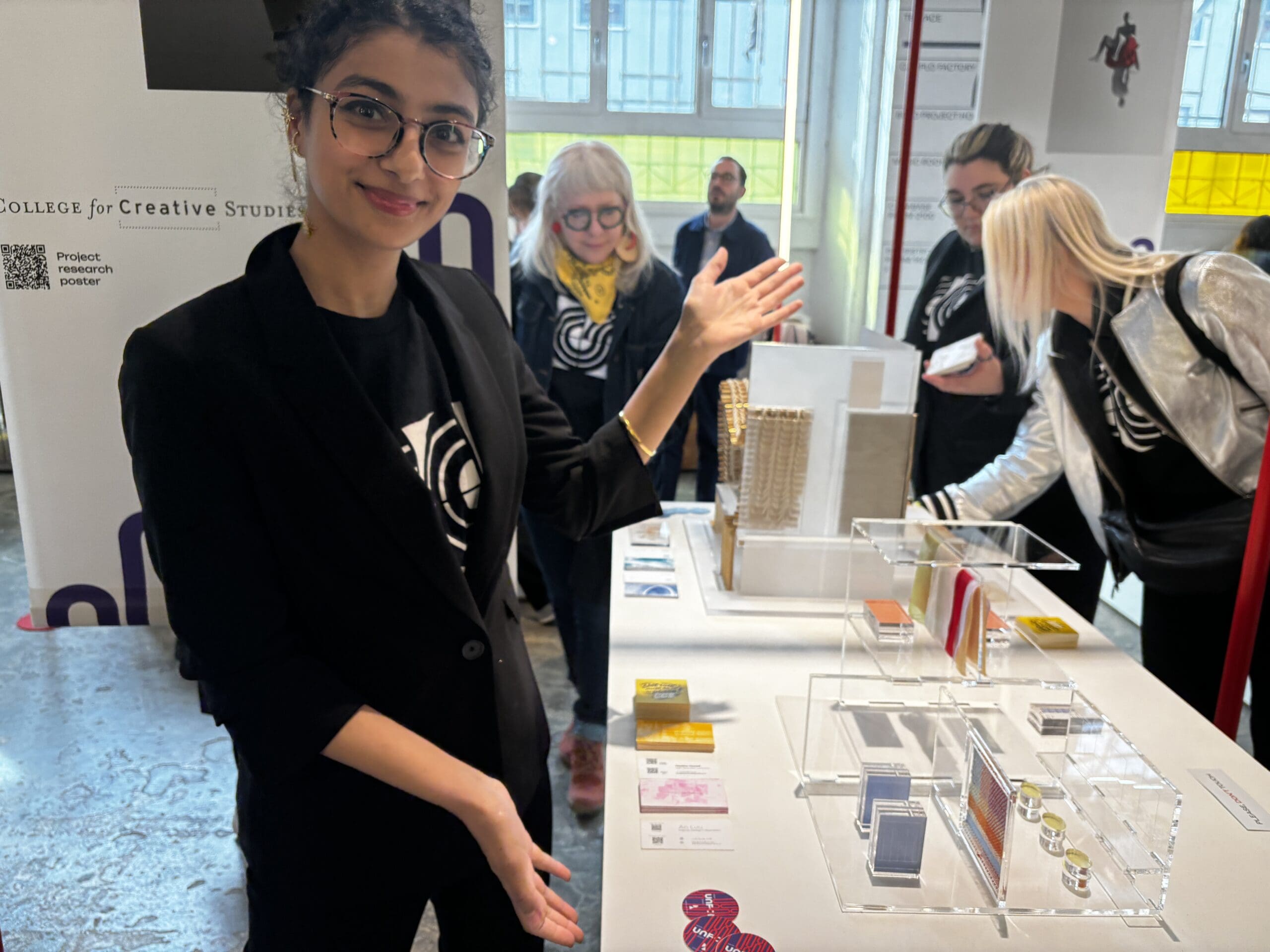
Speaking to the caliber of work, one group of students was selected to present their final project at Milan Design Week, the preeminent global design fair. Yostina Kaoud (MFA Color & Materials Design), An Luu (Interior Design), Yuya Cheng (MFA Color & Materials Design), and Yasmeen Khalifa (Interior Design) had the opportunity to display and present their final project, Sight to Self, at the design fair in May with over 360,000 visitors in attendance.
Color & Materials Design chair, Melanie McClintock, felt student participation in Milan Design Week was a bonus. She emphasized the outstanding work completed by all of the students, which she credits not only to the students but also to Dr. Mitchell’s passion for C.L.A.S.S. “This was the first time our department has participated in a community-focused project working directly with a local non-profit. Collaborating with Dr. Mitchell and the C.L.A.S.S. team was such a positive and enriching experience – so grounded in a collective desire to do good,” said McClintock. “The outcomes of the projects were incredibly thoughtful, intentionally created with deep consideration for the client and the community. I was really impressed with the level of empathy, dedication, collaboration, and engagement from the students, which was a reflection of their passion for the project.”
As for the future of C.L.A.S.S., Dr. Mitchell hopes to break more boundaries and expand care.
“We look to expand our direct services to include Integrative Behavioral Health, Outpatient and Intensive Outpatient for youth and young adults – in a way that does not feel like institutionalized care to those we serve.”
The final projects will be presented this fall during Detroit’s Month of Design, where this year’s theme, Creative Currents, pays tribute to the city’s unique legacy of artistry and innovation while emphasizing the importance of collaboration and collective action.
This project was funded by the new Practicing Design Center at CCS — a dynamic hub where partner organizations receive top-tier design support, students gain immersive, hands-on skills, and the community benefits from enhanced collaboration.
A contingent of three departments from the College for Creative Studies participated in the prestigious Salone del Mobile Milano 2024.
The Salone del Mobile Milano is widely recognized as the preeminent global design fair. This year was a standout year with over 360,000 visitors, 1,950 exhibitors from 35 countries and over 5,500 accredited journalists in attendance. Participating departments were undergraduate Interior Design, undergraduate Communication Design and graduate Color & Materials Design.
“Being able to take a team of students to showcase their student work at Milan Design Week was an opportunity for us to shine a light on their exceptional work, our community and Detroit.” – Melanie McClintock, Chair of Color & Materials Design
“Having my work shown in Milan Design Week felt so unreal, but I also felt so proud of my team. We all worked extremely hard, for many long hours, days and weeks to make sure our project was perfect.” – Yostina Kaoud ’24, Color & Materials Design
In what was once home to the historic Carminati Toselli factory for tram and railway rolling stock, the Fabbrica del Vapore showcased undergraduate CCS Communication Design student work during the INTERDEPENDENCE international exhibition. As part of the larger Milan Design Week, INTERDEPENDENCE reflected relationships connecting projects of Politecnico di Milano https://www.polimi.it/ students with those of 50 international design schools. Four of these projects were from CCS Communication Design students: Luke Fabricatore, Rebecca Hernandez, Yasmin Ali, Madi Ritemburg and Lucy VanEerde. Their projects explored concepts in reframing immigrants through an immigrant lens, a first generation social advocate experience and empowering Native people to reclaim their history.
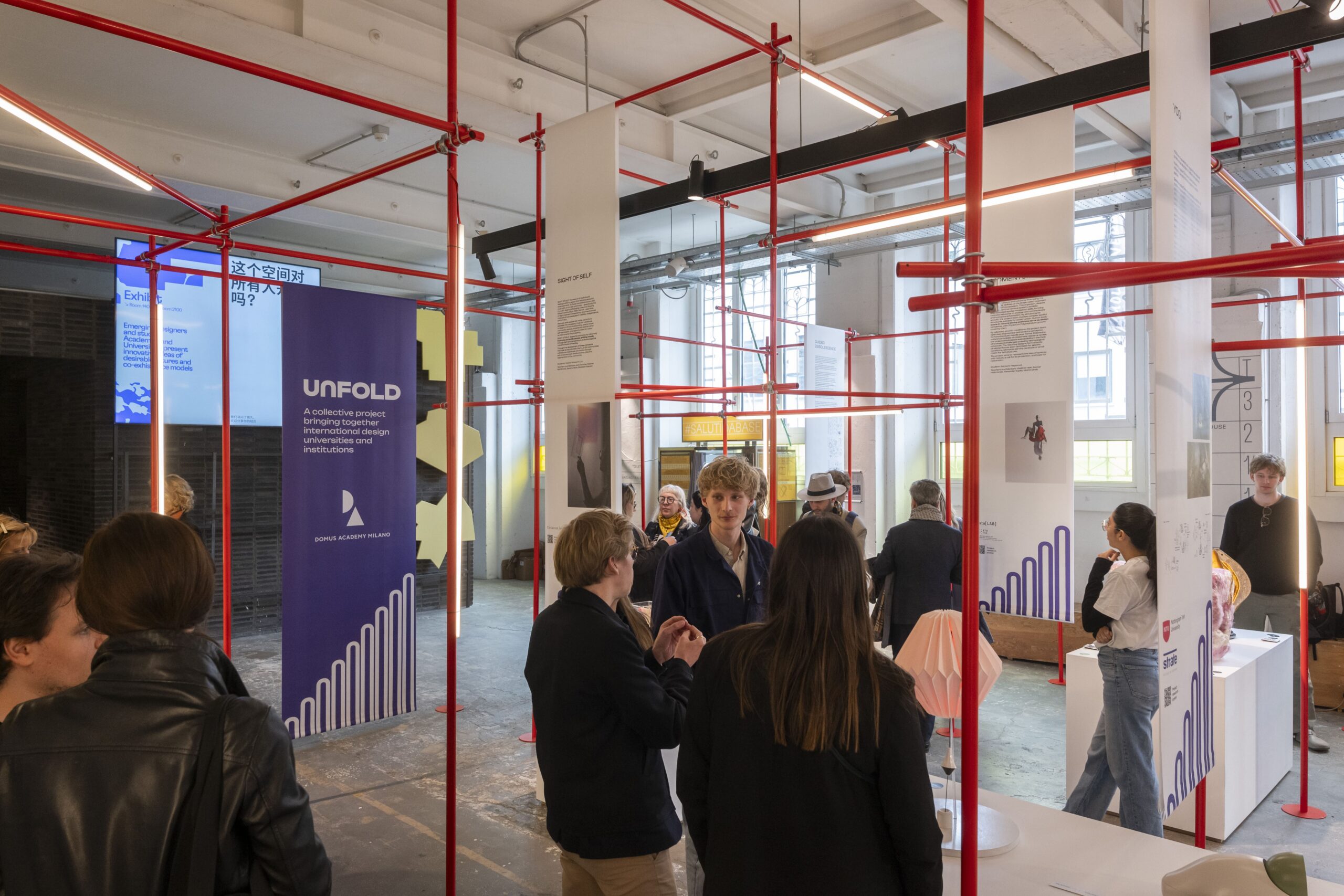
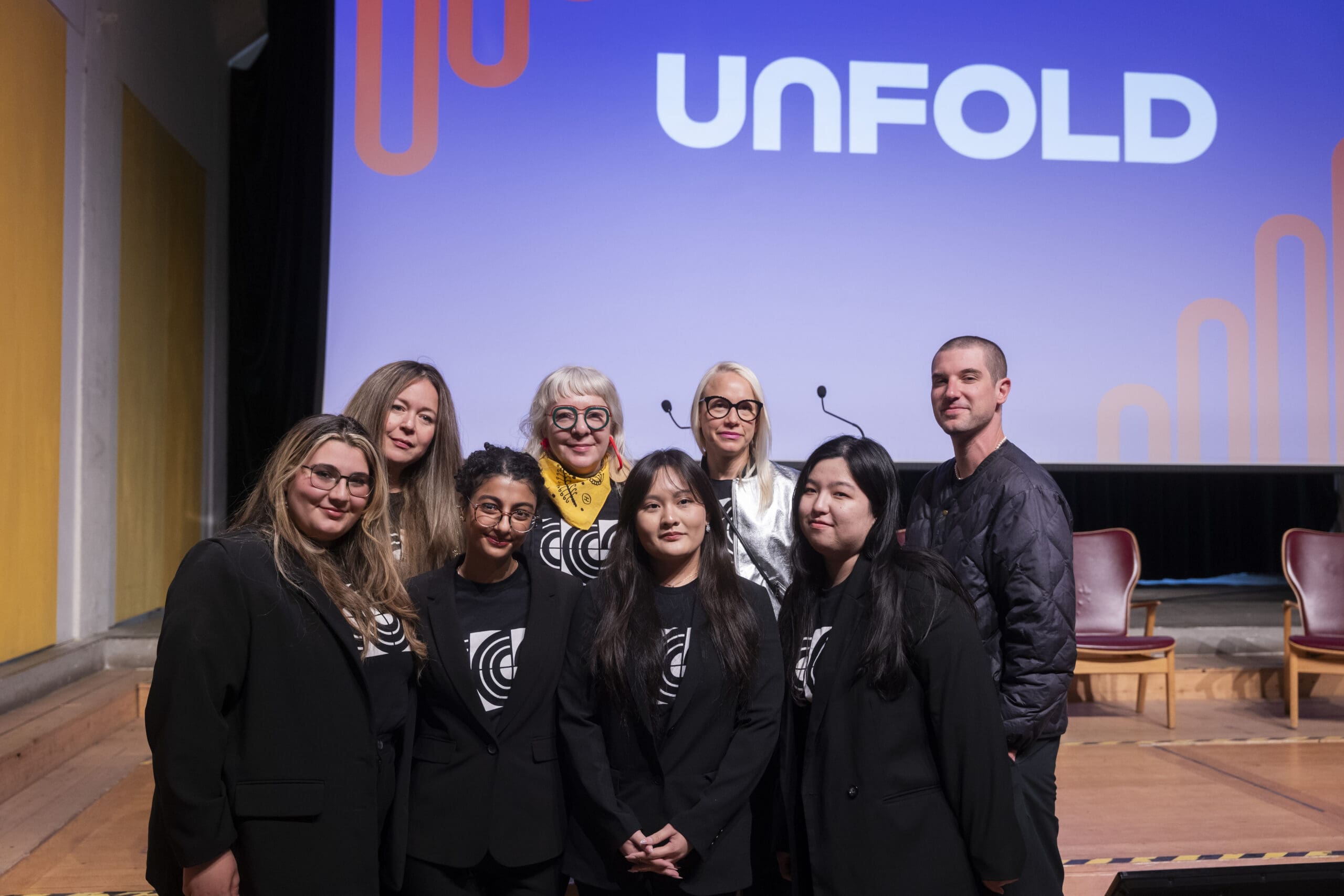
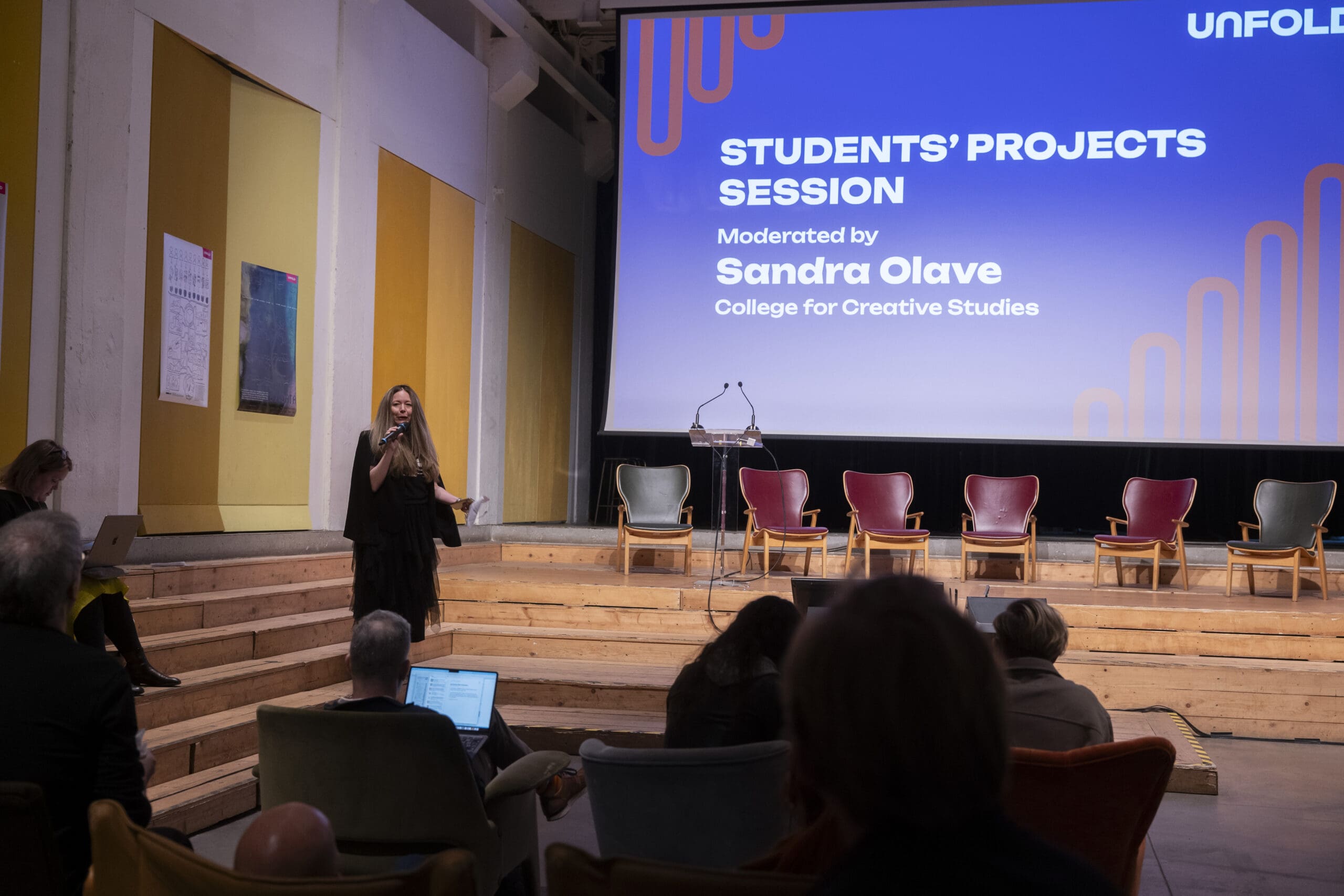
Also participating in Salone del Mobile, undergraduate Interior Design and graduate Color & Materials Design students were one of only six international design schools asked to participate in the six-day UNFOLD exhibition hosted by Domus Academy https://www.domusacademy.com/ . UNFOLD showcased design prototypes addressing crucial global challenges through design as a problem-solving discipline and as a form of communication. CCS students Yostina Kaoud (MFA Color & Materials Design), An Luu (BFA Interior Design), Yuya Cheng (MFA Color & Materials Design) and Yasmeen Khalifa (BFA Interior Design) were in attendance and presented their work from a Winter sponsored project with the local Detroit non-profit Changing Lives and Staying Sober https://www.class-agency.org/ (the C.L.A.S.S. Agency). C.L.A.S.S. asked students to create an environment that promotes a safe space, holistic healing and transformation for a newly acquired residential property that will serve as a safe haven for prevention, intervention and substance use disorder treatment for both adults and children.
“It was an honor to bring both CCS and C.L.A.S.S. Agency to an international viewpoint. So thankful to showcase our group’s work and passion — it was overwhelming in the best way possible. It provided a space with new ideas and new horizons where I was able to talk and learn with fellow students and schools from all over the globe.” – Yasmeen Khalifa ’25, Interior Design
CCS Student Work at Milan Design Week
“CCS has been working for years to involve students in Milan Design Week. The opportunity to be the only U.S. college invited to participate in the Domus Academy exhibit was exceptional and one I will not forget.” – Sandra Olave, Chair of Interior Design
Create an experience digital or analog that moves users into physical spaces that forge new connections.
Boolean is a speculative human centered social advocate product that recognizes the people you brush past in a day in your life. Given the consequences of social distancing and digital socialization, this product is designed to bring Gen Z back in physical contact with on another in a subtle but meaning way. Its not a dating app, a friend app, its not an app at all, its a small device to help you navigate real human interaction on your own terms.
This experience is designed to empower Native people to reclaim their history. Through a series of workshop experiences, Indigenous people would annotate and write over Westernized, Euro-centric textbooks with their histories and perspectives allowing for the reclamation of identity.
“Our goal is to share our current insights, from the creative process, without assuming authority on behalf of the Indigenous community. To to honor the lives and narratives of Indigenous people. All presented artwork and research strives to embody ethical, respectful, and authentic practices. The projects showcased serve as proof-of-concept, recognizing that further development necessitates collaborative content creation and sourcing with the Indigenous community, autonomously facilitated by trained experts.”
“I’m American Too”, uses the negative associations of immigrants in America in order to flip this narrative as a positive, humanistic and more accurate way. The challenge was to move beyond stereotypes in order to celebrate America’s rich history of created by immigrants.
The rise of branding in America has contributed to an identity crisis, highlighting the nation’s imperfect history and its complex role as a perceived leader on the global stage. While our country has always been flawed, it was once seen as a beacon of ideals to emulate. Consequently, we constructed a brand around this image, whether rooted in reality or myth, which now shapes individual perceptions and relationships with our national identity.