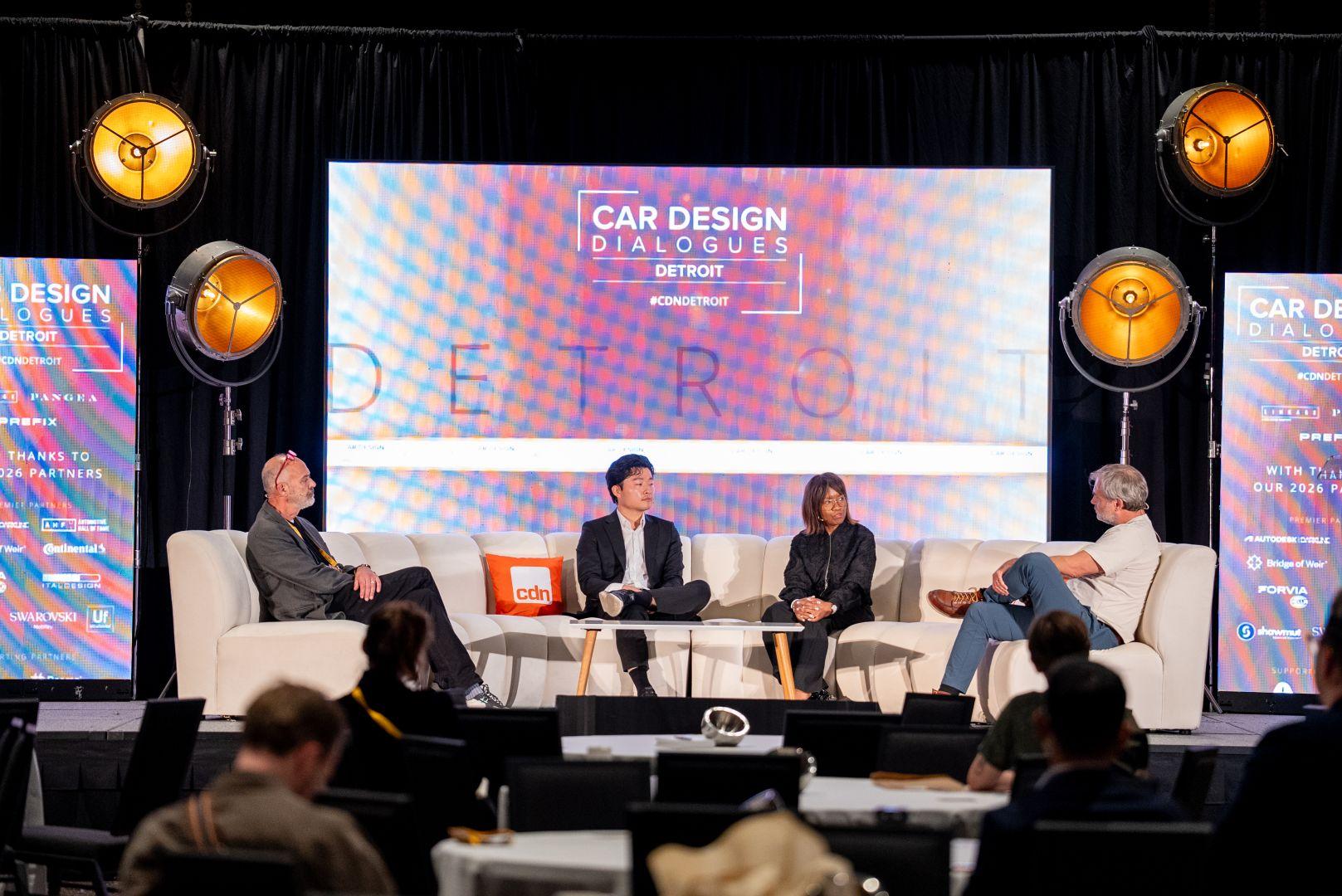
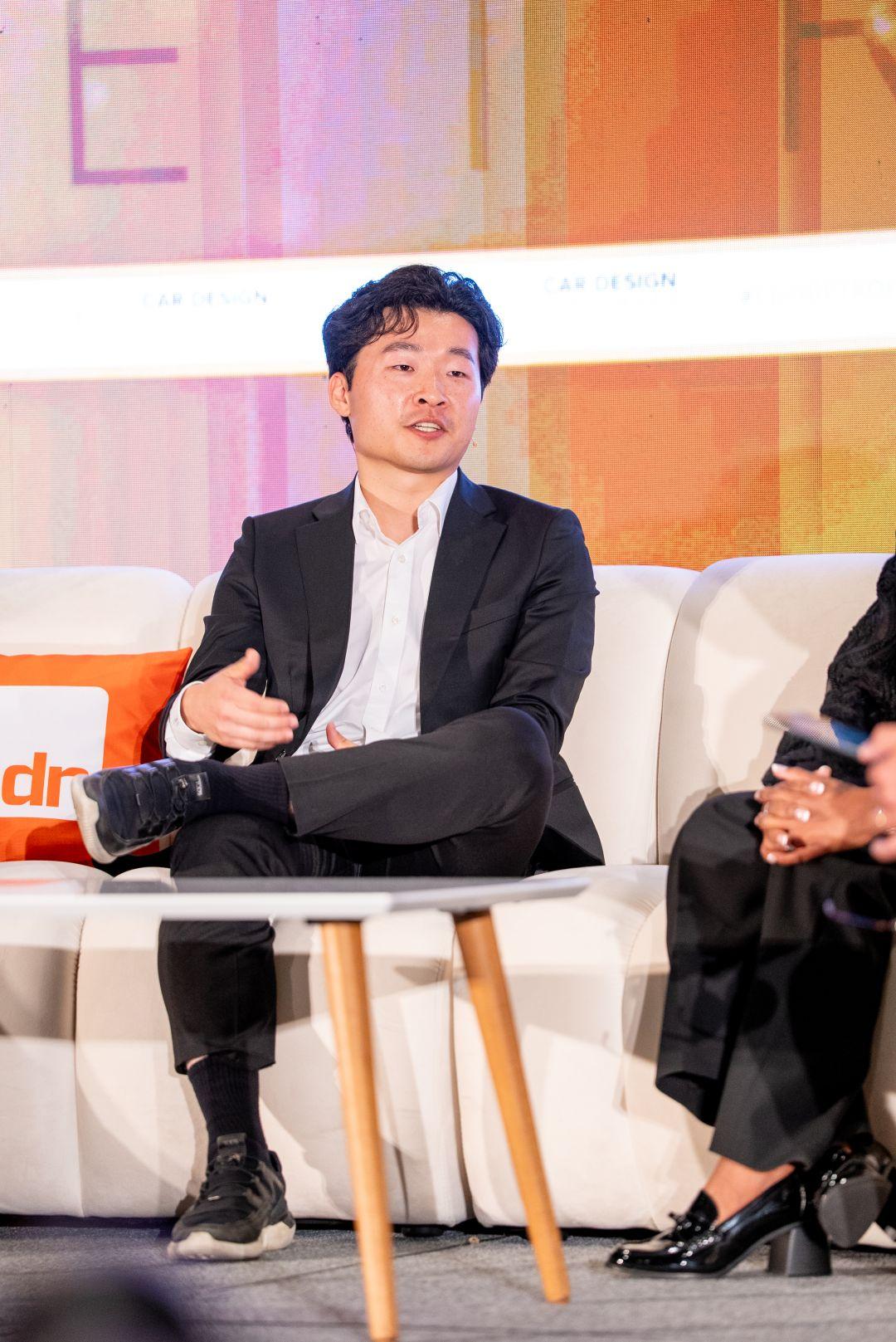
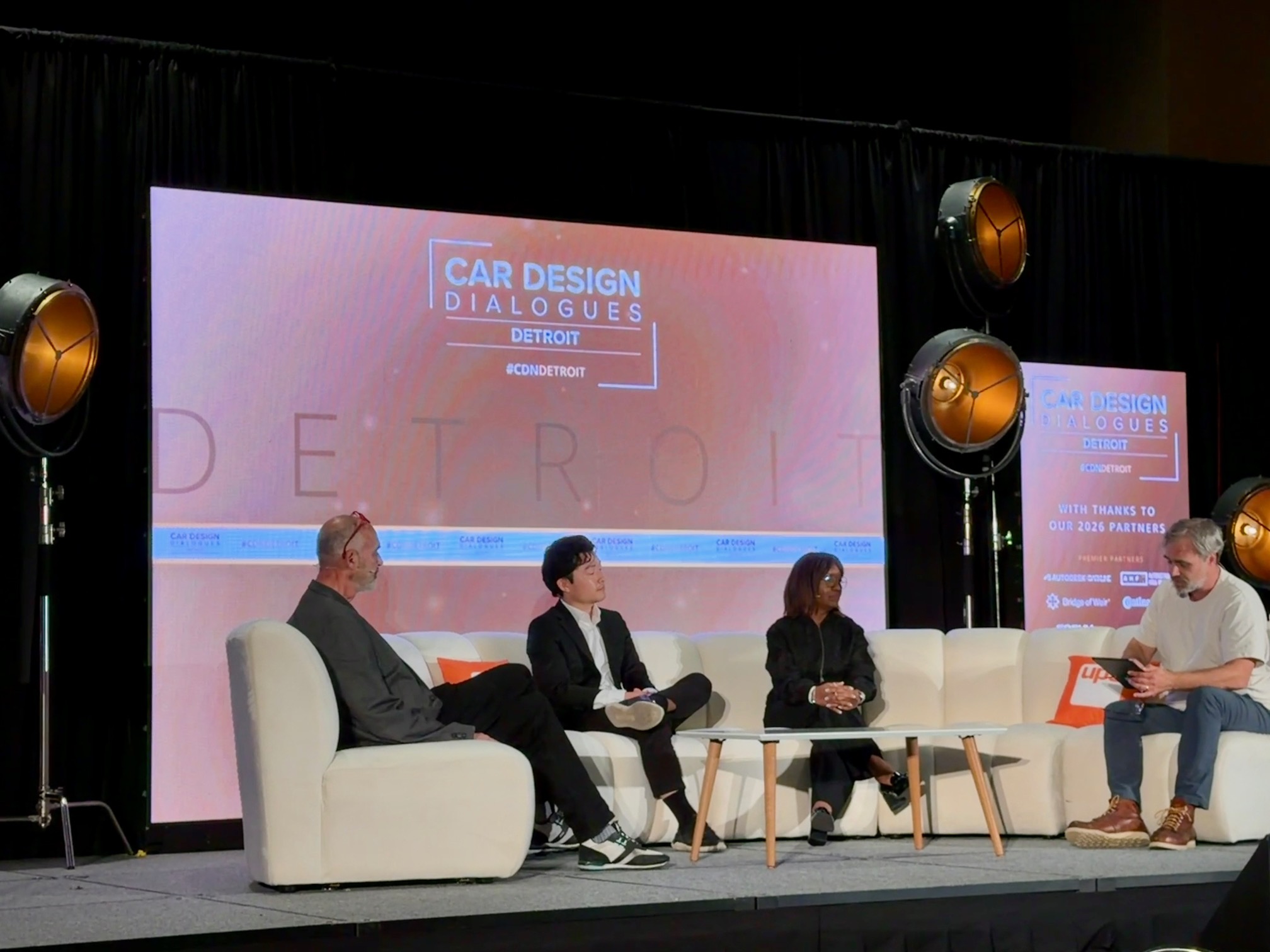
CCS Transportation Design student Jason Song was awarded the Automotive Hall of Fame Global Scholars Award on Thursday, Oct. 8, during Car Design News’ Car Design Dialogues Detroit event at the Department at Hudson’s. The award is granted to emerging automotive designers who demonstrate creativity, originality and the potential to make meaningful contributions to the future of the industry. Song’s thoughtful and user-focused approach to mobility design that combines creativity with purpose earned him this recognition. The award was presented through a partnership with the Ralph L. and Winfred E. Polk Foundation, with additional support from GM Design.
Song participated in a panel discussion following the award ceremony alongside CCS’s Undergraduate Transportation Design Chair, Paul Snyder, General Motors’ Executive Director of Industrial Design, Crystal Windam and Car Design News Editor-in-Chief, James McLachlan. The discussion focused on the future of automotive design, specifically the possibilities of artificial intelligence as it integrates with human judgment and creativity, the importance of foundational design skills and career opportunities for emerging designers.
The Car Design Dialogues Detroit 2026 event concluded with the award presentation and discussion. Song’s recognition highlights both his accomplishments and potential as an emerging automotive designer. It also reflects the Automotive Hall of Fame’s commitment to supporting emerging talent and CCS’s ability to prepare creative talent to shape the future of transportation and mobility design.
Design and education. Two words that have driven John Manoogian’s life and career.
So when Manoogian recently read about former GM colleagues who had established scholarships at the College for Creative Studies, it sparked an idea. After a 35-year career in automotive design and years spent teaching the next generation of designers at CCS, this was another way he could give back.
“What better way to give back and help talented students?” he said.
Earlier this year, Manoogian established the John Manoogian II Endowed Scholarship to support aspiring Transportation Design students who might not have the financial means to pursue and complete their education.
The decision was a natural extension of Manoogian’s long relationship with design education and with CCS, a relationship that began well before the College had become the internationally recognized source of transportation design talent he knows today.
An Early Connection
After earning a bachelor’s degree in Product Design from Michigan State University, Manoogian landed a job as a clay sculptor at Ford Motor Company. But he still hadn’t achieved his goal of becoming a car designer.
Someone suggested he take a Transportation Design class taught by legendary designer and instructor Homer LaGassey at the Detroit Society of Arts and Crafts, now CCS.
At the time, Transportation Design classes were taught in the basement of an old house on Kirby Street. The program itself was just getting started and had not yet become the established source of design talent it would later be.
Manoogian enrolled in LaGassey’s night class and asked him for help developing a portfolio for admission to ArtCenter College of Design in Los Angeles.
“LaGassey had a powerful teaching method. He was a practitioner of tough love. He set the bar very high and expected his students to extend themselves beyond what they thought they were capable of. His exacting expectations helped transform my portfolio for entrance into ArtCenter, and gave us a taste of what to expect in real-life professional design studios.”
Manoogian’s work with LaGassey helped him take that next step. He was accepted to ArtCenter and graduated with honors.
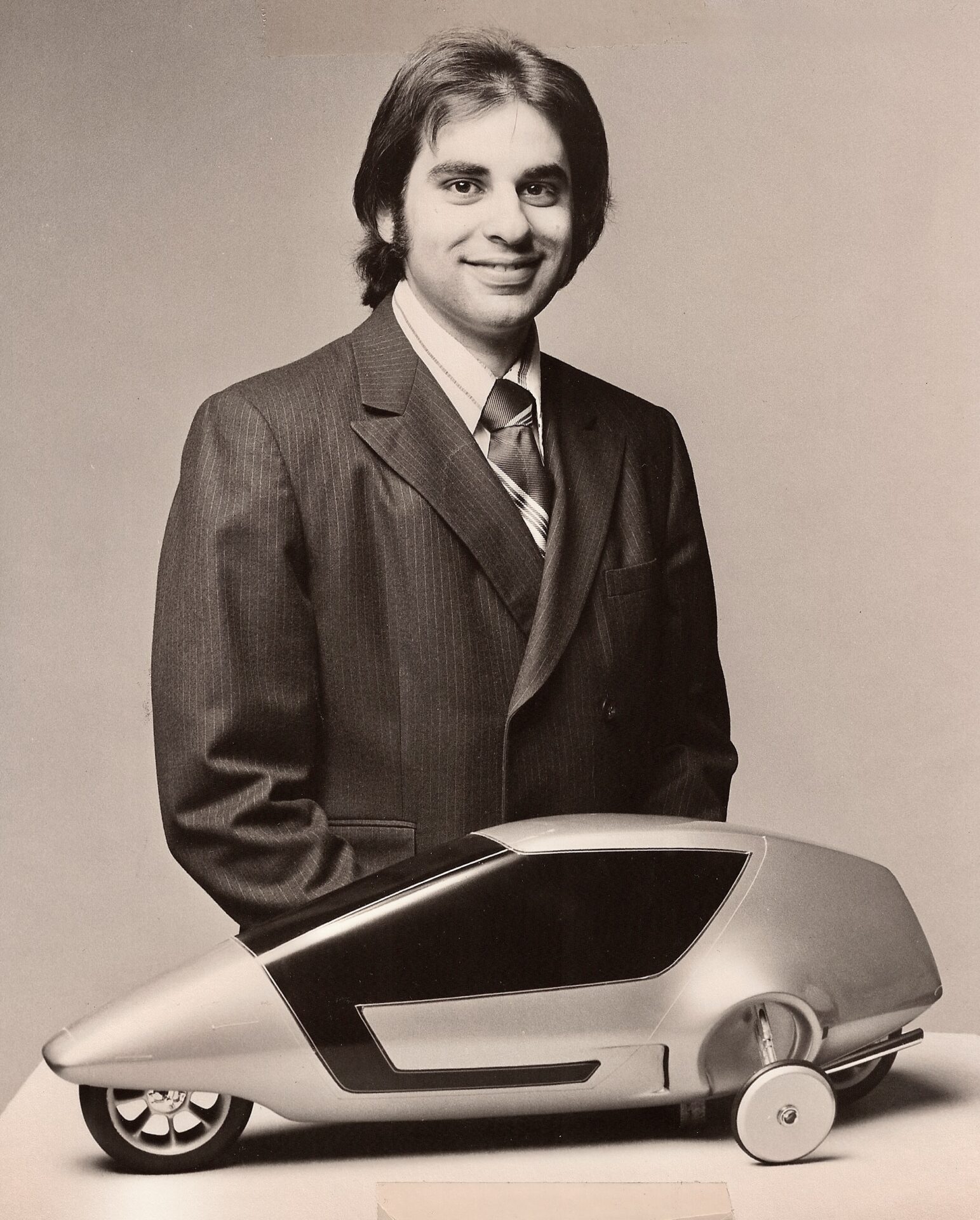
John Manoogian at his ArtCenter graduation (with a model car)
From there, he joined General Motors Design, beginning a career that would span 35 years.
For more than 25 of those years, he also served on GM Design’s Portfolio Team, searching for and interviewing talented graduates to join the company. The experience took him to design schools around the world and gave him an unusual opportunity to evaluate both the state of design education and the students those institutions were preparing for the profession.
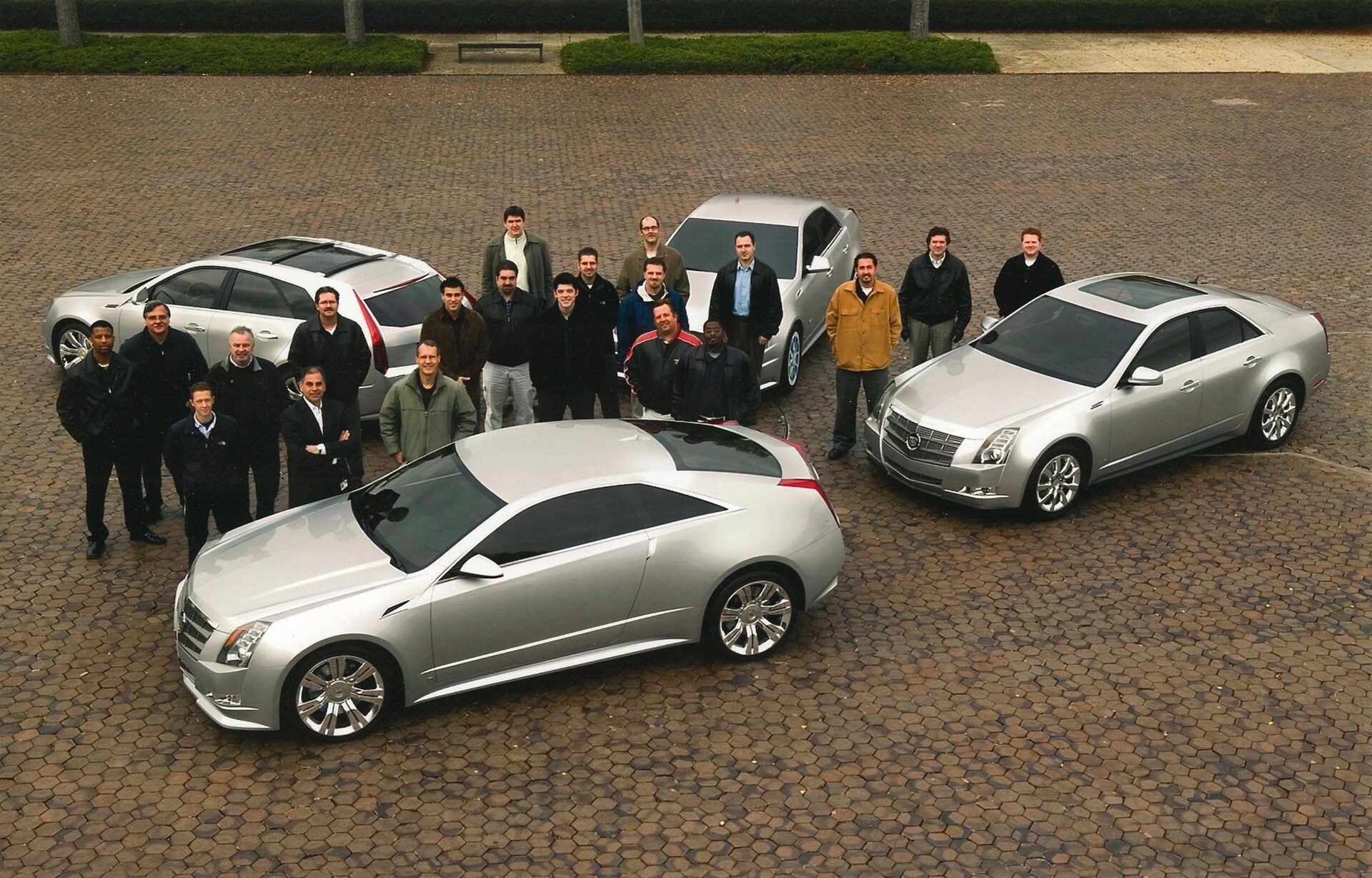
Director of Cadillac Design Team photo with Cadillac CTS Coupe/Sedan/Wagon and design team
Over those same years, he watched the College for Creative Studies evolve.
“CCS had become a source of incredible design talent and had established itself as one of the premier international transportation design educational institutions,” Manoogian said.
After several years evaluating student portfolios, it became apparent to Manoogian that CCS had become an emerging source for design talent. The students not only possessed the technical drawing/design skills, but were being trained to be problem solvers and storytellers. Necessary skills for success in the professional design studios.
Returning to CCS
When Manoogian’s 35-year career at GM came to a close in 2009, he returned to CCS, this time as an adjunct instructor teaching senior Transportation Design students.
“Here was an opportunity to give back to the profession that I had been blessed with for so many years,” he said. “I could help and guide future mobility designers in preparing for the challenges facing them in the future.”
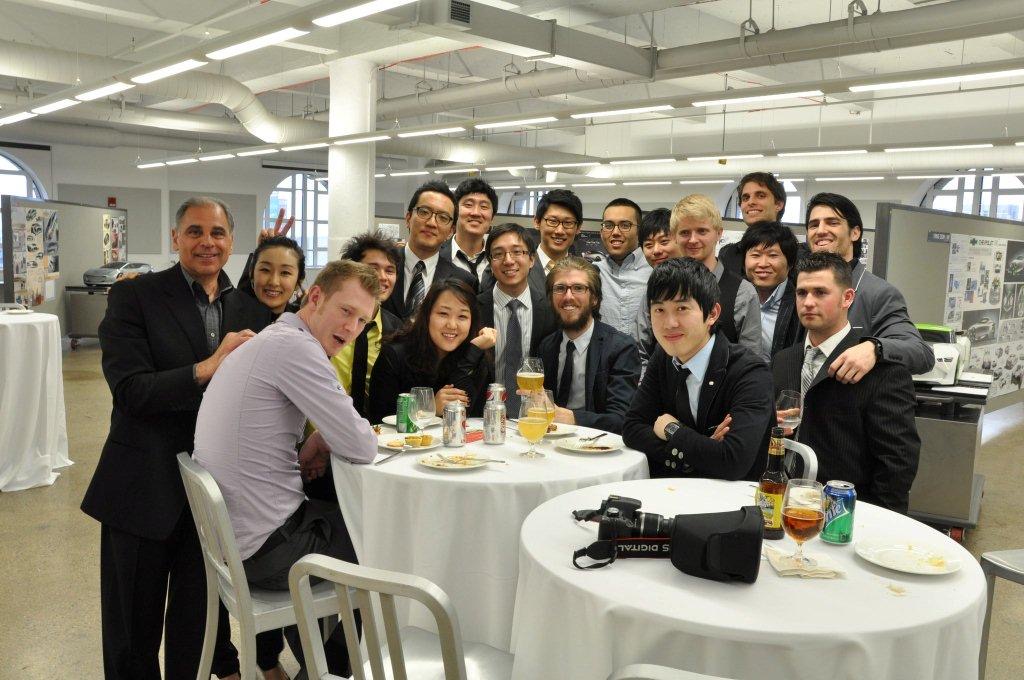
Manoogian with CCS senior Transportation Design students celebrating the end of the term
For Manoogian, preparing those students means developing more than technical skill.
“I believe problem-solving and the thinking process are key to providing well-rounded designers who will make meaningful contributions. CCS excels at developing that thought process, and I wanted to build on that discipline.”
He also sees an important advantage in where that education takes place. With CCS located in Southeast Michigan, students have access to generations of design talent and an industry that continues to evolve around them.
Creating Opportunity
For Manoogian, establishing an endowed scholarship brings together the two forces that have shaped his life.
A CCS class helped him take an early step toward becoming a car designer. His career gave him the opportunity to evaluate and hire emerging designers from around the world. Later, CCS gave him the chance to teach and mentor students preparing to enter the profession themselves.
Now he can help make that path possible for someone else.
“As an adjunct professor, I saw firsthand how the expense of completing a design education was a daunting prospect, and I wondered how I might help deserving, talented students reach their goals. A conversation with Dick Ruzzin made me aware of the possibility of creating a scholarship, and subsequently I read that Crystal Wyndham had created a scholarship. Those two made me aware of how I might help”
“My personal design journey had been anything but straightforward, so I thought I would do whatever I could to help an aspiring student reach their goals without the worry of financial constraints.”
“With my sponsored scholarship, I will have satisfied my desire to help the next generation achieve their dreams as I had been able to do,” Manoogian said.
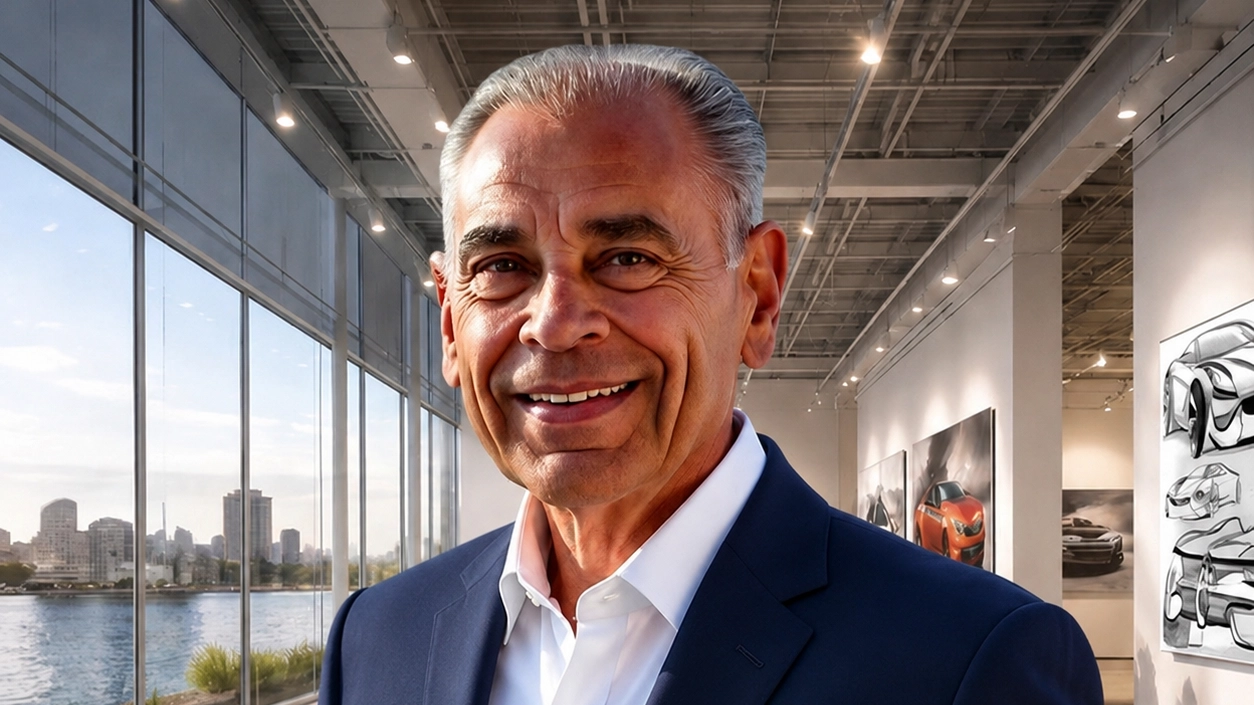
His commitment to automotive design continues in another way as well. Manoogian is currently working on the development of a facility on Detroit’s riverfront celebrating the art of the automobile and the people who have shaped it. He sees that work as connected to educating future designers, preserving the legacy of the profession while helping inspire those who will carry it forward.
For Manoogian, it all comes back to the two things that have driven his life and career from the beginning.
Design and education. Full circle.
Interested in supporting students through a scholarship?
There are many ways to create a scholarship at CCS and shape it around what matters most to you. Contact Katie Rusak, Senior Director of Major Gifts, at [email protected] or 313.664.7861 to learn more.
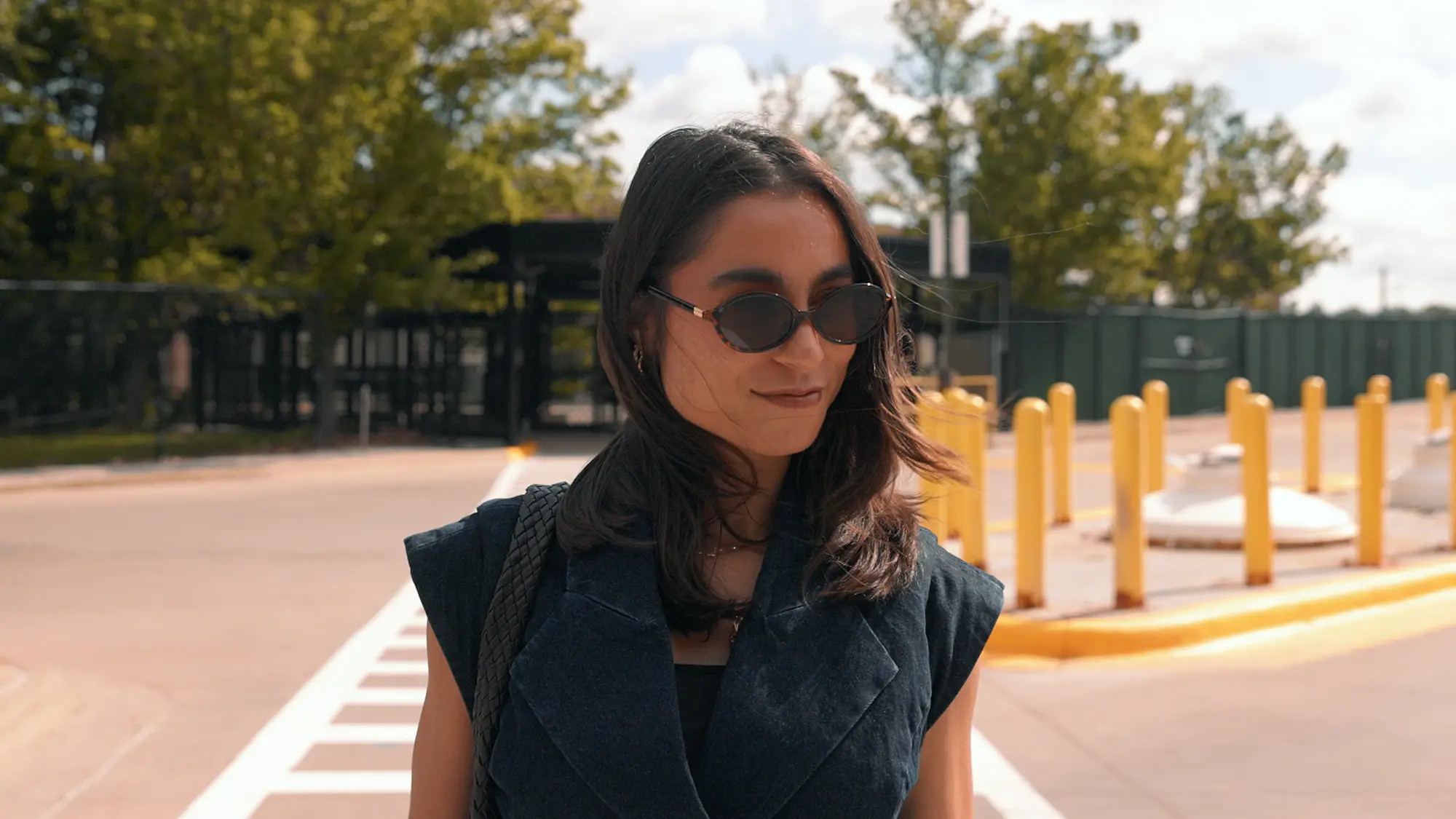
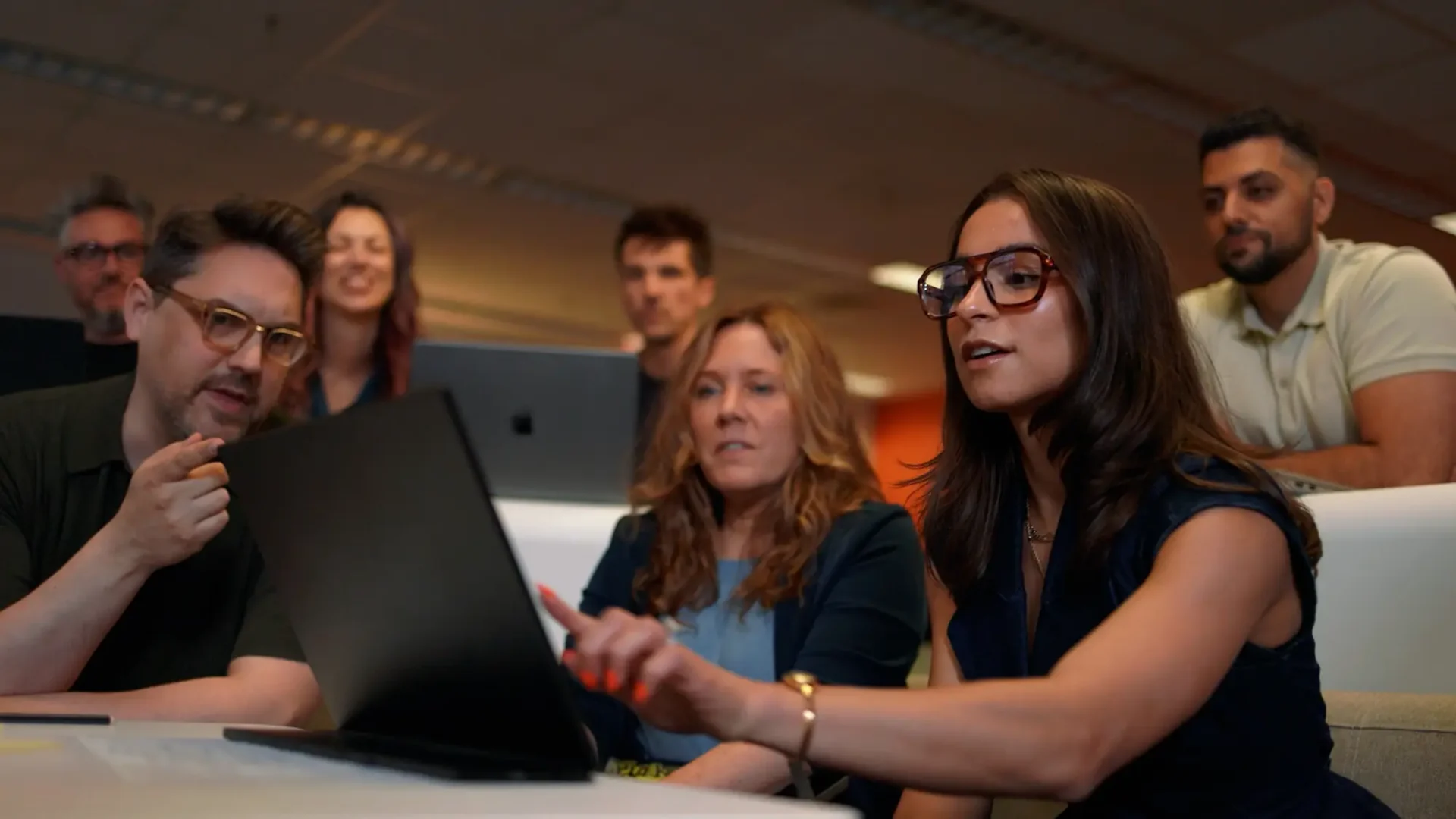
Christine Montalbano (’22, User Experience Design) has always been curious about how things work. A lifelong creative with an interest in making experiences both functional and intuitive, she found a career that brings together her creative and analytical sides. Today, Christine manages the Core Global User Experience Design Team for Stellantis’ in-vehicle infotainment system, helping translate complex technology into experiences that feel natural to drivers across its global brands. She also returns to CCS as an Adjunct Instructor, sharing what she has learned with the next generation of designers.
Can you tell us more about what you do at Stellantis?
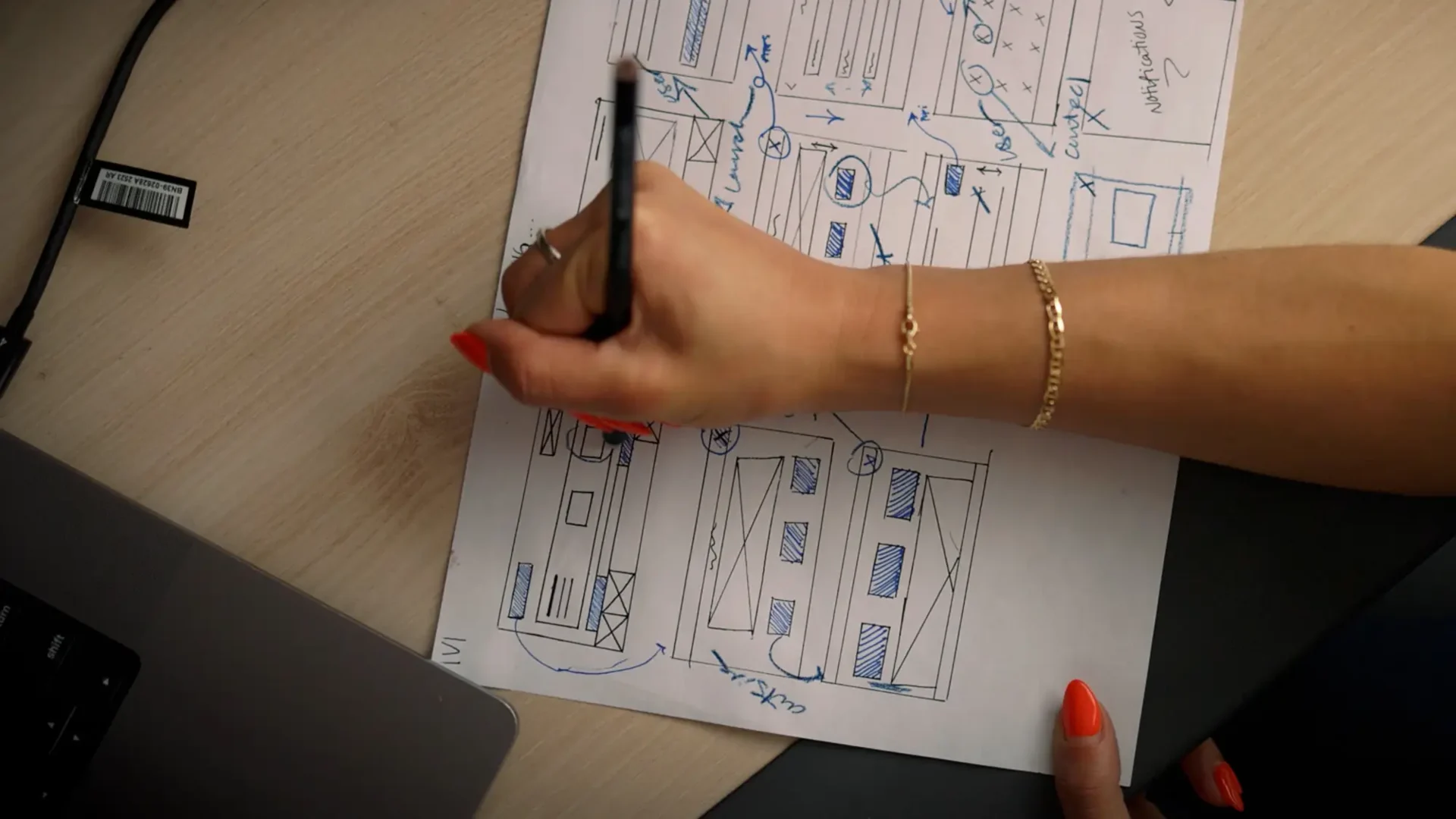
At Stellantis, I currently manage the Core Interaction Design Team for our in-vehicle infotainment system. My team and I design the structure and framework of our user interface for all 14 of our global brands. We look at how every single element on the screen is communicating different vehicle functions to the user. We do the actual interaction. We understand the electrical engineering requirements, how the back end and the software work, and build the front end in a digestible way for the driver, passenger and anybody else in the vehicle.
How did you get where you are today?
I was born and raised in the Metro Detroit area. I have tons of family members who have been in the automotive industry. I kind of grew up consumed by going to the auto shows and different cars and coffee events with my family. My parents are big car people, so there was always something to drive or something to sit in growing up. After my undergrad, I went to CCS for my master’s, and I was just consumed by the automotive industry with different collaborative projects that we were working on. I kind of became a cliché. I’m from Detroit. I went to CCS. I went into the car design world, and that’s how I got here.
Honestly, I’m an experiences person. I love experiences. I love designing the best possible experience not only for other people, but myself. A lot of times, people make fun of me like, “Christine, we don’t need to experience that the exact way that you want us to.” But it’s in my nature. Designing the in-vehicle infotainment system, you really have to understand the entire vehicle experience – before you get in the vehicle, while you’re in it, when you get out, and even what you’re doing at home that prepares you for getting in. So I think it really comes down to being super experience-focused and doing something with purpose.
What are you most proud of right now in your career?
What I am most proud of in my career is overcoming fear. I used to be a very anxious person, and now I tell myself, “You just need 10 seconds. Don’t be afraid, just do it.”
It’s helped me a lot in overcoming some of those anxieties. Now managing a team, I’m able to help my team feel that as well. They’re so talented. They just need 10 seconds of that confidence, and we know what we’re doing. So I think it’s about sharing that experience of overcoming fear, gaining confidence through it, and seeing that confidence in my team’s faces as well.
What’s it like seeing your work come to life?
Being in the automotive industry, it’s just part of the gig that these vehicles have long product life cycles. Since I arrived at Stellantis, I’ve been working on the next generation of our in-vehicle infotainment system, and it still is not on the road yet. But I know the army behind it. There are so, so, so many people and brains that really go into it. I think seeing the end product, and it being so sharp and seamless, while knowing every little detail that went into every single pixel on the screen, is just mind-blowing – knowing how a car works and then seeing it in front of the user looking so mindless and simple, so elegant and not as technical as I understand it to be.
Was being creative something you grew up with as a kid?
Yes, I was always very creative. I was the person making the videos for my family after every family vacation. “Christine, make a video of it. Play it at the family reunion.” Which is every week in my family because I’m super Italian. Then I was always making invitations, different stationery and printed materials. In high school, instead of being in the advanced math classes, I was taking the art classes. I was designing the yearbooks. I was always into not only the visual communication side of things, but making things work and using different computer applications. I even taught myself the whole Adobe suite.
It’s something that I’ve always been chasing. And who knows where it’ll go because I still chase my creativity every day. I always want to do more. I think that’s just who I am as a person.
What would you say to someone who is apprehensive about chasing their creative path in life?
If I could say anything to someone who’s apprehensive about chasing a creative path in life, I would say don’t be. When I was in high school, the traditional careers were always advertised, which is great, but sometimes I wonder if part of my brain is analytical and then the other part is super creative – hence user experience design.
I would say, don’t be afraid to chase it. I’m sure that’s the answer they hear all the time when they talk to people like me, but at least start exploring it because the opportunities are endless. When you think of a big corporation, you don’t realize that there’s always a creative team behind it, whether it’s internal or external. Just thinking of how cars are designed, right? I went to school with people who were studying sculpture, and they now are working on the clay models of the cars. You just don’t know what you don’t know. Definitely explore it. And if you have an itch to explore something, scratch that itch. I think I’ve scratched a lot of itches that I’ve had, in all directions – professionally, personally and creatively. Scratch that itch.
Is there something specific about user experience design that you love most?
The big picture in interaction design, specifically in automotive, is you’re driving a car at 75 miles an hour. It just has to work. You don’t have time to tinker through multiple apps and look for something. If you need to know where your tire pressure is within a second, you need to be able to find it instantly. I think what I love is understanding the technical side of it and being the bridge that translates that into a digestible way for a human being. It needs to feel emotional. It needs to feel like you’re working with the car and the human driving it, not a piece of technology.
What is it like going back to CCS as an Adjunct Instructor after being a student there?
Going back is super rewarding. I remember myself in those students’ shoes, and I can see the stress on their faces. Being able to reassure them that you’re doing this for a reason, you’re here for a reason, you chose to be here and the hard work will pay off is always something that excites me about being there. I love the energy of school and all the opportunities that are presented to students and all the blue-sky possibilities you have as a student.
It also humbles me at work. I think when you get into the industry, there are certain practices or day-to-day things that you learned about your craft that you may forget to practice on a daily basis. Being an Adjunct, I hold myself accountable to the practices that I’m teaching my students, the practices that I learned as a student. Then I’ve been able to give back. So over my time at Stellantis, we’ve hired a few of my students as either an intern or a full-time hire as well. So it’s been a super rewarding experience on my end.
How did CCS help prepare you for where you are right now?
CCS helped prepare me for where I am now in so many ways. I realized in studying user experience design that I’m not designing for me or my classmates. I am designing for whoever is going to be interfacing with the product, system or service. Beyond that, CCS really helped me hone in on the craft. I gained a lot of technical skills in addition to creative thinking. I think combining the two is awesome.
I love being creative, but at the same time I want to understand how things work.
I’d also say that my professors at CCS were super inspiring. When I was working on my thesis and research, I spoke with the College about some of the specific areas I was interested in, and CCS was able to connect me with influential people in those fields. I didn’t know it at the time, but my thesis focused on programming hardware and software and having it output to a graphical user interface. With the help of my professors, we came up with this awesome outcome, and here I am doing a larger-scale version of what that thesis project was. So it really came full circle.
What would you tell your younger self?
I think when I was younger, I put myself in a box. I always said, “Oh, you’re just not smart.” I was never a math or science person. That wasn’t me. I was the creative one, and I was just groomed to think that you had to follow the traditional career path. I would go so hard trying to figure out math and science. I remember my mom used to give me these at-home tests, and I would tell myself, “I’m just not smart enough for this. I don’t know what I’m going to do with my life.”
And I think looking back, it’s not that I wasn’t smart enough. I just wasn’t following something I was interested in. Once I found that interest, the opportunities were endless. I’m good at this. There’s so much I can do with this, learn and even teach. I think I stayed curious, and I’ll always remain curious. It’s helped me a lot throughout the years, and we’ll see where it continues to take me.
The CCS community mourns the loss of former trustee, arts enthusiast, philanthropist and Detroit businessman Richard Manoogian.
Mr. Manoogian died Friday, September 25, 2026 at the age of 90. Most recently, he served as chairman emeritus for the global home improvement company Masco Corporation. Under his leadership, the company grew to become a global leader in design, with sales growing from $55 million to over $8 billion during his tenure. A lifelong supporter of the arts, Mr. Manoogian served on the CCS Board of Trustees until 2002.
In 2006, CCS recognized his family’s ongoing commitment and service to CCS by renaming the Academic Resource Center, which housed gallery spaces and the library, to its current name, the Manoogian Visual Resource Center.
In 2008, Mr. Manoogian was awarded a CCS honorary degree for his significant contribution to the arts, acknowledging his involvement in the renovation of the Detroit Institute of Arts.
President Don Tuski, Chairman Jim Nicholson, and the CCS Trustees are grateful for Mr. Manoogian’s service to CCS as a board member and support of the arts.