College for Creative Studies Announces Esteemed Group of Honorary Degree Recipients
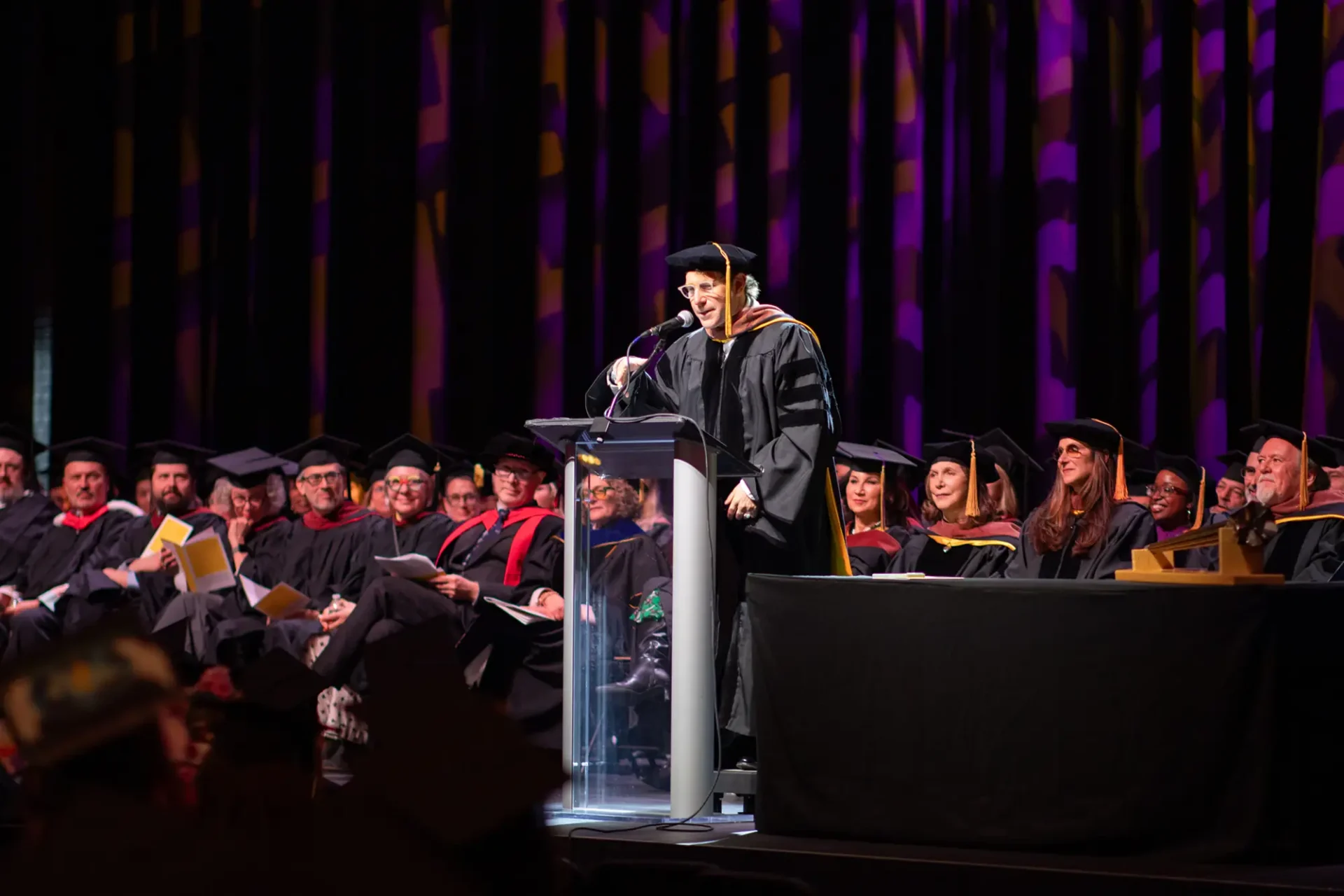
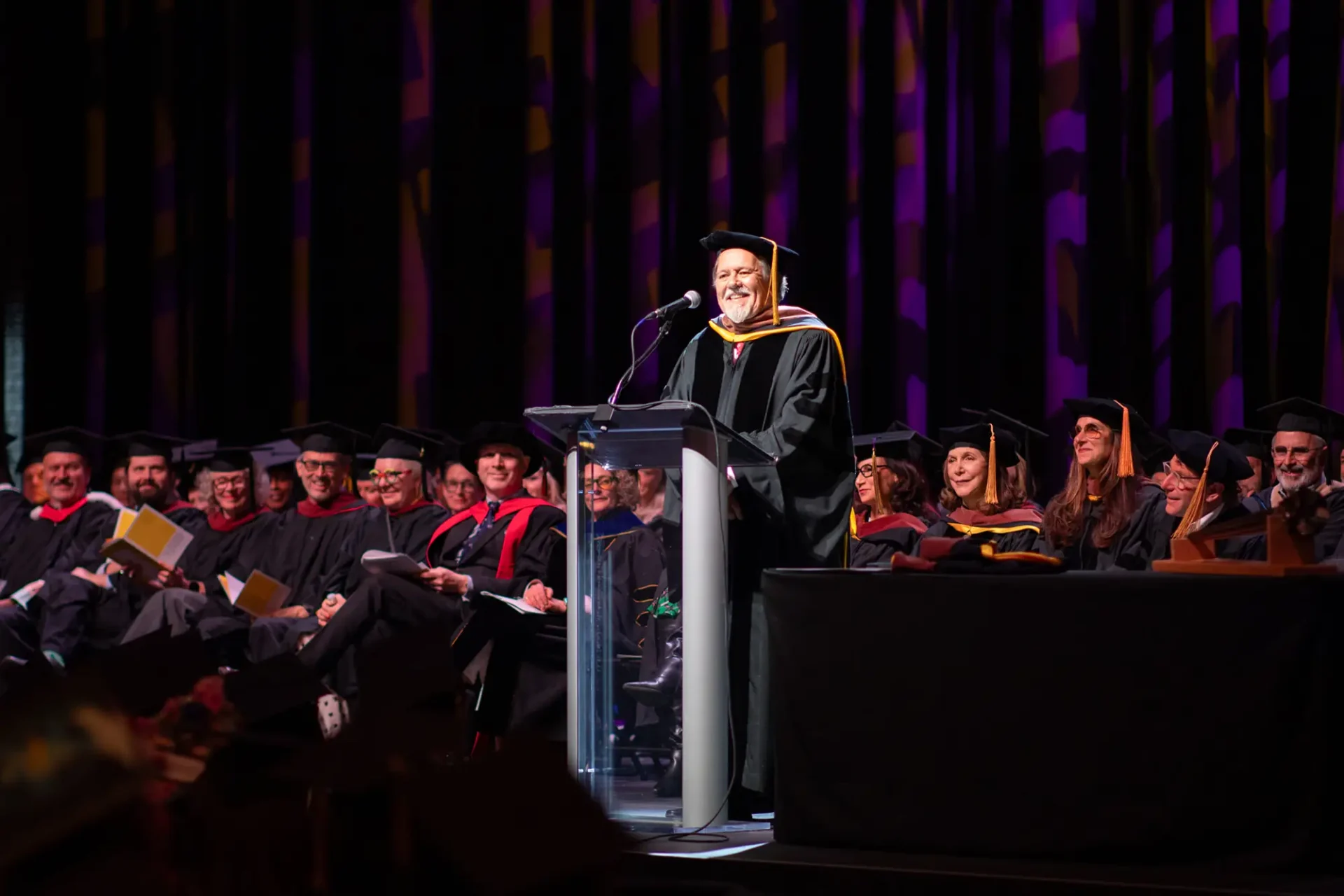
Detroit, MI – College for Creative Studies is proud to announce its 2026 honorary degree recipients: Dustin Yellin, artist and the founder and director of Pioneer Works; Moray Callum, automotive designer; Lynn Alandt, president of the Benson and Edith Ford Fund; and Paul Mobley, portrait photographer. Yellin also delivered the commencement address for the graduating class of 2026.
Dustin Yellin tells stories that weave together the diverse forces of nature and technology. Through his multidisciplinary body of work, which includes object making, painting, animation, and institute building, Yellin draws attention to the interconnectivity of all beings and things. His approach tunnels across traditionally siloed fields so as to crystallize the idea that both the human world, and all other worlds around us, are a collection of enmeshed networks – even if many are hidden. Yellin’s glass works in particular, in which paint and images clipped from various print media are embedded within laminated glass sheets to form grand pictographic allegories, invite viewers to engage with the legions of their own consciousness and its embodied emotions, as well as that of our collective society and its infrastructures. Yellin is the founder and director of Pioneer Works, a multidisciplinary cultural center that builds community through the arts and sciences. The artist balances descriptive poetry with a prescriptive social practice so as to span new ways of seeing and being, and build a bridge to a more holistic world.
Yellin lives in Brooklyn, New York. His artwork has been exhibited at Brooklyn Museum, Amorepacific Museum, Leeum Museum, Museo Del Palacio de Bellas Artes, SCAD Museum of Art, The Kennedy Center, Lincoln Center for the Performing Arts, City Museum, Colección Solo, Corning Museum of Glass, and with Creative Time, amongst many others. Yellin is often featured in diverse media ranging from the New York Times to Artforum, Vanity Fair, and TED. He holds an Honorary Doctor of Humane Letters from the Savannah College of Art and Design.
A respected automotive designer from Dumfries, Scotland, Moray S. Callum graduated from Napier University with a degree in industrial design and earned a master’s degree in transportation design from the Royal College of Art in London. His design career began when working for Chrysler Corporation UK and PSA Peugeot Citroën on passenger/commercial vehicles. He joined Ghia SpA as a consultant designer, where his work sparked interest from the Ford company. This ultimately led to a role in Dearborn, Michigan, on North American vehicles such as the 2000 Ford Taurus and the last generation of Ford Super Duty pickups. He relocated to Japan to work for Mazda, then a Ford subsidiary, designing sports cars, contributing notable models like the MX-5 sports car and the CX-7 crossover.
Eventually, he became executive director of design for Ford’s Americas studios. Moray Callum’s successes include the new Ford Fusion, Explorer, Mustang, EcoSport and Lincoln MKZ. Ultimately, Callum was promoted to vice president of design at Ford Motor Company, taking responsibility for all concept and production vehicles for the Ford and Lincoln brands globally, unveiling the 2015 sixth-generation Ford Mustang and the 2017 second-generation Ford GT. Additionally, Callum serves on the CCS Board of Trustees.
Lynn Alandt is a civic leader and the president of the Benson and Edith Ford Fund. Alandt has served on the CCS Board of Trustees for more than 25 years and currently serves as the vice chair of the board. She also serves as the board chair for the Eleanor and Edsel Ford House. Additionally, Alandt is trustee emeritus for The Henry Ford Museum and has served on the board of directors for Henry Ford Health System. She is a strong supporter of CCS and the arts community in and around Detroit.
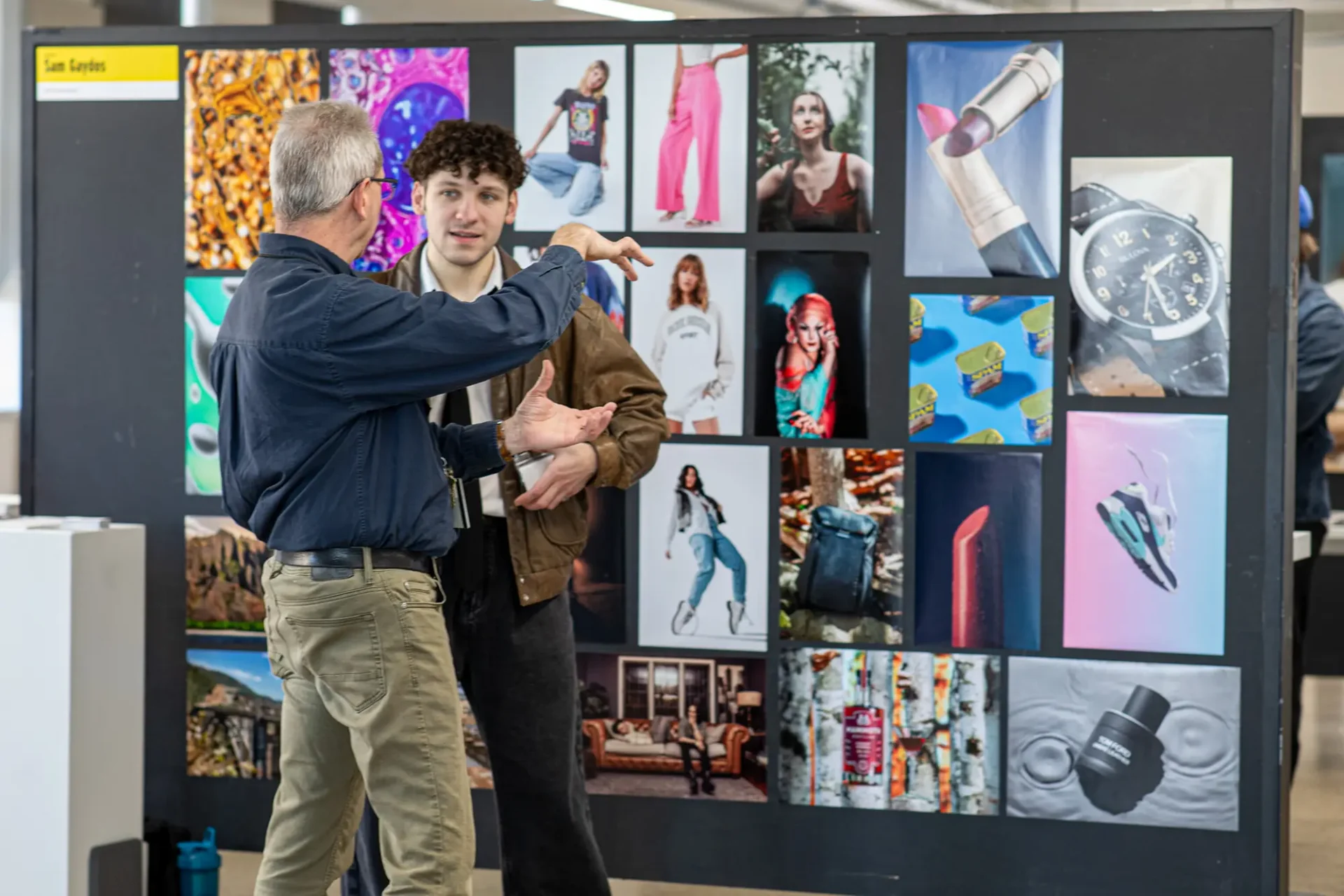
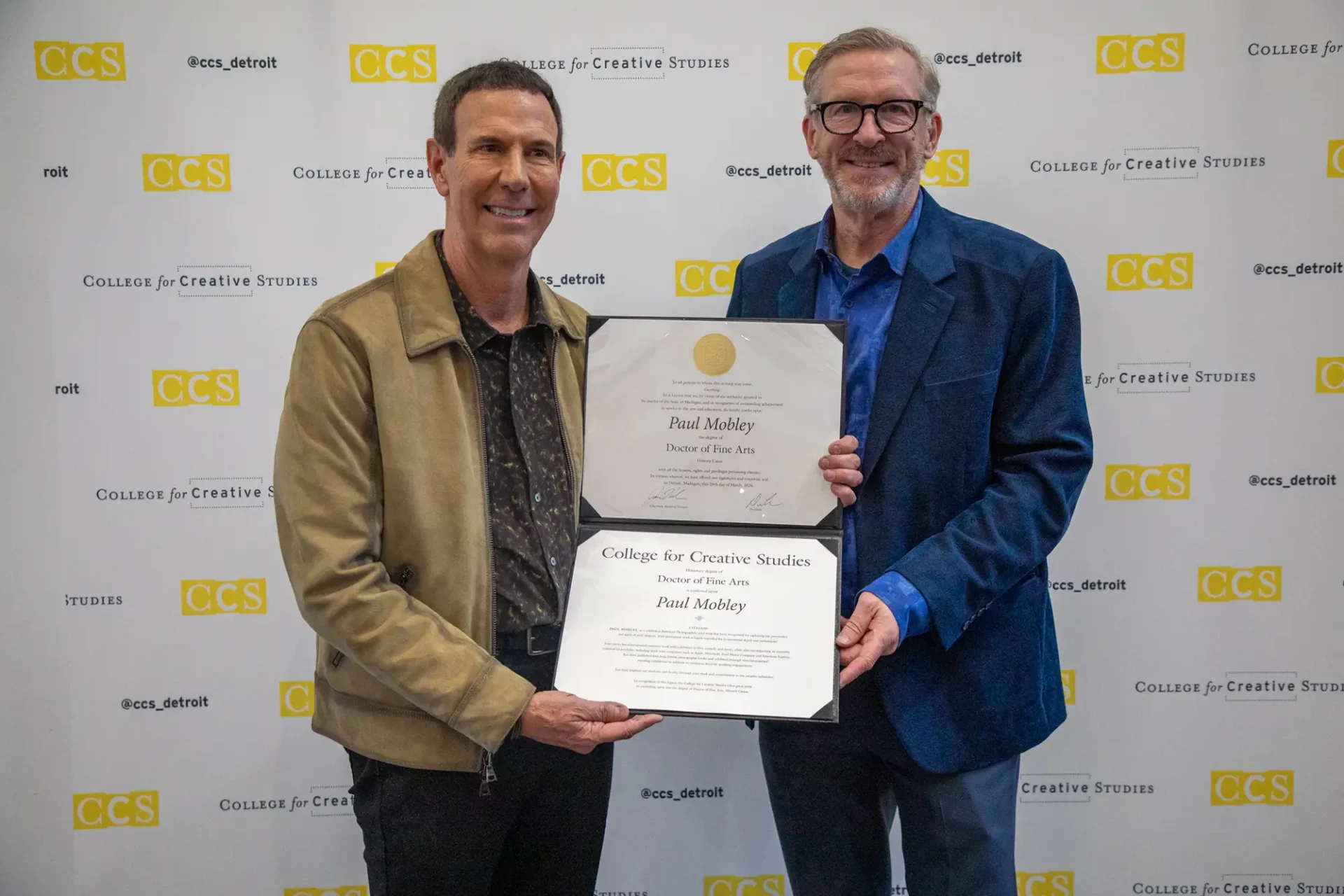
Paul Mobley is an American portrait photographer celebrated for creating intimate, timeless images that reveal the personality and spirit of his subjects. His commercial work spans corporate, editorial, and advertising photography, with clients ranging from major brands such as Apple, Microsoft, Ford, and American Express to celebrities and entertainers in film, comedy, and music. His portraiture is known for its emotional depth and authenticity, achieved through his ability to quickly connect with people from all walks of life. Mobley trained at CCS in Detroit and then moved to New York City, where he studied portraiture and assisted renowned photographers, including Annie Leibovitz and David Langley, before launching his own career.
In addition to commercial assignments, Mobley is widely recognized for his long-form personal projects and photography books. His first major project, American Farmer, became a touring exhibition and book that captured the lives of U.S. farmers and traveled for seven years, reaching over 500,000 people. Other notable projects include Everyday Heroes — portraits of Americans dedicated to helping others; If I Live to Be 100 — intimate portraits of centenarians from all 50 states; and American Firefighter — portraits and stories of firefighters across the country.
“This year’s honorary degree recipients are incredible leaders across a diverse range of industries,” said Don Tuski, President of CCS.
“We are thrilled to honor Dustin, Moray, Lynn and Paul, who offer invaluable support and insight into the art and design world.”
The College’s commencement ceremony took place on May 14, 2026, to honor the graduating class of 2026. Yellin, Callum, Alandt and Mobley join a distinguished list of recent honorary degree recipients, including automotive design leader Michael Simcoe, architect Suchi Reddy, and artist Kevin Beasley, among others.
Veronika Scott, who turned a class project into an internationally recognized workforce development organization, is College for Creative Studies’ 2026 Distinguished Alumni.
“I don’t think I would’ve started Empowerment Plan anywhere else,” said Scott, ‘11 Product Design.
Upon the advice of her grandfather, Scott chose to attend CCS, which awarded her a scholarship and financial aid, rather than taking out student loans to go to Yale University. It was during her junior year that Product Design Professor Stephen Schock challenged Scott and her classmates to design a product that filled a specific need in the community.
Leaning into her own experiences with poverty and homelessness growing up, Scott spent three days a week for about five months at the Neighborhood Service Organization (NSO), a Detroit-based health and human services agency. Through conversations with those who’d been displaced, some for years, she learned more about the realities people who live on the street face and was inspired to design the first prototype of what is now the weather-resistant EMPWR coat.
“It was about creating something I wish had existed for my own parents,”
That prototype took 80 hours to create, and unlike the coat-sleeping bag version now distributed across the United States and to 22 other countries, Scott’s original design was a coat-tent.
“The tent part never panned out,” she said. “And it was hilarious.”
Once the project was complete, people Scott had spoken to through NSO began asking about where they could get their coats. “And I said, ‘Well, I don’t know. It takes me two weeks to make one and you don’t want the one I’m making because it’s not that great. I’m not a good sewer,’” she said.
Even though Scott had received mixed feedback, she decided to pushed forward. Her first challenge was startup capital, since she didn’t have the funds personally or even close family or friends to approach. Instead, she turned to CCS.
Scott met “with everyone that I could meet with as a student,” from professors to the legal team, who advised her to create a business plan. Figuring out that essential roadmap for any organization required the advice of more CCS staff members. She eventually connected with Imre Molnar, who helped guide her project through an independent study. The two met weekly, with Molnar — a former design director for outdoor gear maker Patagonia — eventually setting her up with Detroit-based Carhartt. “He truly believed that [Empowerment Plan] could be something, that it actually could be a business or an organization when I did not,” Scott said. “I didn’t know that it could be something like that. And I certainly didn’t think I was the right person either.” For early iterations of the EMPWR coat, Scott tried a variety of recycled materials, such as billboard fabric, construction fencing and door paneling from General Motors’ vehicles, as well as Tyvek. “You name it, I tried to sew with it,” she said. Learning to take feedback while at CCS was crucial to the development process, and to her role as CEO and founder of Empowerment Plan. “One thing that I took away from CCS was how to take a critique and learn from those critiques and continue to improve,” she said. After graduation, Scott began working with different partners, including Carhartt and RefrigiWear, an Atlanta-based company that produces garments for cold storage. According to Scott, Carhartt helped her to understand how to make long-lasting, durable apparel, and from RefrigiWear, what goes into clothing designed for temperatures as low as negative 40 degrees. But as it turns out, finding the perfect materials for the EMPWR coat and then producing and distributing the sleeping bag-coat was only part of what Scott would do through Empowerment Plan. Because one afternoon, as she was leaving NSO during those days of initial research, a woman had told her, “I don’t need a jacket. I need a job.” That stuck with her, and when it came time to hire employees, she sought people who would need to use the coat — with hopes of them never having to use the coat again. Empowerment Plan created a “paid-to-learn” model, pairing full-time employment with supportive services and programs. In addition to working as sewing techs, employees can earn their GEDs, gain financial skills and receive mental health services. Those early years of creating her organization wouldn’t have been possible if she’d incurred student loan debt, given that she didn’t collect a salary for two years. “Had I needed to worry about paying back student loans or deferring loans, I wouldn’t have been able to do it,” Scott said. “I think of that as [not only] another gift from my grandfather, but also CCS.” Empowerment Plan also wouldn’t have helped hundreds of employees and their families overcome homelessness or distributed its 100,000th coat in March. “I love my job,” Scott said. “What I’ve realized over the years is how lucky I am. I had an incredible experience [at CCS]. I had an incredible mentor and wouldn’t be the same without it.”
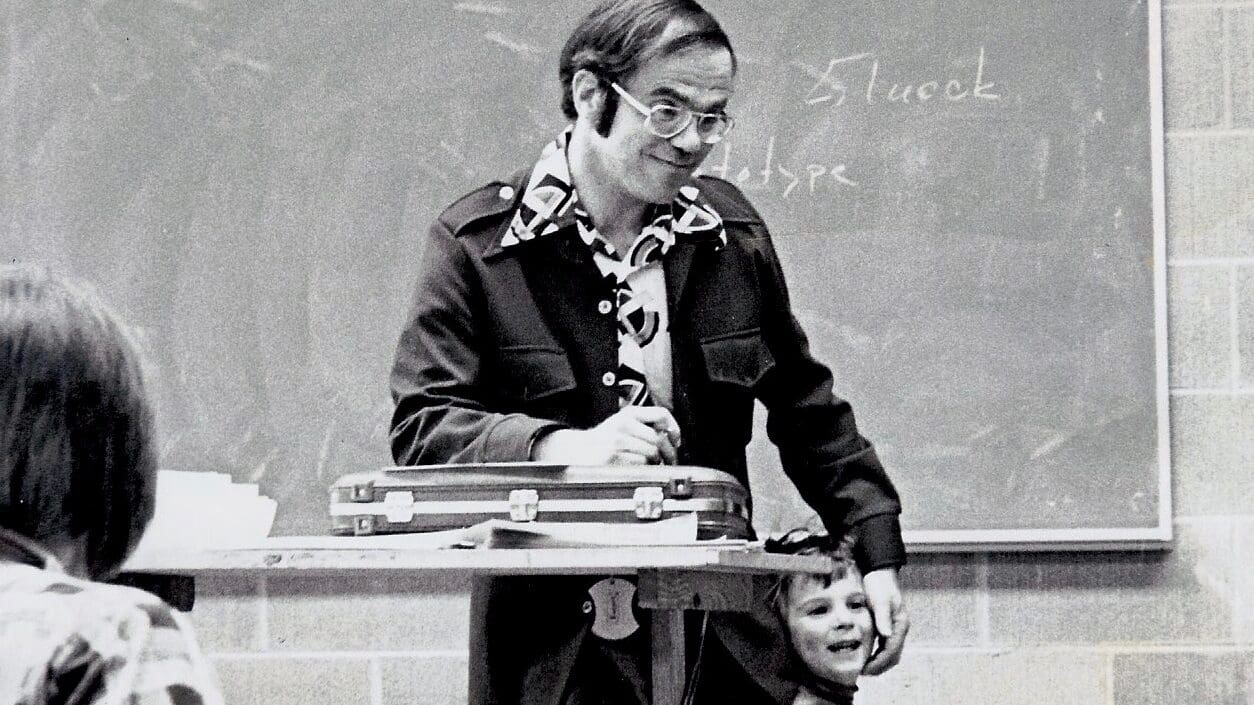
When Jim Goldwasser’s three-year-old son darted into a CCS classroom mid-lecture to wrap himself around his father’s leg, a photography student captured the moment: a laughing little boy, a delighted professor and a room full of smiling classmates taking in the unexpected happening. The photo lives on in the Goldwasser family album — an unscripted snapshot of the warmth and humanity that Professor James S. Goldwasser brought to the College for Creative Studies.
“He had a genuine interest in his students, a devotion to the classroom, and a deep appreciation for fine literature and well-crafted writing,” recalls his wife, Judy Goldwasser.
Making Writers Visible in an Art & Design College
For three decades, Goldwasser championed the idea that the same thinking process behind writing is not only essential to producing the visual arts, but it also has much in common with the very core of creative output.
As he once wrote in “Topic and Talk,” a publication of the Art School of the Society of Arts and Crafts (the forerunner of today’s College for Creative Studies):
“The sound created by walking on the parking lot cinders or the view from the window of a classroom on a spring day may prove to be the original catalyst that produces your photography, your painting or my short story or novel.”
After earning his MFA from the University of Iowa Writers’ Workshop — where he studied under literary greats such as Kurt Vonnegut, Nelson Algren and Richard Yates — he spent four years teaching English at Wayne State University before he joined CCS. He quickly became part of the CCS fabric: advising students, chairing the General Studies Department and various committees, and showing up for nearly every exhibition and event throughout Metro Detroit.
Creating a Living Tribute
When Jim passed away in 2000, his family, friends and colleagues came together to ensure his influence would continue. Their generosity established the James S. Goldwasser Award for Excellence in Writing, a lasting tribute to his belief in the power of language. Each spring, the award, presented at the CCS graduation and judged by CCS Liberal Arts faculty, recognizes two graduating seniors for exceptional fiction writing. It honors the rigor, empathy and imagination Jim brought to his teaching.
“The James S. Goldwasser Award celebrates Jim’s love of words, stories and students,” observes Dorene O’Brien, CCS creative writing instructor and longtime contest judge, who enjoyed many years as Jim’s colleague. “Jim would appreciate the award benefits that have remained constant throughout the past 25 years: validation of writing excellence; positive career impact; encouragement of innovation and risk-taking; and preservation of the uniquely human act of storytelling. Jim would have been proud of every hopeful entrant for this prestigious award.”
For the winners, it’s far more than the prize money and recognition. It’s a reminder that language, like design, can change how we view the world.
Scholarship in Action
This year, Illustration Senior Lily Jarnac captures the empathy and imagination Jim inspired in his classrooms with her winning story, “The Glowing Tree.” She describes the experience of winning the writing award as a moment of affirmation:
“I’m very thankful for this award. It is hard for me and for most students to comprehend that they deserve that title, that they are professional artists, writers, or photographers, no longer the children who spent their time admiring the world around them. The Goldwasser Award cemented this idea in my mind. It reminded me that I am allowed to take up space in the creative world, that I am capable enough, and that people might actually care about the words I put on a page. They are words so personal and private that I often forget there is someone out there who feels them as deeply as I do.”
For fellow award winner Fiona McCabe, Concept Design Senior, the recognition brought a new sense of confidence:
“I have never been a very confident person, always doubting myself and my writing skills. As much as I love writing, I always thought that I didn’t have what it takes to make compelling stories that people would be invested in. I wasn’t even going to apply to the Goldwasser writing competition until my professors, friends and family heavily encouraged me to do so. I’m an artist and designer, and I had begun to think that maybe that’s all I would ever be good at, that maybe I should just stay in my own lane. But when I was notified that I was a winner, it was an eye-opening moment for me. Winning this award has given me new confidence and shown me that I don’t have to stay in my lane of visual arts. I can move forward knowing I can expand outward and find success in another form of storytelling that I deeply love.”
Together, their reflections speak to the spirit of the award, encouraging students to trust their voices, take creative risks, and recognize the value of their own storytelling. The award continues the work Jim did best: noticing talent, encouraging creativity and helping writers feel seen.
A Legacy of Presence and Mentorship
Jim’s students have vivid memories of their times with him both in and outside of the classroom.
“When I think of Jim, it’s always with a smile,” observes Mary Haddad Raveane, Advertising Design BFA ’79, who took several of his classes. “He was an integral part of my education, and he had a way of connecting writing to art. His approach to writing in Composition 101 helped me see that writing quick essays was the equivalent of gesture poses in life drawing, and he used the art studio method of having students read each other’s essays and critique them in class. His American Novels class helped me develop a lifelong love of reading.”
“In addition to being a great teacher, Jim was a wonderful human being. He had a sparkling, dry wit that was contagious. He was just fun to be around. When we had evening classes, Jim would often join students and Fine Arts faculty members for picnic dinners. I always thought of him as the jovial parent in a group of adolescents.”
Looking Ahead
Now, as CCS marks the 25th anniversary of the James S. Goldwasser Award for Excellence in Writing, the College celebrates more than a competition. It celebrates a legacy — one that continues to nurture artists who write, writers who design and creatives who use words to see the world more clearly.
The award stands as a living tribute to Jim’s life and teaching — a reminder that words, when chosen with care, have the power to shape not only art, but lives.
For more information about establishing a scholarship or to learn more about the College for Creative Studies, please contact Katie Rusak at [email protected] or 313.664.7861.
“Future Fantastic” showcased emerging designers shaping fashion through material, narrative, and form
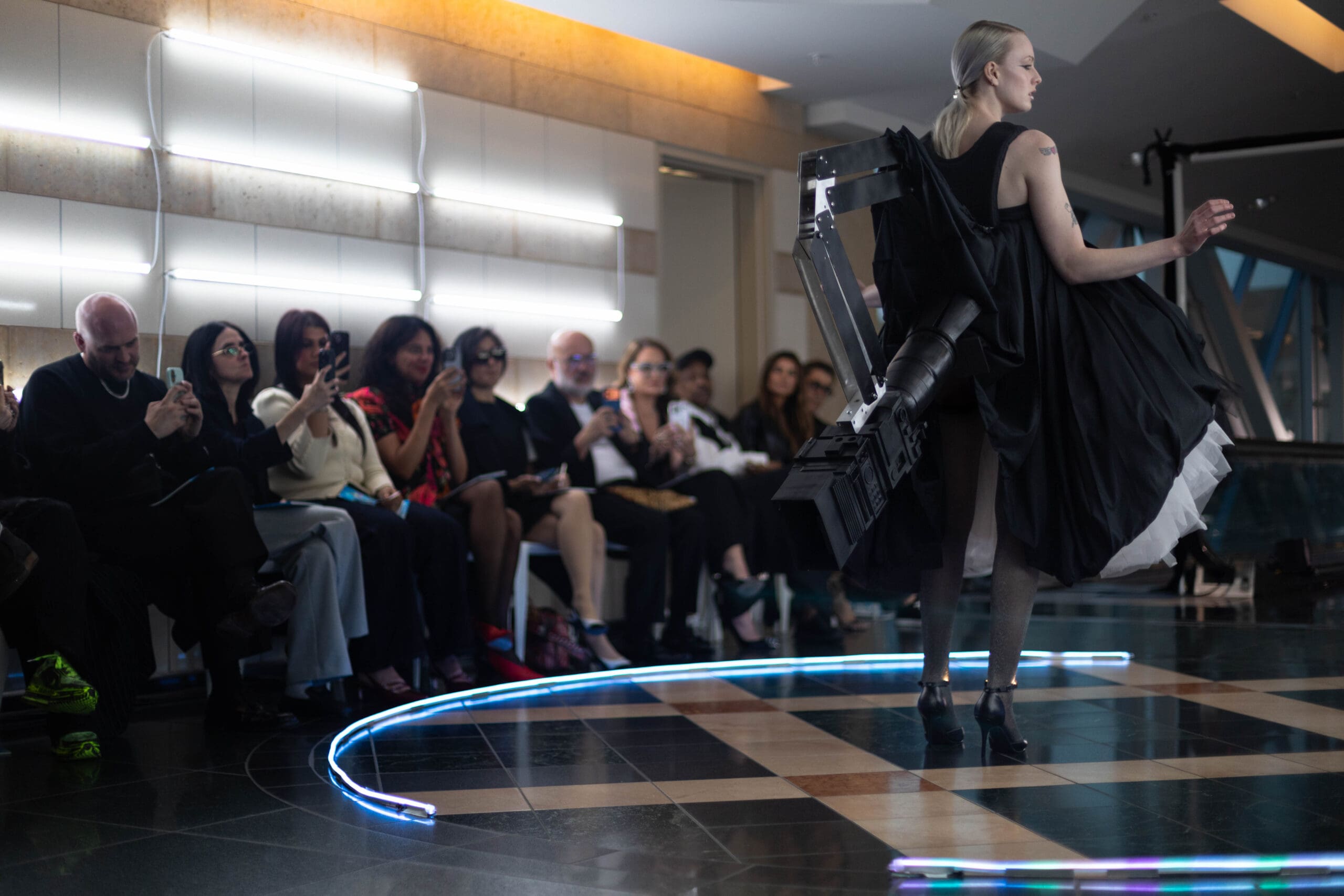
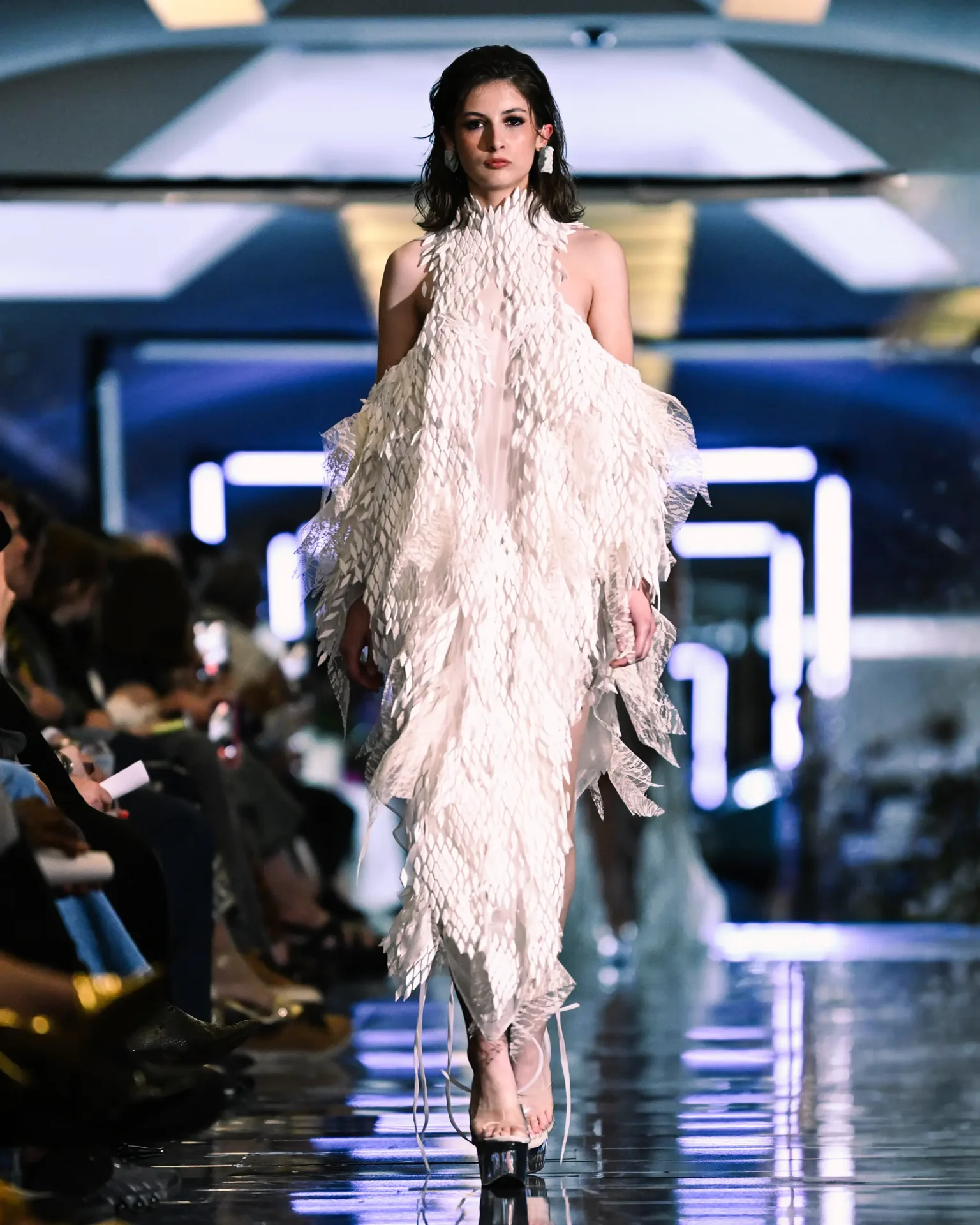
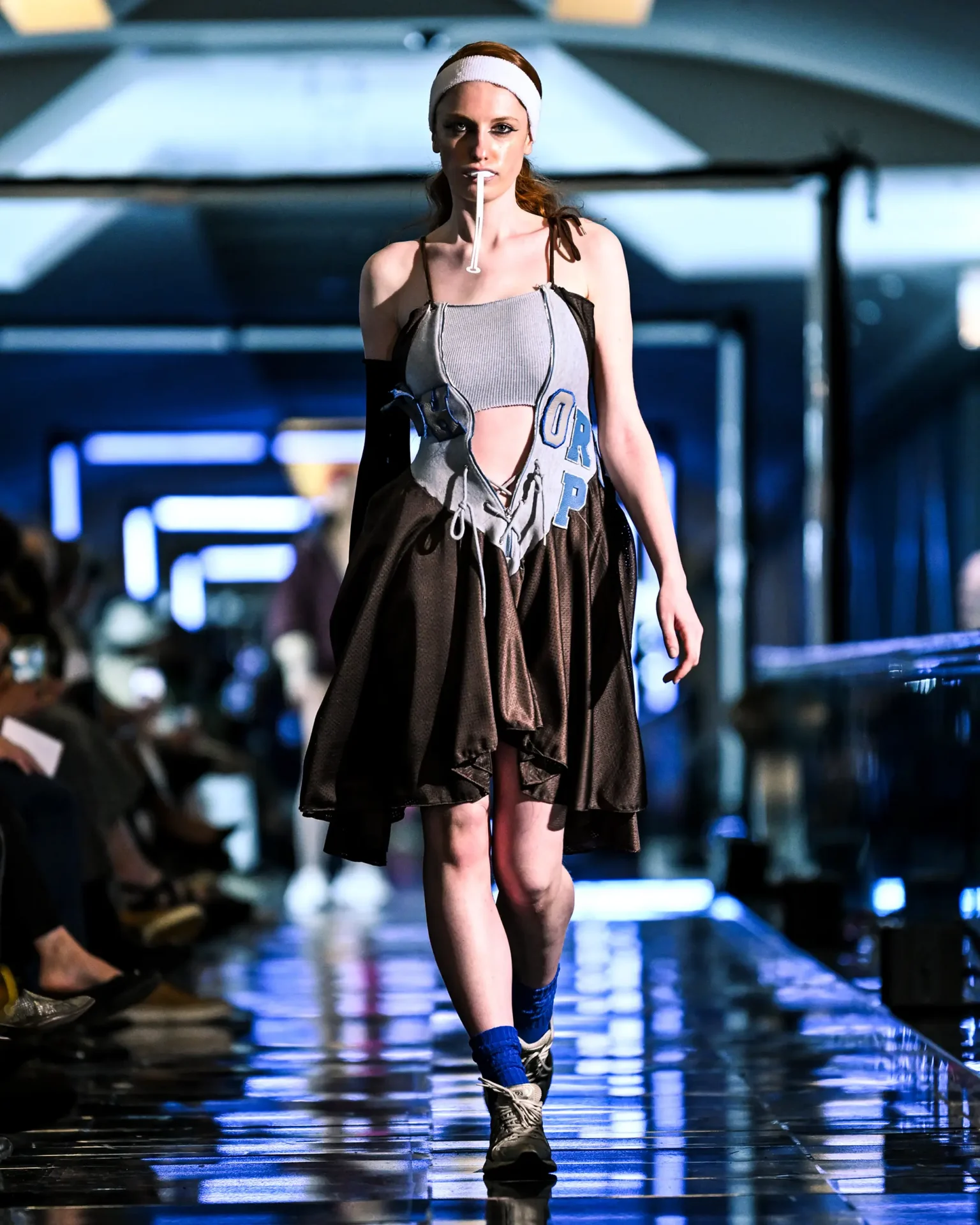
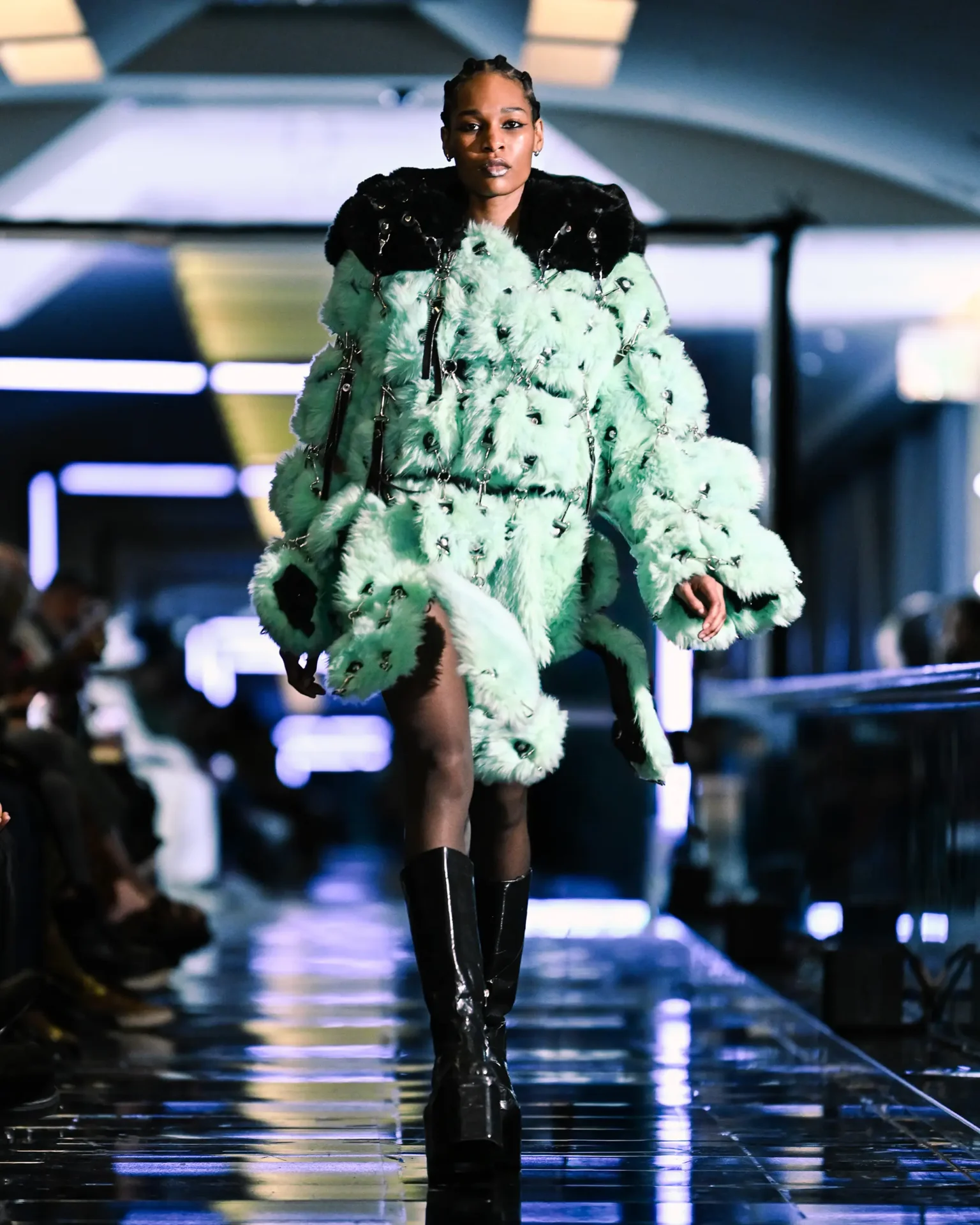
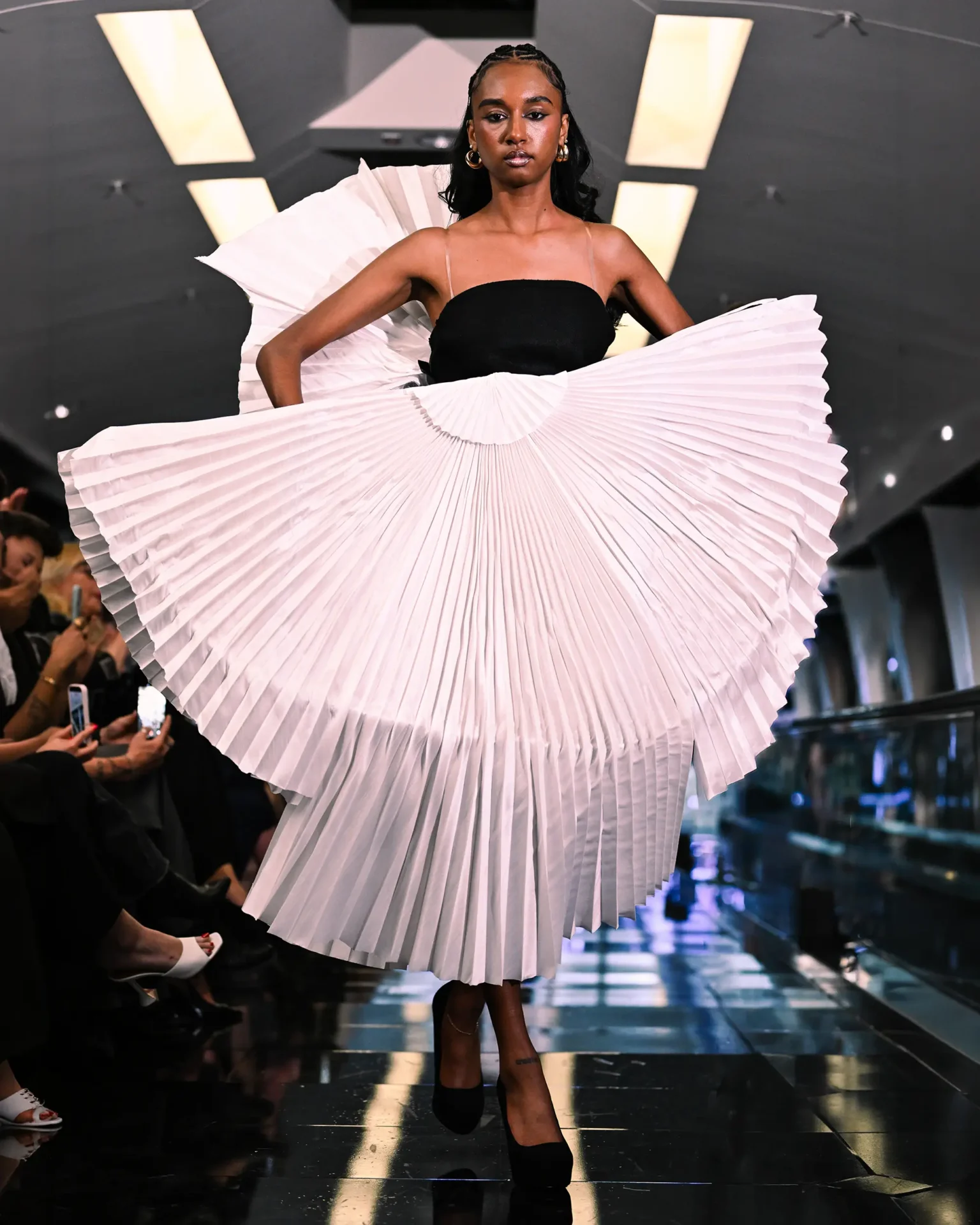
DETROIT, MI – The College for Creative Studies (CCS) Fashion Design Program presented The Show 2026 on Sunday, April 26, at the Skywalk at Somerset Collection. The annual runway show brought together industry leaders, tastemakers, and the creative community for an evening of new work from emerging designers.
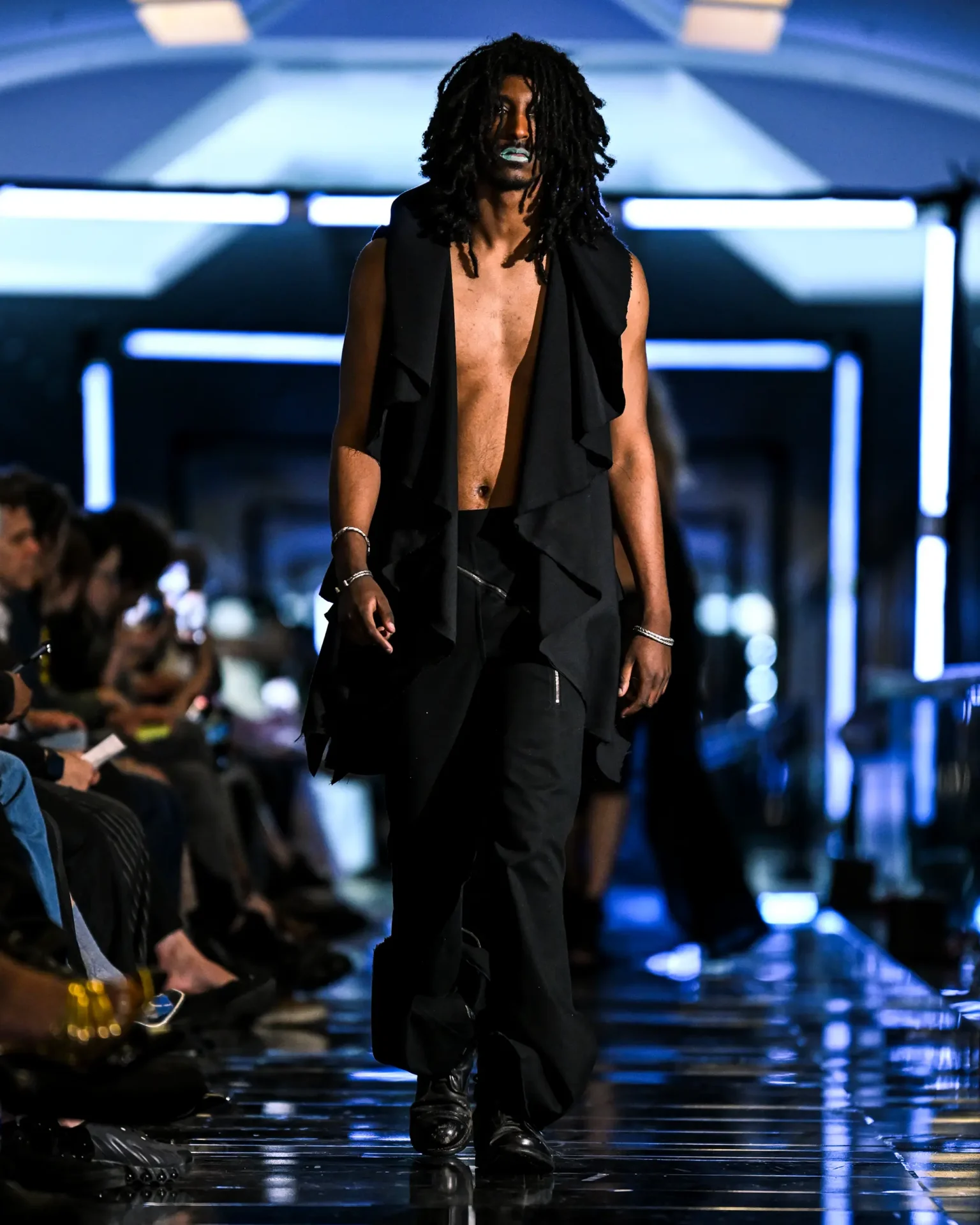
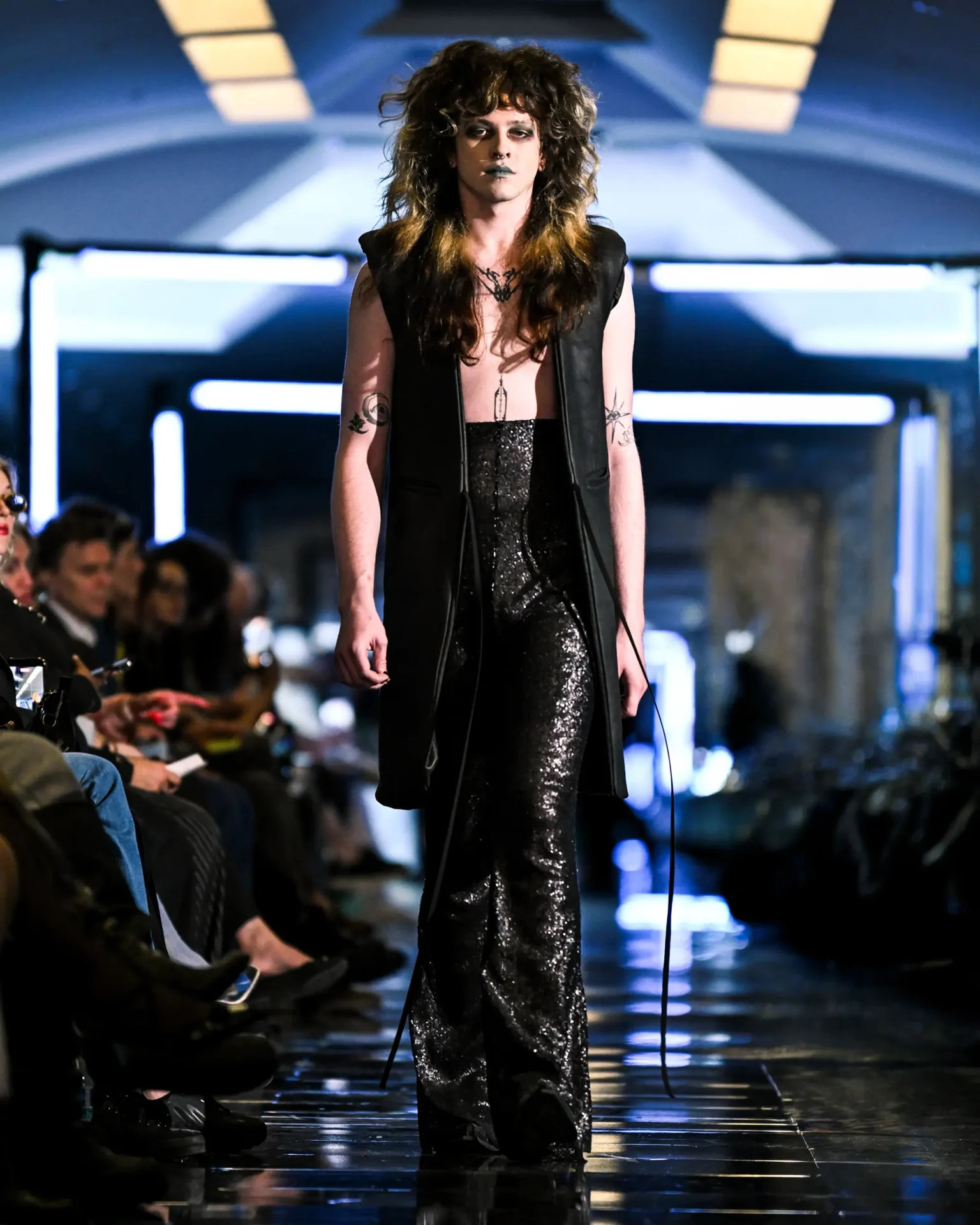
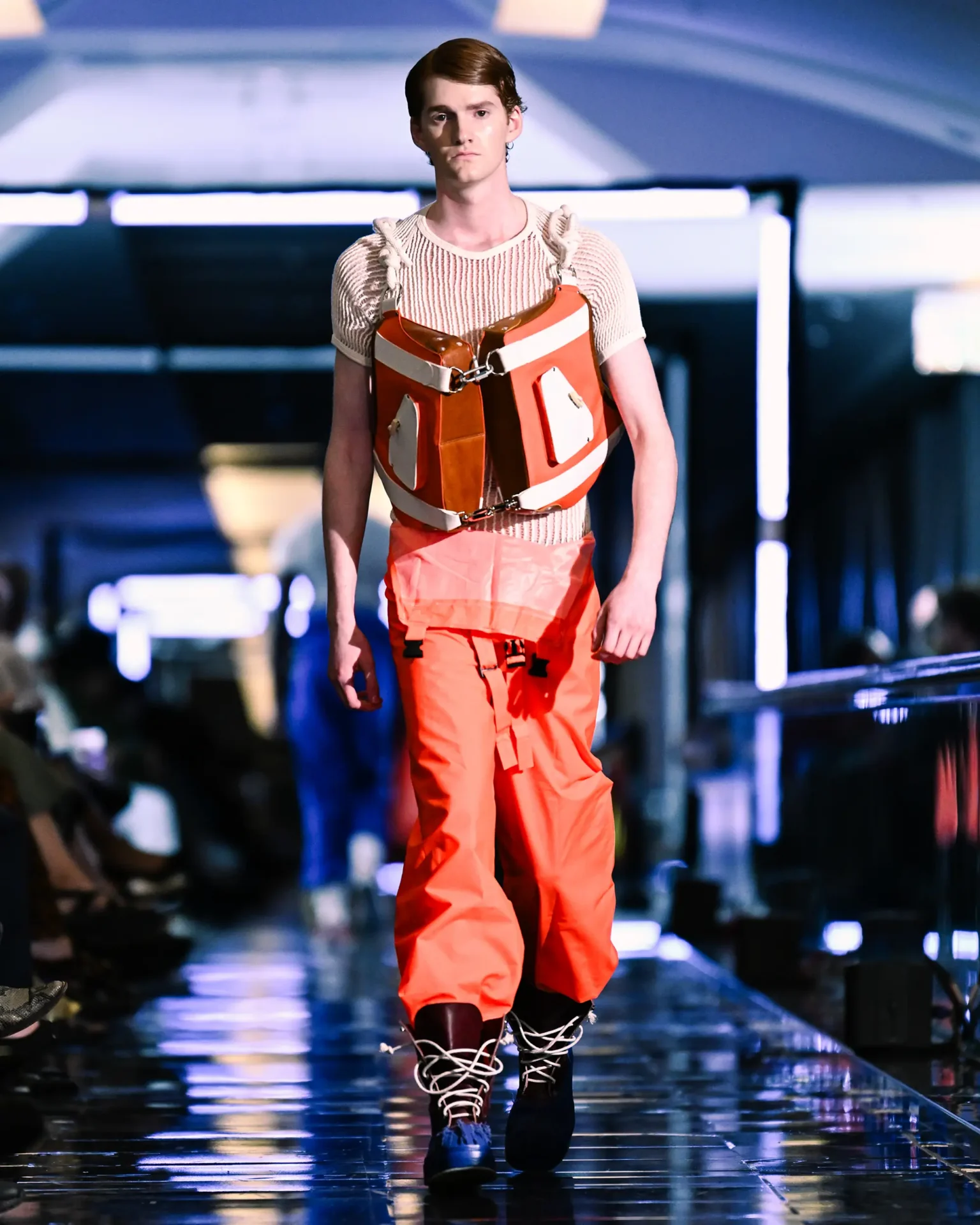
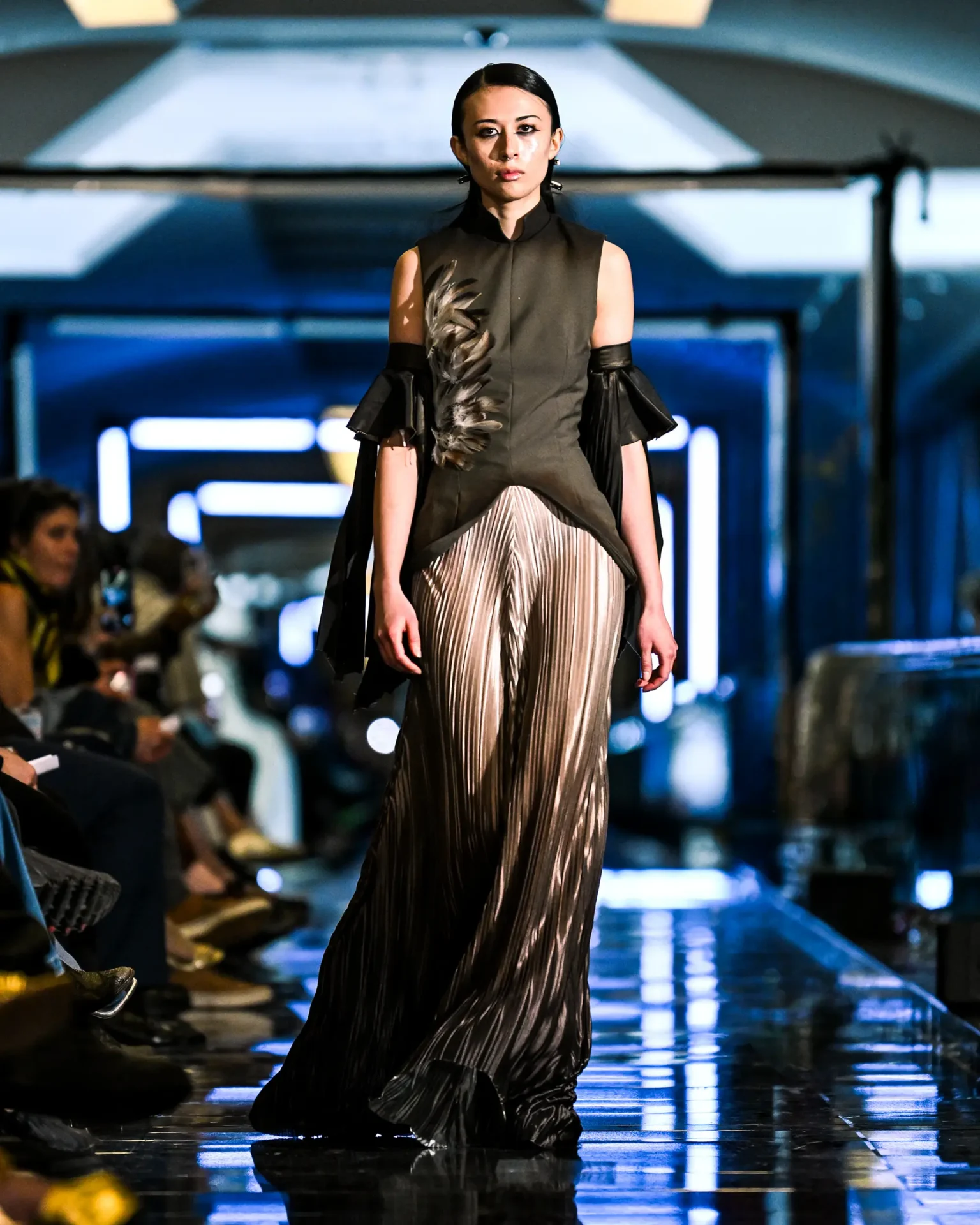
The Show featured over 100 looks from junior and senior students in apparel and accessories design. The evening included a VIP reception followed by the runway presentation at 8 p.m. Collections by Senior Designers Izzy Abohasira, Mar Bissada, Hayden Brice, Maxwell Honeycutt, Falina Jimerson, Griffin Mesner, Sarah Nofar, Ryan Putnam, Veronica Wardowski, and Emma Wisler, and Junior Designers Quade Feller, Luka Gallé, Santino Giglio, Bryn Hazen, Athan Hillman, Megan Hotchkiss, Sophia Jensen, Lilly Steele, and Bryce Truby, explored personal narrative, cultural history, and speculative futures, blending traditional craftsmanship with advanced fabrication.
The event welcomed 354 guests. Notable attendees included Chuck Bennett, Fox 2 News Style Ambassador; Stephanie Chang, Michigan State Senate; Diana Costescu, Tapestry; Stuart McMillan, Banana Republic; Millie de La Valette, Louis Vuitton; Owen Davenport, General Motors; Gretchen Davidson, Former Chair of the National Council of Arts and Culture; Ben Ewy, Carhartt; Ralph Gilles, Stellantis and CCS Board of Trustees; Danialle Karmanos, Mad Dog Technology and CCS Board of Trustees; Simion Kayiwa, Hermès; Drew Little, Fear of God; Donald Manvel, CCS Board of Trustees; Barbara May, B. May Bags; Heaven Montero, LITO; Silvia Prada, Kate Spade; Tracy Reese, Hope for Flowers; Tiffadelic, Artist; Tiff Massey, Artist; Mario Moore, Artist; Ken Walker, K. Walker Collective; Ash Hanson, Nike; and Chris Webb, General Motors.
This year’s theme, “Future Fantastic,” focused on the intersection of contemporary fashion and forward-looking design. Drawing on the material language of contemporary runway and the cinematic minimalism of Stanley Kubrick’s 2001: A Space Odyssey, the presentation created an environment defined by light, reflection, and precision.
“We’ve created a kind of laboratory for fashion at CCS. Here, students experiment, take risks, and develop their own design language,” said Aki Choklat, Linda Dresner Endowed Chair in Fashion Design, College for Creative Studies. “That same interdisciplinary approach extends across the College. New programs like our Fashion Business Management BA prepare students to meet the demands of a global, rapidly evolving industry. The Show reflects that process through collections that are highly individual, technically resolved, and grounded in innovation and making.”
The runway, designed in collaboration with CCS’s Interior Design department, transformed the Skywalk into a spatial installation. Suspended frames, projected light, and reflective materials defined the setting, while metallic surfaces and industrial sheeting caught and diffused light as models moved through the space.
“What better way to mark our 30th anniversary than by hosting the College for Creative Studies’ The Show, spotlighting the next generation of fashion,” said Nate Forbes, managing partner of The Forbes Company and member of the CCS Board of Trustees.
“As an institution defined by vision, design, and excellence in craft, it’s only fitting that our signature skywalk becomes a runway for such a remarkable event.”
The presentation emphasized a rigorous, studio-based approach to design at CCS, where students develop work from concept through execution. The resulting collections were highly individual, technically resolved, and grounded in both innovation and making.
The Show continues to serve as a platform for emerging designers, connecting students with recruiters, press, and industry professionals. As Detroit’s creative ecosystem expands across design, fashion, and cultural production, the runway positions CCS as a key site of talent development.
About Somerset Collection Somerset Collection is located on the corner of Big Beaver Road and Coolidge in Troy. A 700-foot-long glass-enclosed moving skywalk spans Big Beaver, connecting Somerset North with Somerset South. Anchored by Neiman Marcus, Nordstrom, Saks Fifth Avenue, and Macy’s, Somerset Collection is home to more than 180 stores and restaurants. Information about center or store-specific events, as well as store hours, can be found at thesomersetcollection.com.
Based in Southfield, Michigan, The Forbes Company (theforbescompany.com) is a nationally recognized owner, developer, and manager of iconic regional shopping centers, recognized throughout their respective markets for their retail innovation, fashion leadership, distinctive architecture, and luxury appointments. In addition to Somerset Collection, these properties include: The Gardens Mall in Palm Beach Gardens, Florida; The Mall at Millenia in Orlando; and Waterside Shops in Naples, Florida.
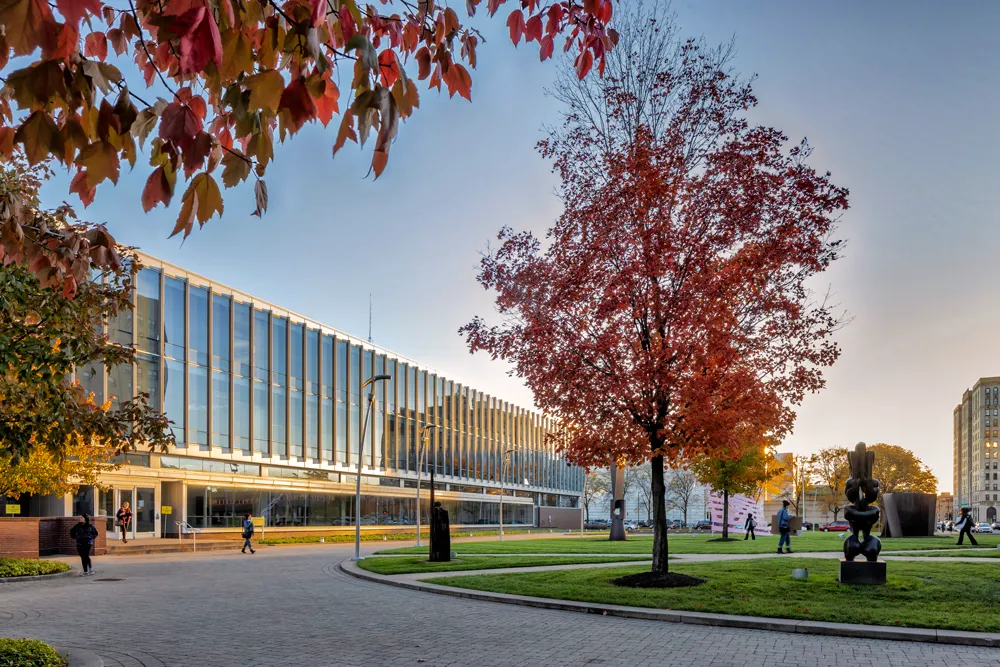
About the College for Creative Studies The College for Creative Studies (CCS) is a nonprofit, private college accredited by the Higher Learning Commission and authorized by the Michigan Department of Education to grant Bachelor’s and Master’s degrees. CCS, located in midtown Detroit, strives to provide students with the tools needed for successful careers in the dynamic and growing creative industries. CCS, named an Opportunity College by the Carnegie Classifications, fosters students’ resolve to pursue excellence, act ethically, engage their responsibilities as citizens and learn throughout their lives. With world-class faculty and unsurpassed facilities, students learn to be visual communicators who actively use art and design toward the betterment of society. The College is a major supplier of talent to numerous industries, including transportation, film and animation, advertising and communications, consumer electronics, athletic apparel, and many more. Its graduates are exhibiting artists and teachers, design problem solvers and innovators, as well as creative leaders in business.
Selected Designer Collections The collections in The Show 2026 explore identity, material, and narrative through diverse perspectives. Izzy Abohasira reimagines Western iconography, while Marwa Bissada examines love and division through the Berlin Wall. Hayden Bryce merges maritime and heritage craft, and Arturo Chaney develops a futuristic language shaped by technology and nature. Falina Jimerson builds a mythological world, while Maxwell Honeycutt reinterprets Mediterranean craft traditions. Griffin Mesner draws from Detroit’s sports history, and Sarah Nofar reflects on immigrant identity. Ryan Putnam explores the body through sport and sexuality, Veronica Wardowski channels Detroit’s industrial and musical legacy, and Emma Wisler examines performance and self-presentation.
Izzy Abohasira Izzy Aboasira’s collection, No Country for Men, draws inspiration from spaghetti and neo-western films. It imagines a posse of outlaw women navigating the American West in the late nineteenth century. Films such as The Good, the Bad and the Ugly, Django Unchained, and Tombstone influenced the work. The eight-piece collection translates cinematic storytelling into fashion, envisioning garments repurposed from men’s clothing taken in battle. It uses traditional menswear materials like leather, fur, heavy wool, and pinstripes. The designs have distressed finishes and frayed textures that evoke the harsh realities of frontier life. Through No Country for Men, Abouasira reinterprets Western iconography to explore rebellion, survival, and female autonomy.
Marwa Bissada Marwa Bissada’s collection, Romeo and Juliet 1989, explores love, distance, and resilience. She uses the symbolic lens of the Berlin Wall, combining this with Shakespeare’s story of star-crossed lovers. Inspired by her father’s time in Berlin, while the wall was still standing, Bissada reimagines five scenes from Romeo and Juliet–each presented as a pair of menswear and womenswear looks, for a total of 10 garments. The collection features 1980s silhouettes and highlights the emotional divide of the wall. Light, romantic materials–jersey knits, sequins, chiffon, and silk–sit alongside her signature denim. Clean construction and a modern edge balance the softness of the fabrics, offering a contemporary interpretation of love enduring across borders.
Hayden Bryce Hayden Bryce’s collection, Harborlands, draws from London’s canal boat culture and the northern Michigan landscape, reflecting the designer’s connection to both regions. This six-look collection merges British maritime influences with American heritage style. Apparel, footwear, and bags are constructed using traditional shoemaking and leatherworking techniques. Materials such as distressed canvas, braided leather, and rugged hardware establish the utilitarian character of life on the water. Sweaters, hand-knit by the Black Sheep Knitters Guild, further highlight the craft emphasis. Harborlands weaves together nautical references and heritage techniques, creating designs shaped by place, material, and personal history.
Arturo Cheney Arturo Chaney’s collection, Subsystem, explores a personal vision of futurism, shaped by imagination, that focuses on the intersection of technology and nature. Influences include video games, science fiction films, and the futuristic design language of the 1990s. Drawing inspiration from Syd Mead and Robert Valli, Chaney creates fluid forms that evoke both biological structures and advanced technologies. The eight-piece collection features sculptural accessories shaped by extensive 3D modeling and CAD processes. Boots, bags, eyewear, and harnesses are crafted in leather, steel, and silver—mainly in white and gray. Through Subsystem, Chaney imagines a speculative future of safety, inclusivity, and new forms of identity.
Falina Jimerson Falina Jimerson’s collection, TYTO, tells a story rooted in worldbuilding, imagining a society shaped by owls. This six-look collection introduces archetypal characters–a royal, a doctor, an assassin–each representing a role within a fictional revolution inspired by owl mythology and the narrative world of Owls of Ga’Hoole. Garments are constructed from natural materials such as wool, silk, and linen, with draping, pleating, embroidery, and feather elements referencing owl anatomy and movement. Airbrushed burn marks and distressed details suggest conflict and transformation, while elegant silhouettes unify the narrative-driven designs. Through TYTO, Dimerson explores how fashion can serve as a vehicle for symbolism, character, and speculative storytelling.
Maxwell Honeycutt Maxwell Honeycutt’s collection, Sabiha Mati, draws on his Maltese and Greek cultural heritage to reinterpret Mediterranean craft traditions. The collection’s name combines the Maltese word for “beautiful” and the Mediterranean symbol of the evil eye, exploring themes of beauty and protection rooted in this lineage. Drawing on mosaic tiles, lace-making, and macramé, the six-look collection translates traditional techniques through modern processes, including 3D-printed fabric and laser cutting. Silk organza and chiffon dominate the construction, emphasizing texture, movement, and layered craftsmanship, while experimental textiles combine symbolic Mediterranean motifs with contemporary techniques.
Griffin Mesner Griffin Mesner’s Mesner collection draws on his lifelong connection to hockey and family, translating the sport’s history into a series of leather accessories. Inspired by Detroit and attending Red Wings games with his parents, Mesner references vintage goalie masks, early protective gear, and archival hockey materials. The six-look collection features footwear and bags made primarily from leather, treated and distressed to evoke mid-century wear through oiling, tuck marks, and raw edges. Minimal hardware keeps the focus on material and craftsmanship. Mesner combines personal memory and sports heritage to create work rooted in tradition, durability, and familial bonds. As Mesner explores Detroit’s sporting legacy, another creative perspective draws inspiration from the city’s industrial and musical heritage.
Sarah Nofar Sarah Nofar’s collection, 13643 Deluxe Market, is inspired by her Iraqi grandmother’s immigration to Detroit and the family market named in the title. Nofar imagines how her grandmother–who dreamed of designing fashion–might have created accessories for Detroit’s Seven Mile neighborhood in the late 1960s. The designer reinterprets family and cultural history through a contemporary design lens. This seven-look collection spotlights footwear and handbags primarily in leather. Techniques include draping, lacing, embossing, and beading, each inspired by Chaldean Catholic traditions. Through 13643 Deluxe Market, Nofar merges family narrative, Detroit history, and material experimentation to honor the resilience of immigrant women.
Ryan Putnam Ryan Putnam’s collection, Round 2, explores the intersections of sexuality, confidence, and movement, using the visual language of contemporary sportswear. Inspirations include 1980s and 1990s athletic apparel, lingerie, and Nicolas Ghesquière’s Balenciaga. The collection, comprising six looks, emphasizes the body and its expression. Stretch materials–neoprene, Lycra, spandex–contour garments closely to the body’s form. Hardware elements such as grommets, ties, and cinch cords allow for adjustable openings that reshape the silhouette. Unconventional materials, even basketball netting, challenge accepted notions of luxury. Putnam reflects on his Midwestern upbringing and personal journey toward self-expression through these designs.
Veronica Wardowski Veronica Wardowski’s collection, City of Firsts, draws on Detroit’s legacy of innovation, exploring the city’s industrial history alongside the rise of Detroit techno. The eight-piece collection references both the 1920s automotive boom and 1990s underground music culture, merging industrial materials with architectural silhouettes inspired by the skyline. Wardowski uses leather, secondhand faux fur, chains, and metal hardware, with modular construction that allows pieces to be reconfigured. Garments feature hand-cut metal fringe, pleated corsetry, and 3D-printed rave boot heels wrapped in duct tape, evoking assembly-line aesthetics and techno’s DIY ethos. Designed to create strong silhouettes that take up space, the collection centers women’s wear as a vehicle for presence and power, while modular elements and metal “fabric” introduce movement and sound, reflecting Detroit techno’s experimental approach to making.
Emma Wisler Emma Wisler’s collection, Who Are You When You’re Not Performing?, explores the tension between authenticity and self-presentation. Exaggerated silhouettes and visual illusion heighten this theme. Ballet and research on Venetian carnival masks influence her approach, prompting a close examination of how people amplify certain aspects to hide vulnerability. The seven-look collection is dominated by dresses in a stark black-and-white palette. Structured pleats and sculptural forms range from minimal to dramatic. Garments use polyester dupioni, crinkle crepe satin, and felt bases with taffeta lining. As each look builds in volume, the final design expands on the collection’s ideas about performance and identity.