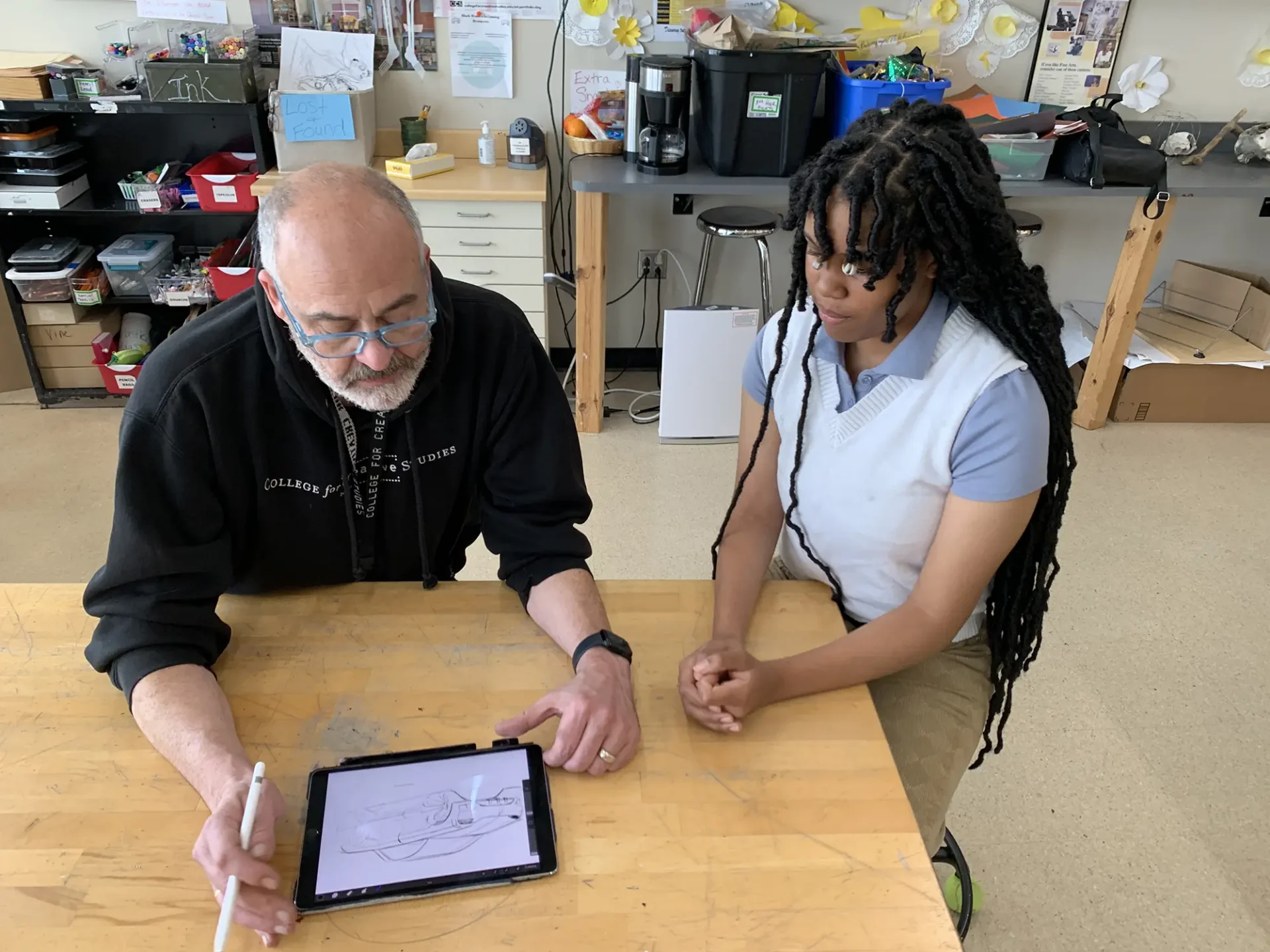
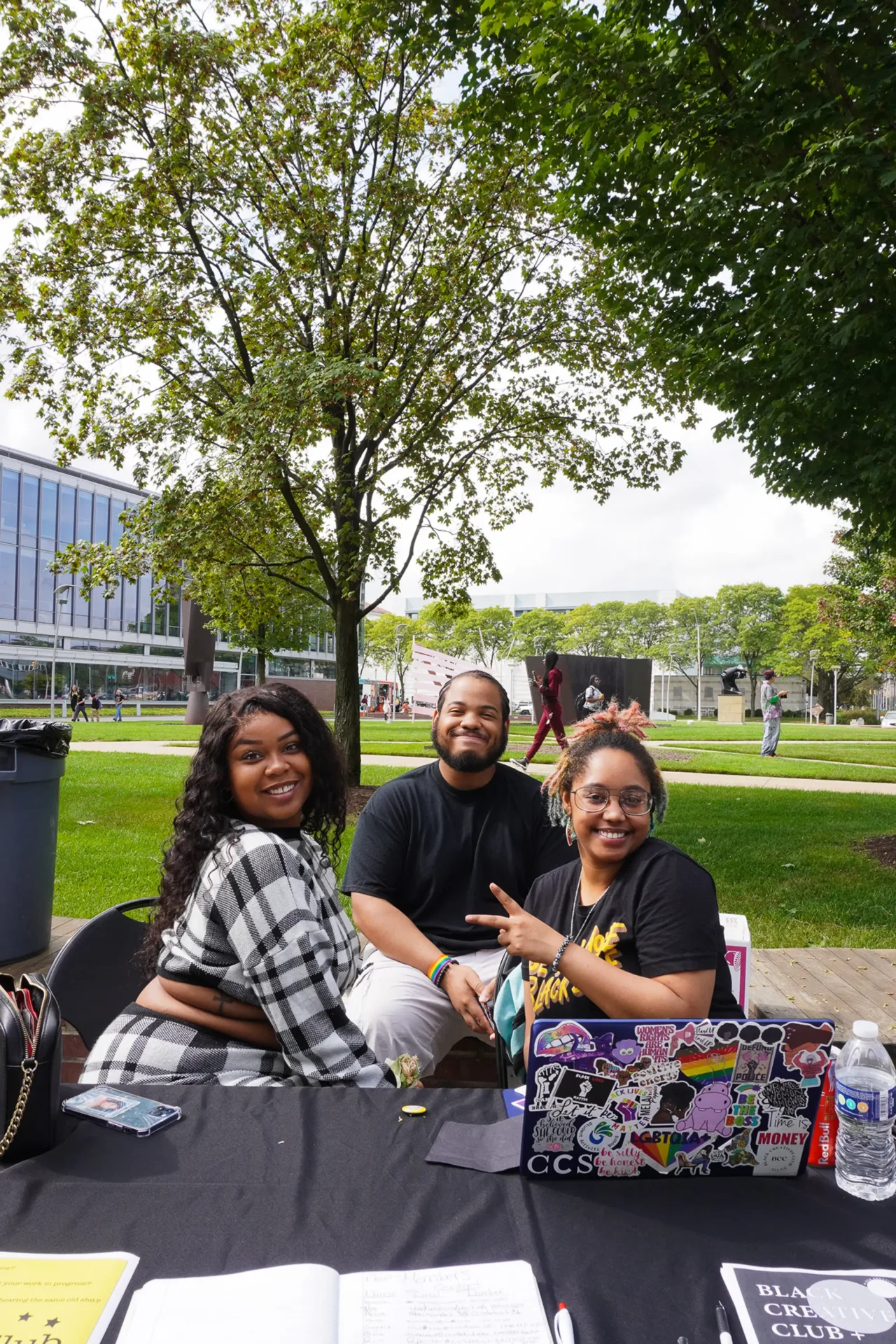

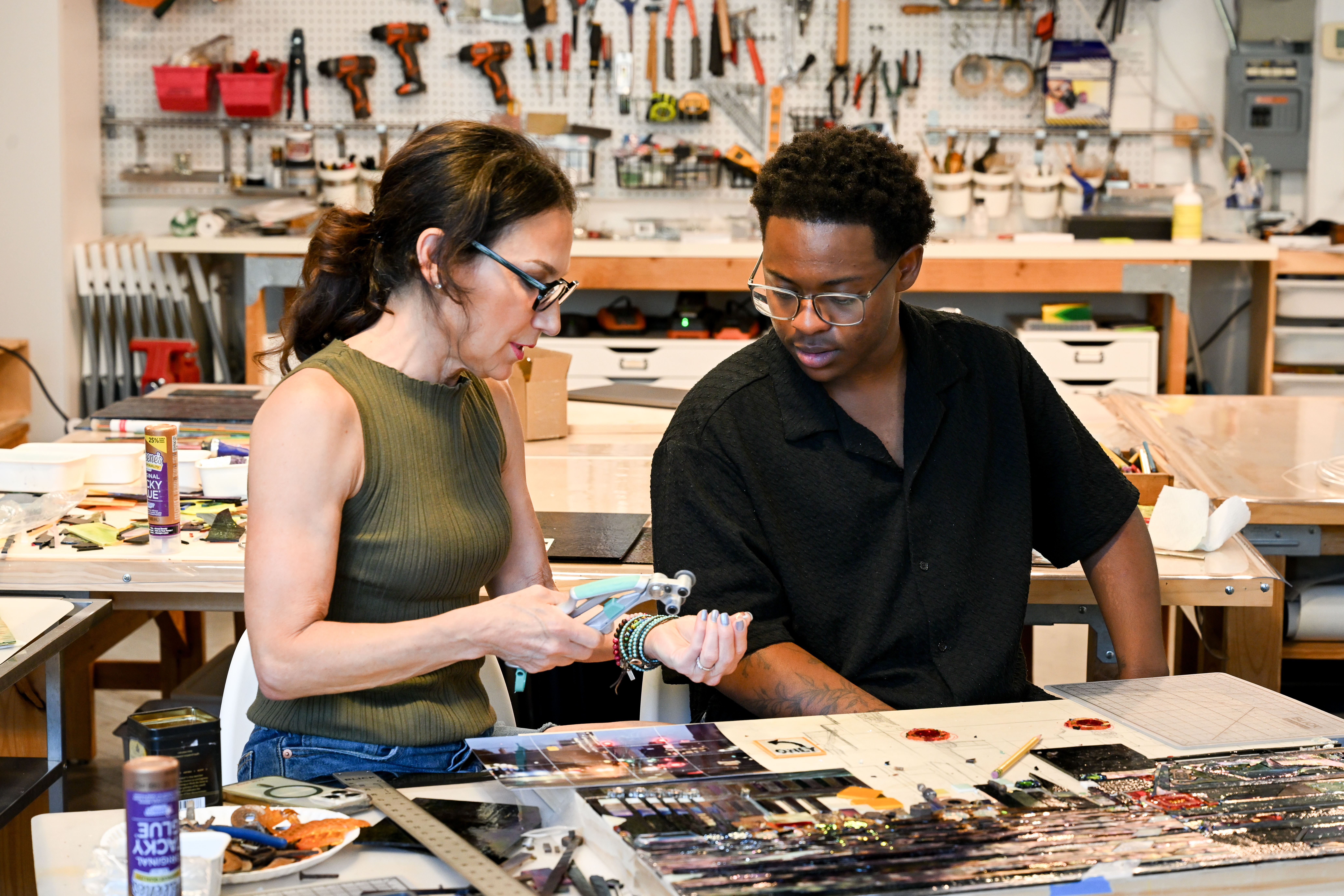
A conversation during CCS Industry Days brought together two artists more than 20 years apart in their CCS journeys. What followed is a story about mentorship, creative community – and what can happen when one person sees possibility in another.

When Darcel Deneau, ’02 Fine Arts, first came to the College for Creative Studies, she couldn’t afford to stay.

Drawn by CCS’s reputation, she enrolled about a year after graduating from high school. But the cost of continuing was more than she or her family could manage, so she left school, married and started a family.

Then, in her 30s, she came back. A scholarship helped give her the opportunity to return to CCS and finish what she had started. That journey gave Darcel a perspective on opportunity that has stayed with her ever since.

“I know firsthand how much support can change someone’s path,” she said.

Returning to CCS opened the world Darcel had wanted to be part of years earlier. She developed her artistic voice, became part of Detroit’s creative community and discovered something else she still associates with CCS: people willing to help one another.

“People tend to be nurturing, compassionate, generous with their time and willing to help one another,” Darcel said.

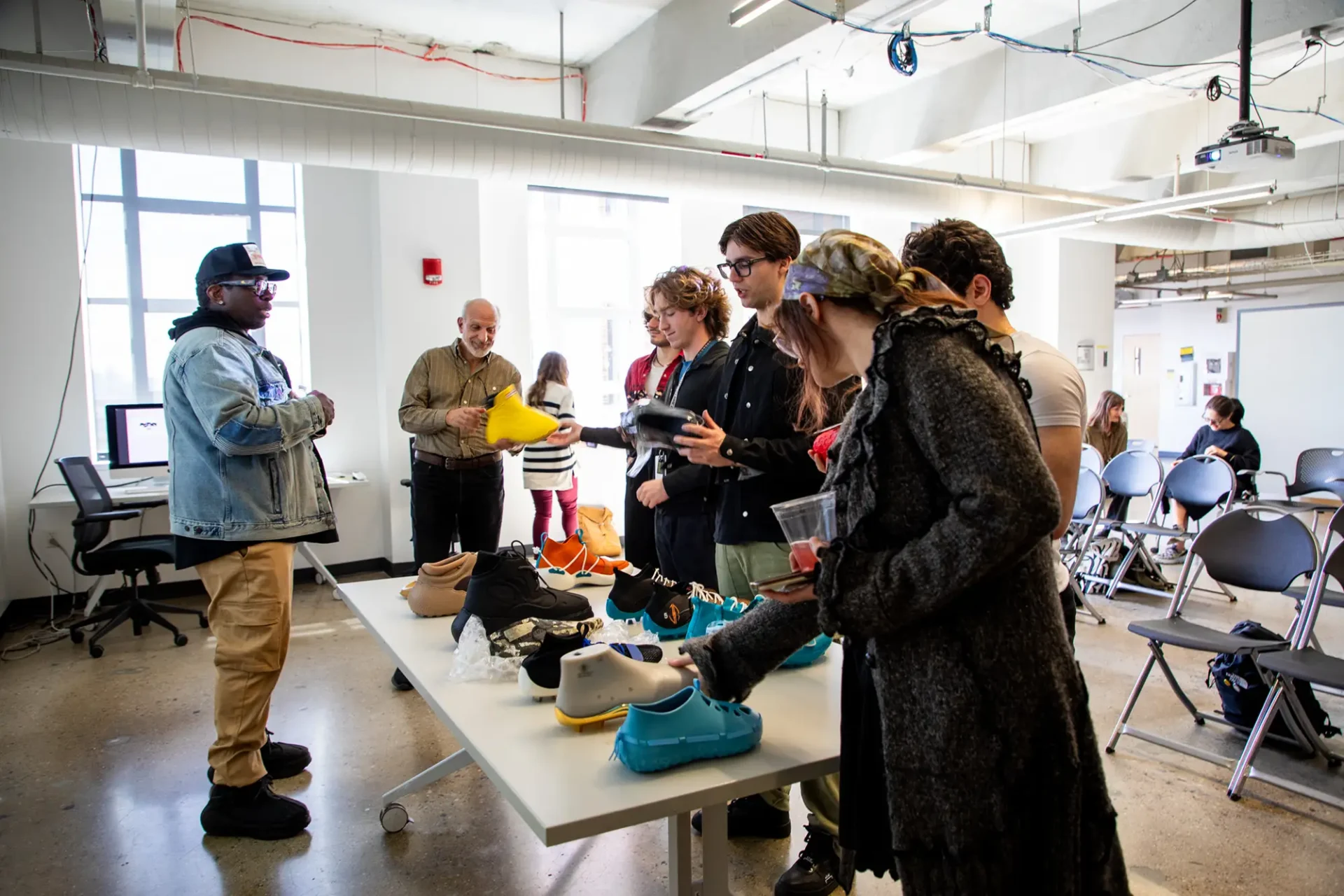
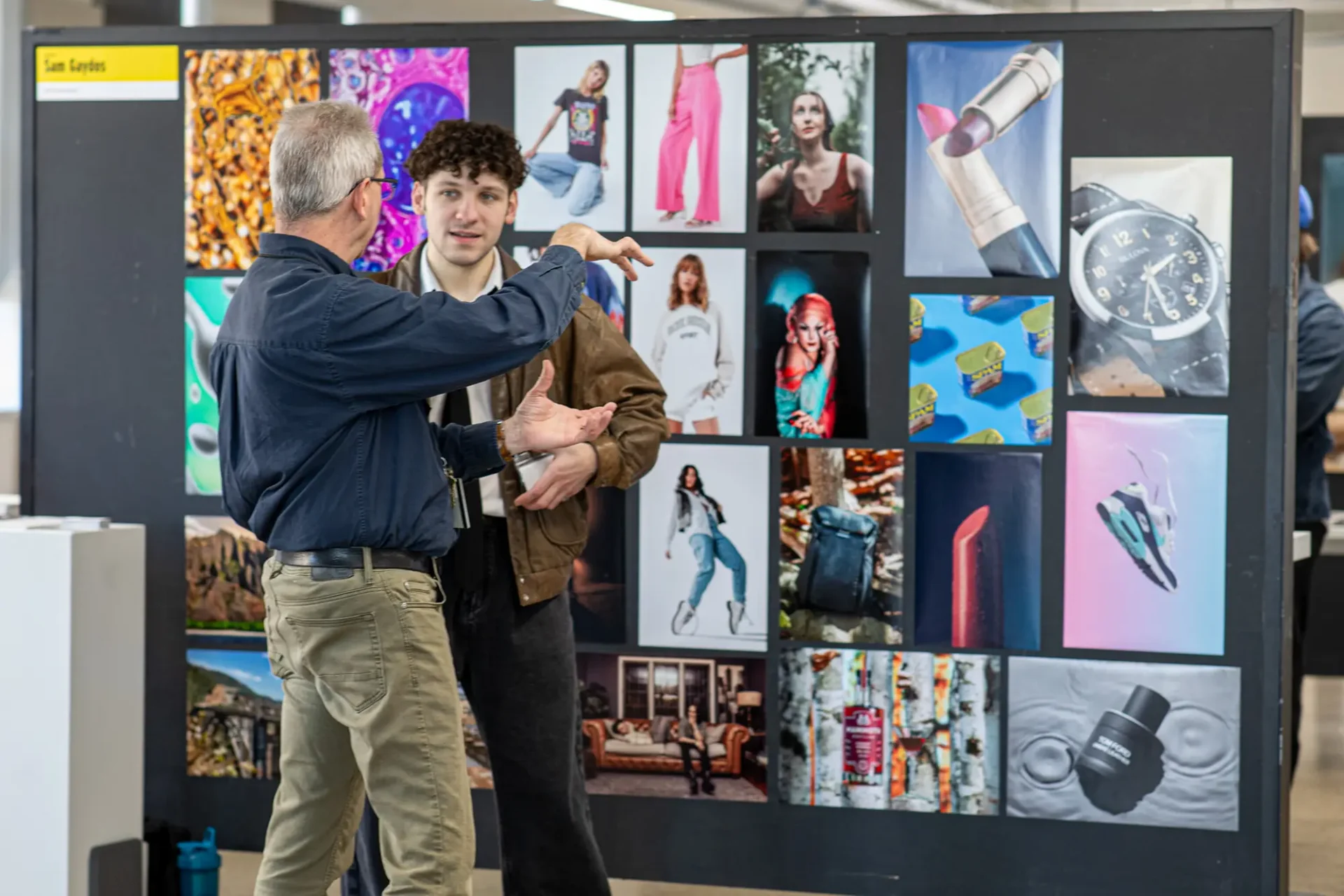
More than 20 years after graduating, Darcel has remained connected to CCS through the Alumni Council, mentoring, volunteering and attending Industry Days. Hosted by the Office of Partnerships, Industry Day events bring alumni and creative professionals back to campus to review student work, share advice, and help emerging artists and designers prepare for careers in the creative industries – reflecting something that has long defined the CCS community: alumni returning to invest in the next generation.

It was during one of those visits that Darcel met graduating Senior Neo Hopkins, ’25 Studio Art & Craft.
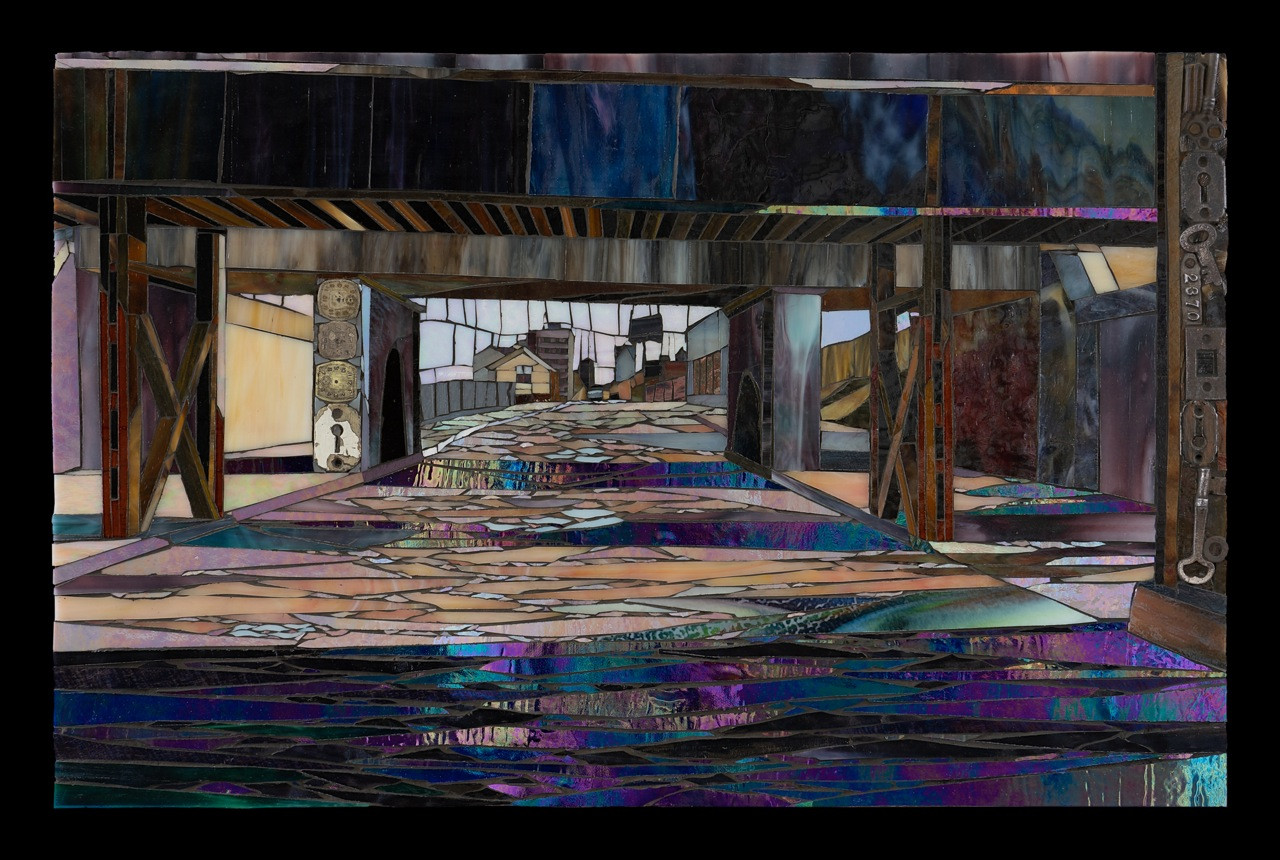
Stained glass mosaic artwork depicting an urban streetscape viewed through the dark structure of an overpass or bridge.
Artwork by Darcel Deneau

One Conversation

Neo was approaching graduation when his paintings and collage work caught Darcel’s attention. She could envision his ideas translated into another medium: glass. So she extended an invitation.

“I was excited when Darcel invited me to her studio, but I was also nervous,” Neo remembered. “Sometimes people say, ‘Come by sometime,’ but you don’t always know if they really mean it.”

The timing made the invitation even more significant. Graduation was approaching, and Neo was trying to determine what would come next. He wanted mentorship and people he could turn to as he began navigating life as a working artist.

“From the very first day I visited her studio, everything felt easy,” Neo said. “She was incredibly welcoming and generous.”

That first visit led to another, and then another. A professional connection became a creative partnership and, ultimately, a friendship.
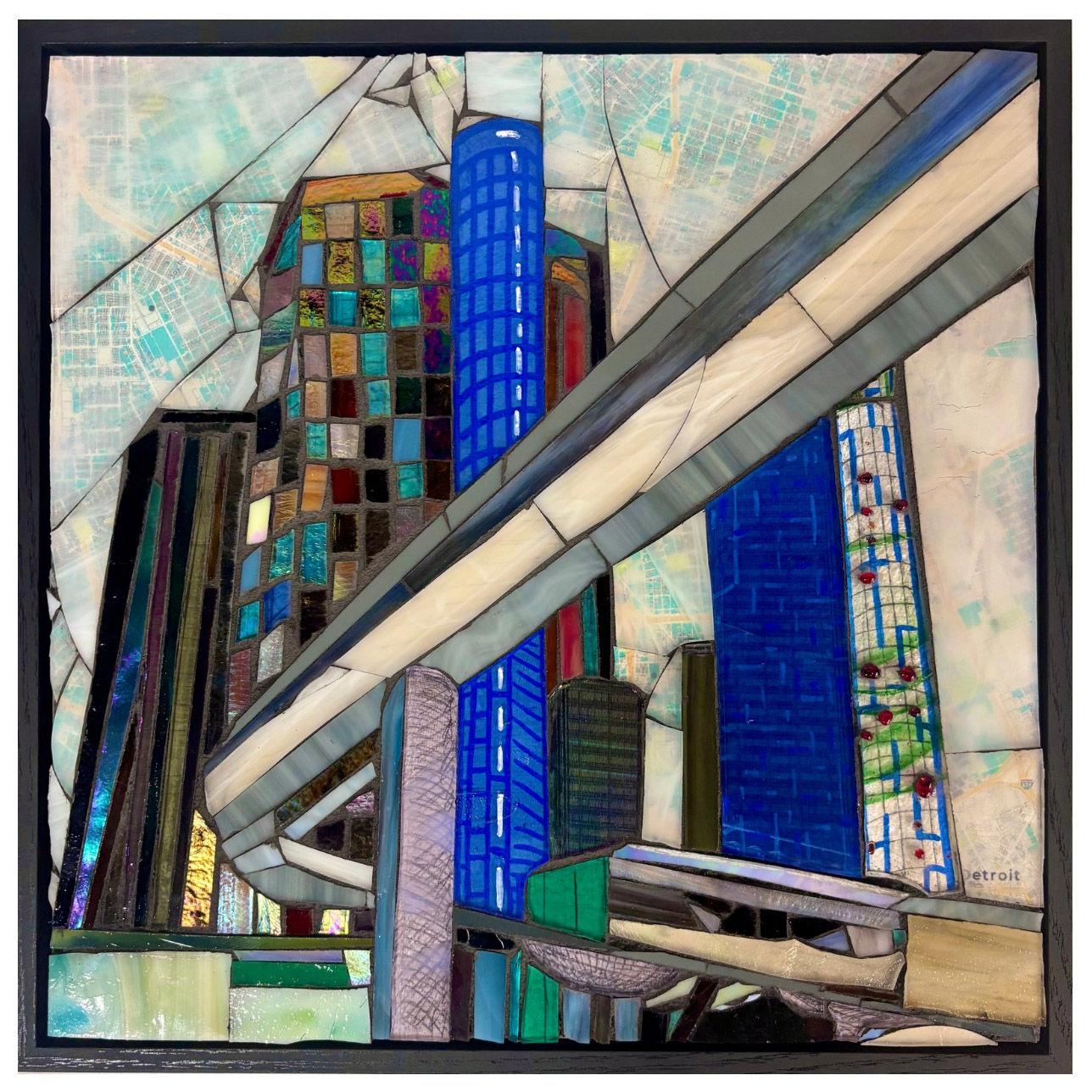
Artwork by Neo Hopkins

Seeing What’s Possible

During those early studio visits, Darcel introduced Neo to glass and taught him glass portraiture. As he explored the medium under her guidance, he began to see how it could complement his own artistic ideas.

“Darcel showed me possibilities in the medium that I hadn’t seen before,” Neo said.

What began as artistic instruction grew into an enduring mentorship. Darcel became someone Neo could call while navigating commissions or trying something new. When he needed his first studio space after graduation, she helped make that possible, too.

Today, the two artists work in the same building, exchanging ideas and continuing to learn from one another. Looking back, Neo can draw a remarkably straight line from that first invitation to where he is now.

“I probably wouldn’t have started working in glass without Darcel,” he said.

His career is growing in other ways, too. Neo works full time as a Brand Identity Coordinator for the Detroit Economic Growth Corporation while continuing to develop his studio practice, take commissions and pursue new creative opportunities.

People often describe mentorship as a one-way relationship, but Darcel believes both people grow through the experience.

“Neo inspires me just as much as I hope I’ve encouraged him,” she said.
College for Creative Studies launches new Bachelor of Arts in Business for Creative Industries and Bachelor of Fine Arts in Human-Centered Robotics Design, giving students direct access to two high-demand career paths

Detroit – College students now have new paths into sustainable creative careers as the College for Creative Studies (CCS) launches two new degree programs. Meeting demand from employers and students, the college will offer a Bachelor of Arts in Business for Creative Industries, giving students the business fluency creative teams need; and a Bachelor of Fine Arts in Human-Centered Robotics Design, positioning graduates at the forefront as the field grows toward a projected $6.4 billion by 2030. Applications for both degrees are now open with enrollment beginning Fall 2027.

“Art and design schools like CCS have always been about educating great makers and creating the future. Increasingly, the industries our students enter need something more: people who can lead the business and strategy side of our creative economy, and human-centered design thinkers who will shape the future of how we interact with emerging technology in our daily lives,” said Don Tuski, CCS President. “We’re rethinking how a creative education prepares students for today’s creative industries — degrees that are accelerated, cost less and consider where creative careers are headed. Our new programs are a direct response to what our students are asking for and what employers are telling us they need.”

Bachelor of Arts in Business for Creative Industries

Creative industries need talented professionals who can lead projects, manage teams and translate creative vision into a working business. The Bachelor of Arts in Business for Creative Industries is built to prepare exactly that kind of talent, and to do it in 90 credits across three years, instead of 120 credits across four years as in traditional programs. Students save a full year of tuition and can start leading sooner without giving up the preparation they need to succeed. In addition, the program allows block transfer from an Associate of Arts in Business and is fully aligned with the MI Transfer Pathway for Business, allowing transfer students to easily apply their associate degree or business credits toward the program, further maximizing time and financial savings.

The degree pairs core coursework in marketing, finance, entrepreneurship, strategy, leadership and project management with studio electives alongside CCS’s art and design majors, exposing students to how creative work gets made and what artists need to succeed. Students can focus in the following areas: film and game production, product design, transportation design, communication design, interior design or curation, or explore electives across disciplines. Internships, challenge-based projects and collaboration with studio majors give students real experience managing creative teams and projects before they graduate. Graduates are prepared for roles including creative project manager, producer, brand or marketing manager, product manager, design researcher and business analyst.

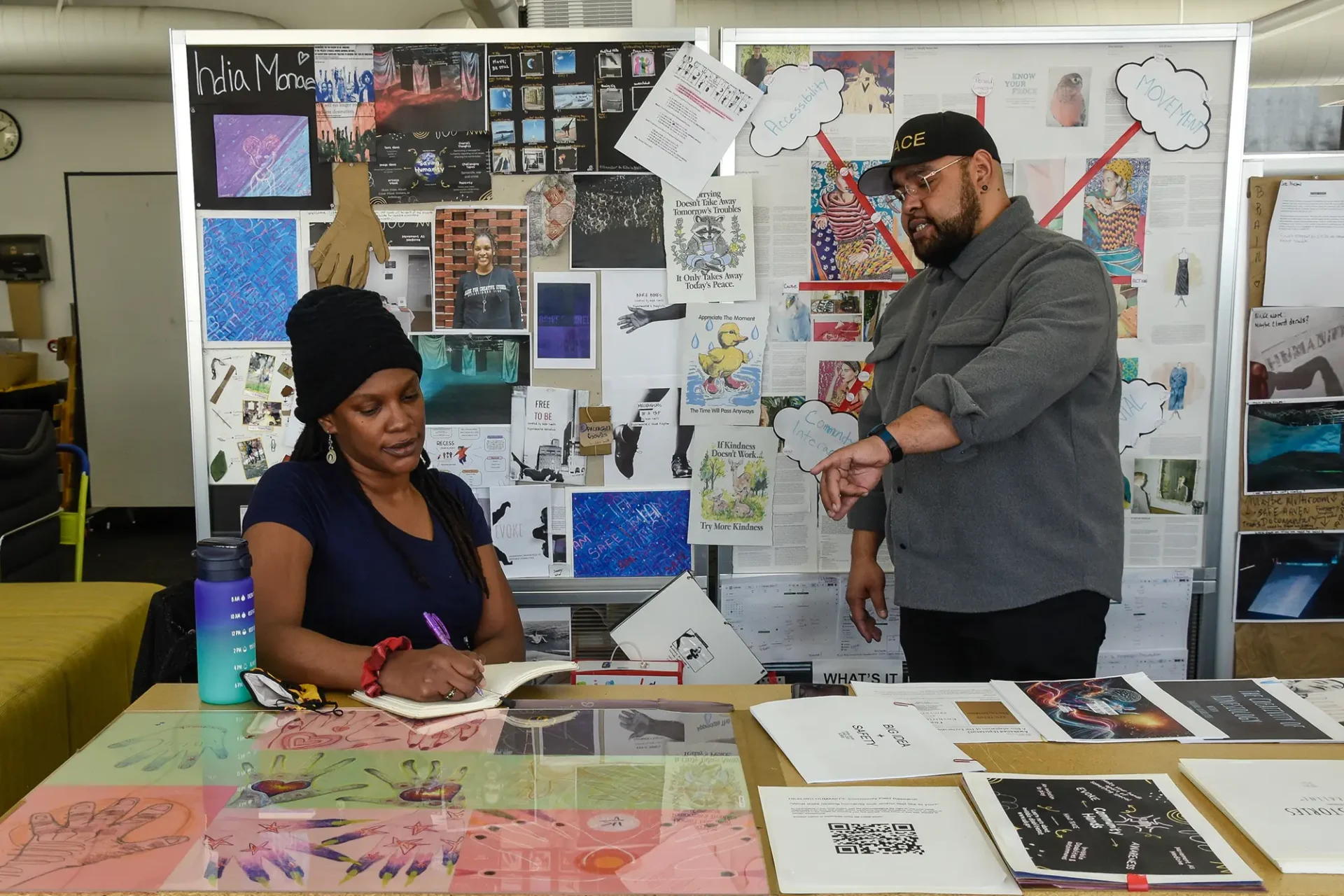
Two students working at a table. Behind them is a large mood board fill of images, writing and inspiration.

Bachelor of Fine Arts in Human-Centered Robotics Design

With the robotics industry projected to grow from a $2 billion industry in 2024 to $6.4 billion by 2030, CCS’s new Bachelor of Fine Arts in Human-Centered Robotics Design will equip students to lead in one of the fastest-growing segments of industrial design.

The degree is a STEM-designated industrial design program grounded in human-robot interaction, which is the study of what makes autonomous systems feel trustworthy rather than unsettling. As robots move beyond factory floors into hospitals, schools and homes, the industry needs designers who can shape not just what these systems look like, but how they behave around the people using them. Students will pair design ethics and behavioral science with studio classes, examining how elements like movement, light, sound, interaction and materials shape human-machine integration.

Being based in Detroit puts students in close proximity to many of the companies leading the robotics industry. The city’s manufacturers, automakers and innovation hubs are already incorporating autonomous robotics into daily life for consumers, giving students unique access to the companies, internships and hands-on projects shaping the future of human-centered interaction.

Accelerated BFA/MFA Degrees and Transfer-Friendly Completion Programs

CCS’s new programs are connected by the idea that creative careers shouldn’t require choosing between passion and practicality. By building degrees that are focused, more affordable and closely tied to the future of creative industries, CCS is equipping students to enter the creative economy and succeed.

To that end, CCS is launching new accelerated degree programs that give students the unique opportunity to complete both a Bachelor of Fine Arts and a Master of Fine Arts in five years, removing a full year of tuition compared with pursuing the degrees separately. The program is currently offered across three tracks, with additional programs in development:

  • Bachelor of Fine Arts in Interior Design and Master of Fine Arts in Color and Materials Design
  • Bachelor of Fine Arts in Product Design and Master of Fine Arts in Color and Materials Design
  • Bachelor of Fine Arts in Communication Design and Master of Fine Arts in User Experience Design

Additionally, CCS is launching three transfer-friendly completion programs with a direct path from an associate’s to a bachelor’s degree in two years, removing barriers and added costs that often impact transfer students in traditional programs. Pathways include:

  • Bachelor of Design in Interior Design
  • Bachelor of Arts in Film Studies
  • Bachelor of Arts in Illustration
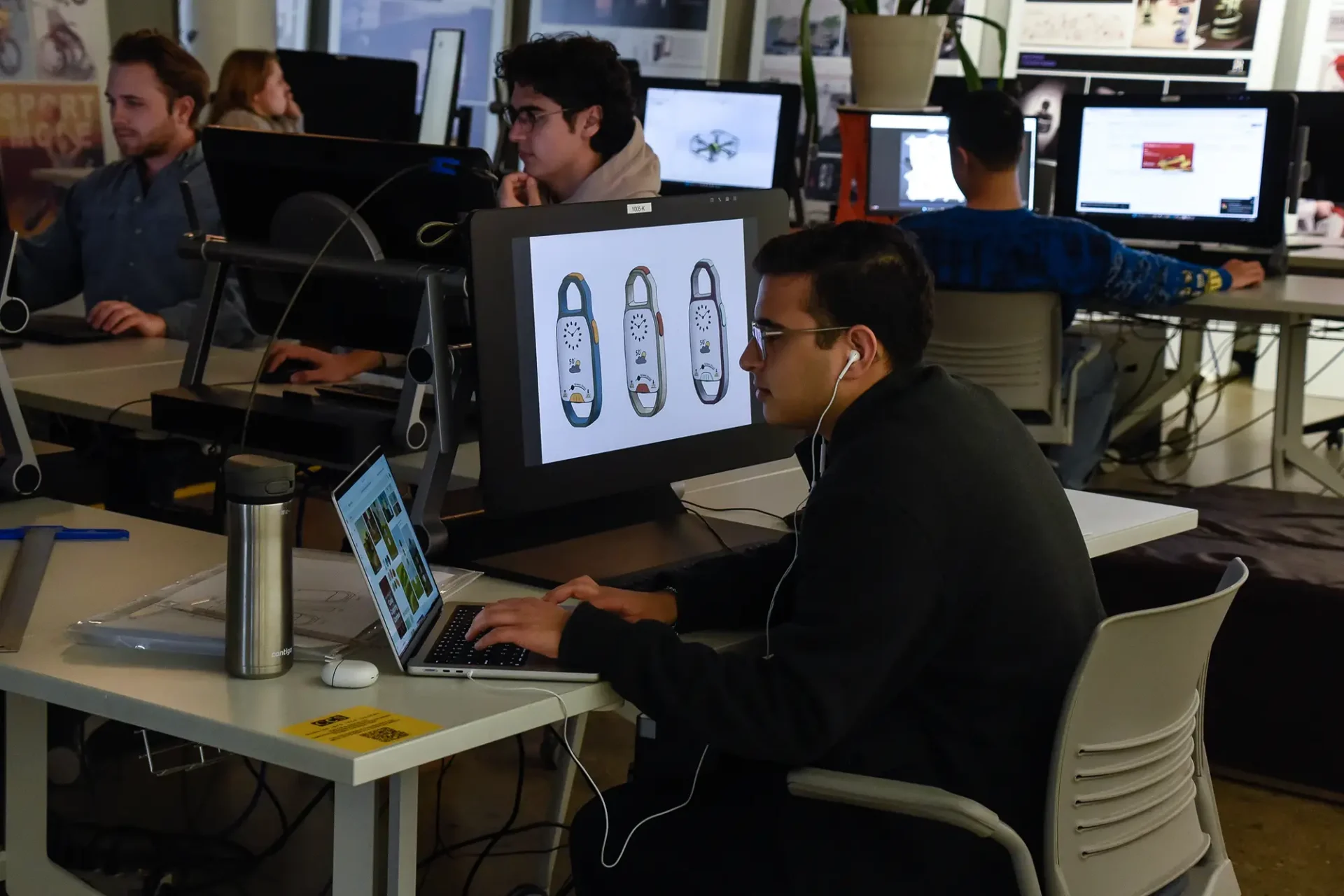
Student working on their project in a computer studio

About CCS

The College for Creative Studies (CCS) is a nonprofit, private college accredited by the Higher Learning Commission and authorized by the Michigan Education Department to grant bachelor’s and master’s degrees. CCS, located in midtown Detroit, strives to provide students with the tools needed for successful careers in the dynamic and growing creative industries. CCS fosters students’ resolve to pursue excellence, act ethically, engage their responsibilities as citizens and learn throughout their lives. With world-class faculty and unsurpassed facilities, students learn to be visual communicators who actively use art and design toward the betterment of society. The College is a major supplier of talent to numerous industries, such as transportation, film and animation, advertising and communications, consumer electronics, athletic apparel and many more. Its graduates are exhibiting artists and teachers, design problem solvers and innovators, as well as creative leaders in business.

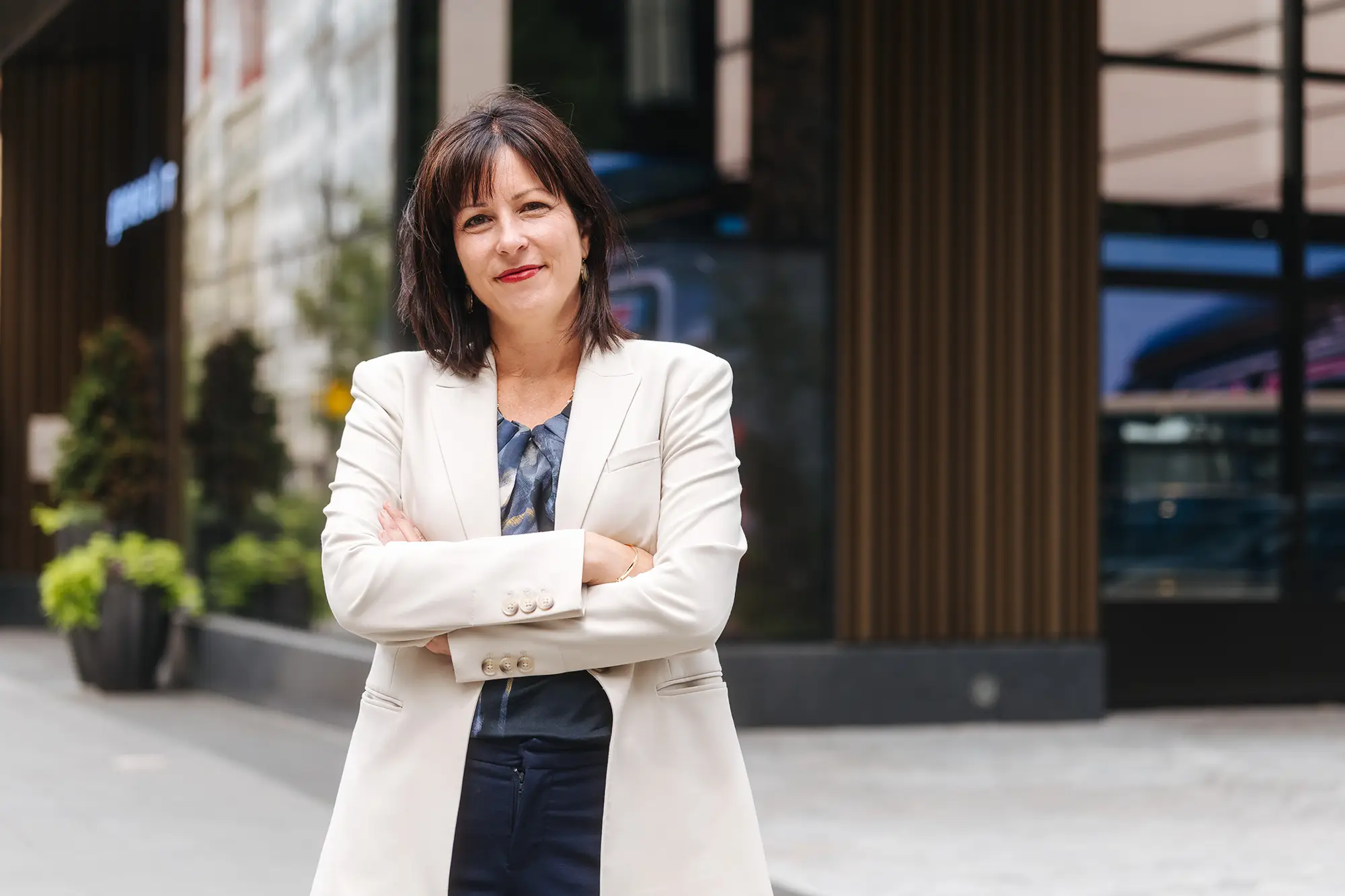
Mayor Mary Sheffield announced today the appointment of Olga Stella as Chief of Economic Development and Workforce for the City of Detroit. A longtime Detroiter, Stella has spent her career as a leader in economic and business growth, community revitalization, and Detroit‘s creative economy. Most recently, she served as Vice President of Strategy and Communication at the College for Creative Studies (CCS), where she shaped the institution’s strategic roadmap, expanded industry partnerships, and oversaw community programs.

During her time at CCS, Stella helped put Detroit on the world stage by stewarding the city’s designation as the only UNESCO City of Design in the United States. She was Executivunie Director of Design Core Detroit, and most recently Vice President of Strategy and Communications at the College for Creative Studies.

In her new role, Stella will set a shared strategy and align resources so that the full ecosystem operates effectively, giving employers and developers a coordinated Detroit. “Detroit’s neighborhoods and business community succeed together,” said Mayor Sheffield. “Olga will be a key architect in making Detroit the best place in the country to start, grow, and locate a business. When businesses thrive here, they create the jobs, opportunity, and stability that Detroit families are counting on.”

“I am inspired by Mayor Sheffield’s vision, and I can’t imagine doing this work anywhere but in
my own hometown,” said Stella. “Detroit has given my family so much and this a historic moment for the City of Detroit, and I look forward to bringing a different approach to economic development, one that delivers for our neighborhoods and employers alike.”

CCS President Don Tuski expressed his enthusiasm for Olga Stella and her new role.
“Since Olga first joined CCS in 2016, she has played a pivotal role in increasing CCS’s external community profile and visibility, as well as strengthening CCS’s internal culture in partnership with campus leaders,” said President Tuski.

 “While Olga will no longer be at CCS, I know she will always be a friend to the College, and I look forward to working with her in this new role as she continues to uplift the City of Detroit.”