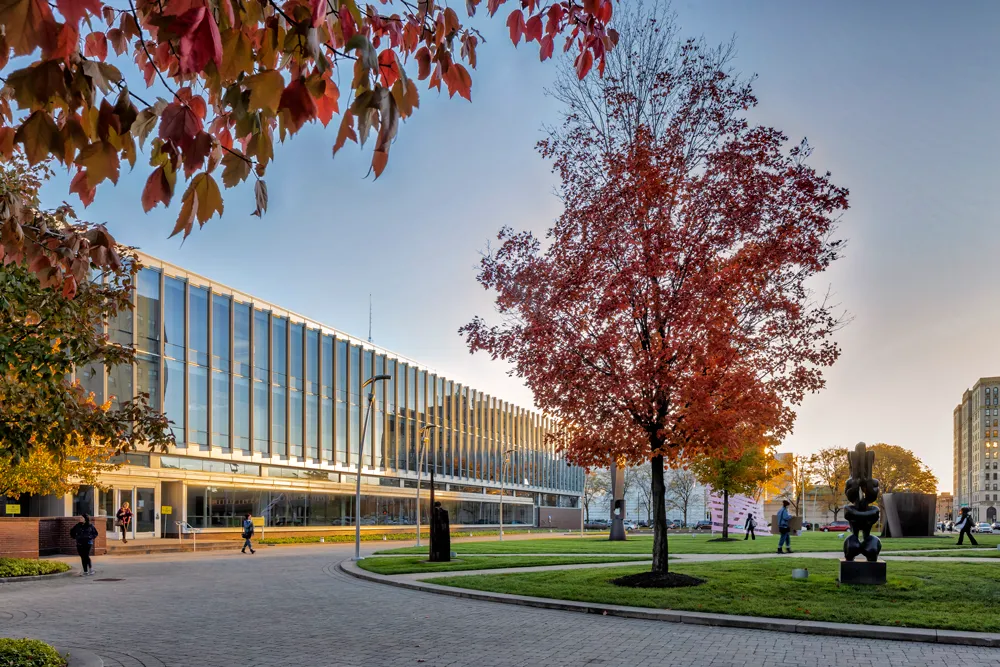
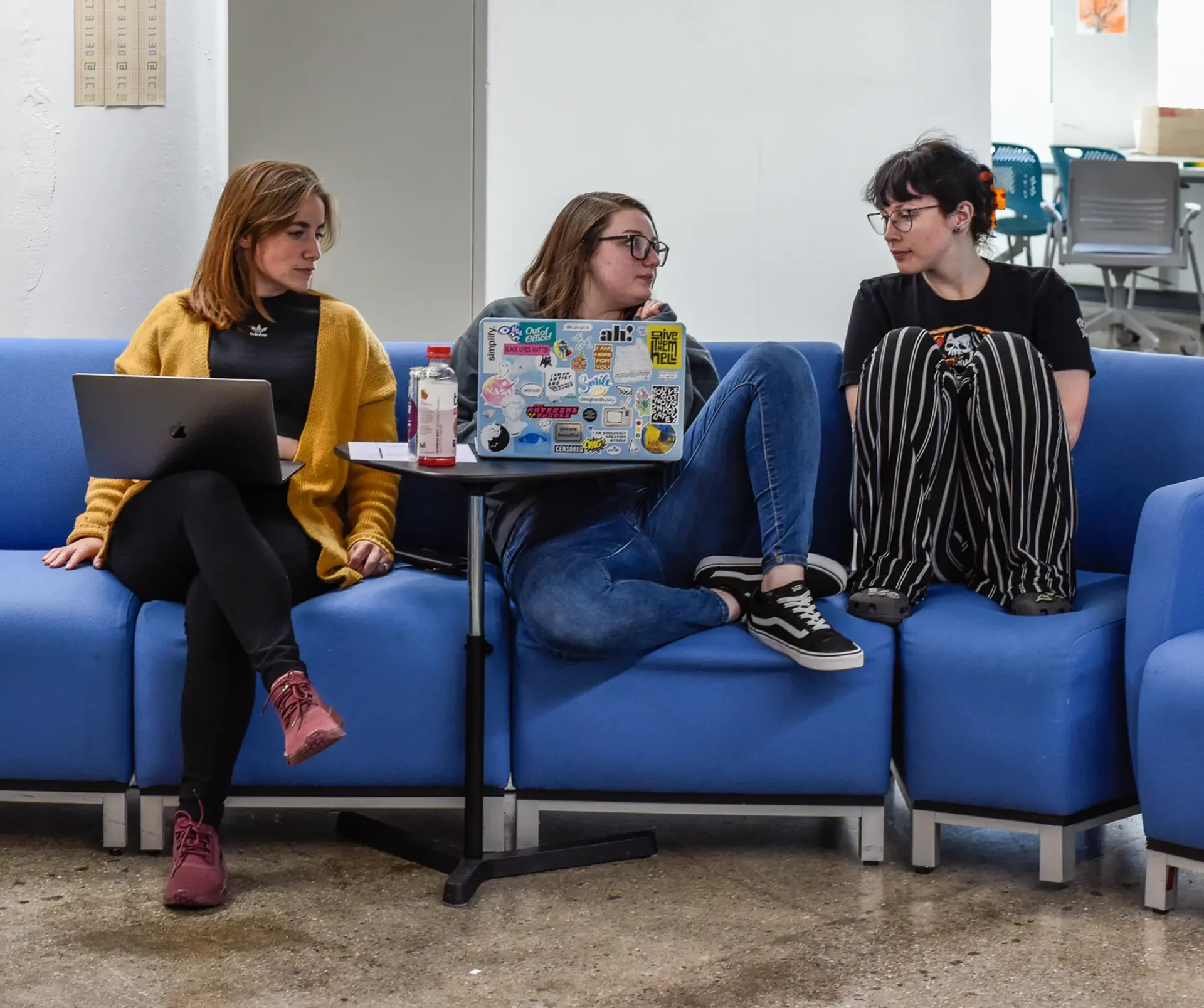
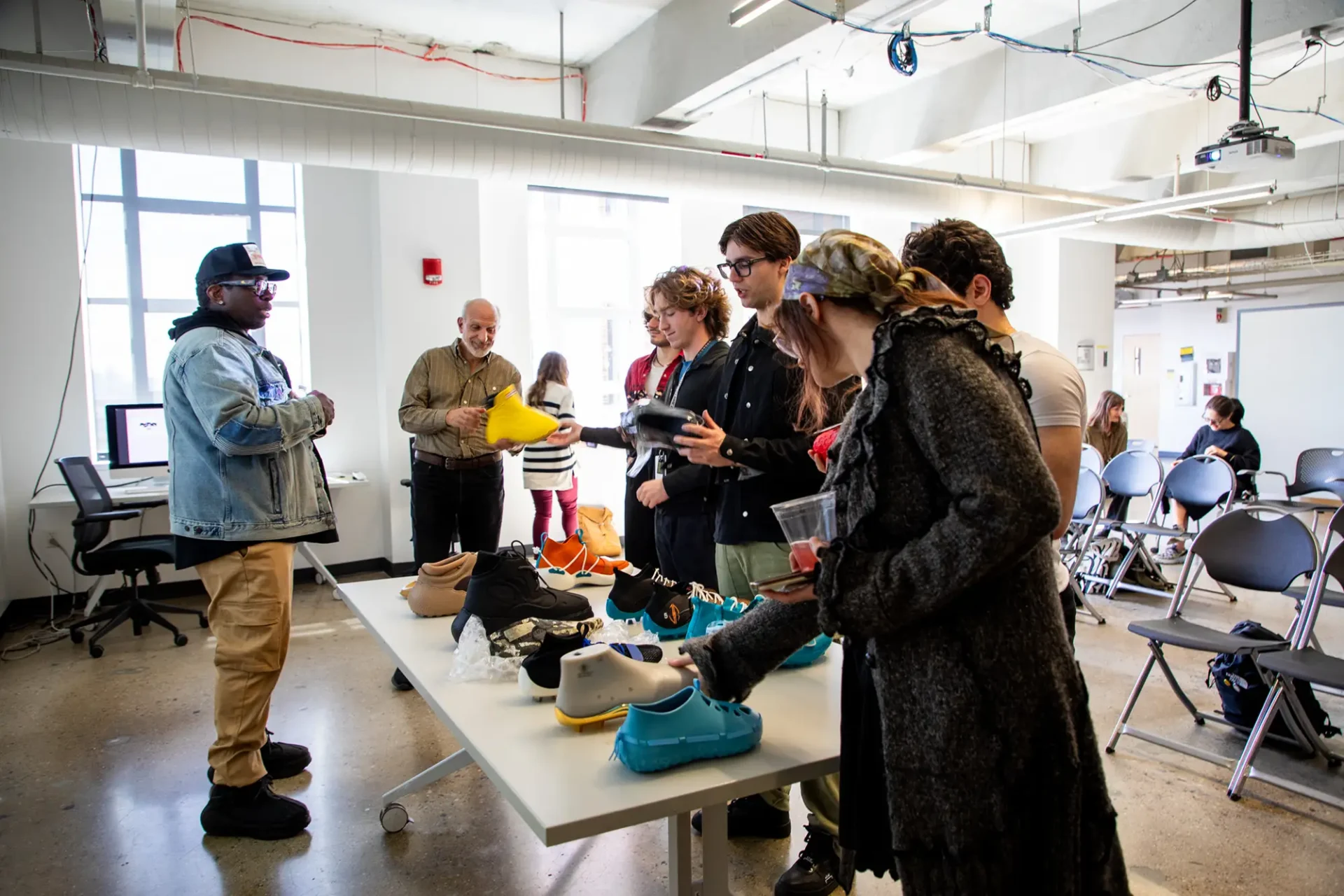
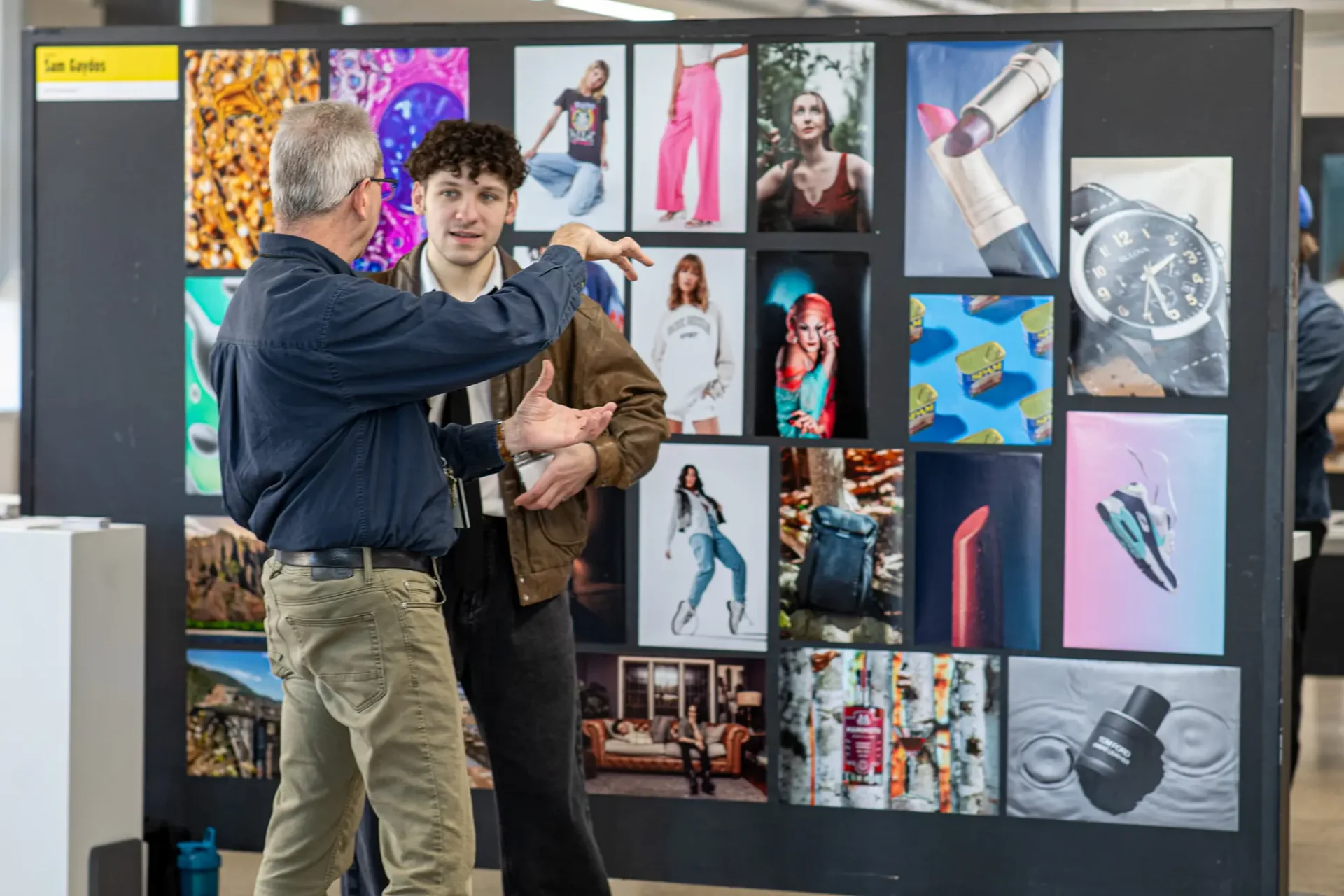
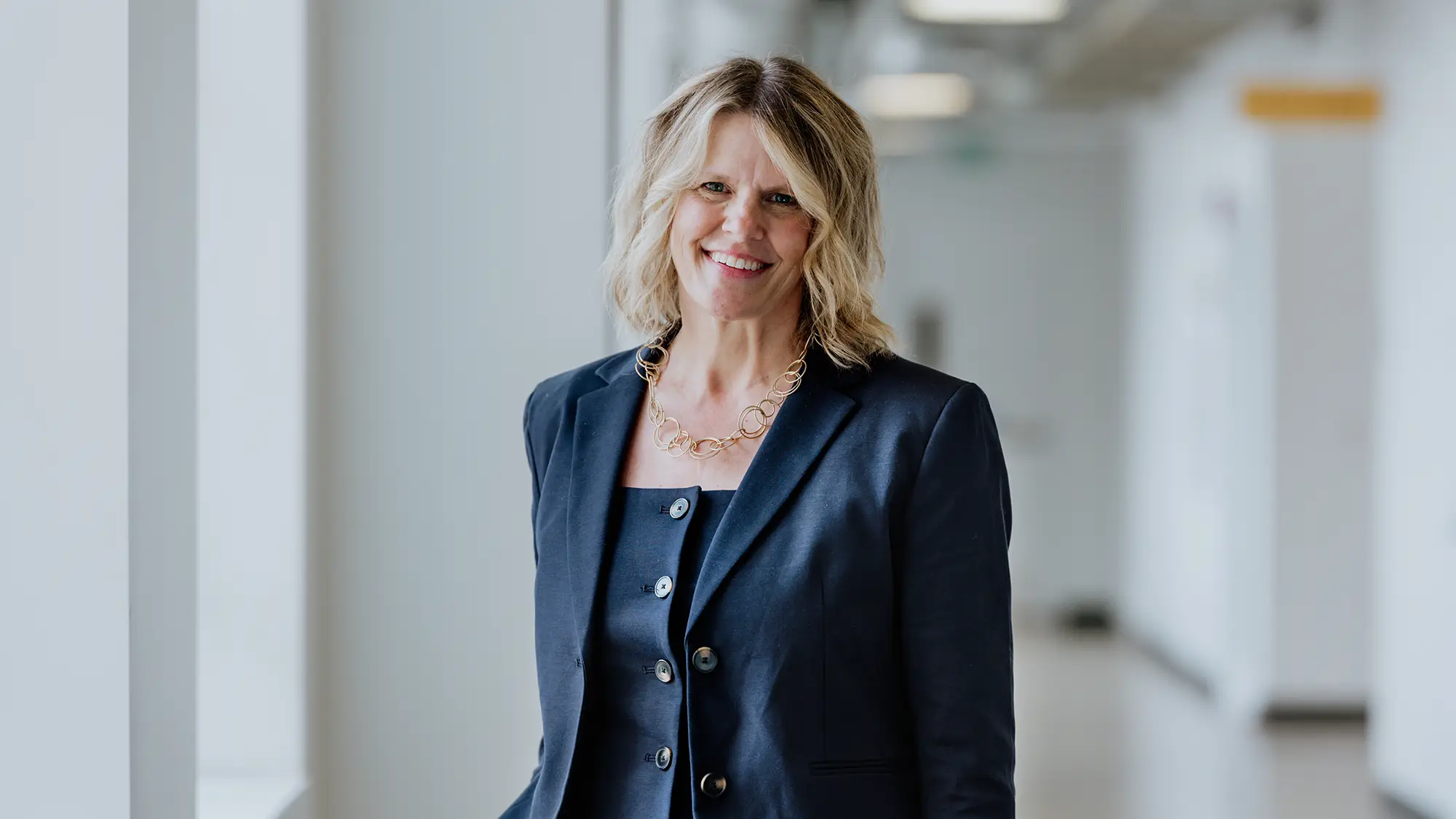
A native Pennsylvanian, Allison Puff took an uncommon path to becoming the Provost of College for Creative Studies in Detroit. From restaurateur to in-house graphic designer to professor, she has spent her life following her passions. Her deep commitment to human connection is both her superpower and her primary driver. Those connections, built through her lived experiences inside and outside of higher education, fuel an unwavering belief in artists and designers and their ability to problem-solve in ways no one else can.

SH: Thank you for your time today, Allison. Let’s start with what attracted you to College for Creative Studies.

AP: It came together at a really good time for me. It felt like a good combination of my skill sets from Farmingdale State College, which was much more business, engineering, technology and design, and Kansas City Art Institute, which was more fine art and craft. Those experiences worked well for CCS and I’m excited to get back into a more design-focused school. I was very connected to design Chairs and programs across the country and had a good impression of CCS from that. I had also met Don (CCS President) and Tim (former CCS Provost) previously at AICAD conferences, and they always seemed happy and positive about CCS. Don was one of those people who took the time to talk to everybody, and when I saw Rob (former CCS Interim Provost) last year, he said he left work every day happy. That’s not something you hear all that often anywhere. He spoke so highly of all the people at CCS and that impacted my decision.

SH: There is the textbook definition of a provost, but how do you see the role and the way it serves the college community?

AP: I see the role of provost as being a problem solver and connector. That’s what happens every day: a problem or multiple problems present themselves and we look for solutions that meet the community’s needs. That is one of the reasons I got into academic leadership. Even as a faculty member, I was always trying to figure things out, like making the promotion and tenure process easier. Plus, I get the opportunity to meet everybody across campus. I love faculty and learning about what they’re doing in their classrooms. I also know that institutions don’t exist without the staff that supports us in fulfilling the academic mission. If I can bring those two groups together to do some of that problem-solving and make everybody’s experience better, especially the students, that’s my happy place.

SH: What are you looking forward to the most in this new role?

AP: This is a really challenging time in higher education, and art and design education in particular. I’m really excited to work with this group of people on what the future can mean, and how we remain a really rigorous, exciting education while also meeting students where they are. And also thinking about what roles artists play in a future that includes AI. That’s the number one question, isn’t it? I would say, who better to tackle these questions than artists and designers? They are the people who have the ability to think about these challenges in such a different way than somebody with an engineering background, who might be led by different reasons. I just have such trust in the ability of artists and designers to solve problems in ways that no one else can. That makes me excited for the work here, and that makes me excited for our graduates also.

SH: As you begin meeting with faculty, staff, and students, what are the questions you’re most eager to ask, and what do you hope to learn?

AP: I want to understand the CCS student, what they want and need, and how we can provide that in a way that works while challenging them. I’ve always been a believer in having strong expectations for them (because I think they’re amazing), while supporting them in what they need to get there. I need to know more about them to be able to do that really well. Amy Ruopp and I are about to start having office hours every other week in the Taubman and Ford cafes during lunchtime to be accessible to not just students, but faculty and staff. I started doing that when I was at KCAI, and it was really helpful. There are some things that are so easy to solve just by having a conversation, and students don’t always know who to have the conversation with. Sometimes they come with really challenging personal concerns with peers or faculty members. I hope the faculty and staff will take advantage of it; they can also come and sit down and have a coffee and chat with Amy and me at one of these lunchtimes. It doesn’t have to be a problem; it can also be something really amazing that’s happening that I might not know about.
SH: What is something unexpected in your past that helped you prepare for this role?

AP: I used to own a restaurant with my husband. It was a very small bistro with about 25 seats that served New American cuisine with many different influences. He built the kitchen so he could do all the cooking himself. I was always there working at the restaurant while also chairing a department in a different state. I would walk in on Thursday night, work the front of house and do the books, and go back to Farmingdale on Monday for four days, where I was teaching online and in-person classes. I never liked conflict, and restaurants require you to deal with different people and their needs. It was very helpful in terms of my academic position.

SH: Can you tell us a little bit about your personal artistic practice?

AP: I have an MFA in Illustration, but I worked more as a graphic designer and taught more graphic design classes. I’ve worked as a freelance illustrator and graphic designer and worked as an in-house designer. People often ask me, in terms of having an MFA and working as a designer, it doesn’t seem like administration is very creative. I would push back against that really hard because it’s been some of the most interesting problem-solving I’ve ever done. It has such a huge impact on the community that we’re all existing in.

SH: What do you enjoy most about being a provost and what do you find is the most challenging?

AP: I enjoy that there’s still so much to learn. That’s another part of being in higher education that’s exciting to me. I constantly want to be learning about something new, and I don’t have the opportunity to ever not be learning something new in these kinds of positions.

SH: What do you want students to know about you?

AP: I want students to know that I am accessible. I’m kind of shy. The reason I share that is to let students know that whatever you find challenging doesn’t need to hold you back from the things that you want to do. Oftentimes, it’s helpful to share that with people and see that they’re on your side. They’re rooting for you to be able to do that presentation, or be successful at what it is that you’re trying to do, because everybody has something that they’re trying to overcome in order to do their job or succeed in the world.
Metro Detroit visual and literary artists are invited to apply starting Dec. 1

DETROIT – Ten metro Detroit residents working in literary and visual arts will be selected to receive $50,000 each in no strings attached funding along with a suite of artist support opportunities. Unrestricted funding addresses the financial barriers artists face, strengthens the region’s creative economy, and affirms artists’ role in building vibrant neighborhoods. Newly revised guidelines for Kresge Artist Fellowships were released today and artists are encouraged to review them carefully.

Kresge Arts in Detroit is generously funded by The Kresge Foundation and administered by the College for Creative Studies. The Kresge Artist Fellowship application opens December 1, 2026. Full application guidelines are now available at kresgeartsindetroit.org. Eligible artists residing in Wayne, Oakland, and Macomb counties  are invited to apply in the following disciplines:

LITERARY ARTS

Arts Criticism, Creative Nonfiction, Fiction, Graphic Novels, Playwriting, Poetry, Spoken Word, Zines, and Interdisciplinary Work.

VISUAL ARTS

Book Art, Ceramics, Collage, Drawing, Fiber, Glass, Installation, Metalwork, New Media, Painting,  Performance Art, Photography, Printmaking, Sculpture, Video Art, and Interdisciplinary Work.

Fellowship selection criteria include: a demonstrated track record of artistic achievement and high-quality work, the potential to grow and advance in one’s career, and the potential to reflect, enhance, or impact communities within metro Detroit.

Also on offer are 10 Gilda Awards of $5,000 each. These $5,000 awards honor artist Gilda Snowden’s (1954-2014) legacy as a mentor and champion of young, emerging artists in metro Detroit. The Gilda Award recognizes early-career artists gaining momentum and demonstrating exceptional potential through creative risk-taking and boundary-pushing work.

The number of awards in each category will be proportional to the relative number of applications received. Applicants who choose to be considered will also be eligible for Gilda Awards if they do not receive a fellowship.

“For nearly two decades, The Kresge Foundation has invested in metro Detroit artists through individual awards. We have had the privilege of witnessing what becomes possible when artists have the freedom and resources to create, rest, invest, save, dream, and collaborate on their own terms. Every application offers a glimpse into the remarkable talent, vision and imagination that exists across our city’s creative community. What inspires us most is the many ways artists use their gifts to strengthen neighborhoods, spark connection and help shape Detroit’s future,” said Wendy Lewis Jackson, managing director for The Kresge Foundation’s Detroit program. “This year’s panelists will face an incredibly difficult task as always. Whether selected or not, no single award will ever define the quality of an artist’s work or fully measure their impact. We are deeply grateful for the time, care and vulnerability that goes into each application.”

Through this continued support, The Kresge Foundation affirms that artists are central to Detroit’s growth and essential partners in advancing opportunity and creating resilient, connected communities.

“These fellowships prove that resources in the hands of independent artists who live, work, and build here strengthen our communities,” said Katie McGowan, director of Kresge Arts in Detroit. “Metro Detroit is unlike any other place in the country and protecting its unique character doesn’t happen by accident. It requires sustained creative work to cultivate regional identity and inspire civic imagination. Unrestricted funding makes that type of work possible.”

AWARD-WINNING FILM PROGRAM

Kresge Arts in Detroit offers each fellow the opportunity to work with a local filmmaker to produce a short film about their work. Select films have been screened and received awards at local, national, and international film festivals in recent years. In 2021, Detroit-based production company Reel Clever was awarded a Michigan Emmy for work on the series. View past films here.

In addition to the film, fellows receive one year of artist support including networking, professional coaching, and legal and accounting consultations.  “This award not only gave me financial capacity to pursue my writing more meaningfully but also the confidence to apply to other opportunities,” said 2025 Kresge Artist Fellow Beenish Ahmed.

KEY DATES

November 2, 2026: Application guidelines available
December 1, 2026: Online application opens
January 14, 2027 by 11:59 PM: Application deadline

The 2027 Kresge Artist Fellows and Gilda Award recipients will be selected by a panel of independent, local and national artists and arts professionals. Winners of the 2026 Kresge Artist Fellowship had previously applied twice, on average. A new year brings new panelists with fresh perspectives; previous applicants are strongly encouraged to re-apply.

As it approaches its 20th year, the program continues to demonstrate how investment in the arts transforms what is possible for communities: fueling creative careers and animating neighborhoods.

APPLICATION INFO SESSIONS

Kresge Arts in Detroit staff will hold an online application info session and walkthrough in December, followed by a second online Q&A session in January. These virtual sessions are not required, however, applicants are encouraged to attend for support in creating compelling applications for a Kresge Artist Fellowship. Applicants can register to attend using the links below.

Application Info Session (virtual)
December 10, 2026
5:30 – 6:30 PM

Application Q&A Session (virtual)
January 9, 2027
5:30 – 6:30 PM

Visit kresgeartsindetroit.org for the complete guidelines, FAQs, and additional resources. Please direct questions about application requirements to Kresge Arts in Detroit at [email protected] or by phone at (313) 744-3204.

See our press folder for graphics and additional resources.

Creativity may begin with an idea, but bringing that idea to life takes opportunity, encouragement and a community willing to invest in what comes next.

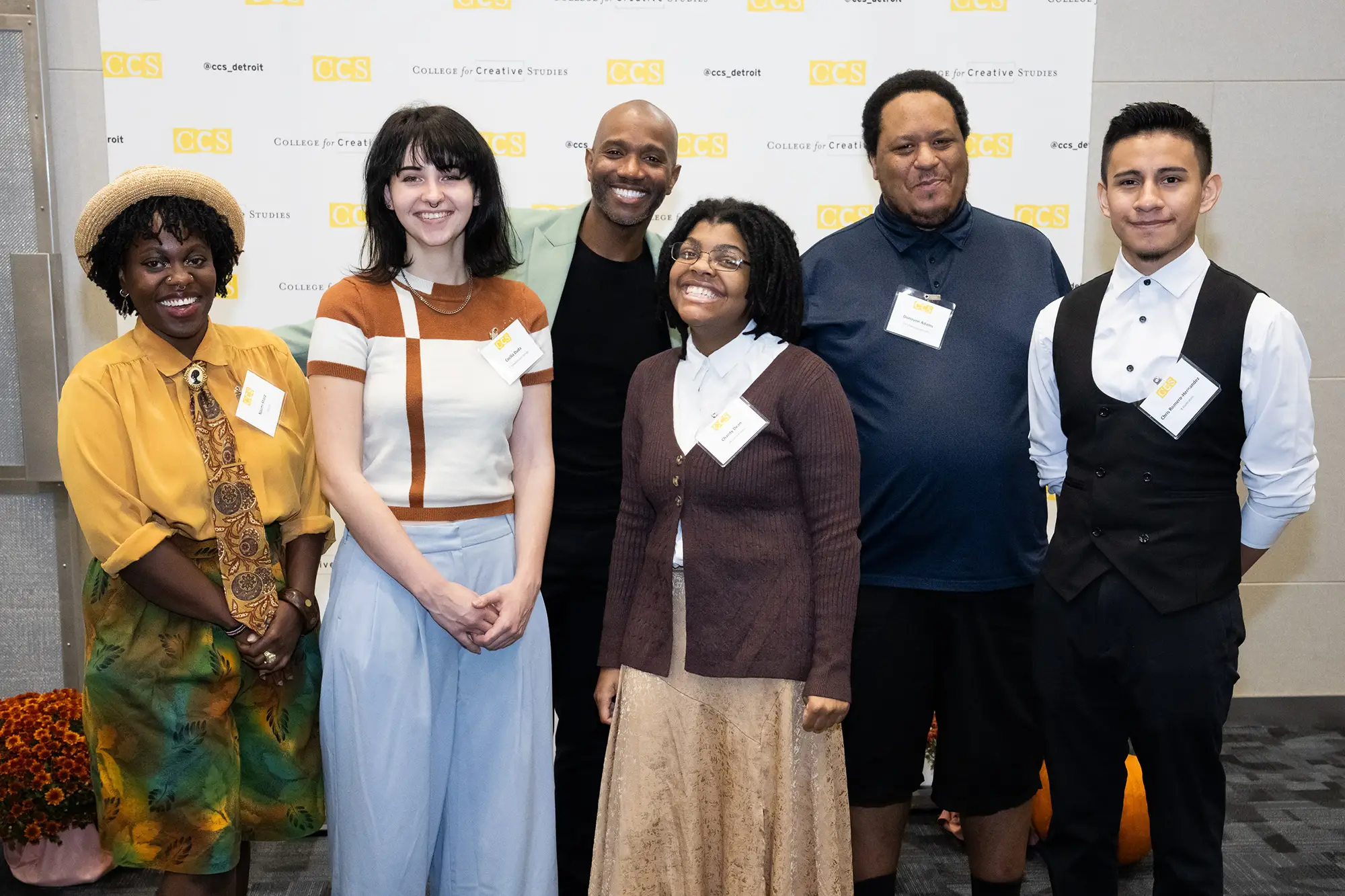
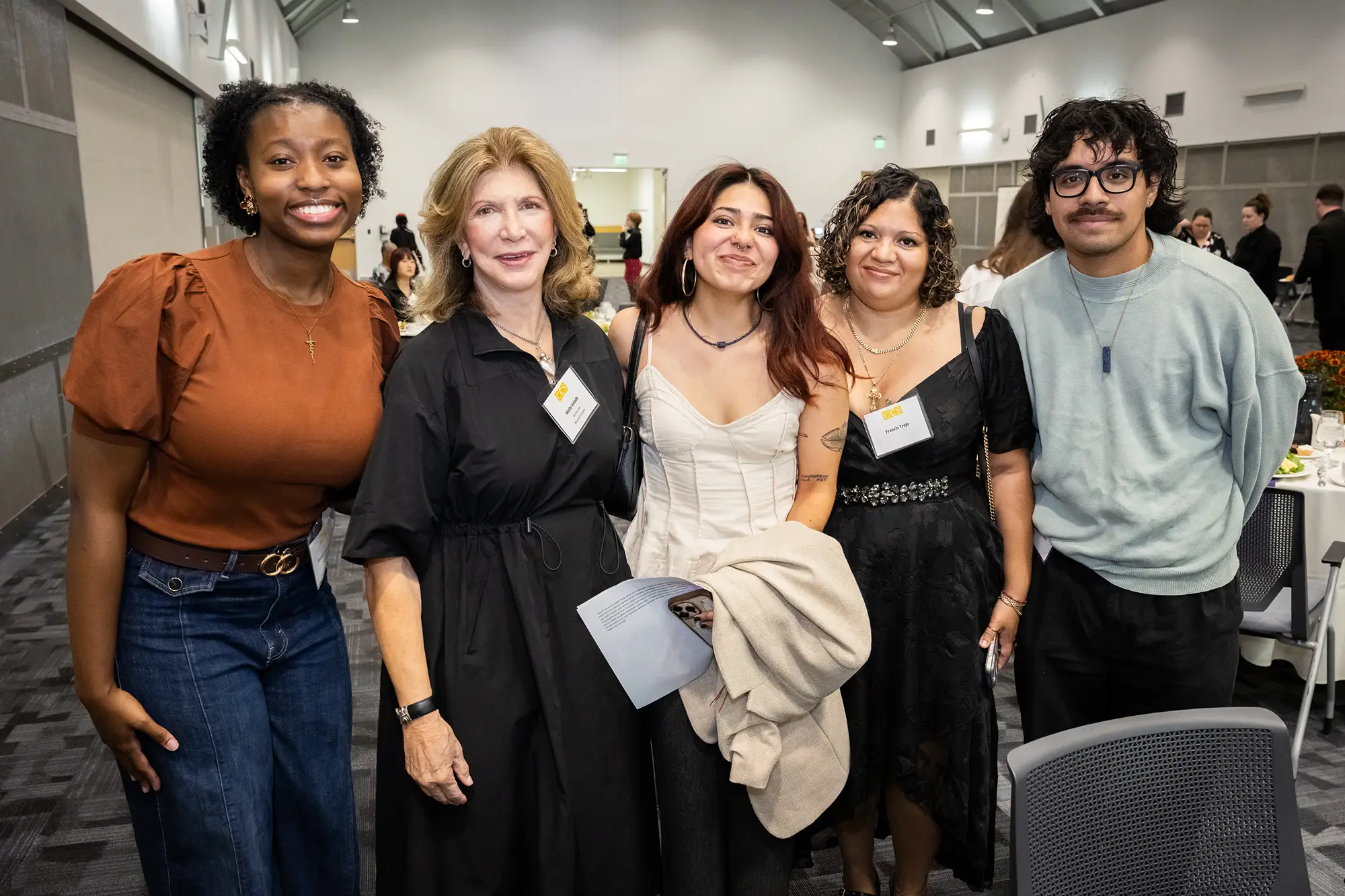
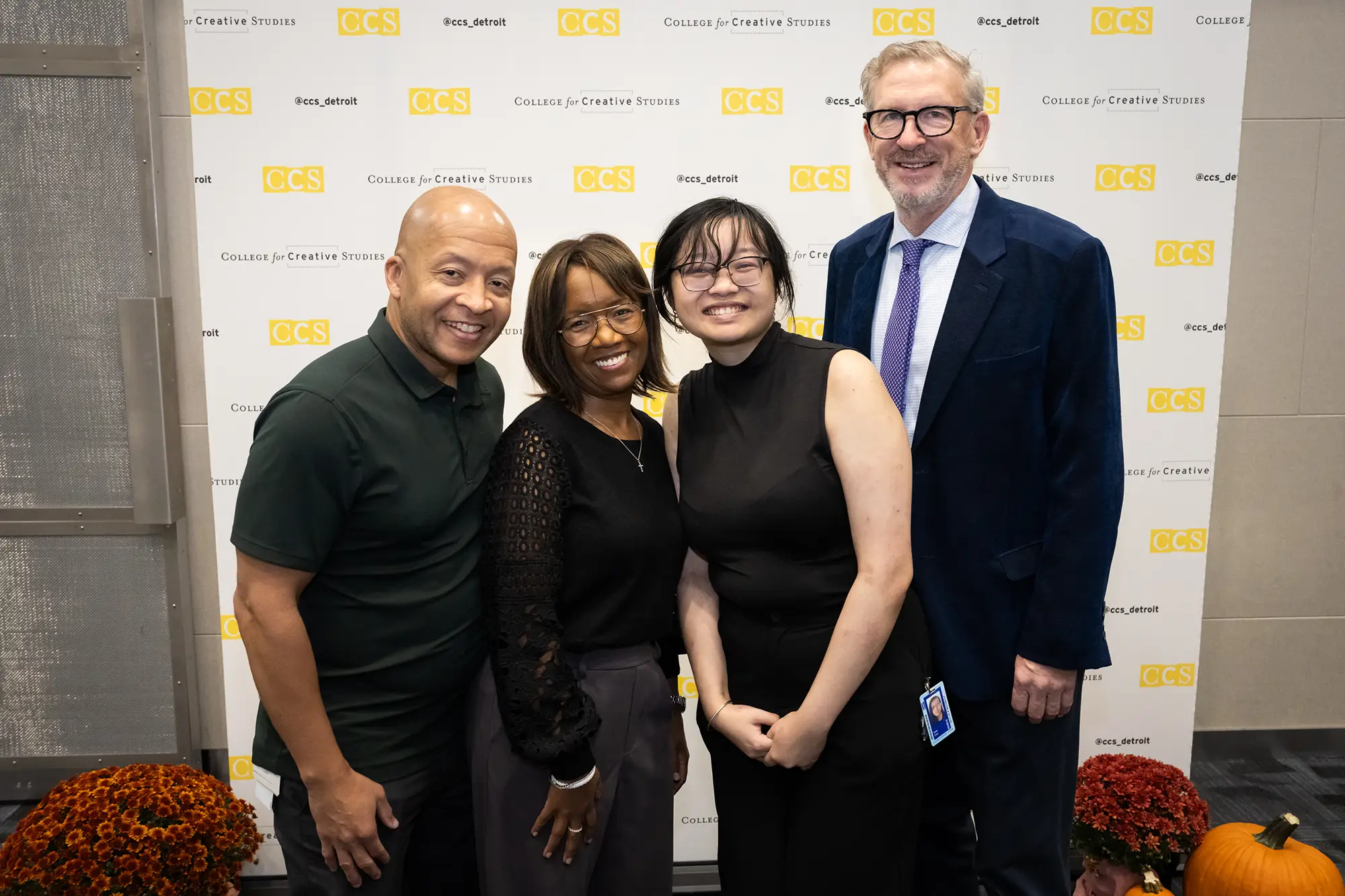
That spirit filled the General Motors Auditorium at the A. Alfred Taubman Center for Design Education on October 13, as the College for Creative Studies welcomed donors, trustees, students, alumni, faculty and friends for its third annual Donor Appreciation Celebration.

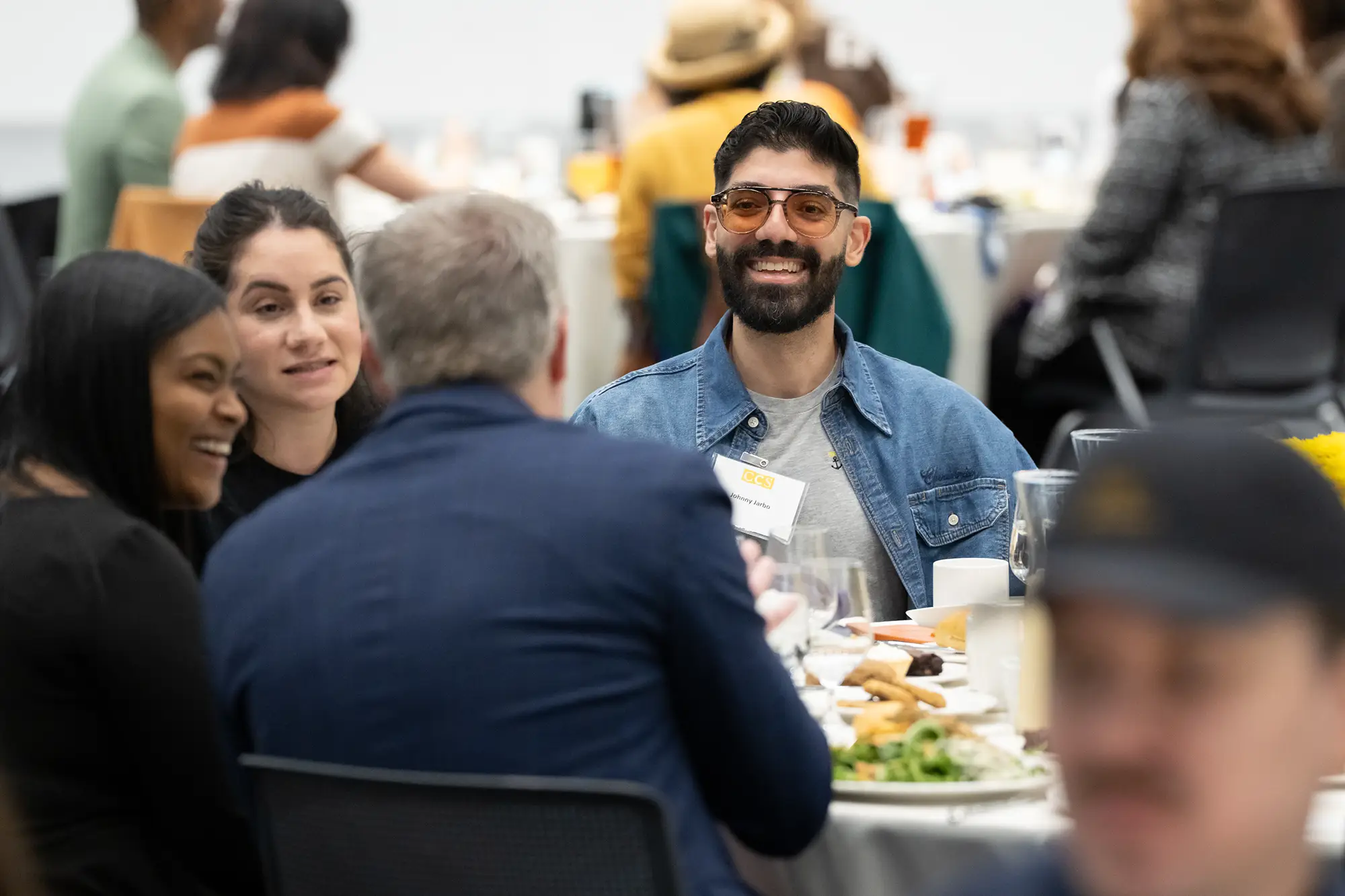
The luncheon brought together donors and students, illuminating what can happen when talent and ambition are met with opportunity and support.

Welcoming guests on behalf of the CCS Board of Trustees, Board Chair Jim Nicholson reflected on the importance of sustaining opportunities for emerging artists and designers.

“CCS has always believed that creative talent deserves the opportunity to be developed,” Nicholson said. “Scholarship support helps ensure that extraordinary potential is not limited by financial circumstance. Investing in our students is one of the most meaningful ways we can help shape the future of this institution.”

Detroit’s Creative Future

This year’s celebration highlighted CCS’s growing partnership with the Gilbert Family Foundation, whose investment is creating pathways for Detroit students to discover, pursue and complete a creative education.

Darnell Adams, Vice President of Detroit Community Initiatives for the Gilbert Family Foundation, spoke about the Foundation’s commitment to expanding opportunity for Detroit students and investing in the city’s next generation of creative talent.

In 2025, the Gilbert Family Foundation doubled its commitment to the Gilbert Family Foundation Endowed Scholarship, bringing the fund to $2 million. The endowment supports scholarships for Detroit students attending CCS, with two students selected each year to receive $50,000 in scholarship support distributed across four years.

The Foundation has also invested in precollege scholarships that introduce younger students to art and design education and completion scholarships that help current Detroit students persist through graduation.

“We are deeply grateful to the Gilbert Family Foundation for their extraordinary commitment to Detroit students and to CCS,” CCS President Don Tuski said. “Their investment creates opportunity at every stage — from helping young people discover what’s possible through precollege experiences, to making a CCS education attainable, to helping students reach graduation. That kind of sustained investment in creative talent strengthens our College, our city and the creative industries our graduates will go on to shape.”

Opportunity in Action

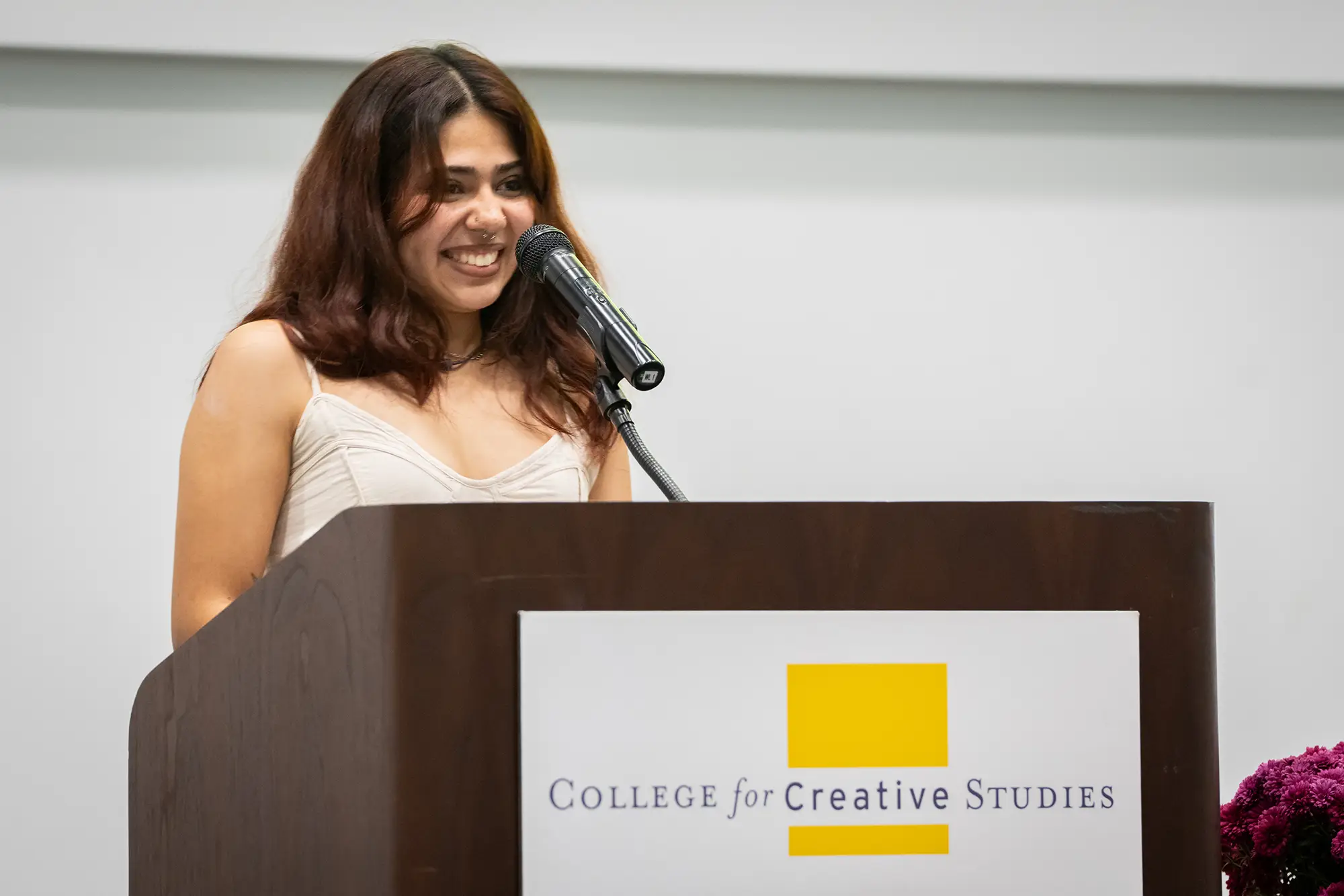
Scholarship support took on a deeply personal meaning as one CCS student shared how it has shaped her education, creative growth and opportunities beyond the classroom.

Madelane Martinez, a junior studying Studio Art & Craft, shared how scholarship support has helped make her CCS education possible. The daughter of immigrants from Honduras and Mexico and the first in her family to attend college, Martinez spoke about the sacrifices her family has made, the challenges they have faced and the encouragement that has fueled her creative journey.

At CCS, Martinez has found a deeper connection to her Latina identity through ceramics and has continued to grow as an artist. Her talent and dedication led to her selection as a Valade Scholar, part of a program established by the Valade family to recognize promising Studio Art & Craft students and give them greater freedom to pursue their creative development.

“Receiving that scholarship completely transformed what was next for me,” Martinez shared. “Any doubt and worry left my body and I was so sure that I was meant to do what I was doing.”

That opportunity has allowed Martinez to devote more time and energy to her practice and pursue experiences beyond the classroom. This summer, she traveled to Zimbabwe for an artist residency, where she studied local clay bodies, experimented with processing wild clay and explored tile making.

“Molly and the Valade family, you’ve made my dream a reality,” she said. “Thank you for showing me that this isn’t impossible.”


Throughout the afternoon, the stories and connections in the room reflected the many ways investment in CCS students can shape what comes next — expanding access to an education, providing the freedom to grow creatively, opening doors to transformative experiences and connecting students with industry through sponsored projects and real-world creative work.

Together, those opportunities prepare emerging artists and designers to bring new ideas, perspectives and creative solutions into their professions and communities. And they reflect something shared by everyone gathered that afternoon: a belief in creative talent, and in the extraordinary things that can happen when it is given the opportunity to grow.

The celebration concluded with conversation and connection among students, donors and partners — relationships that will continue to shape CCS, Detroit’s creative community and the industries its graduates will help lead. View the full event photo gallery here.

For more information about establishing a scholarship, supporting student experiences or partnering with CCS, please contact Katie Rusak at [email protected] or 313.664.7861.

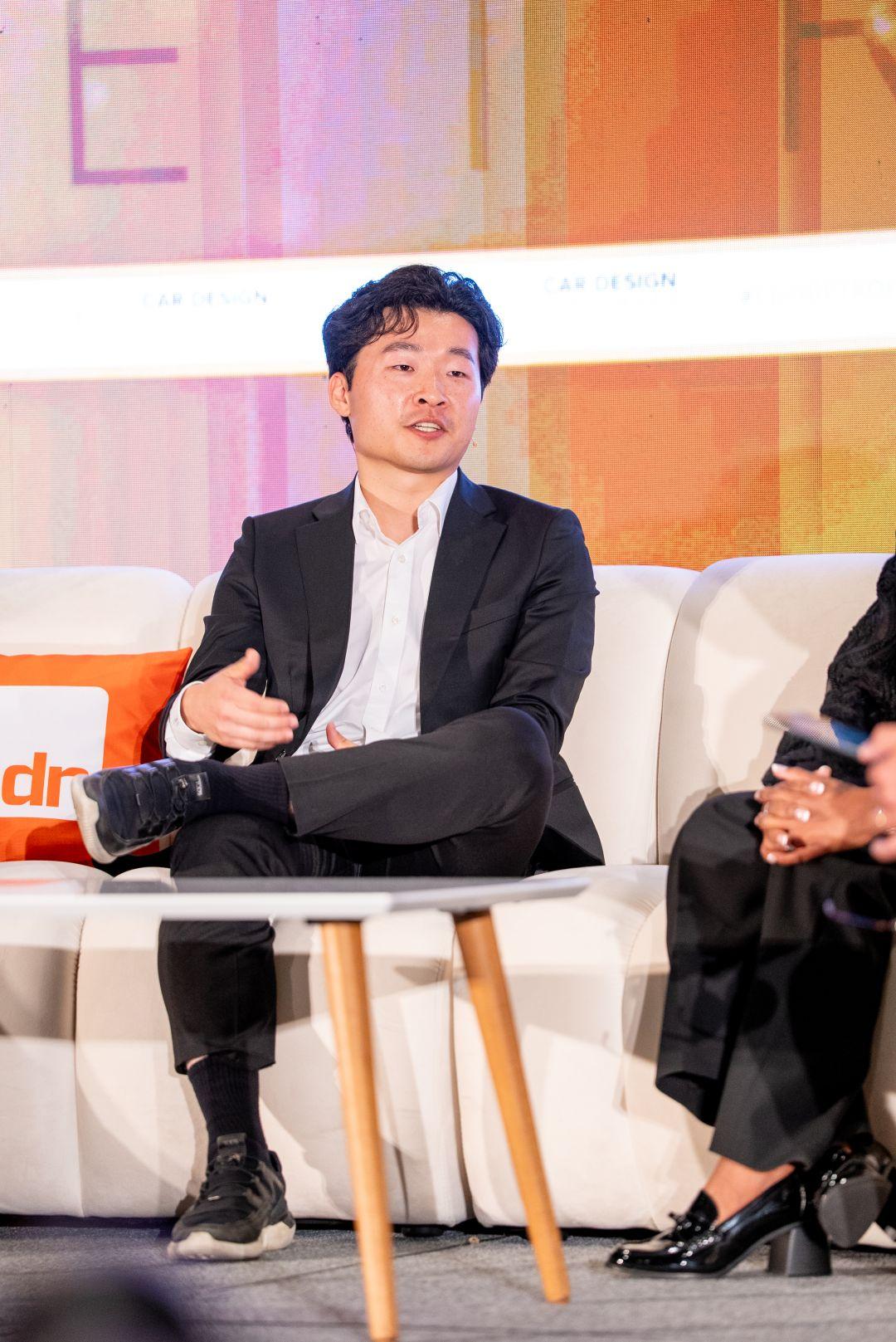
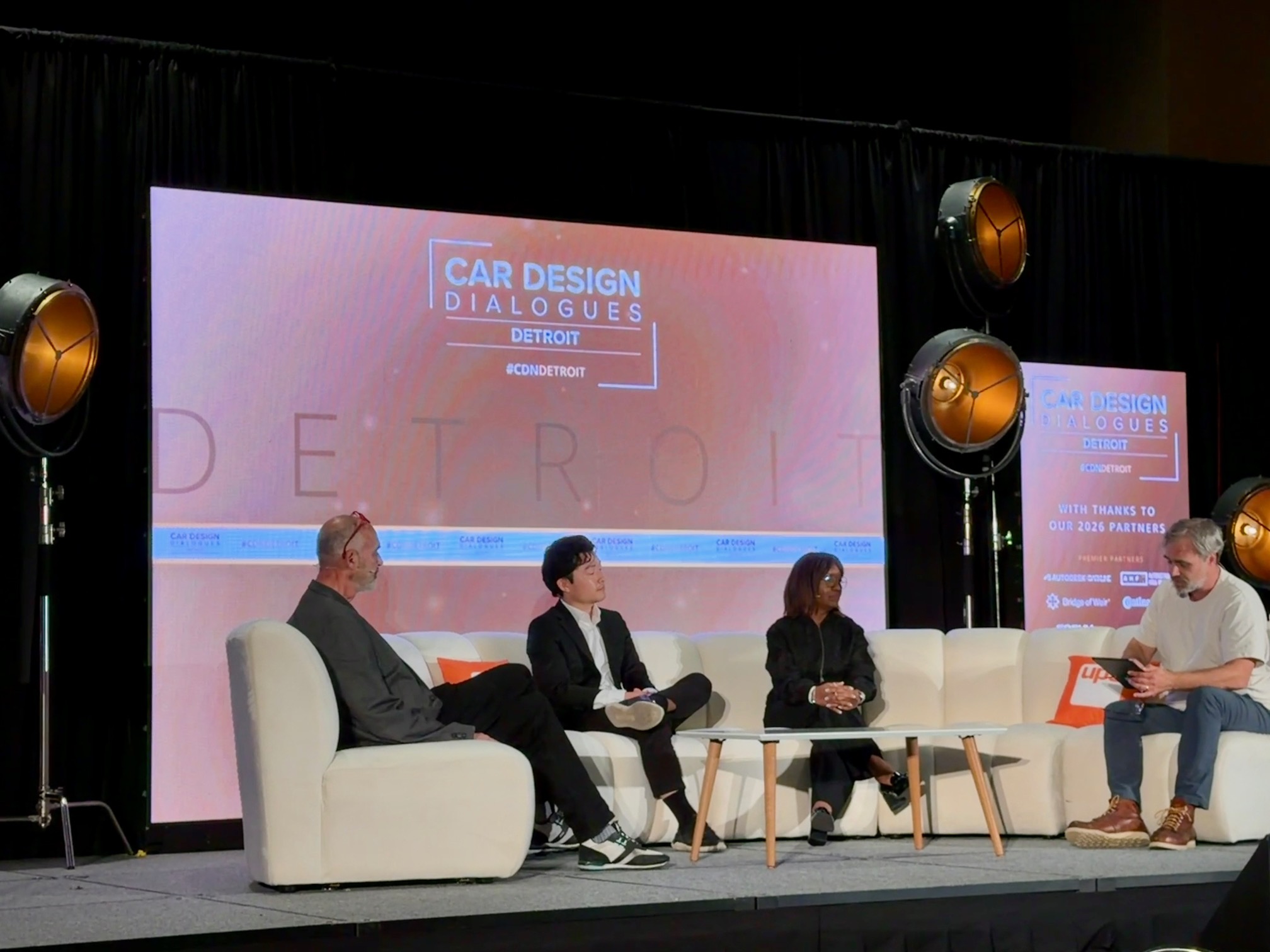
CCS Transportation Design student Jason Song was awarded the Automotive Hall of Fame Global Scholars Award on Thursday, Oct. 8, during Car Design News’ Car Design Dialogues Detroit event at the Department at Hudson’s. The award is granted to emerging automotive designers who demonstrate creativity, originality and the potential to make meaningful contributions to the future of the industry. Song’s thoughtful and user-focused approach to mobility design that combines creativity with purpose earned him this recognition. The award was presented through a partnership with the Ralph L. and Winfred E. Polk Foundation, with additional support from GM Design.

Song participated in a panel discussion following the award ceremony alongside CCS’s Undergraduate Transportation Design Chair, Paul Snyder, General Motors’ Executive Director of Industrial Design, Crystal Windam and Car Design News Editor-in-Chief, James McLachlan. The discussion focused on the future of automotive design, specifically the possibilities of artificial intelligence as it integrates with human judgment and creativity, the importance of foundational design skills and career opportunities for emerging designers.

The Car Design Dialogues Detroit 2026 event concluded with the award presentation and discussion. Song’s recognition highlights both his accomplishments and potential as an emerging automotive designer. It also reflects the Automotive Hall of Fame’s commitment to supporting emerging talent and CCS’s ability to prepare creative talent to shape the future of transportation and mobility design.

Read more about CCS’s participation in the Car Design Dialogues Detroit panel here.

Design and education. Two words that have driven John Manoogian’s life and career.

So when Manoogian recently read about former GM colleagues who had established scholarships at the College for Creative Studies, it sparked an idea. After a 35-year career in automotive design and years spent teaching the next generation of designers at CCS, this was another way he could give back.

“What better way to give back and help talented students?” he said.

Earlier this year, Manoogian established the John Manoogian II Endowed Scholarship to support aspiring Transportation Design students who might not have the financial means to pursue and complete their education.

The decision was a natural extension of Manoogian’s long relationship with design education and with CCS, a relationship that began well before the College had become the internationally recognized source of transportation design talent he knows today.

An Early Connection

After earning a bachelor’s degree in Product Design from Michigan State University, Manoogian landed a job as a clay sculptor at Ford Motor Company. But he still hadn’t achieved his goal of becoming a car designer.

Someone suggested he take a Transportation Design class taught by legendary designer and instructor Homer LaGassey at the Detroit Society of Arts and Crafts, now CCS.

At the time, Transportation Design classes were taught in the basement of an old house on Kirby Street. The program itself was just getting started and had not yet become the established source of design talent it would later be.

Manoogian enrolled in LaGassey’s night class and asked him for help developing a portfolio for admission to ArtCenter College of Design in Los Angeles.

“LaGassey had a powerful teaching method. He was a practitioner of tough love. He set the bar very high and expected his students to extend themselves beyond what they thought they were capable of. His exacting expectations helped transform my portfolio for entrance into ArtCenter, and gave us a taste of what to expect in real-life professional design studios.”

Manoogian’s work with LaGassey helped him take that next step. He was accepted to ArtCenter and graduated with honors.

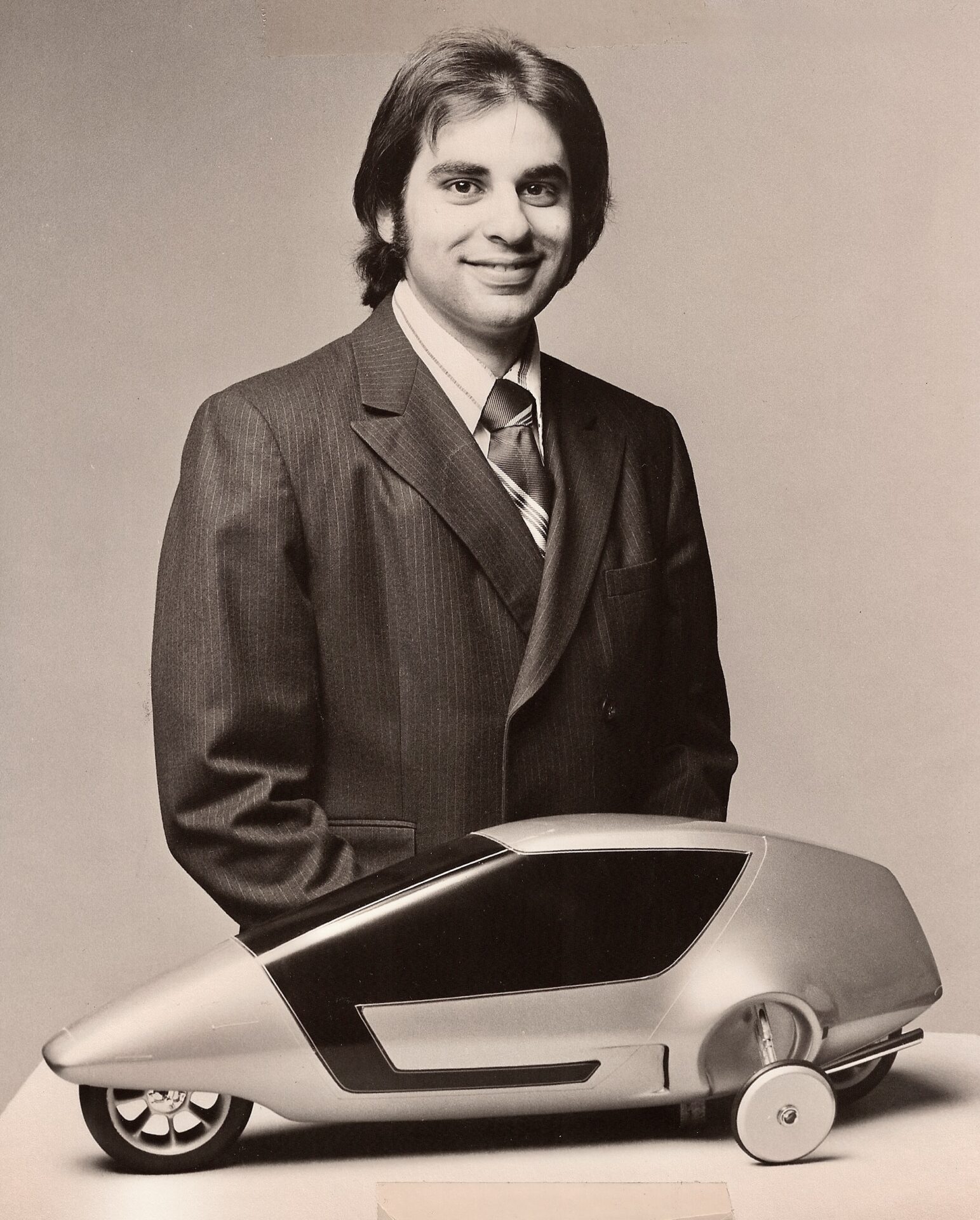
Black-and-white portrait of a young John Manoogian smiling in a suit, standing behind a sleek, futuristic silver model car with dark tinted windows.
John Manoogian at his ArtCenter graduation (with a model car)

From there, he joined General Motors Design, beginning a career that would span 35 years.

For more than 25 of those years, he also served on GM Design’s Portfolio Team, searching for and interviewing talented graduates to join the company. The experience took him to design schools around the world and gave him an unusual opportunity to evaluate both the state of design education and the students those institutions were preparing for the profession.

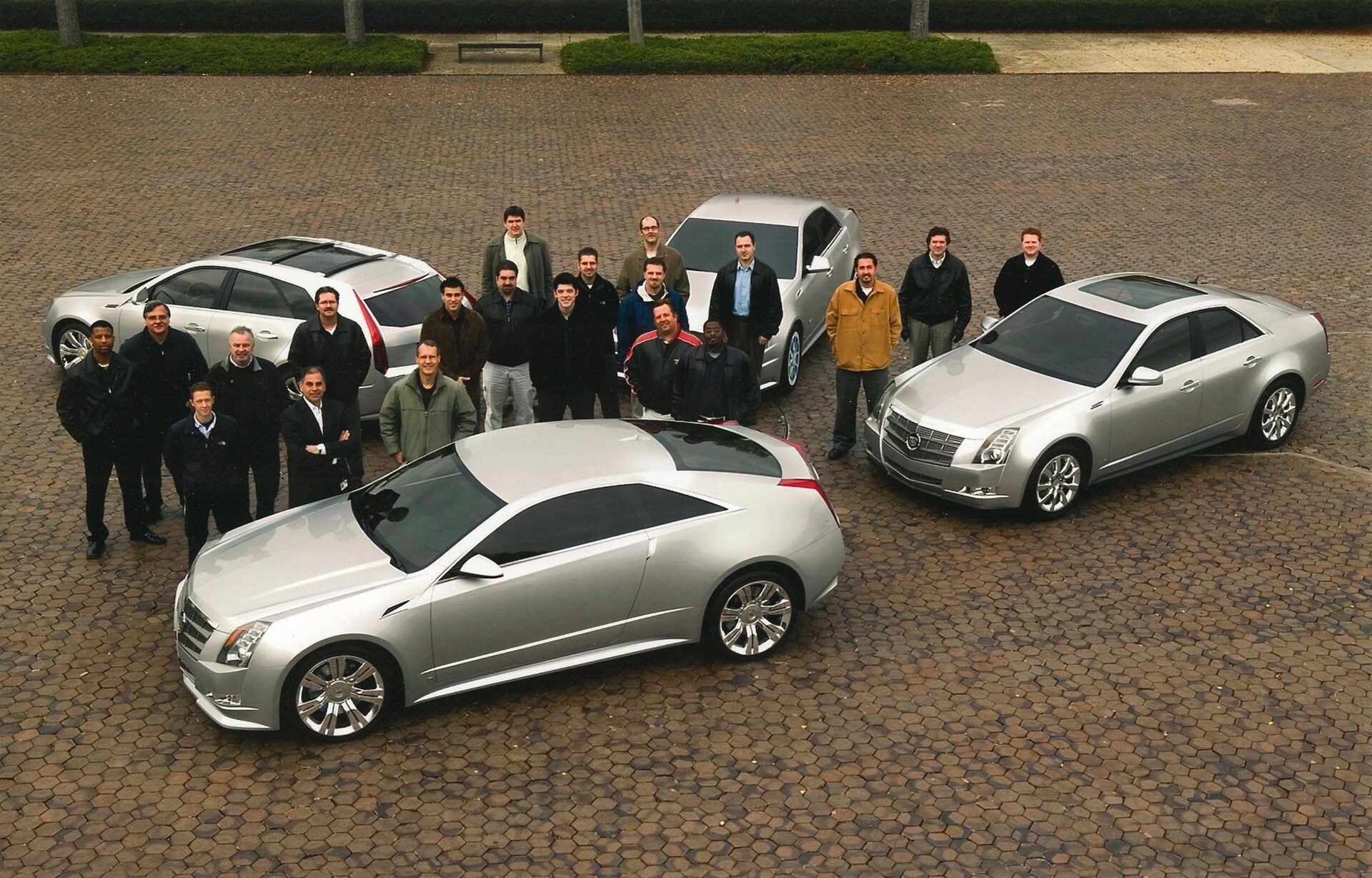
The Cadillac design team poses outdoors on a cobblestone plaza alongside three silver Cadillac CTS models: a Coupe in the foreground, a Wagon on the left, and a Sedan on the right.
Director of Cadillac Design Team photo with Cadillac CTS Coupe/Sedan/Wagon and design team

Over those same years, he watched the College for Creative Studies evolve.

“CCS had become a source of incredible design talent and had established itself as one of the premier international transportation design educational institutions,” Manoogian said.

After several years evaluating student portfolios, it became apparent to Manoogian that CCS had become an emerging source for design talent. The students not only possessed the technical drawing/design skills, but were being trained to be problem solvers and storytellers. Necessary skills for success in the professional design studios.

Returning to CCS

When Manoogian’s 35-year career at GM came to a close in 2009, he returned to CCS, this time as an adjunct instructor teaching senior Transportation Design students.

“Here was an opportunity to give back to the profession that I had been blessed with for so many years,” he said. “I could help and guide future mobility designers in preparing for the challenges facing them in the future.”

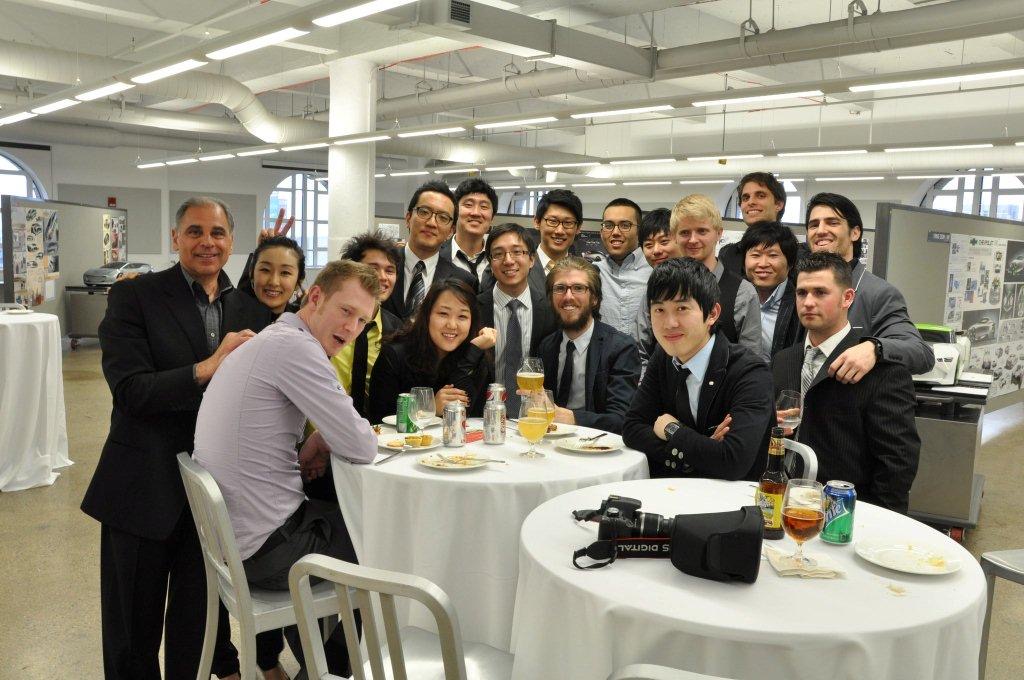
John Manoogian poses with a large group of smiling transportation design students gathered around a round table in a bright, modern studio room.
Manoogian with CCS senior Transportation Design students celebrating the end of the term

For Manoogian, preparing those students means developing more than technical skill.

“I believe problem-solving and the thinking process are key to providing well-rounded designers who will make meaningful contributions. CCS excels at developing that thought process, and I wanted to build on that discipline.”

He also sees an important advantage in where that education takes place. With CCS located in Southeast Michigan, students have access to generations of design talent and an industry that continues to evolve around them.

Creating Opportunity

For Manoogian, establishing an endowed scholarship brings together the two forces that have shaped his life.

A CCS class helped him take an early step toward becoming a car designer. His career gave him the opportunity to evaluate and hire emerging designers from around the world. Later, CCS gave him the chance to teach and mentor students preparing to enter the profession themselves.

Now he can help make that path possible for someone else.

“As an adjunct professor, I saw firsthand how the expense of completing a design education was a daunting prospect, and I wondered how I might help deserving, talented students reach their goals. A conversation with Dick Ruzzin made me aware of the possibility of creating a scholarship, and subsequently I read that Crystal Wyndham had created a scholarship. Those two made me aware of how I might help”

“My personal design journey had been anything but straightforward, so I thought I would do whatever I could to help an aspiring student reach their goals without the worry of financial constraints.”

“With my sponsored scholarship, I will have satisfied my desire to help the next generation achieve their dreams as I had been able to do,” Manoogian said.

His commitment to automotive design continues in another way as well. Manoogian is currently working on the development of a facility on Detroit’s riverfront celebrating the art of the automobile and the people who have shaped it. He sees that work as connected to educating future designers, preserving the legacy of the profession while helping inspire those who will carry it forward.

For Manoogian, it all comes back to the two things that have driven his life and career from the beginning.

Design and education. Full circle.


Interested in supporting students through a scholarship?

There are many ways to create a scholarship at CCS and shape it around what matters most to you. Contact Katie Rusak, Senior Director of Major Gifts, at [email protected] or 313.664.7861 to learn more.

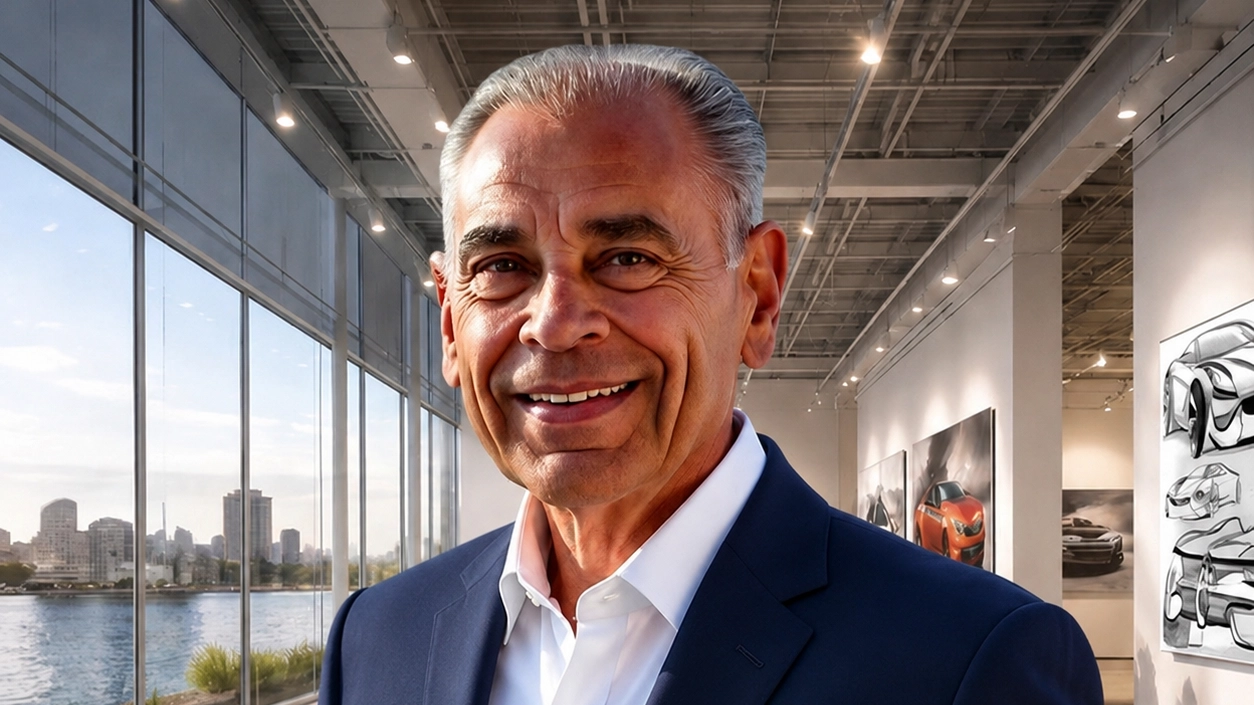
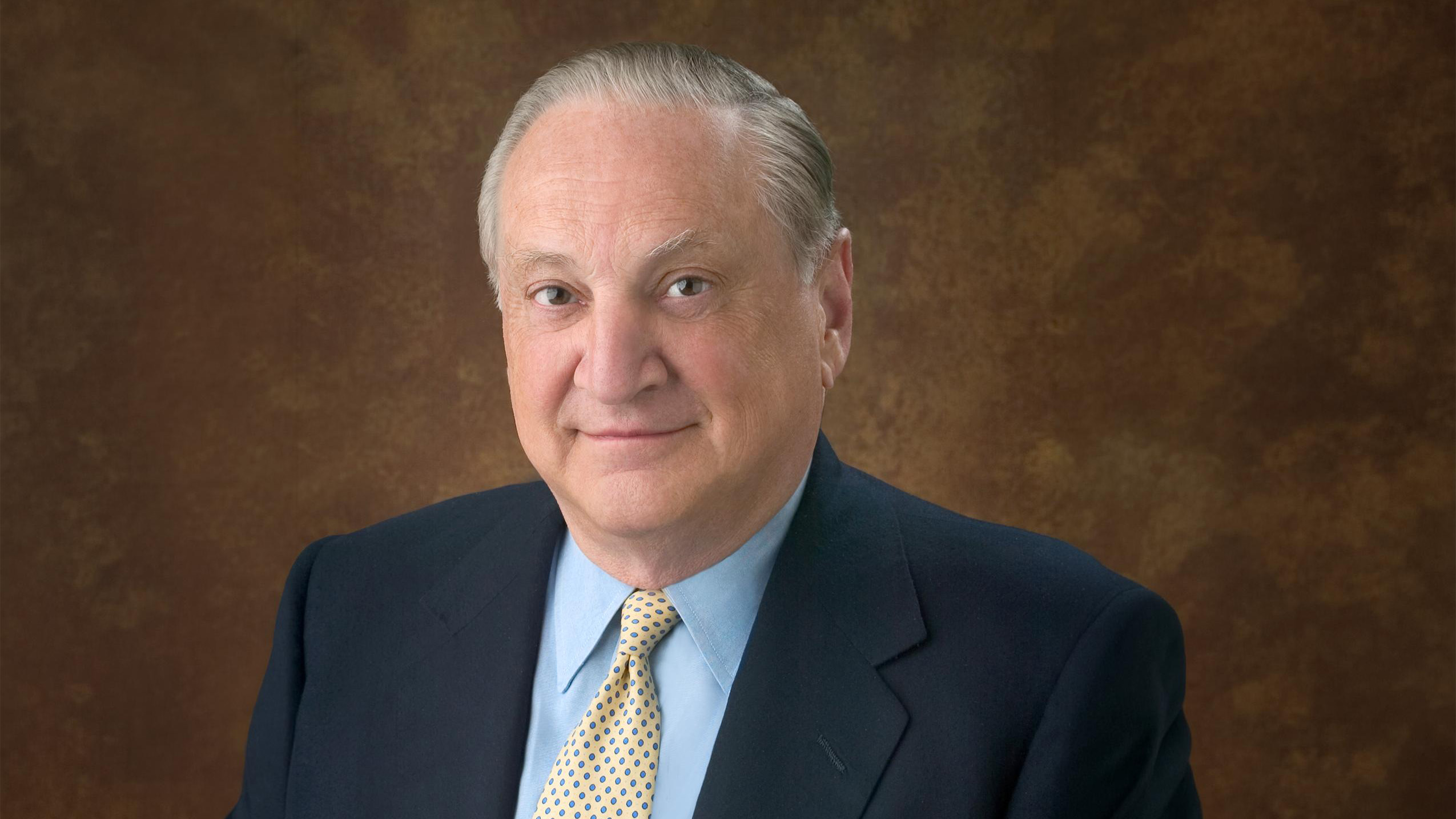
The CCS community mourns the loss of former trustee, arts enthusiast, philanthropist and Detroit businessman Richard Manoogian.

Mr. Manoogian died Friday, September 25, 2026 at the age of 90. Most recently, he served as chairman emeritus for the global home improvement company Masco Corporation. Under his leadership, the company grew to become a global leader in design, with sales growing from $55 million to over $8 billion during his tenure. A lifelong supporter of the arts, Mr. Manoogian served on the CCS Board of Trustees until 2002.

In 2006, CCS recognized his family’s ongoing commitment and service to CCS by renaming the Academic Resource Center, which housed gallery spaces and the library, to its current name, the Manoogian Visual Resource Center.

In 2008, Mr. Manoogian was awarded a CCS honorary degree for his significant contribution to the arts, acknowledging his involvement in the renovation of the Detroit Institute of Arts.

President Don Tuski, Chairman Jim Nicholson, and the CCS Trustees are grateful for Mr. Manoogian’s service to CCS as a board member and support of the arts.

More information can be found on Masco Corporation’s website: https://masco.com/richardmanoogian/

A conversation during CCS Industry Days brought together two artists more than 20 years apart in their CCS journeys. What followed is a story about mentorship, creative community – and what can happen when one person sees possibility in another.

When Darcel Deneau, ’02 Fine Arts, first came to the College for Creative Studies, she couldn’t afford to stay.

Drawn by CCS’s reputation, she enrolled about a year after graduating from high school. But the cost of continuing was more than she or her family could manage, so she left school, married and started a family.

Then, in her 30s, she came back. A scholarship helped give her the opportunity to return to CCS and finish what she had started. That journey gave Darcel a perspective on opportunity that has stayed with her ever since.

“I know firsthand how much support can change someone’s path,” she said.

Returning to CCS opened the world Darcel had wanted to be part of years earlier. She developed her artistic voice, became part of Detroit’s creative community and discovered something else she still associates with CCS: people willing to help one another.

“People tend to be nurturing, compassionate, generous with their time and willing to help one another,” Darcel said.

More than 20 years after graduating, Darcel has remained connected to CCS through the Alumni Council, mentoring, volunteering and attending Industry Days. Hosted by the Office of Partnerships, Industry Day events bring alumni and creative professionals back to campus to review student work, share advice, and help emerging artists and designers prepare for careers in the creative industries – reflecting something that has long defined the CCS community: alumni returning to invest in the next generation.

It was during one of those visits that Darcel met graduating Senior Neo Hopkins, ’25 Studio Art & Craft.

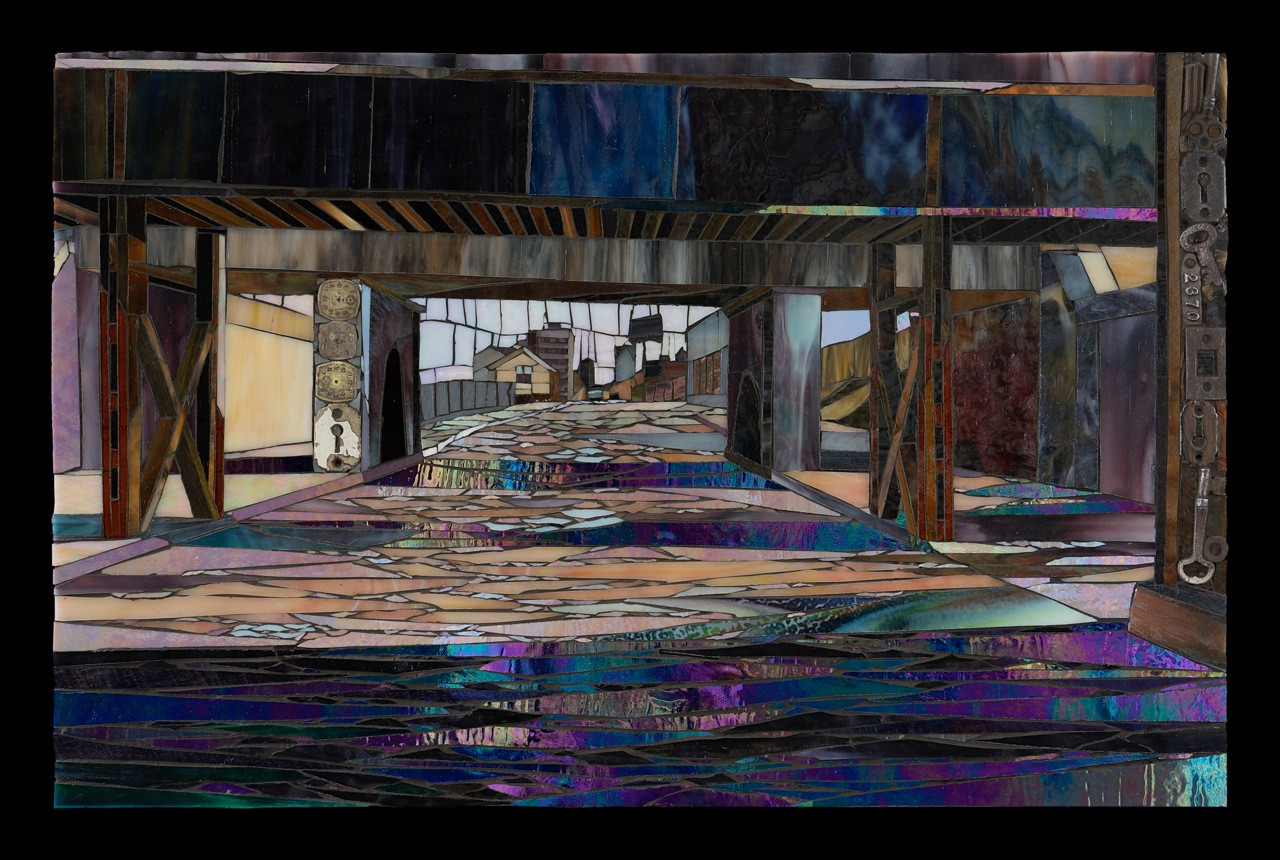
Stained glass mosaic artwork depicting an urban streetscape viewed through the dark structure of an overpass or bridge.
Artwork by Darcel Deneau

One Conversation

Neo was approaching graduation when his paintings and collage work caught Darcel’s attention. She could envision his ideas translated into another medium: glass. So she extended an invitation.

“I was excited when Darcel invited me to her studio, but I was also nervous,” Neo remembered. “Sometimes people say, ‘Come by sometime,’ but you don’t always know if they really mean it.”

The timing made the invitation even more significant. Graduation was approaching, and Neo was trying to determine what would come next. He wanted mentorship and people he could turn to as he began navigating life as a working artist.

“From the very first day I visited her studio, everything felt easy,” Neo said. “She was incredibly welcoming and generous.”

That first visit led to another, and then another. A professional connection became a creative partnership and, ultimately, a friendship.

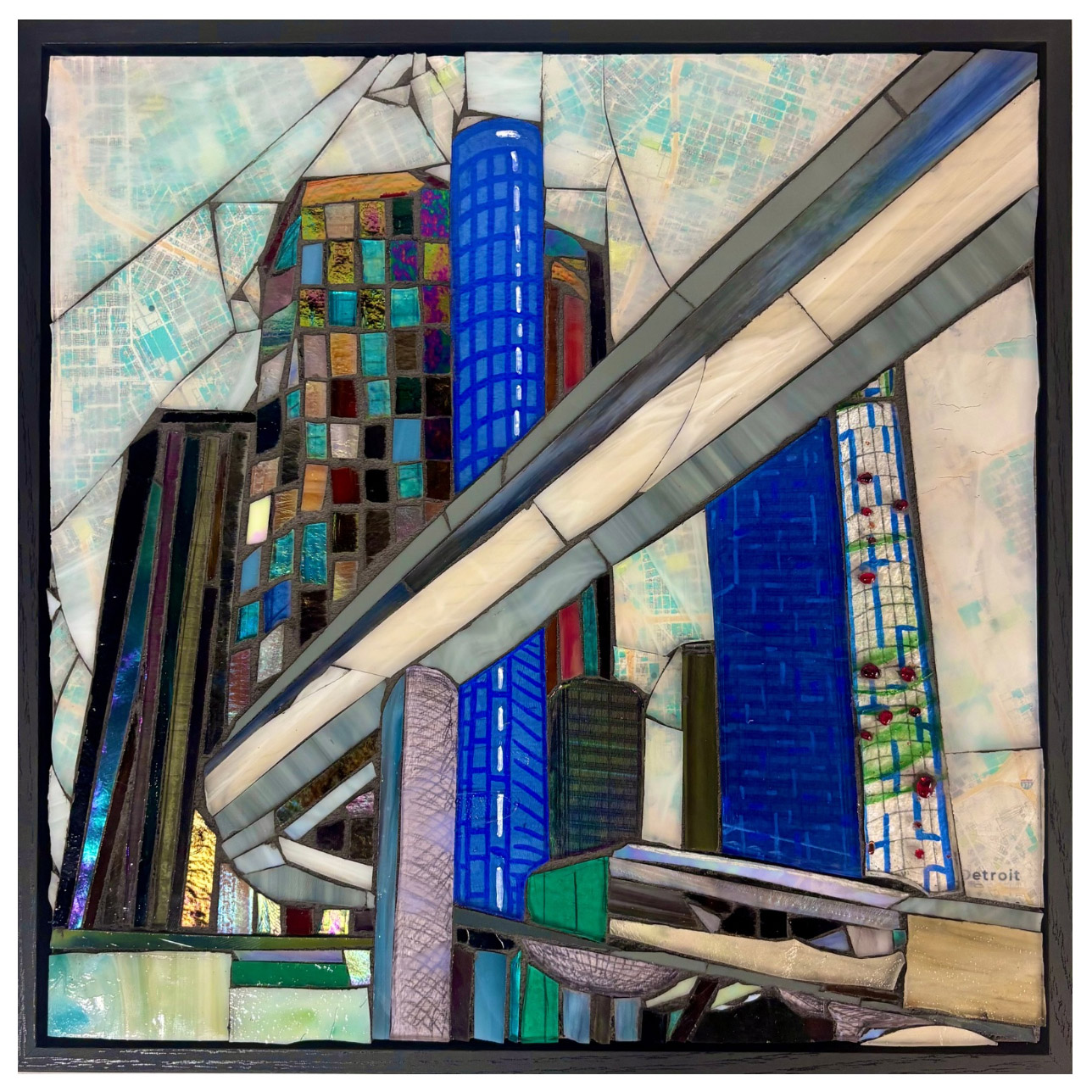
Artwork by Neo Hopkins

Seeing What’s Possible

During those early studio visits, Darcel introduced Neo to glass and taught him glass portraiture. As he explored the medium under her guidance, he began to see how it could complement his own artistic ideas.

“Darcel showed me possibilities in the medium that I hadn’t seen before,” Neo said.

What began as artistic instruction grew into an enduring mentorship. Darcel became someone Neo could call while navigating commissions or trying something new. When he needed his first studio space after graduation, she helped make that possible, too.

Today, the two artists work in the same building, exchanging ideas and continuing to learn from one another. Looking back, Neo can draw a remarkably straight line from that first invitation to where he is now.

“I probably wouldn’t have started working in glass without Darcel,” he said.

His career is growing in other ways, too. Neo works full time as a Brand Identity Coordinator for the Detroit Economic Growth Corporation while continuing to develop his studio practice, take commissions and pursue new creative opportunities.

People often describe mentorship as a one-way relationship, but Darcel believes both people grow through the experience.

“Neo inspires me just as much as I hope I’ve encouraged him,” she said.

College for Creative Studies launches new Bachelor of Arts in Business for Creative Industries and Bachelor of Fine Arts in Human-Centered Robotics Design, giving students direct access to two high-demand career paths

Detroit – College students now have new paths into sustainable creative careers as the College for Creative Studies (CCS) launches two new degree programs. Meeting demand from employers and students, the college will offer a Bachelor of Arts in Business for Creative Industries, giving students the business fluency creative teams need; and a Bachelor of Fine Arts in Human-Centered Robotics Design, positioning graduates at the forefront as the field grows toward a projected $6.4 billion by 2030. Applications for both degrees are now open with enrollment beginning Fall 2027.

“Art and design schools like CCS have always been about educating great makers and creating the future. Increasingly, the industries our students enter need something more: people who can lead the business and strategy side of our creative economy, and human-centered design thinkers who will shape the future of how we interact with emerging technology in our daily lives,” said Don Tuski, CCS President. “We’re rethinking how a creative education prepares students for today’s creative industries — degrees that are accelerated, cost less and consider where creative careers are headed. Our new programs are a direct response to what our students are asking for and what employers are telling us they need.”

Bachelor of Arts in Business for Creative Industries

Creative industries need talented professionals who can lead projects, manage teams and translate creative vision into a working business. The Bachelor of Arts in Business for Creative Industries is built to prepare exactly that kind of talent, and to do it in 90 credits across three years, instead of 120 credits across four years as in traditional programs. Students save a full year of tuition and can start leading sooner without giving up the preparation they need to succeed. In addition, the program allows block transfer from an Associate of Arts in Business and is fully aligned with the MI Transfer Pathway for Business, allowing transfer students to easily apply their associate degree or business credits toward the program, further maximizing time and financial savings.

The degree pairs core coursework in marketing, finance, entrepreneurship, strategy, leadership and project management with studio electives alongside CCS’s art and design majors, exposing students to how creative work gets made and what artists need to succeed. Students can focus in the following areas: film and game production, product design, transportation design, communication design, interior design or curation, or explore electives across disciplines. Internships, challenge-based projects and collaboration with studio majors give students real experience managing creative teams and projects before they graduate. Graduates are prepared for roles including creative project manager, producer, brand or marketing manager, product manager, design researcher and business analyst.

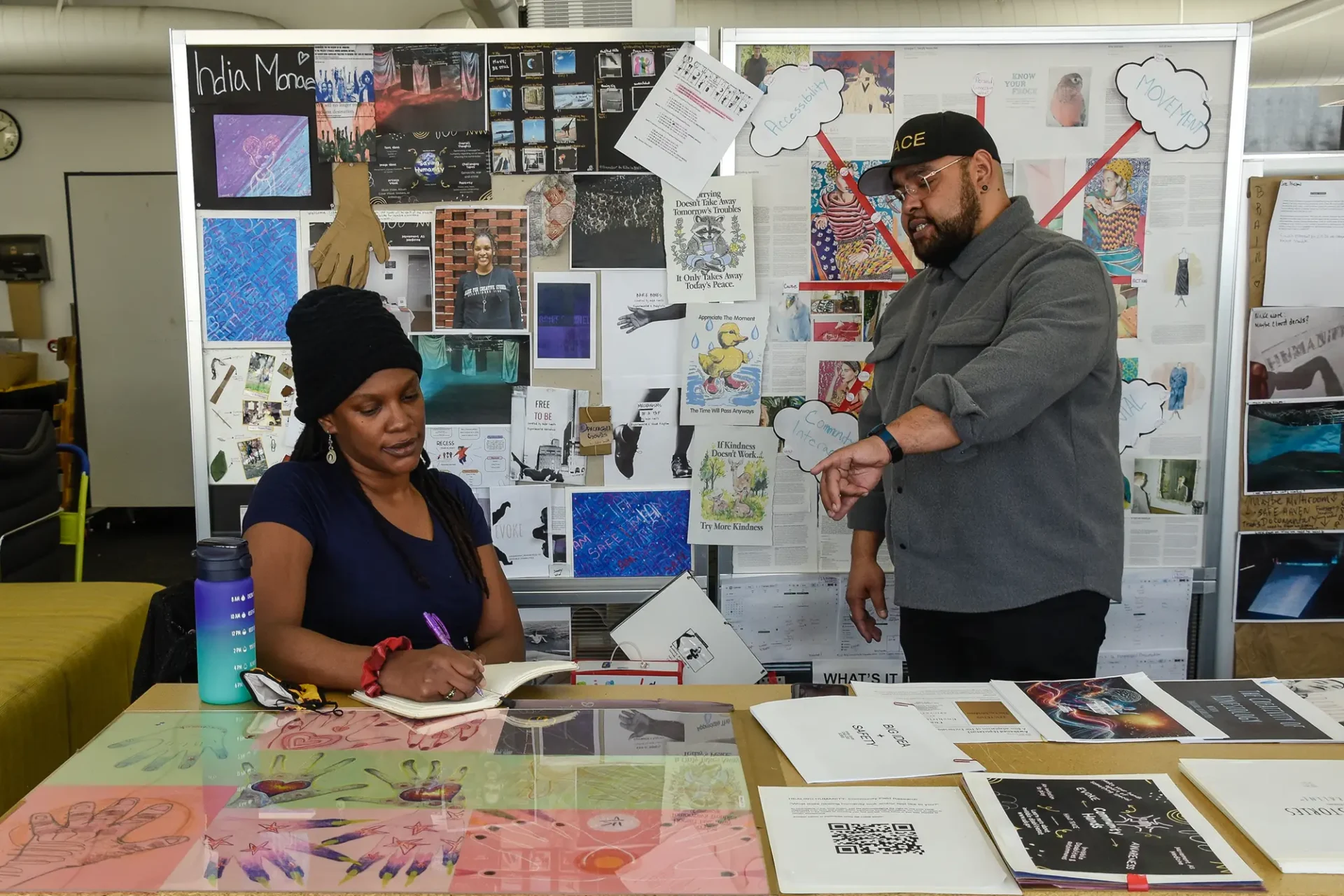
Two students working at a table. Behind them is a large mood board fill of images, writing and inspiration.

Bachelor of Fine Arts in Human-Centered Robotics Design

With the robotics industry projected to grow from a $2 billion industry in 2024 to $6.4 billion by 2030, CCS’s new Bachelor of Fine Arts in Human-Centered Robotics Design will equip students to lead in one of the fastest-growing segments of industrial design.

The degree is a STEM-designated industrial design program grounded in human-robot interaction, which is the study of what makes autonomous systems feel trustworthy rather than unsettling. As robots move beyond factory floors into hospitals, schools and homes, the industry needs designers who can shape not just what these systems look like, but how they behave around the people using them. Students will pair design ethics and behavioral science with studio classes, examining how elements like movement, light, sound, interaction and materials shape human-machine integration.

Being based in Detroit puts students in close proximity to many of the companies leading the robotics industry. The city’s manufacturers, automakers and innovation hubs are already incorporating autonomous robotics into daily life for consumers, giving students unique access to the companies, internships and hands-on projects shaping the future of human-centered interaction.

Accelerated BFA/MFA Degrees and Transfer-Friendly Completion Programs

CCS’s new programs are connected by the idea that creative careers shouldn’t require choosing between passion and practicality. By building degrees that are focused, more affordable and closely tied to the future of creative industries, CCS is equipping students to enter the creative economy and succeed.

To that end, CCS is launching new accelerated degree programs that give students the unique opportunity to complete both a Bachelor of Fine Arts and a Master of Fine Arts in five years, removing a full year of tuition compared with pursuing the degrees separately. The program is currently offered across three tracks, with additional programs in development:

  • Bachelor of Fine Arts in Interior Design and Master of Fine Arts in Color and Materials Design
  • Bachelor of Fine Arts in Product Design and Master of Fine Arts in Color and Materials Design
  • Bachelor of Fine Arts in Communication Design and Master of Fine Arts in User Experience Design

Additionally, CCS is launching three transfer-friendly completion programs with a direct path from an associate’s to a bachelor’s degree in two years, removing barriers and added costs that often impact transfer students in traditional programs. Pathways include:

  • Bachelor of Design in Interior Design
  • Bachelor of Arts in Film Studies
  • Bachelor of Arts in Illustration
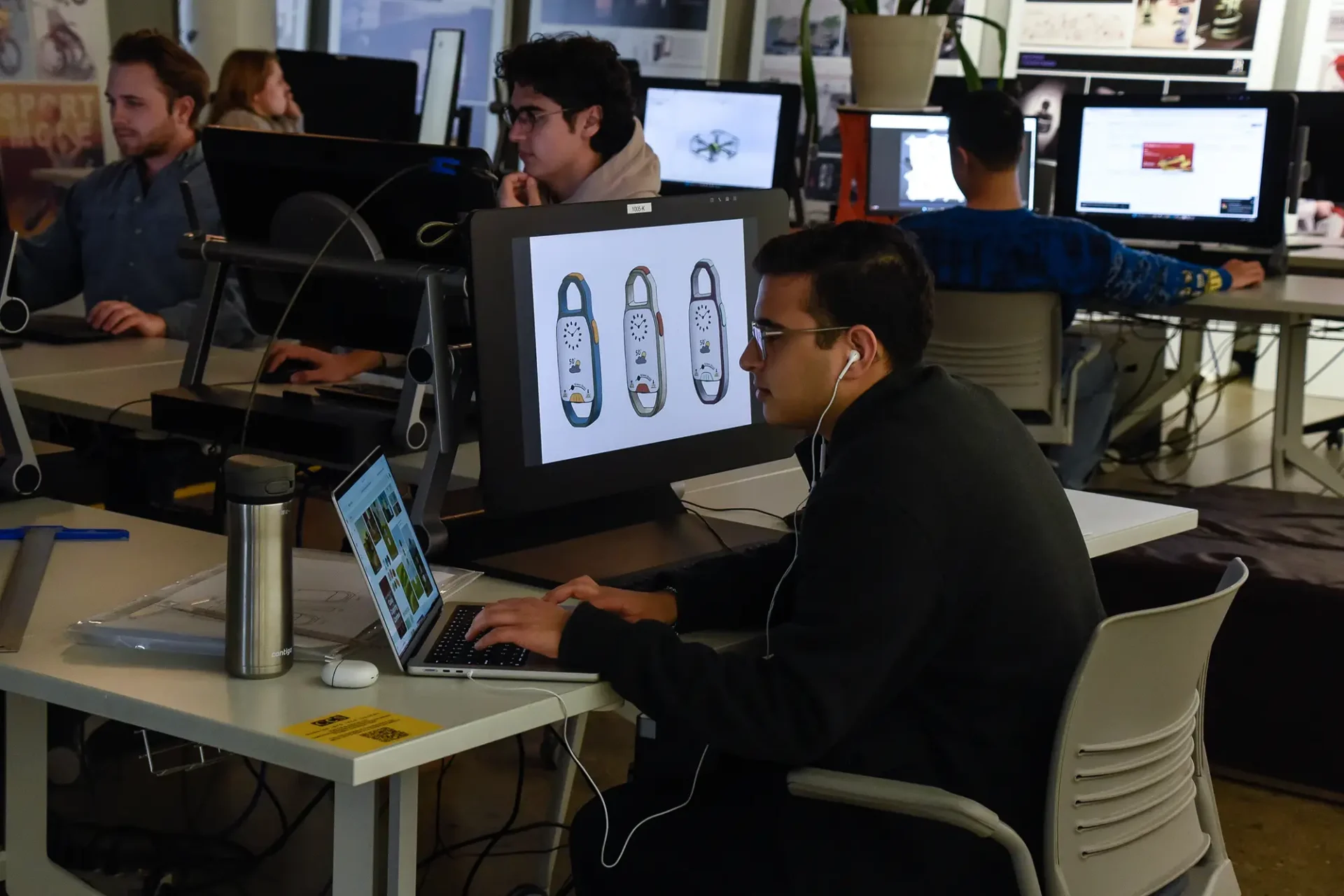
Student working on their project in a computer studio

About CCS

The College for Creative Studies (CCS) is a nonprofit, private college accredited by the Higher Learning Commission and authorized by the Michigan Education Department to grant bachelor’s and master’s degrees. CCS, located in midtown Detroit, strives to provide students with the tools needed for successful careers in the dynamic and growing creative industries. CCS fosters students’ resolve to pursue excellence, act ethically, engage their responsibilities as citizens and learn throughout their lives. With world-class faculty and unsurpassed facilities, students learn to be visual communicators who actively use art and design toward the betterment of society. The College is a major supplier of talent to numerous industries, such as transportation, film and animation, advertising and communications, consumer electronics, athletic apparel and many more. Its graduates are exhibiting artists and teachers, design problem solvers and innovators, as well as creative leaders in business.

We are pleased to announce that Sterling Toles (‘00, GC) has been selected as the 2024 Alumni Juror for Re/View: CCS Alumni Exhibition.

Sterling Toles is a visual/sonic artist and educator and a 2016 Kresge Fellow. With roots in Detroit’s early 90s hip-hop scene, he views his creative process as a form of personal healing that extends to collective well-being. Educated in Detroit’s Cass Corridor, he then went on to earn a BFA in Illustration from the College for Creative Studies. Toles has dedicated the past two decades to working with Detroit youth through Detroit Summer, Living Arts Detroit, and the Rosa Parks Youth Program.

Notable productions include the critically acclaimed collaborative album with Boldy James, “Manger on McNichols”, which was named Stereogum’s 2020 Rap Album of The Year. Toles has also composed scores for short films and documentaries, including “Brewster Douglass: You’re My Brother”, Dream Hampton’s “Fresh Water” and “Sydney G. James: “How We See Us” for PBS’s American Masters Series. In 2022, his inaugural solo exhibition, “S(h)elves?,” debuted at The Museum of Contemporary Art Detroit, showcasing his painting, sculpture, sound, and installation art. The exhibition explored human potential through questioning societal perception – suggesting without introspection, we risk being confined to exist as mere shelves, burdened with the weight of imposed traumas against us.

Toles’ vision is a deeply personal observation of art and creativity. Toles shared that he sees “this exhibition as a heartbeat – one of many – that gives health, love, inspiration and restoration to the living breathing community,”

Alumni Can apply to participate here