


The College for Creative Studies is deeply saddened by the passing of Anne Beck, a cherished member of our community and former Vice President for Administration and Finance.

Anne passed away on April 25, 2025 at the age of 69 after a hard-fought battle with cancer. She is survived by her husband Bruce Beck; children Stephanie Beck, Bryan (Meghan) Beck, Billy (Roni) Balconi; grandchildren Nolan and Isla; and siblings Tom (Kris) Greene, Cathy (Dave) Pike, and Bob (Suzy) Greene.

For nearly three decades, until her retirement in 2022, Anne served as an integral part of CCS’s leadership. Her tenure was marked by significant contributions, which included the strategic redesign of the campus budget model, oversight of financing and construction of the Walter B. Ford building and Ford Campus parking garage, and the securing of the complex financing for the development of the A. Alfred Taubman Center for Design Education. Her profound knowledge and strong leadership proved invaluable in guiding CCS through numerous institutional milestones.

“CCS is grateful for Anne’s wisdom and dedicated service,” reflected Don Tuski, CCS President. “She was a driving force in the College’s progress, providing stability during challenging periods and laying a robust foundation for our future. I am deeply saddened by her passing and extend my heartfelt condolences to her family. Anne was a truly valued member of the CCS community, and her loss will be profoundly felt.”

“Anne Beck’s remarkable financial and leadership skills were instrumental to CCS’s transformation into the world-class institution it is today. Whether developing facilities, managing budgets, or shouldering her many other responsibilities, she labored tirelessly in the best interests of our students, faculty and staff,” shared former CCS President Rick Rogers. “We had a tremendous working relationship for 24 years. I greatly valued her abundant talents and her sound advice. She left an indelible mark on the College. I’m deeply saddened by her loss.”

Beyond her dedication to CCS, Anne was actively engaged in the Detroit community. She served on the boards of Midtown Detroit, Inc., the Local Initiative Support Corporation Detroit Advisory Board, and the predecessor board for University Prep Art and Design Middle and High School. Notably, she also played a key role in facilitating Shinola’s decision to establish its headquarters within the Taubman Center.

More information about memorial arrangements →

A new Student Access and Earnings Classification recognizes institutions that foster opportunities for student success

College for Creative Studies has been designated as an Opportunity College and University the Carnegie Classifications, recognizing CCS as an institution that can serve as a model for studying how campuses can foster student success.

The Opportunity Colleges and Universities designation is part of a newly developed Student Access and Earnings Classification published this month by the Carnegie Foundation and the American Council on Education. This new classification examines the extent to which institutions foster opportunities for student success by measuring whether institutions are enrolling students reflective of the communities they serve and how the earnings of those students compare to peers in their area. In 2025, 479 institutions have been identified as Opportunity Colleges and Universities, which is about 16% of all U.S. colleges and universities that are in the Student Access and Earnings Classification. CCS is the only Opportunity school in Michigan with an art and design specialty focus.

The methodology for the new Student Access and Earnings Classification uses multidimensional groupings of the 2025 Institutional Classification to evaluate student access and earnings between similar colleges and universities.

Read the 2025 Student Access and Earnings Classification for more information about the designation, including the methodology.

About the Carnegie Classification

The Carnegie Classification of Institutions of Higher Education is the leading framework for recognizing and describing institutional diversity in U.S. higher education. The Carnegie Commission on Higher Education developed the classification in 1973 to support its program of research and policy analysis, and it was updated in 1976, 1987, 1994, 2000, 2005, 2010, 2015, 2018, 2021, and 2025 to reflect changes among colleges and universities. It will next be updated in 2028, with subsequent updates every three years.

About the Carnegie Foundation for the Advancement of Teaching

The mission of the Carnegie Foundation is to catalyze transformational change in education so that every student has the opportunity to live a healthy, dignified, and fulfilling life. Enacted by an act of Congress in 1906, the Foundation has a rich history of driving transformational change in the education sector, including the establishment of TIAA-CREF and the creation of the Education Testing Service, the GRE, Pell Grants, and the Carnegie Classifications for Higher Education.

About the American Council on Education

ACE unites and leads higher education institutions toward a shared vision for the future. With more than 1,600 member colleges, universities, and associations, ACE designs solutions for today’s challenges and advances public policy to support a diverse and dynamic higher education sector. Learn more at www.acenet.edu or follow ACE on X (formerly Twitter) @ACEducation and LinkedIn american-council-on-education.

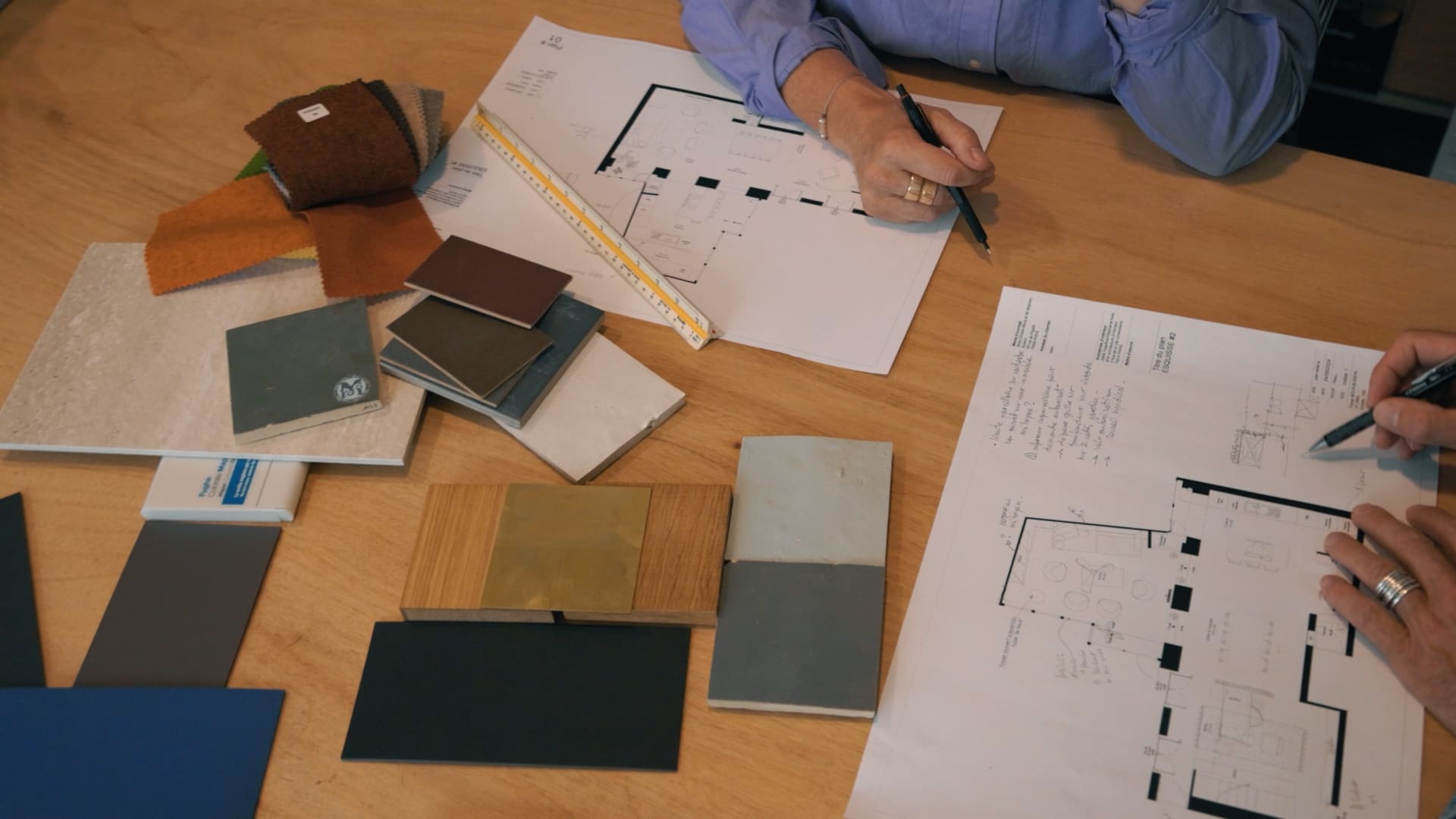
Sometimes when you meet someone, you just click. For Stephanie Kalb and Chair of Interior Design, Sandra Olave, a shared elevator ride at College for Creative Studies was that moment. And it would prove to be pivotal in paving a career pathway for a lifetime passion for interior design.

The Interview

“I love this job because I love to draw things and then make it into reality” –Stephanie Kalb

What sparked your interest in interior design? I was taking evening classes at CCS. At the end of the semester, I came to this exhibition just to see it with my friends. As I’m getting out of the lift, I see this fantastic woman – this charismatic woman coming at me. She said, “You are Stephanie Kalb.” I was like, “Whoa. I don’t know this woman.” And that was Sandra Olave, the head of the Interior Design department. She said, “I want you in my class.” I have to tell you that this little sentence, for me, was very boosting. It really boosted my interest in interior design and materials. Then I studied for four years at CCS in the Interior Design department.

Did you always know that you wanted to go into interior design? Or is this something that you realized later in life? I believe I knew it, but I didn’t understand it at the beginning. When I was younger, I started to study marketing for five years or so. But I was very interested in interior design. I was going to all the fairs in Europe. I was visiting all the construction sites that I could. Going and seeing and imagining the different rooms that it could be. I’ve always been very open to design.

How does it feel now to see your designs realized in front of you? This is fulfilling to me. I love this job because I love to draw things and then make it into reality. This is my passion now. I love to see how drawings can become reality. Fulfilling the customer’s needs. We need to understand the ways they live when we’re doing residential, when we are doing offices, and the way they want the strategy to be put into walls. Because of my background in marketing, I’m very, very interested in this part as well.

What do you love the most about what you do? Starting the project on-site. This is an exciting moment. You’ve been doing the conception for two months, three months, sometimes even longer, and then it turns into reality, into technical problems, into, “How am I going to work with this facade?” Then working with the workers and having them understand what you want to reach, and understanding their problems as well, is an interesting part for me. Plans are plans, but when you are in it, for example, this apartment was a big challenge because we had so many surprises, and we had to deal with so many problems. I love that.

If you could go back in time and talk to your younger self, what would you say? Start studying interior design as soon as possible. Don’t waste your time. I have to say that going back to studies when you’re 35 – I was 35 at this point, with three kids – I had different problems from the other students. For me, at the beginning, it was quite a challenge, especially with all the software. I mean, the computer part was pretty tough. I had to work many, many nights on top of days as a mom.

I would start right away, and not be afraid of this kind of career.

How do you feel CCS prepared you for a career in interior design? I have to tell you that I really loved their way of teaching. I could compare it with France, for example. France was very conceptual. Till the end, I mean, I did the last year in France, and it was very conceptual, while CCS was more technical. I love this part as well. Sandra is a great enhancer of talent and concept. She’s very good at bringing you to the end of your concept, and I loved this. And you’ve got other teachers teaching you technical things that are very fundamental when you start to work because you might have very good ideas, very good drawings, but if you cannot make it into reality, it’s a problem. I really loved the two parts of CCS, the conceptual and the technical.

At the end of the four years you transferred, why is that? I was an expat in Detroit. My husband came to the end of his contract, so we had to go back to France. I couldn’t go on with the CCS studies, and on top of that, I wanted to study in France, because I knew I would practice in France. It’s a different system – electrical system, different rules, of course, different materials. I really wanted to have a graduation in France. So I completed four years at CCS with one year in Paris.

What’s your ultimate goal or dream? I would love to work in the U.S., actually. I would love to do a project with my European background and to put it back in the U.S. with what I know from there.

Learn more about Interior Design →

Learn more about CCS’s Programs →

Learn more about Minors at CCS →

www.ccsdetroit.edu/wp-content/uploads/2025/04/William-Langford-1-382×284.jpg www.ccsdetroit.edu/wp-content/uploads/2025/04/McGarry-2-400×284.jpg www.ccsdetroit.edu/wp-content/uploads/2025/04/McGarry-1-400×284.jpg www.ccsdetroit.edu/wp-content/uploads/2025/04/William-Langford-2.jpg

CCS is proud to announce the winners of the 2025 Publishing Awards, honoring the impactful scholarly and creative contributions of our faculty and staff. This year’s distinguished recipients are:

  • Academic Award Winner – Karen McGarry, Associate Professor, Art Education McGarry, Karen. “Educating the Whiteness Out.” The Intersectionality of Critical Identities in Art Education, edited by S. Willis, R. Shin, and A. Richards, International Society for Education through Art (InSEA), 2024, pp. 12–22.
  • Creative Award Winner – William Langford, Adjunct Faculty, Liberal Arts Langford IV, William T. Detroit: Workers, Teachers, Lovers. Finishing Line Press, 2022.

The CCS Publishing Award acknowledges outstanding publications from our community. Faculty and staff interested in the 2026 award can look for details in September. The submission deadline for the 2025 review cycle is December 1, 2025.

The CCS Publishing Award celebrates the scholarly and creative publishing efforts of faculty and staff by selecting two faculty or staff members who, in the two calendar years prior to the nomination deadline, published exemplary scholarly or creative work as determined by the selection committee.

CCS has earned the 2025-2026 Military Friendly® School designation. Institutions earning the Military Friendly® School designation were evaluated using both public data sources and responses from a proprietary survey. More than 1,800 schools participated in the 2025-2026 survey with 830 earning special awards for going above the standard.

The 2025-2026 Military Friendly® Schools list will be published in the May and October issue of G.I. Jobs magazine and found at www.militaryfriendly.com.

Methodology, criteria, and weightings were determined by Viqtory with input from the Military Friendly® Advisory Council of independent leaders in the higher education and military recruitment community. Final ratings were determined by combining the institution’s survey scores with the assessment of the institution’s ability to meet thresholds for Student Retention, Graduation, Job Placement, Loan Repayment, Persistence (Degree Advancement or Transfer) and Loan Default rates for all students and, specifically, for student veterans.

For more information about CCS’s student veteran programs, visit our website.

# # #

About Military Friendly® Schools:

The Military Friendly® Schools list is created each year based on extensive research using public data sources from more than 8,800 schools nationwide, input from student veterans, and responses to the proprietary, data-driven Military Friendly® Schools survey from participating institutions. The survey questions, methodology, criteria and weighting were developed with the assistance of an independent research firm and an advisory council of educators and employers. The survey is administered for free and is open to all postsecondary schools that wish to participate. Criteria for consideration can be found at www.militaryfriendly.com.

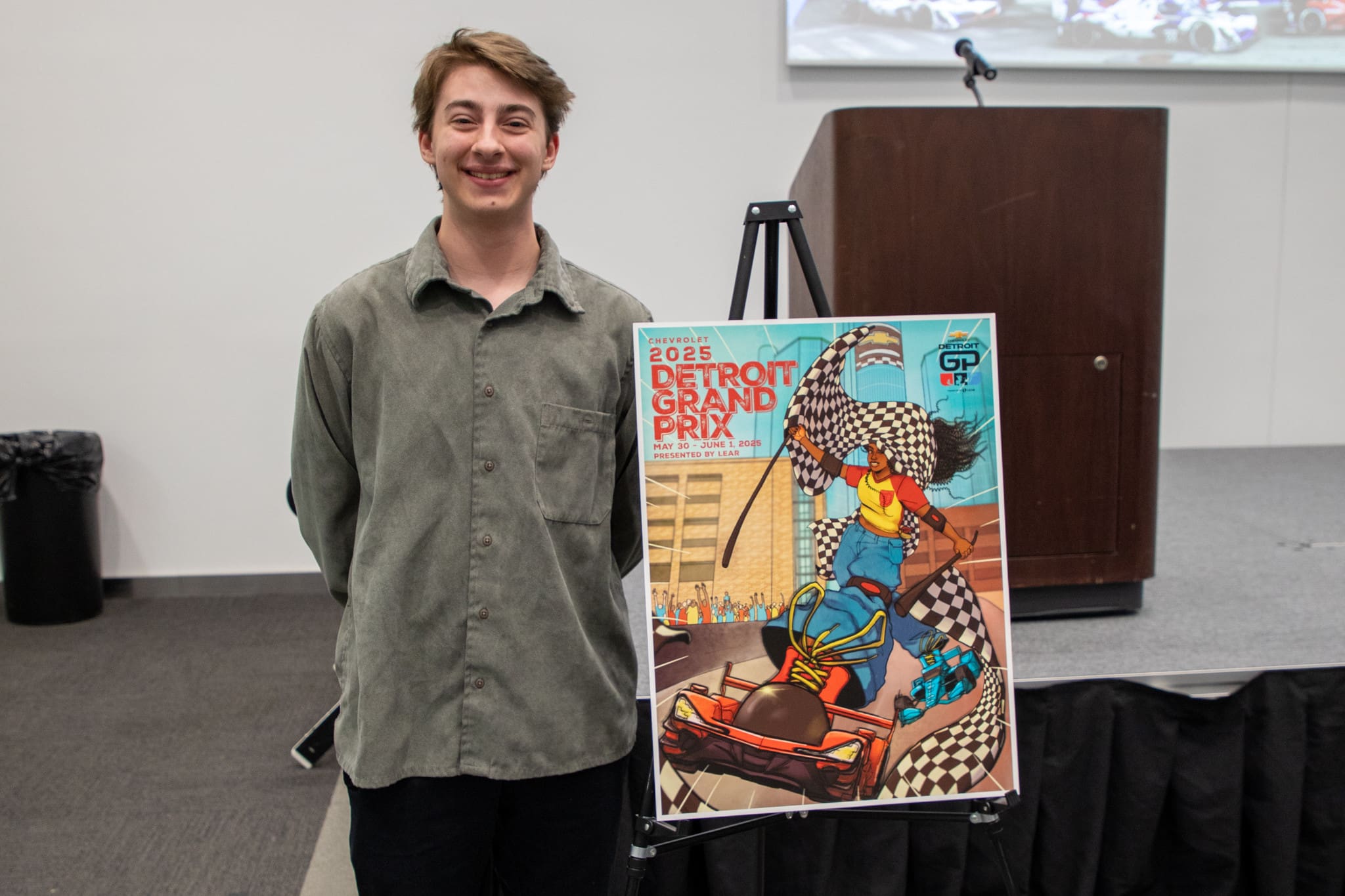
College for Creative Studies (CCS) student Eli Archer tapped into his Hoosier heritage as the 20-year-old sophomore from Indiana emerged victorious in the 2025 Chevrolet Detroit Grand Prix presented by Lear Official Poster Competition on Wednesday, April 2. Archer’s colorful creation captured the thrill of racing on the Streets of Downtown Detroit while highlighting the Grand Prix’s connection to the local community and the summertime vibe of the Motor City.

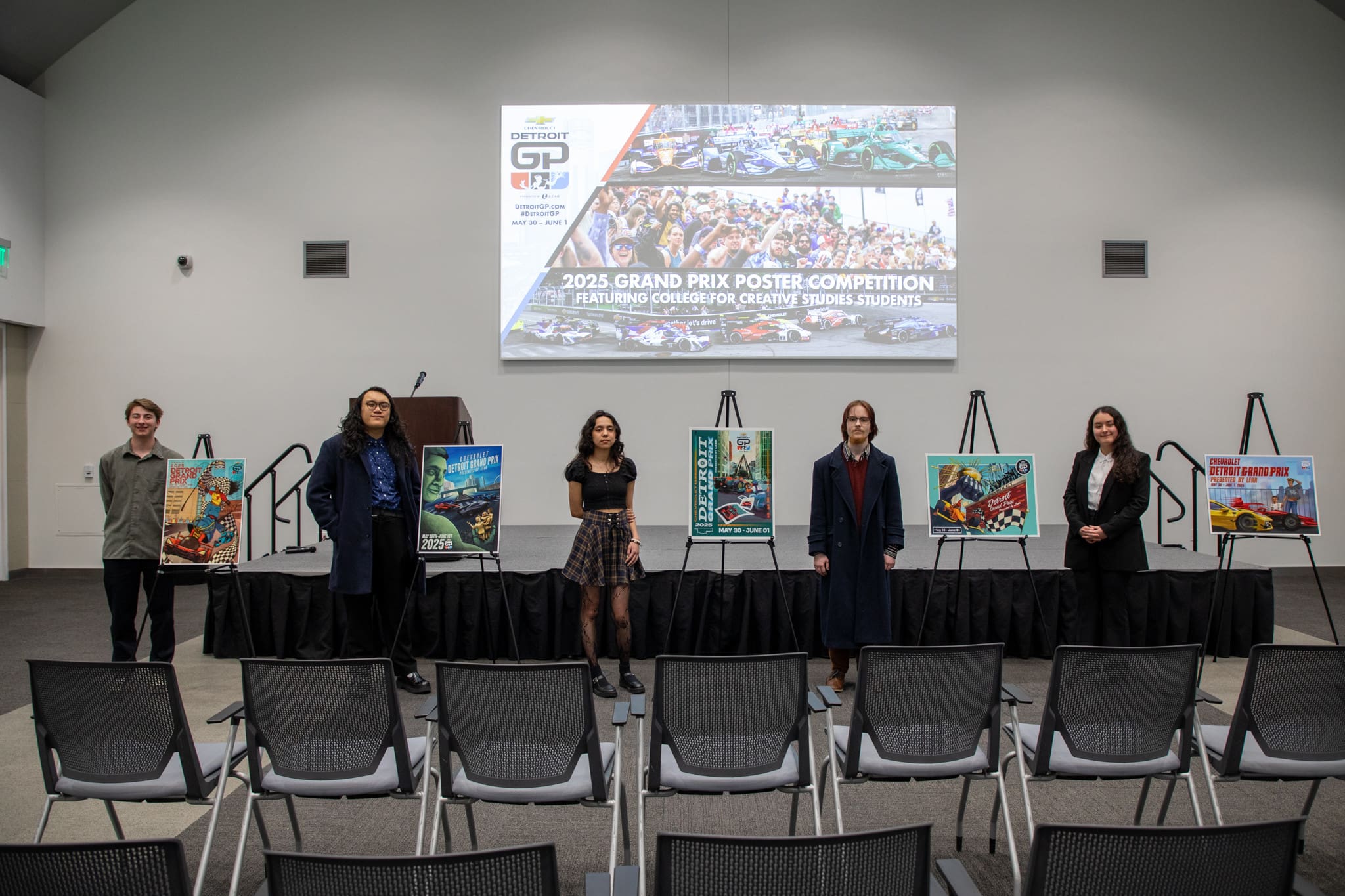
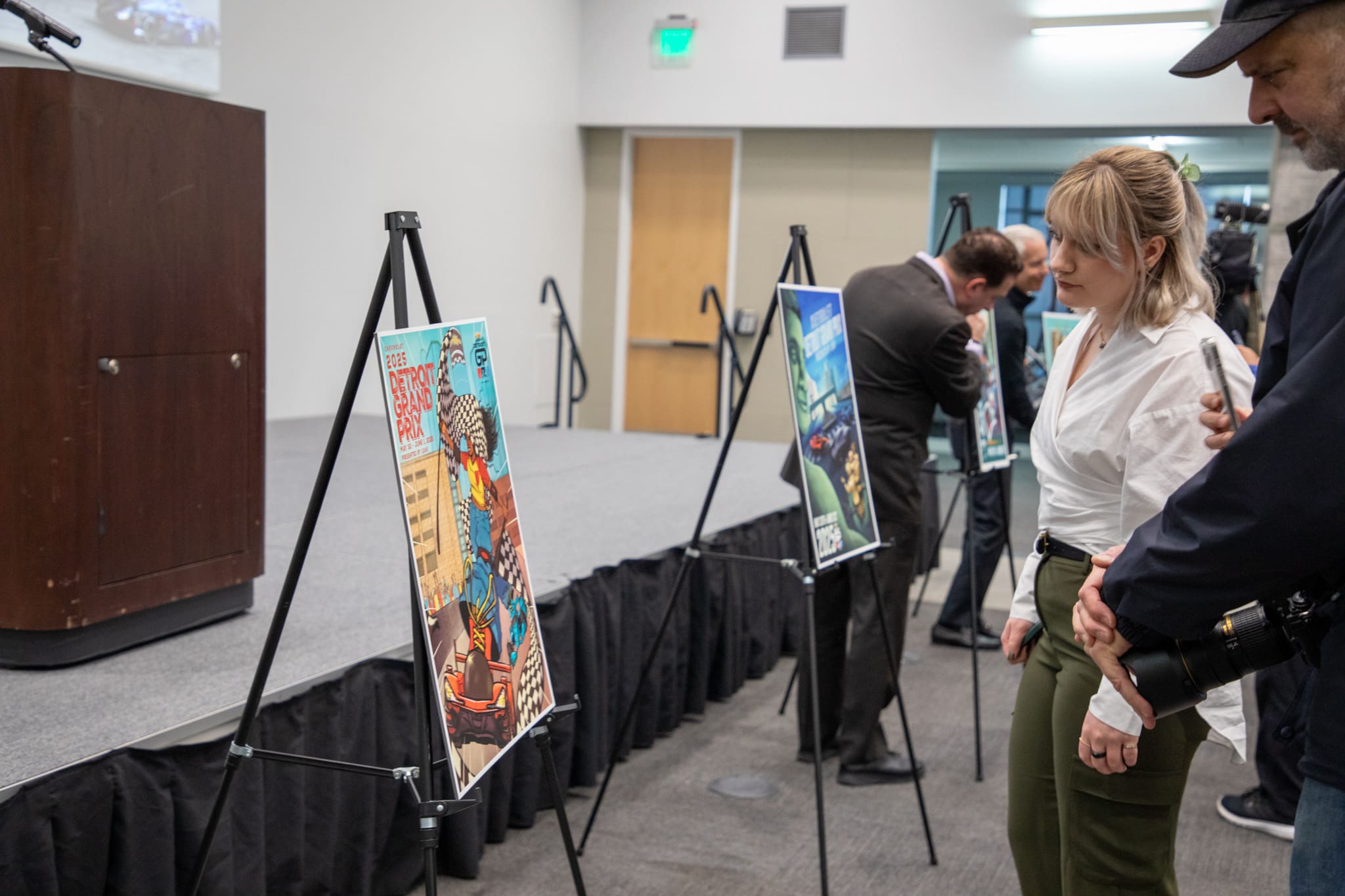
The final judging of the annual student poster competition took place at the CCS A. Alfred Taubman Center for Design Education in Downtown Detroit, where a distinguished panel of judges selected Archer’s design from the five final contenders. The winning artwork will be refined over the next few weeks before the official poster is revealed on Tuesday, May 6. The 2025 commemorative poster will be available for purchase online at www.DetroitGP.com in advance of the Chevrolet Detroit Grand Prix presented by Lear, May 30-June 1.

The 2025 design competition represents the 13th consecutive year of collaboration between the Grand Prix and CCS, offering students at Detroit’s renowned art and design college the opportunity to create the official poster for the city’s annual summer racing festival. This competition is more than a showcase of artistic talent – it embodies the power of art to unite communities, celebrate diversity and provide a platform for CCS students to express their unique and shared experiences.

“We are so excited to celebrate the 13th year of our unique collaboration with the College for Creative Studies and we are honored to build on the tradition of the Official Grand Prix commemorative poster and provide opportunities for young talented artists to shine,” said Bud Denker, Chairman of the Detroit Grand Prix and one of the judges of the annual competition. “Eli’s poster design captures the personality of Detroit, along with the fun and the excitement of the Grand Prix.”

All five student finalists in the competition presented their poster designs to the eight-member judging panel on Wednesday as the aspiring artists each described their vision and process behind their creations. Judges included Denker, Raphael Zammit, Chair of the Graduate Transportation Design program at CCS; Ryan Root, Performance, Motorsports and Accessories Designer for General Motors; Erika Cryderman, Senior Marketing Specialist for Lear Corporation; Bobby Keyes, Vice President of the Detroit Sports Media Association; Neal Rubin, columnist for the Detroit Free Press, Genna Barner, Page Designer for the Detroit News and FOX2 Detroit news anchor and reporter Amy Lange.

Detroit Grand Prix fans also factored into the selection process. The top five designs were posted on the Detroit GP social media platforms as followers were encouraged to vote for their favorite design. Fan voting was factored into the decision of the on-site judges to determine the results of the competition.

Archer’s winning poster design featured a young woman roller skating through the streets of Detroit while waving checkered flags for both the NTT INDYCAR SERIES car and the IMSA WeatherTech SportsCar Championship prototype racing on the Grand Prix circuit in front of a cheering crowd and the GM Renaissance Center.

“I just thought roller skating was a different way to incorporate the cars into the design. I wanted this poster to personify Detroit and reflect Detroit in the cars and the cars into the race,” said Archer, who is from Zionsville, Ind., a suburb of Indianapolis. “I’m so shocked to win this competition, especially seeing how strong the designs were from the other competitors. This was such a fun process and I really liked learning about the history of the Detroit Grand Prix and what it means to the city.”

The five finalists were students from the CCS Digital Illustration class, led by instructor Brian Kotulis. CCS, a renowned art and design college in Midtown Detroit, attracts some of the nation’s top illustration and design talent. Each spring, the Grand Prix provides these students with a platform to showcase their skills through the annual poster design competition, which is integrated into their class curriculum.

Archer’s design won in a close competition with the second-place entry designed by CCS student Robin Contreras, while the artwork created by Luca Olgren came in third place to complete the poster podium. Students Jacob Nguyen and David Klink earned honorable mention recognition for their poster designs.

This hands-on experience allows students to work with a real “client” and produce a final professional product. The competition not only fosters creativity but also upholds the Grand Prix’s heritage of creating commemorative posters, a tradition that dates back to the inaugural Detroit Grand Prix in 1982. Thanks to a partnership between the Chevrolet Detroit Grand Prix presented by Lear and the Detroit Sports Media Association, each of the top five designers in this year’s competition will receive a small scholarship in recognition of their outstanding work.

The 35th Grand Prix event in the City’s history will return to the 1.7-mile, nine-turn Streets of Downtown Detroit circuit that runs along the award-winning Detroit Riverwalk, May 30-June 1, 2025. With new viewing options and entertainment packages, fans can purchase tickets at www.DetroitGP.com/Tickets or through the event’s Ticket Hotline at 888-811-PRIX (7749). For more information on the 2025 Chevrolet Detroit Grand Prix presented by Lear, visit www.DetroitGP.com.

# # #

ABOUT THE DETROIT GRAND PRIX

The Detroit Grand Prix is a 501(c)3 organization and a subsidiary of the Downtown Detroit Partnership. Scheduled for May 30-June 1, 2025, the event will return to the Streets of Downtown Detroit. The Grand Prix will include the Chevrolet INDYCAR Grand Prix featuring the cars of the NTT INDYCAR SERIES, the sports cars of the IMSA WeatherTech SportsCar Championship and the rising stars of racing competing in INDY NXT by Firestone. For more information, visit DetroitGP.com and follow us on Facebook, X, and Instagram.