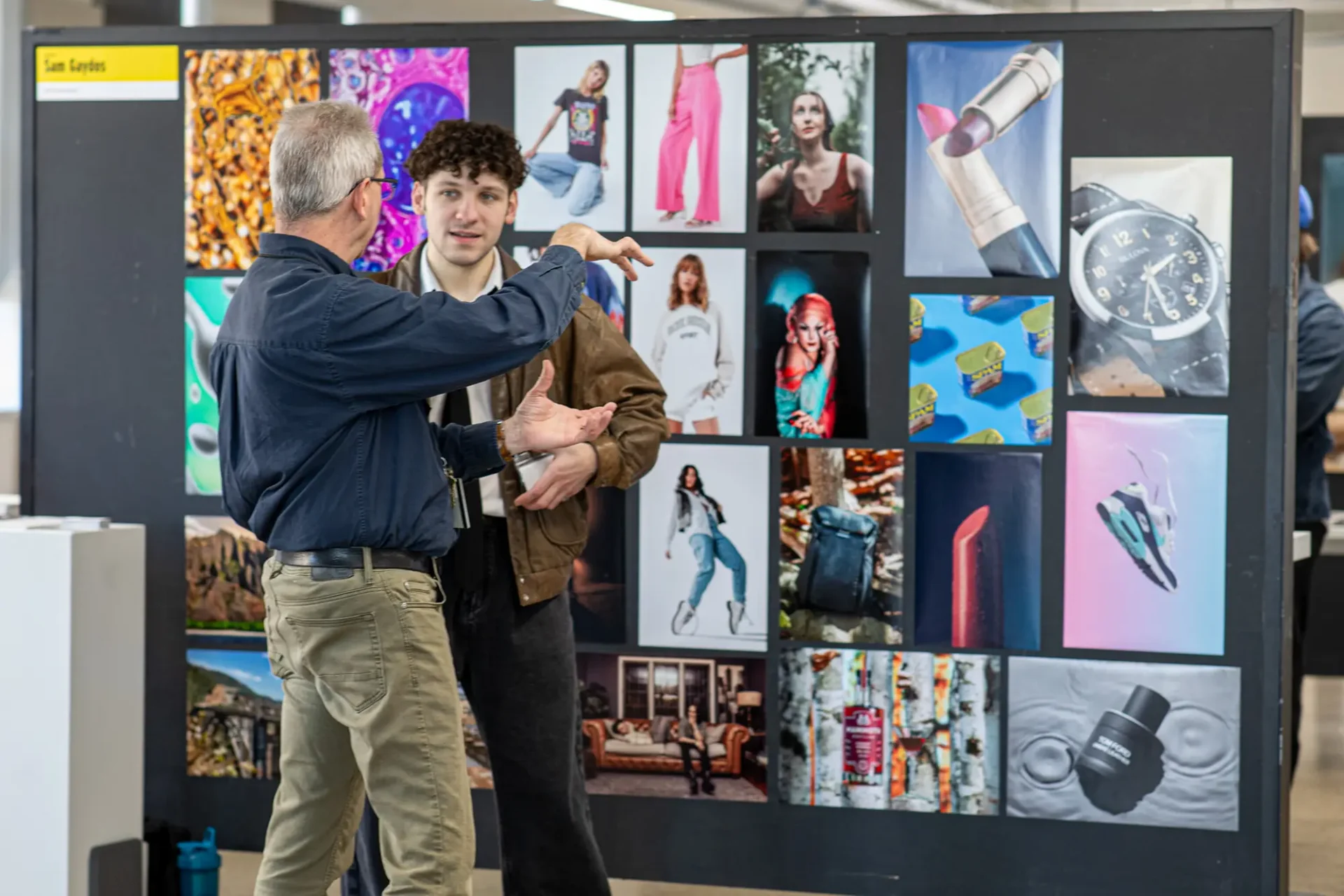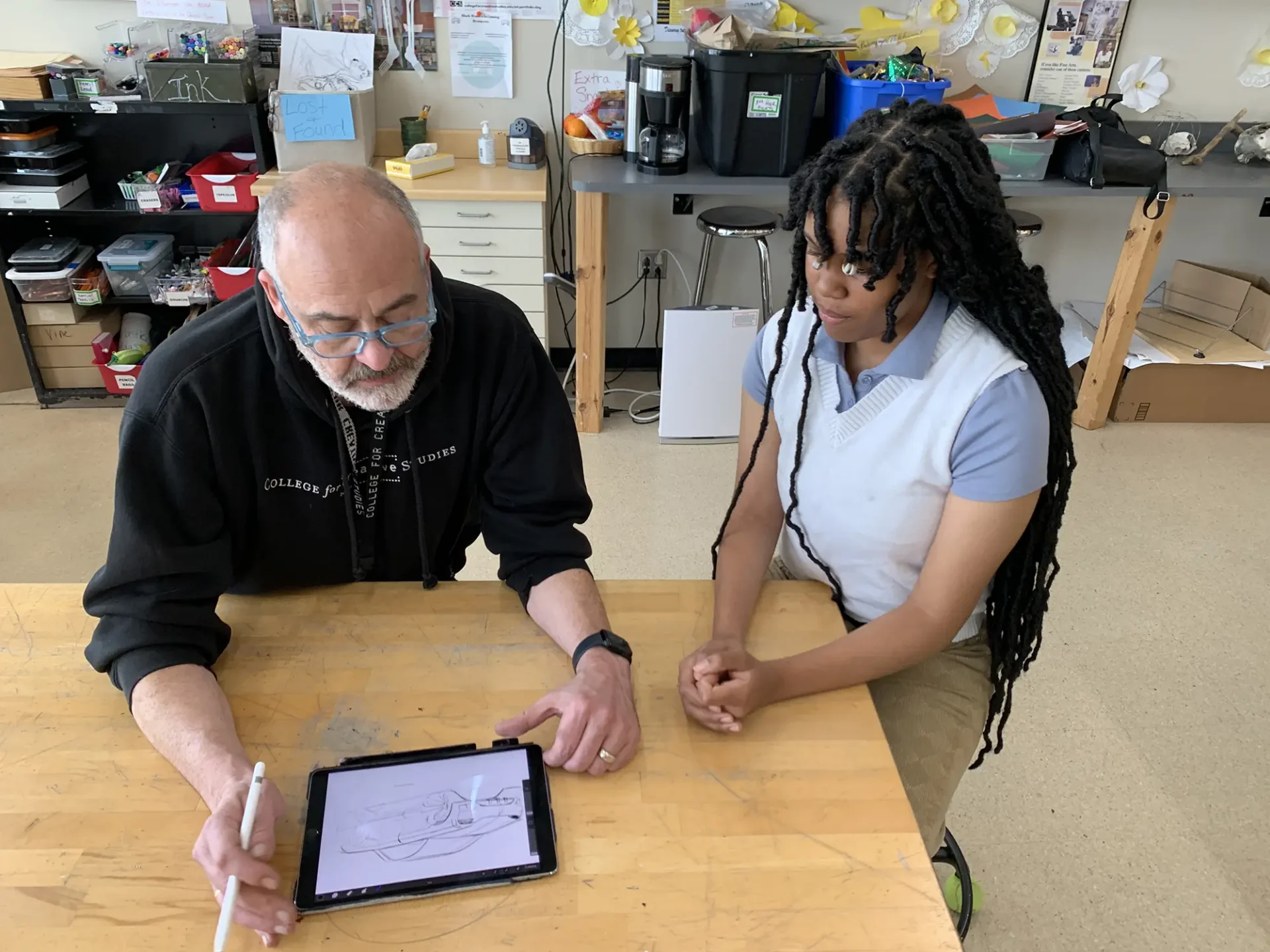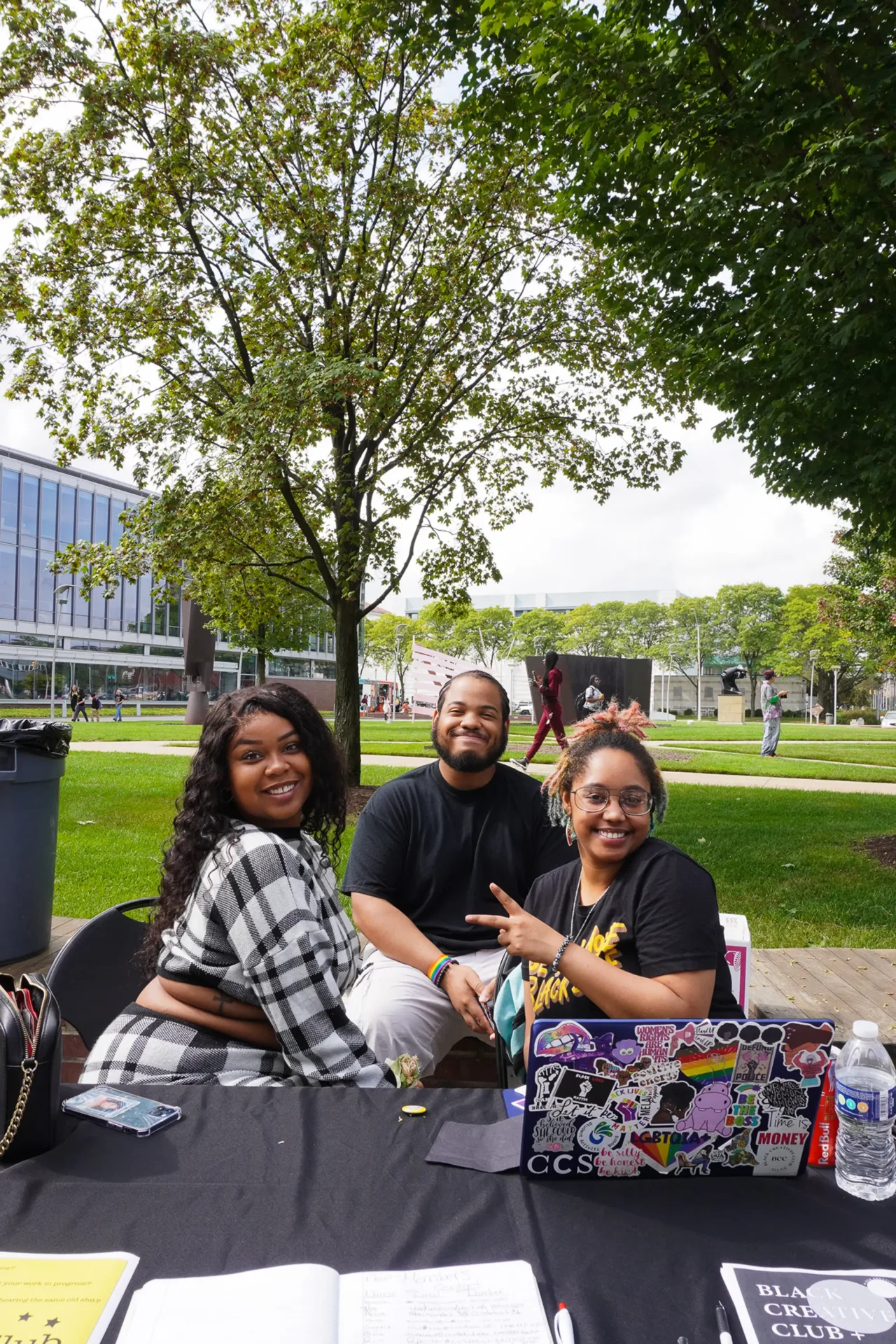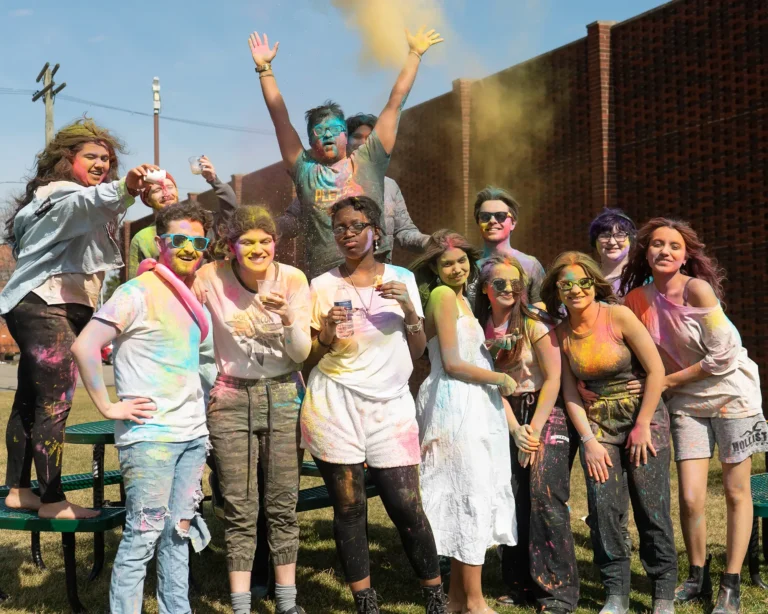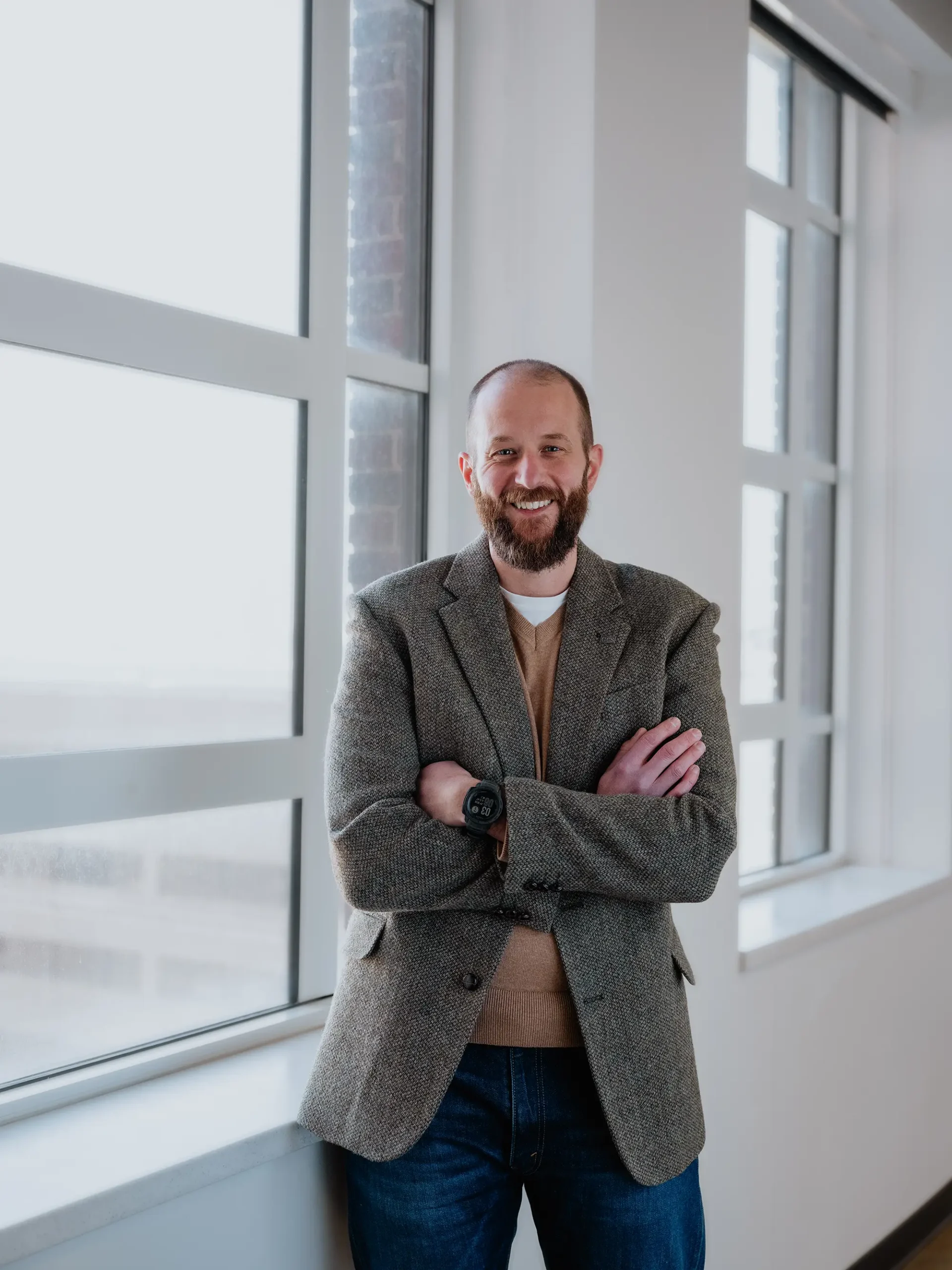
Student well-being, safety and experience are Dan Long’s guiding lights. These were his priorities when he came to the College for Creative Studies in 2005 and first served as Student Programming Coordinator, and they remain his priorities as Assistant Vice President for Campus Life, an appointment Long received during the summer of 2024.
As AVP for Campus Life, Long oversees three interconnected offices of the College: the Student Affairs Office, Campus Safety and Security, and the Office of Civil Rights and Title IX.
These entities have been redefined during Long’s two-decade tenure at the College. To better meet students’ needs, the former Office of Student Life —which included two separate offices: the Wellness Center and the Residence Life and Housing Office—became the overarching Student Affairs Office. This office is now the umbrella for several key areas, including the Student Engagement and Belonging Office, Residence Life, Student Organizations, Wellness and Counseling Services, Student Disability Services, and the Center for Tutoring and Writing, among others.
Another change was the former Office of Institutional Equity and Inclusion, which was restructured to become the Office of Civil Rights and Title IX. A director position was created to oversee the office, which reports to Long as well.
“Everything that reports to me is really rooted in making students feel like they belong and are capable at CCS,” Long says. “Every student at CCS should feel like they have a place; that they belong and have an opportunity to be successful here.”
That notion was at the core of Long’s role as a Student Programming Coordinator nearly 21 years ago. He was later promoted to a joint role as Assistant Director of Student Life and Student Ombudsman. During that time in the late 2000s and early 2010s, Long remembers the College was working towards providing more experiences for students outside of the classroom, through things such as peer support networks and co-curricular learning opportunities. An indicator of that shift, according to Long, was the increase in employees. CCS went from 10-12 resident assistants at that time to presently having around 60 total work study students.
“Seeing that growth in the opportunities we’re able to provide and that we can generate enough interest in working for those various areas is one of the big leading signs that I see in a tangible way, that Student Affairs is making an impact,” he says.
In 2012, Long was promoted to Dean of Students at CCS. During his 12 years in that role, he continued to support streamlining efforts of what he says were the College’s student-facing offices and the crisis-oriented offices. The aforementioned transition of the former Office of Student Life to today’s comprehensive Student Affairs Office happened while Long was Dean of Students.
Fourteen years later, and two years into his AVP role, Long is happy with CCS’ holistic approach to student experience. His goal for Student Affairs is to continue building on the work those teams have already achieved through their strategic planning. For Campus Safety and Security and the Office of Civil Rights and Title IX, Long says empowerment and trust building among the greater campus community has been his goal, especially with the latter office being new.
“So really, that has been, how do we successfully launch, announce and integrate a new office and a new function for the institution in a space where there’s not always a lot of trust?” Long says. “There’s no inherent trust in an office of civil rights; you have to earn that respect and trust from people.”
Long is also excited about the “enormous growth” in student organizations over the past couple of years, as well as the pending launch of a new student engagement platform. This platform will allow students to create an account and build a full co-curricular transcript to visualize their collegiate experience.
“I have an incredibly strong team of professional staff and student staff that really make all of this work on a higher level,” he says. “I always like to make sure that I highlight them, in these kinds of situations where they’re making all of this really function, and giving the students at CCS the opportunity to experience all of this.”

Longtime partnerships leader to head the College for Creative Studies Office of Partnerships as the new Assistant Vice President
Shannon McPartlon, a 20-year CCS leader, has been named Assistant Vice President of Partnerships.
In her new role, McPartlon will work closely with Vice President Olga Stella to expand strategic initiatives and external partnerships that support the College’s strategic plan and financial success. She will continue to lead the recently expanded Office of Partnerships, which now includes Event Operations, Speakers and Exhibitions and Exhibition Services.
“Shannon’s expertise and leadership come at a crucial time, when higher education continues to be disrupted by external forces,” said Don Tuski, President of CCS. “Serving as a key external ambassador to create career opportunities for students across all of our majors, Shannon will work in collaboration with academic department chairs and internal stakeholders to connect industry trends and needs to new and current programs and initiatives that will bolster the College’s business model, positioning and revenue generation.”
Throughout her 20-year career at CCS, McPartlon has managed over 400 industry partnerships, engaging more than 3,000 students, faculty and staff. She has played a critical role in evolving the College’s approach to experiential learning to include more opportunities for students and established the Practicing Design Center in partnership with faculty. Her facilitation of for-credit internships, on-campus recruiting events and launching strategies to increase exposure for students has empowered students to gain hands-on experience and enhance their career readiness.
“I am incredibly honored and energized by the opportunity to take on this expanded role,” said Shannon McPartlon, Associate Vice President of Partnerships. “My primary goal in this new role is to forge strategic, high-level partnerships that directly connect industry trends and needs with new academic opportunities, bolstering the college’s business model and global positioning. I look forward to applying my experience to further scale our strategic initiatives and help secure the future success of CCS.”
To learn more about the Office of Partnerships, please visit https://www.ccsdetroit.edu/office-of-partnerships/.
ABOUT THE COLLEGE FOR CREATIVE STUDIES
The College for Creative Studies (CCS) is a nonprofit, private college accredited by the Higher Learning Commission and authorized by the Michigan Education Department to grant Bachelor’s and Master’s degrees. CCS, located in midtown Detroit, strives to provide students with the tools needed for successful careers in the dynamic and growing creative industries. CCS fosters students’ resolve to pursue excellence, act ethically, engage their responsibilities as citizens, and learn throughout their lives. With world-class faculty and unsurpassed facilities, students learn to be visual communicators who actively use art and design toward the betterment of society. The College is a major supplier of talent to numerous industries, such as transportation, film and animation, advertising and communications, consumer electronics, athletic apparel, and many more. Its graduates are exhibiting artists and teachers, design problem solvers and innovators, as well as creative leaders in business.
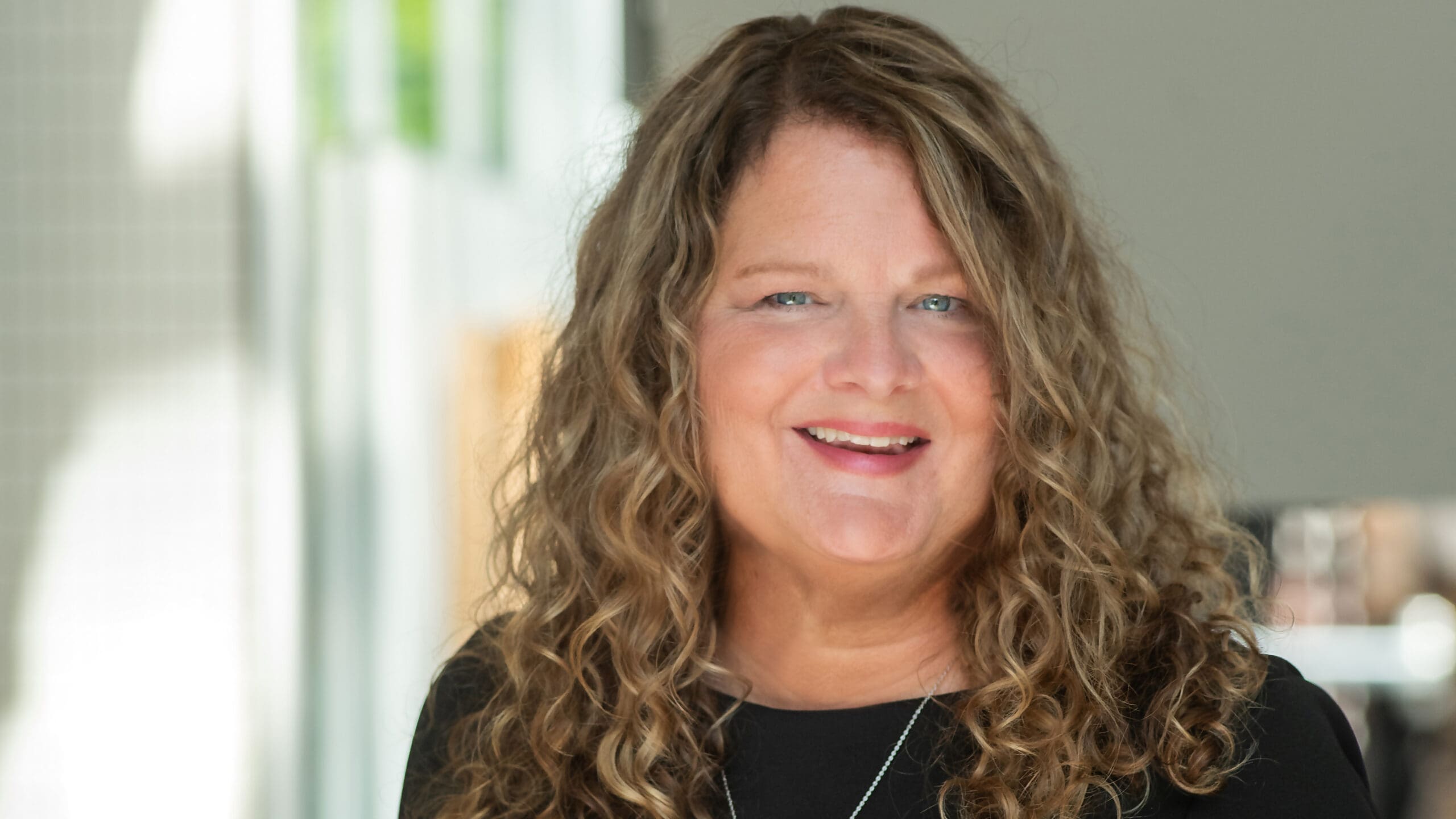
If Denise Thomas could pick up the phone and call every single College for Creative Studies alum and tell them their alma mater appreciates them and is there for them, even long after they’ve obtained their degree, she says she would.
Both alumni and donor relations are top priorities for Thomas, who was appointed Vice President for Institutional Advancement in October 2025, shortly after former Vice President Tracy Muscat retired that summer. Through her new role, Thomas is committed to developing fundraising efforts that are tied to CCS’s mission and vision, and building up a sustainable community of alumni.
The last seven years have prepared Thomas for this VP role. In 2019, she joined Institutional Advancement as the Director of Campaigns and Major Gifts. She was excited to once again work alongside Muscat, whom she had worked for in a previous role and considers a strong fundraiser with a gift for connecting and empowering people.
“At CCS, I could see where I could really help move the bar, leveraging my experience to make a difference, and I knew I would have opportunities to contribute in meaninful ways,” Thomas says on why she came to the College. “I was going to work for an organization that is incredibly important to the Detroit community, and be able to make a difference.”
As CCS grappled with the Covid-19 pandemic that began just months after Thomas started her director position, she focused her attention on raising funds to secure the resources students needed for their studies, which was done through cultivating new and existing donor relationships.
Once Thomas began managing the alumni relations program, she knew it was time to transition from previous event-based fundraising efforts to more “mission- and vision-connected fundraising.” That involved identifying the College’s key events as well as new ones that could engage alumni and donors. The Institutional Advancement office also wanted to increase communications with alumni and donors.
“It’s about finding out who loves and believes in CCS, sharing the mission and vision, and finding out what problem we could solve together,” Thomas says, adding that at one point, the team met with every CCS Board of Trustees member via Zoom for their insights. “Philanthropy is not just about raising money; it’s building community, pride and a shared responsibility for where we’re going.”
These efforts proved successful. Thomas helped the team learn how to track alumni engagement through key areas, including interaction with their communications, volunteering, donations and event attendance. The Office also participated in the Council for Advancement and Support of Education’s (CASE) Alumni Engagement Survey in TK year(s). Thomas and the team learned CCS ranked 21%, higher than the international average for alumni engagement and higher than their peers.
Thomas also says the average open rate for their alumni e-newsletters tripled over time, going from around 13% to as high as 40%. And to continue strengthening the alumni network, Thomas and the Institutional Advancement team created a role dedicated to that work and hired alumna Lesley Mason in 2024.
As Thomas transitioned to the VP role, she recalls the experience being a seamless one, crediting her time working with Muscat and the solid team they built. She wants to continue fortifying those alumni and donor relationships that will support CCS for decades to come.
“When I think about my vision for these next couple of years, a lot of it is about continuing to build that pride and connection, that community of people that are going to have a shared responsibility for where CCS goes,” Thomas reiterates. “It will lead to philanthropy, but it’s really about building that community of our biggest fans.”
CCS alumna and Trustee Molly Valade and her husband Mark Valade established the Valade Family Endowed Chair in Studio Art & Craft.
The College for Creative Studies (CCS) is thrilled to announce a commitment to endow the position of Chair of Studio Art & Craft. The Valade Family Endowed Chair in Studio Art & Craft will ensure ongoing support for the College’s Studio Art & Craft Department, one of CCS’s most historic programs.
This transformative commitment reflects CCS alumna and Trustee Molly Valade’s deep connection to and belief in the legacy and importance of the Studio Art & Craft program, as well as her enduring belief in the power of a CCS education. Molly graduated from CCS’s Fine Arts program (now Studio Art & Craft) and has served on the College’s Board of Trustees since 2008, in addition to serving on CCS’s alumni council for 13 years. Over the years, her engagement with students, faculty, and staff has strengthened the program’s creative and academic environment, and this gift will ensure that impact continues into the future.
“Studio Art & Craft has been at the heart of CCS for more than a century,” said Don Tuski, President of the College for Creative Studies. “The establishment of this endowed chair will help ensure the department continues to evolve, inspire new generations of artists and makers, and expand opportunities for innovative studio practice well into the future.”
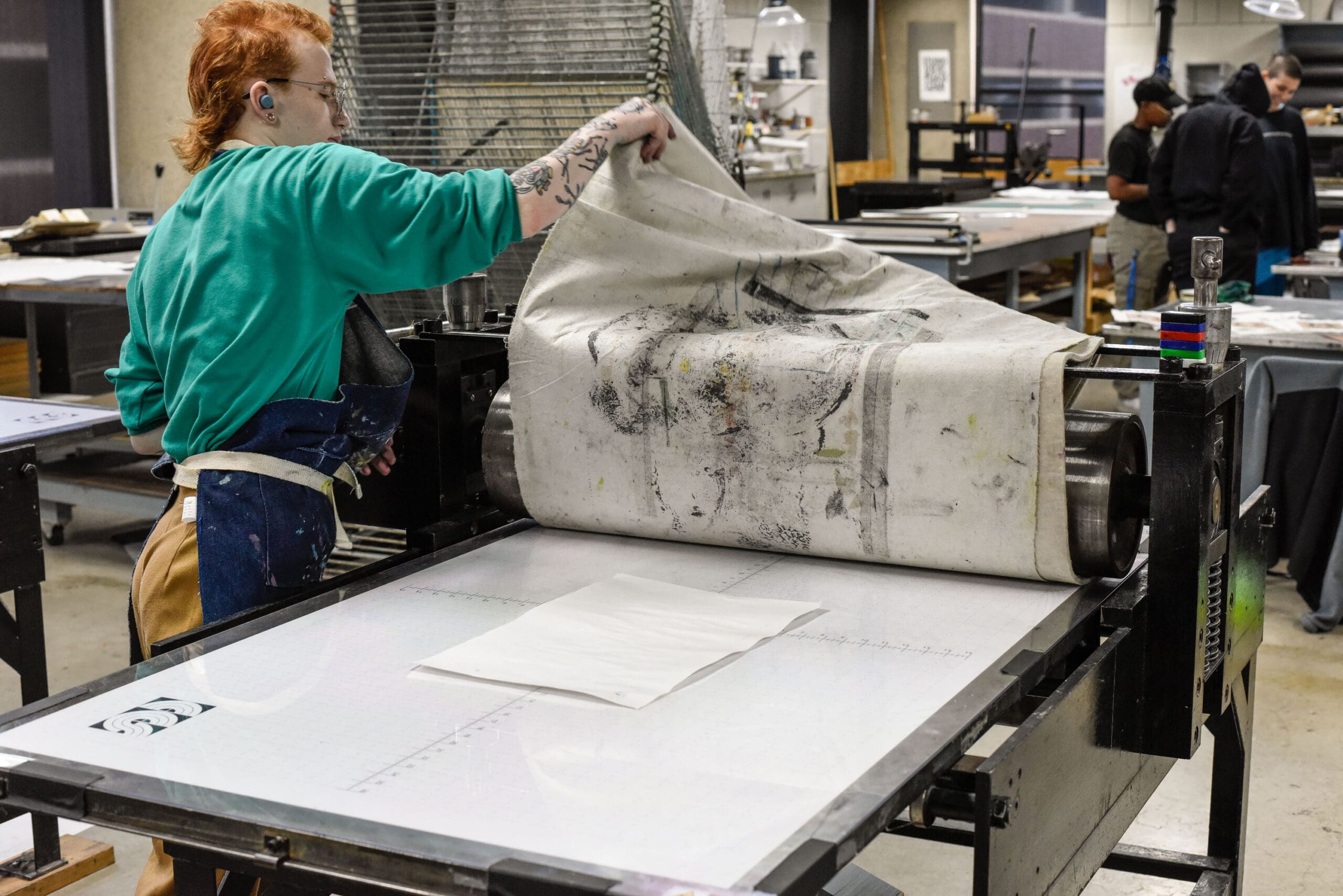
Founded in 1906, CCS, then The Society of Arts & Crafts, integrated rigorous courses with the progression of the art and design movements and world-class, contemporary exhibitions. Since its inception, the Studio Art & Craft program has carried on this tradition while continually building on this foundation and legacy. In 2026, the program is still rooted in traditional techniques, now enhanced by contemporary processes and innovative technologies. The department currently enrolls undergraduate students exploring the disciplines of Ceramics, Drawing, Fibers and Textiles, Fine Arts, Glass, Metalsmithing and Jewelry, Painting, Performance, Print Media, Sculpture, Digital Fabrication and Digital Media.
Under the leadership of Department Chair Valerie Jenkins, Studio Art & Craft continues to foster rigorous studio practice and distinct creative voices. The creation of the Valade Family Endowed Chair will further elevate that work, strengthening the program’s impact and vitality, ensuring its continued growth.
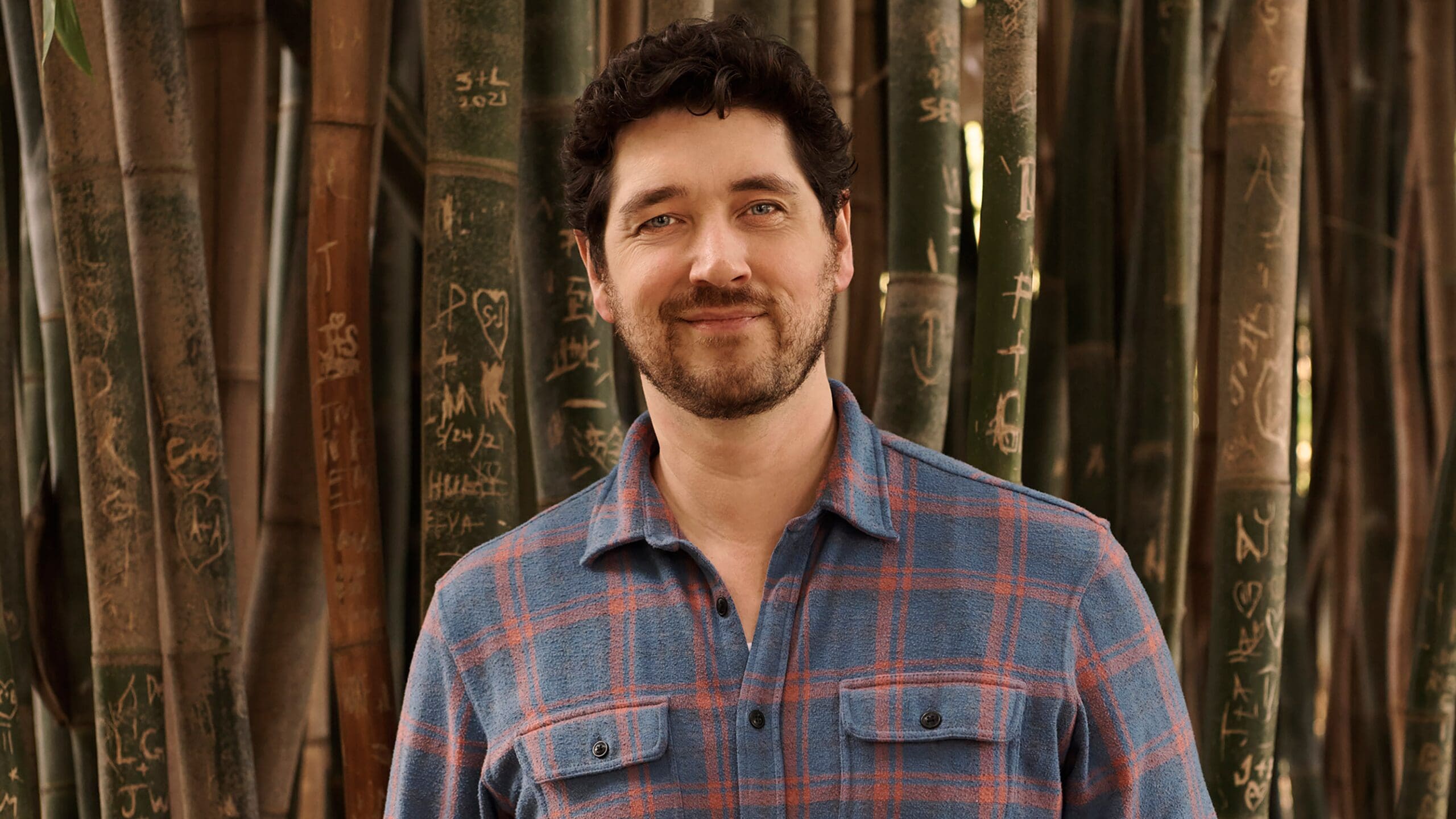
Michael Maher Jr. (’07 Illustration), is a storyteller at his core. And he’s living proof that with enough tenacity and a strong gut instinct, your creative voice can change worlds. What started as a job moving furniture on film sets has evolved into a decades-long career in the entertainment industry. From designing the iconic posters in The Ides of March and prop storyboards for the Oscar-winning Argo, to bringing the terrifying Vecna to life in Netflix’s Stranger Things, Michael’s journey is a masterclass in unlocking your creative potential.
The Interview
“I pull from the fundamentals all the time. You are just always looking for complementary colors or how to make something pop with contrast, or the right composition to make you feel a certain way.” –Michael Maher Jr.
I would love it if you would share more about how you started in the film industry.
There was a tax incentive in Michigan at that time and it brought a lot of films, right at the moment I had gotten out of school. There was a professor at CCS named Keith Newton who worked in the Illustration department, and he was kind enough to encourage me to get my foot in the door on one of these films. Under the lead man are these guys named swings and they’re essentially furniture movers with an artistic eye, who know how to decorate and actually make a set look good. As a swing, in between one of the days where they were filming on location there were a whole bunch of extras there and I started drawing caricatures of them. Then that led to the production designer asking if I could do other things, like graphic design and illustration of any kind, because there are a lot of opportunities in the art department to create props and set deck items and things that are hanging on walls. So, I found a good home, you know? I think I worked for probably 10 or 11 movies after that in Michigan. There was just so much business coming to Detroit, and there weren’t a lot of locals with the experience in the art department that I now had. I was also doing a lot of logo design. My illustration design, wherever I could fork it into whatever was needed, whether it be a book cover that the actors were reading or a poster on someone’s bedroom wall, I was always eager to take those projects on. I would let everyone know I want to do some drawing. This really helped me throughout my entire career. It took almost 10 years to become an illustrator in film. It was a long road, but I had jobs, I was working creatively. And then – then I got a gig on Cosmos. So I moved from Michigan to Los Angeles. Cosmos was a big show for me because there were lots of opportunities to do really cool illustrations. That turned out to be one of the best jobs I’ve ever had.
https://www.ccsdetroit.edu/wp-content/uploads/2026/05/JPEG-image-6.jpg
https://www.ccsdetroit.edu/wp-content/uploads/2026/05/JPEG-image-5.jpg
That sounds like it was a huge moment for you. How did it feel when you were able to see that come to fruition?
It’s very nerve-racking, actually. But before that, I had done a bunch of really important prop graphic design stuff that was going to be on camera for a number of different films. Ides of March with Ryan Gosling. I got to meet him and interact with him. George Clooney directed it, so I got to meet him as well. For that film, I did all the posters for the political campaign, which were supposed to sort of mimic Obama’s Hope posters. After that, I worked on Argo, which ended up winning an Oscar. Ben Affleck was directing, and I did a bunch of prop storyboards. They were prop storyboards in the film in 1979, and they were supposed to have been drawn by Jack Kirby, who was a legendary comic artist. Those actually ended up on camera because Ben Affleck’s character – and this is a true story, believe it or not – was showing it to the guards at the Tehran Airport to tell them that they were working on a movie to convince them to get on the flight to be able to escape with all the prisoners. So, that was a really big moment. And then finally, when Cosmos came, I was ready. That was really a great experience because we were a bit shorthanded. So, I got to do a little bit more than just concept art. I was doing some motion graphics, kind of pre-vis stuff. I even remember an early teaser trailer for Cosmos that we did where a buddy and I worked together and essentially made a whole shot out of something that I had illustrated. That was a huge thing for me. So, it was baby steps.
https://www.ccsdetroit.edu/wp-content/uploads/2026/05/JPEG-image-scaled.jpg
How did you hear about the College? What got you in tune with CCS to want to apply there?
I had seen some examples of commercial illustration around – one of my best friends’ dads was a commercial illustrator in Dearborn, Gary Ciccarelli, and he had actually taught at CCS at one point. I felt like he was a good one to emulate because he had a successful career, worked on a bunch of magazines for Cream, which was super popular back in the day. I felt like maybe editorial illustration, commercial illustration was the in. I got really lucky knowing him because he was influential; he said, “well, you know the place to go is CCS.” I think I told him that I was considering other options, and he was like, “it’s right in your backyard.” So, I took his advice and it just ended up being the right fit, right move.
https://www.ccsdetroit.edu/wp-content/uploads/2026/05/JPEG-image-2.jpg
That’s really nice. Have you and Gary ever had the opportunity to talk in recent years with everything you’ve done?
Every once in a while I get a text or something just saying, “I saw something that you’ve worked on.” He’s always been somebody in my corner. I feel like I’ve been really lucky to have him as sort of an early mentor. He even gave me some of my first little illustration gigs after school. I was kind of struggling to find work, and he was doing some children’s books, and he helped me out with that. So, I owe a lot to him.
Switching gears a little bit, how do you feel CCS prepared you for the jobs that you’re doing today or for your career in general?
It was very heavily traditional. Everything that I was doing at CCS was foundational, but even more than that, it was practical, oil painting and traditional media. I was lucky enough to have some professors that were into digital illustration and were fostering some of the first digital illustration courses around. You couldn’t find that anywhere. I remember working in the computer lab in the old illustration wing. That served me really well for the rest of my career. Not to mention, you know, the ability to not just draw and illustrate, but do graphic design and think about color and light in a certain way, all those fun fundamentals and the foundation was so strong. I pull from the fundamentals all the time. You are just always looking for complementary colors or how to make something pop with contrast, or the right composition to make you feel a certain way. That’s present in all of those core classes that I had with Dave Chow and Keith and everything that I learned from Gil Ashby. They’re all just super influential.
https://www.ccsdetroit.edu/wp-content/uploads/2026/05/JPEG-image-3-scaled.jpg
“I think to be a successful commercial artist, the collaboration actually comes before you even do any of the drawing.” –Michael Maher Jr.
You can hear very clearly how passionate you are about everything that you’ve learned. What would you say you love the most about what you do, your job or what you’re working on?
Oh man, it’s a roller coaster. The highs can be really, really high, you know? You can get a chance at designing a creature or a character, and for me, that was always the apex. Like, oh my god, I’m creating some character that’s going to be on screen, that’s going to be a living, breathing thing, that’s going to interact with characters. Vecna (from Netflix’s Stranger Things) was a huge one for me because even though it was a practical sculpt at first, it was the first real thinking character I got to do. That was so fun, just coming up with the design. I think I got a little overeager. I feel like I drew a couple hundred options for the brothers. Poor guys were looking at so many drafts of different options, and I didn’t want to leave anything on the table. Now, I think I would just trust my expertise and give them a few to pick from, but that was an important thing for me. That was something that I really cherish. The other thing would probably be doing storyboards for certain sequences that have become sort of iconic. Season 4 of Stranger Things, for example, when Max is in the mind layer, that red world and she’s running away from all the things falling out of the sky and heading towards the portal, and Kate Bush’s “Running Up That Hill” is playing, and all of that is happening, in my mind in a room where I’m just making these drawings. Then they put the drawings on a big board while they’re filming it and they literally cross off the drawings per shot. Then you have a sequence, and that becomes something that’s ingrained into what people think of when they think about the show. There have been so many sequences like that over the years that I’ve been lucky enough to be a part of. And it just starts with me reading the script and getting inspired and thinking, “What would be cool?” That’s me just making a little drawing. That’s where it starts. And then it’s on the screen. It’s crazy.
https://www.ccsdetroit.edu/wp-content/uploads/2026/05/500_VECNA-POSED_cpt_V0002.jpg
Do you feel like collaboration and teamwork is something that you enjoy when it comes to what you do?
Yeah, totally. I think for commercial art, collaboration is mandatory. You’re going to have somebody who will give you an assignment, and then you’ll have to iterate. Very rarely is it the first thing that works, especially in film. You have the art department, you’re talking with visual effects, and you want the director to have what they would like. You want to think about what the actors are going to do and give them some space to do their thing on the day, and you have to think about the complexities of the shoot, how fast it’s going to be. I think to be a successful commercial artist, the collaboration actually comes before you even do any of the drawing. I would search around for other people’s opinions on what they would want and synthesize everyone’s needs, and try to make it as smooth as possible. It’s such a mandatory obligation to be collaborative and eventually it just feels secondhand.
“Sometimes it’s not just the raw talent that gets you in the door. It’s equally important to be a little tenacious and go for what you want to do and not give up.” –Michael Maher Jr.
I think it’s super helpful for current students in particular, but also potential students to understand duality and the need to be flexible. That trust within yourself and your decision-making, do you feel like that was innate within you, or do you think that that was something that you built over time?
I think that’s definitely something you come to trust, because early on in any career, in any discipline, you feel uneasy when given a task because maybe there are too many options. It’s hard to narrow it down. It’s hard to know where to start. It’s hard to know what to focus on. Anything with repetition becomes easier, and you won’t have that uneasiness inside when you’re stepping into whatever you’re endeavoring to do. I think it’s good to have those feelings first. There’s a saying that in storyboarding, especially in film, you can draw any different camera angle from any different place, but why? Why are you drawing it from that angle? You have to consider emotion, and feeling, and storytelling, and all that stuff. I think you kind of find yourself asking why all the time, and because of that I think it makes you a better artist. No matter what discipline, what is the intention behind something, and how pure can you get that intention? How crystal clear can you make that thing that’s just under the surface of what you’re doing? That’s what gets to be really fun, when there’s stuff that people don’t even think about, and if someone looks at something that was shot or something that you did, and they get a feeling, but they don’t really know why. You know, that’s cool.
https://www.ccsdetroit.edu/wp-content/uploads/2026/05/504_117-165_MacZAttack_stb_vM0011-Part-2_Page_05.jpg
https://www.ccsdetroit.edu/wp-content/uploads/2026/05/504_117-165_MacZAttack_stb_vM0011-Part-2_Page_26.jpg
More recently, you worked on Stranger Things. You had the opportunity to direct. Is that something that you’ve always known that you wanted to do as well?
No, not at all. By Season 3, I think I had done probably a thousand storyboards for the show. There were times when I remember drawing until my hand would bleed. I would draw so much and for so long. You present often enough that there’s a familiarity there. After a while, they’re like, okay, you know the tone of the show. You’ve presented and worked with multiple directors who are working within the same sandbox. You know all the characters; sometimes you know a little bit more or are thinking of things that we aren’t thinking of, and you earn a little bit of trust. I was really lucky that they took that trust and asked me to direct a few shots. I remember in Season 3 the big monster in the mall, trapesing around, smashing things, going through the gap, hunting the kids, all of that was me with some guy and a beach ball running around as the mind flayer, taking those camera angles and eventually, working with the vendors to create the monster and put it into the shot. I’d have to take a lot of intention with my storyboards, knowing where the monster is going to be, how it’s going to be framed. It takes it out of that two-dimensional storyboard into an environment where all of a sudden, you’re in charge of the way the camera moves. That was my first foray into directing and, again, a huge leap for my career. I have a ton of thanks for the Duffer brothers for having that trust in me to allow me to take that leap. Later on that led to directing 500 extras running around and shooting an entire army platoon searching for things throughout the base. Then they had me work with the main cast, and by the end of Season 5, a lot of the end battle is my stuff.
“You can listen to your gut, and it’ll tell you where to go.” –Michael Maher Jr.
So, is this your ultimate goal, to do more of that? Is there something else that you want to try?
I do truly love all the aspects of it, and even when offered the opportunity to do concept art or design, I cannot pass it up. It feels like a natural progression in my career to move to the next. For the students out there or the people thinking about going into this – I had to take a leap of faith, and I had to invest in myself, and I had to say, yeah, I can do that. Because I had done it previously, but not to the extent that they needed, and I felt like it was going to be a challenge. I think that ended up paying off quite a bit.
Just like you have other people trusting you, it’s a moment of you showing yourself some trust, which is cool.
Yeah. Yeah, yeah.
https://www.ccsdetroit.edu/wp-content/uploads/2026/05/504_117-165_MacZAttack_stb_vM0011-Part-2_Page_53.jpg
https://www.ccsdetroit.edu/wp-content/uploads/2026/05/504_117-165_MacZAttack_stb_vM0011-Part-2_Page_56.jpg
If you had any advice to share with current students or potential students, what would you say?
One thing that I learned, not only through going to school, but even coming out of school, is that sometimes it’s not just the raw talent that gets you in the door. It’s equally important to be a little tenacious and go for what you want to do and not give up. I think that comes from a burning interest in doing something, which I was lucky enough to have. I was lucky to know relatively early on what I wanted to do. I wanted to draw, I wanted to illustrate. I wanted to tell stories in that way. And because I identified that early, I was able to take steps and build and work. Even though it wasn’t honed in exactly on storyboards, designing creatures, or directing from the get-go, I was always taking steps and building from the fundamentals, taking the courses at CCS – doing all the things that I could lean on later in design, and I think that really served me well. I don’t want to discourage any students who aren’t sure what they want to do and are kind of searching for something. For them, I would say, there’s an undeniable feeling you get when you’re doing something that feels really enticing. Like you could do this again and again, and maybe it’s not very obvious to you at first, but if time goes by and you’re in it, and you’re not noticing you’re in a state of flow, then I would pursue whatever that is. That has been the thing that I’ve propelled forward with, and it’s evolved over time. It doesn’t always have to be the one thing. You can listen to your gut, and it’ll tell you where to go. Interests change, you know?
“The discipline and the skills and the trust you build in yourself and the creativity that you foster in yourself, the more you push it, the better life gets.” –Michael Maher Jr.
Were there ever any moments of doubt? Did you ever think maybe this isn’t it for me?
Oh my god. Yeah.
How did you overcome that?
When I came out of school in 2007, 2008 was the housing crisis. I didn’t always have work as an artist, so I would get other jobs here and there. Even if it was on the periphery, I always wanted to do something creative just to keep my mind in it. I worked at the DIA, for example. I heard about a job where they did these things called “Drawing in the Galleries.” They’d set up easels inside some of the galleries and kids would come through. You’d encourage the kids and the adults to sit down and draw what’s on the wall or draw something inside the museum. I sort of just stayed around it, always looking for opportunities to keep my mind thinking creatively. The longer you’re away from it, the more you start to get rusty, and it takes time to build the muscle again. That was just in the early part where there was some doubt and discovery, and it was difficult to stay creative, and I wasn’t on track in my career. But even when you are working in your career, you have these moments where you feel like all is lost. But the better you get at overcoming those challenges, the more you’ve had to hurdle things – that’s the tenacity that I’m talking about. That’s another skill to couple with your fundamentals that will serve you for the rest of your career.
“A lot of my experience at CCS I look back on really fondly. The people that I met there, I keep in touch with, a lot of the teachers, what they told me, and what we worked on, I apply every day.” –Michael Maher Jr.
What would you tell your younger self?
Don’t be afraid to push it. Really push your skills and your discipline. A lot of stuff that you’ll do will not matter, but the discipline and the skills and the trust you build in yourself and the creativity that you foster in yourself, the more you push it, the better life gets. It took me a long time to realize that, and even at CCS, looking back, I wish I had maximized my potential, taken more courses in other places, and gotten more knowledge from different crafts when it was available to me. Now I’m doing not only digital illustration, but I was sculpting later in my career, and I never took a sculpting class at CCS. I was just so bummed about that. The amount of 3D modeling I do now, it’s insane. I only took one course in intro to Maya at CCS because I never expanded my interests while I was there. My regret would be that I didn’t try enough things or push the envelope on everything that I could creatively. When you have those electives, and you have a chance to take something different, you never know how it’ll serve you in the end.
Is there a specific memory you have of when you came to CCS, whether it was your first visit, your first day, or your last day, that sticks out to you?
Oh man, there’s a lot of those. I remember it very vividly. It was a really important step because, I was going to be an artist, you know, that’s huge. And even Robert Schefman’s (previous CCS Foundation Chair) first lecture is so daunting. It feels so scary. One of the first things he says – it’s been how many years I remember this like the back of my hand. He’s like, “You are probably one of the better artists in your small little community before coming to this school. Now you are basically just as good as everyone else. So, what’s going to make you a little bit better than everyone else? How are you going to advance?” And of course, he was trying to teach knowledge and expansion, and kind of scare the people out of there that don’t belong there, maybe. Taking that course and really listening to him and taking it to heart was a big deal. He probably doesn’t even know who I am. He would never even recognize me or anything – but that had a profound effect on me. You know, a lot of my experience at CCS I look back on really fondly. The people that I met there, I keep in touch with, a lot of the teachers, what they told me, and what we worked on, I apply every day. It was a really important thing for me to have been there when I was, and it was an important thing for me to launch out and do my own thing and go off to Los Angeles afterwards. I feel like I’m really lucky to have had the balance of learning from people in the place where I grew up and then exploring the world and finding what I wanted to do.
https://www.ccsdetroit.edu/wp-content/uploads/2026/05/260129_943-scaled.jpg