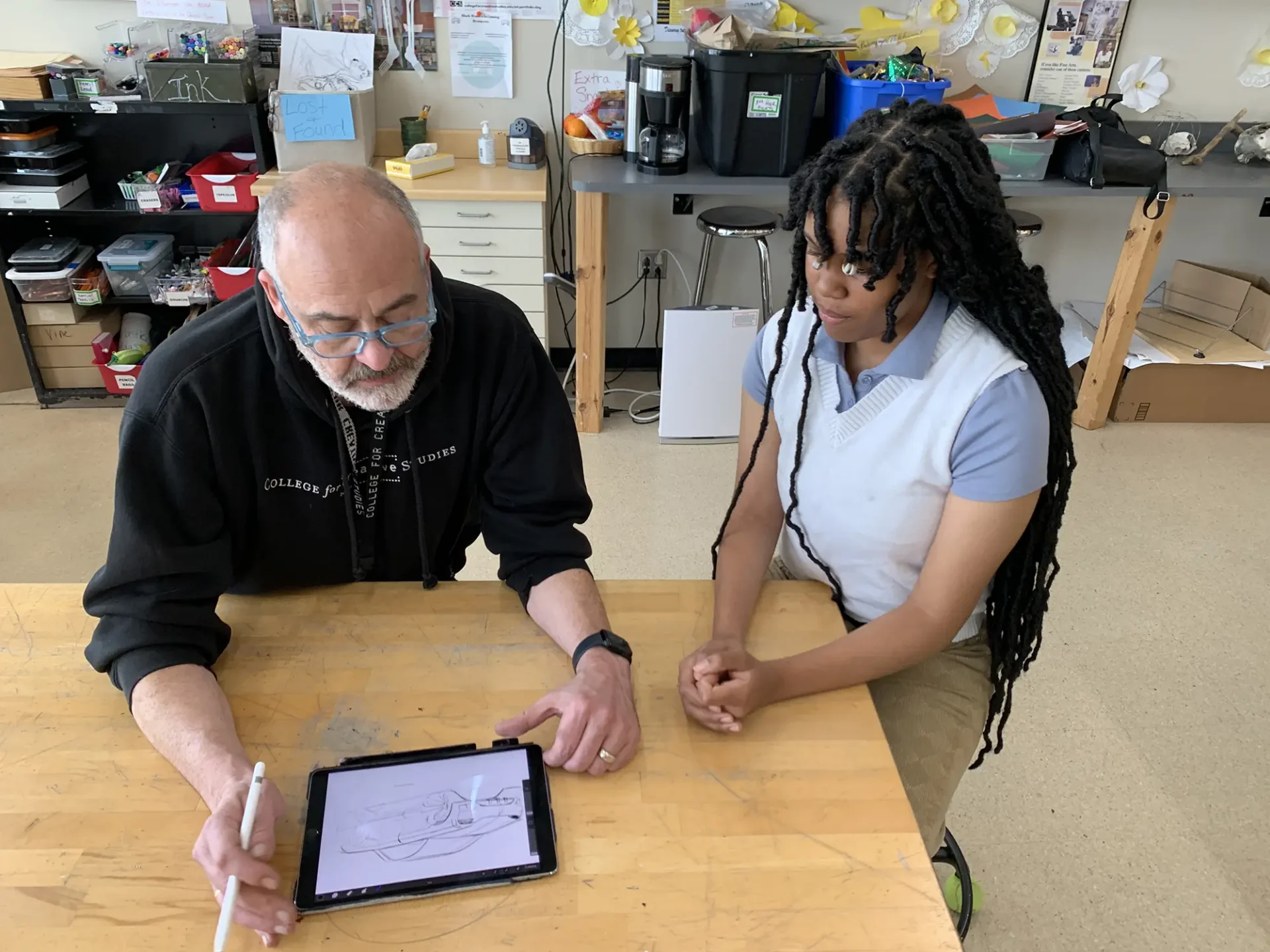
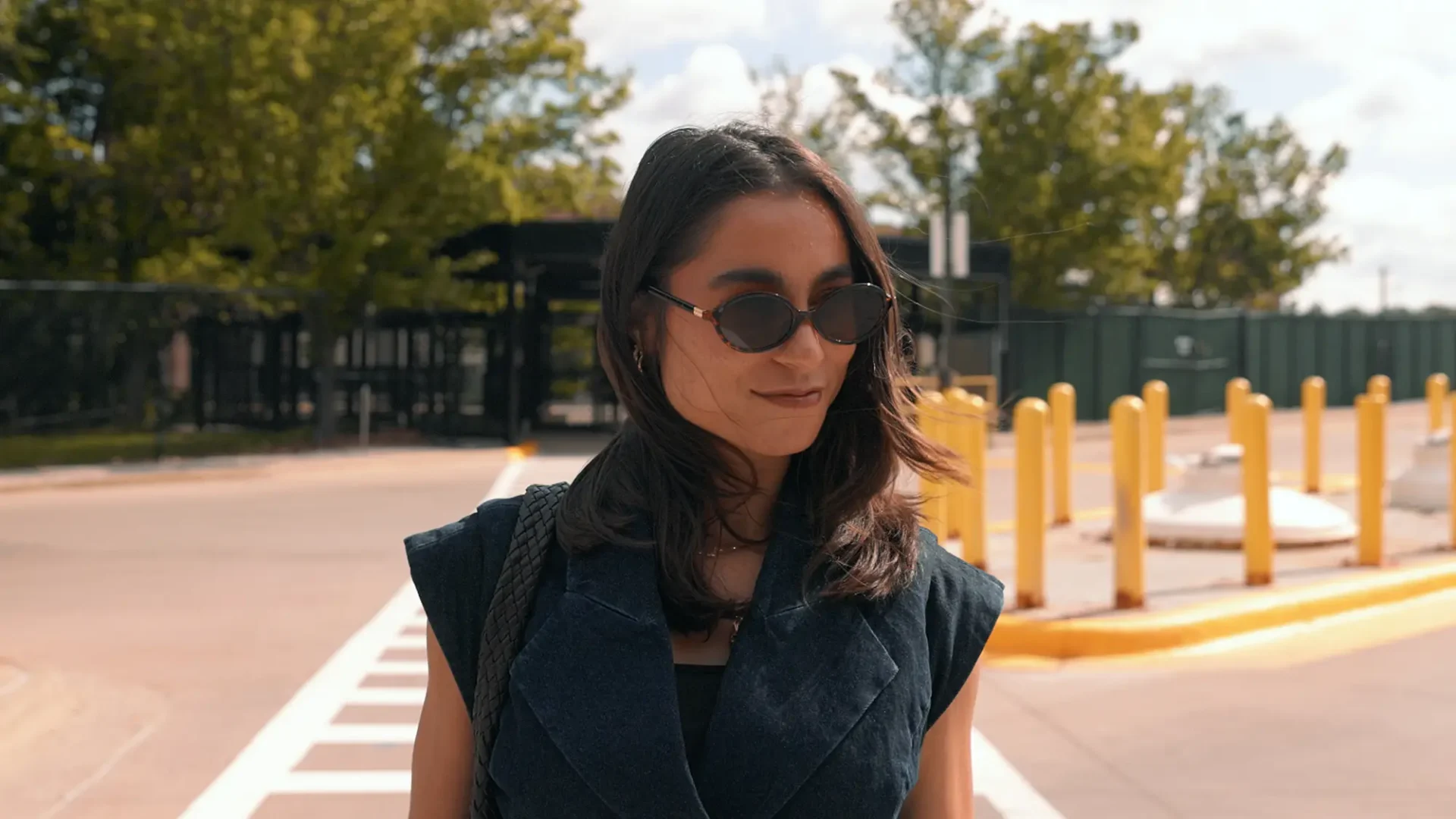
Christine Montalbano (’22, User Experience Design) has always been curious about how things work. A lifelong creative with an interest in making experiences both functional and intuitive, she found a career that brings together her creative and analytical sides. Today, Christine manages the Core Global User Experience Design Team for Stellantis’ in-vehicle infotainment system, helping translate complex technology into experiences that feel natural to drivers across its global brands. She also returns to CCS as an Adjunct Instructor, sharing what she has learned with the next generation of designers.
Can you tell us more about what you do at Stellantis?
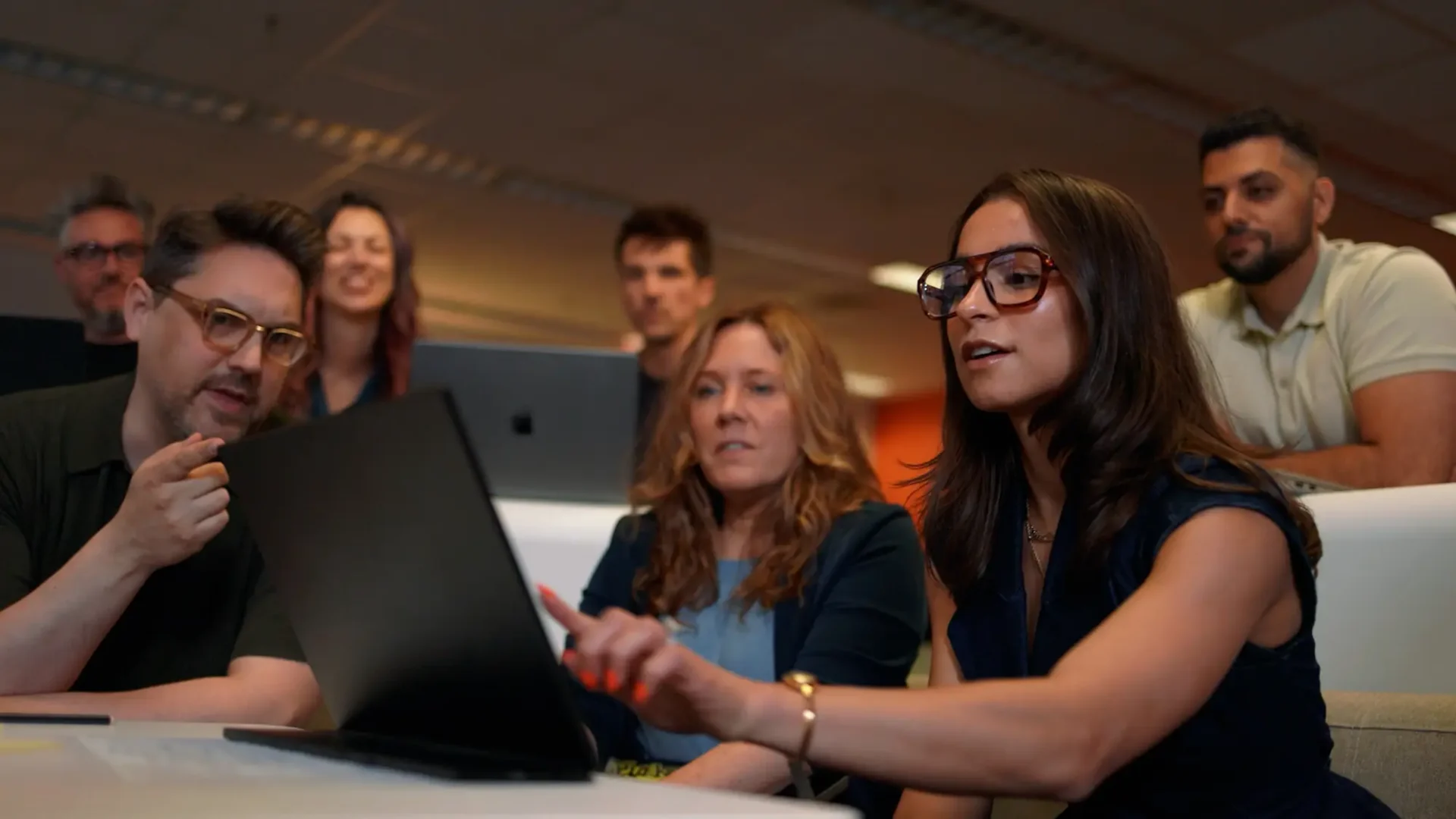
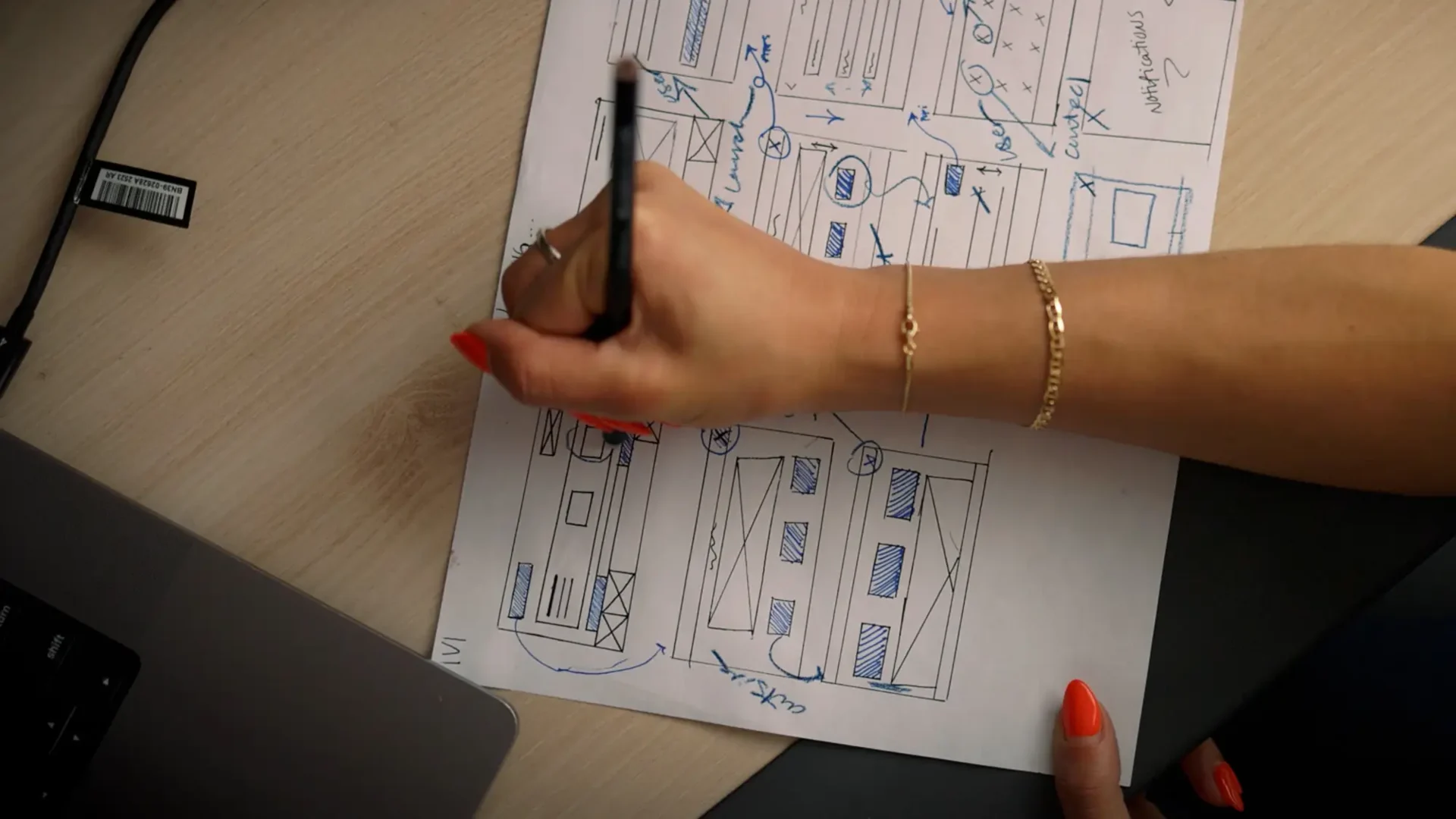
At Stellantis, I currently manage the Core Interaction Design Team for our in-vehicle infotainment system. My team and I design the structure and framework of our user interface for all 14 of our global brands. We look at how every single element on the screen is communicating different vehicle functions to the user. We do the actual interaction. We understand the electrical engineering requirements, how the back end and the software work, and build the front end in a digestible way for the driver, passenger and anybody else in the vehicle.
How did you get where you are today?
I was born and raised in the Metro Detroit area. I have tons of family members who have been in the automotive industry. I kind of grew up consumed by going to the auto shows and different cars and coffee events with my family. My parents are big car people, so there was always something to drive or something to sit in growing up. After my undergrad, I went to CCS for my master’s, and I was just consumed by the automotive industry with different collaborative projects that we were working on. I kind of became a cliché. I’m from Detroit. I went to CCS. I went into the car design world, and that’s how I got here.
Honestly, I’m an experiences person. I love experiences. I love designing the best possible experience not only for other people, but myself. A lot of times, people make fun of me like, “Christine, we don’t need to experience that the exact way that you want us to.” But it’s in my nature. Designing the in-vehicle infotainment system, you really have to understand the entire vehicle experience – before you get in the vehicle, while you’re in it, when you get out, and even what you’re doing at home that prepares you for getting in. So I think it really comes down to being super experience-focused and doing something with purpose.
What are you most proud of right now in your career?
What I am most proud of in my career is overcoming fear. I used to be a very anxious person, and now I tell myself, “You just need 10 seconds. Don’t be afraid, just do it.”
It’s helped me a lot in overcoming some of those anxieties. Now managing a team, I’m able to help my team feel that as well. They’re so talented. They just need 10 seconds of that confidence, and we know what we’re doing. So I think it’s about sharing that experience of overcoming fear, gaining confidence through it, and seeing that confidence in my team’s faces as well.
What’s it like seeing your work come to life?
Being in the automotive industry, it’s just part of the gig that these vehicles have long product life cycles. Since I arrived at Stellantis, I’ve been working on the next generation of our in-vehicle infotainment system, and it still is not on the road yet. But I know the army behind it. There are so, so, so many people and brains that really go into it. I think seeing the end product, and it being so sharp and seamless, while knowing every little detail that went into every single pixel on the screen, is just mind-blowing – knowing how a car works and then seeing it in front of the user looking so mindless and simple, so elegant and not as technical as I understand it to be.
Was being creative something you grew up with as a kid?
Yes, I was always very creative. I was the person making the videos for my family after every family vacation. “Christine, make a video of it. Play it at the family reunion.” Which is every week in my family because I’m super Italian. Then I was always making invitations, different stationery and printed materials. In high school, instead of being in the advanced math classes, I was taking the art classes. I was designing the yearbooks. I was always into not only the visual communication side of things, but making things work and using different computer applications. I even taught myself the whole Adobe suite.
It’s something that I’ve always been chasing. And who knows where it’ll go because I still chase my creativity every day. I always want to do more. I think that’s just who I am as a person.
What would you say to someone who is apprehensive about chasing their creative path in life?
If I could say anything to someone who’s apprehensive about chasing a creative path in life, I would say don’t be. When I was in high school, the traditional careers were always advertised, which is great, but sometimes I wonder if part of my brain is analytical and then the other part is super creative – hence user experience design.
I would say, don’t be afraid to chase it. I’m sure that’s the answer they hear all the time when they talk to people like me, but at least start exploring it because the opportunities are endless. When you think of a big corporation, you don’t realize that there’s always a creative team behind it, whether it’s internal or external. Just thinking of how cars are designed, right? I went to school with people who were studying sculpture, and they now are working on the clay models of the cars. You just don’t know what you don’t know. Definitely explore it. And if you have an itch to explore something, scratch that itch. I think I’ve scratched a lot of itches that I’ve had, in all directions – professionally, personally and creatively. Scratch that itch.
Is there something specific about user experience design that you love most?
The big picture in interaction design, specifically in automotive, is you’re driving a car at 75 miles an hour. It just has to work. You don’t have time to tinker through multiple apps and look for something. If you need to know where your tire pressure is within a second, you need to be able to find it instantly. I think what I love is understanding the technical side of it and being the bridge that translates that into a digestible way for a human being. It needs to feel emotional. It needs to feel like you’re working with the car and the human driving it, not a piece of technology.
What is it like going back to CCS as an Adjunct Instructor after being a student there?
Going back is super rewarding. I remember myself in those students’ shoes, and I can see the stress on their faces. Being able to reassure them that you’re doing this for a reason, you’re here for a reason, you chose to be here and the hard work will pay off is always something that excites me about being there. I love the energy of school and all the opportunities that are presented to students and all the blue-sky possibilities you have as a student.
It also humbles me at work. I think when you get into the industry, there are certain practices or day-to-day things that you learned about your craft that you may forget to practice on a daily basis. Being an Adjunct, I hold myself accountable to the practices that I’m teaching my students, the practices that I learned as a student. Then I’ve been able to give back. So over my time at Stellantis, we’ve hired a few of my students as either an intern or a full-time hire as well. So it’s been a super rewarding experience on my end.
How did CCS help prepare you for where you are right now?
CCS helped prepare me for where I am now in so many ways. I realized in studying user experience design that I’m not designing for me or my classmates. I am designing for whoever is going to be interfacing with the product, system or service. Beyond that, CCS really helped me hone in on the craft. I gained a lot of technical skills in addition to creative thinking. I think combining the two is awesome.
I love being creative, but at the same time I want to understand how things work.
I’d also say that my professors at CCS were super inspiring. When I was working on my thesis and research, I spoke with the College about some of the specific areas I was interested in, and CCS was able to connect me with influential people in those fields. I didn’t know it at the time, but my thesis focused on programming hardware and software and having it output to a graphical user interface. With the help of my professors, we came up with this awesome outcome, and here I am doing a larger-scale version of what that thesis project was. So it really came full circle.
What would you tell your younger self?
I think when I was younger, I put myself in a box. I always said, “Oh, you’re just not smart.” I was never a math or science person. That wasn’t me. I was the creative one, and I was just groomed to think that you had to follow the traditional career path. I would go so hard trying to figure out math and science. I remember my mom used to give me these at-home tests, and I would tell myself, “I’m just not smart enough for this. I don’t know what I’m going to do with my life.”
And I think looking back, it’s not that I wasn’t smart enough. I just wasn’t following something I was interested in. Once I found that interest, the opportunities were endless. I’m good at this. There’s so much I can do with this, learn and even teach. I think I stayed curious, and I’ll always remain curious. It’s helped me a lot throughout the years, and we’ll see where it continues to take me.