
Veronika Scott, who turned a class project into an internationally recognized workforce development organization, is College for Creative Studies’ 2026 Distinguished Alumni.
“I don’t think I would’ve started Empowerment Plan anywhere else,” said Scott, ‘11 Product Design.
Upon the advice of her grandfather, Scott chose to attend CCS, which awarded her a scholarship and financial aid, rather than taking out student loans to go to Yale University. It was during her junior year that Product Design Professor Stephen Schock challenged Scott and her classmates to design a product that filled a specific need in the community.
Leaning into her own experiences with poverty and homelessness growing up, Scott spent three days a week for about five months at the Neighborhood Service Organization (NSO), a Detroit-based health and human services agency. Through conversations with those who’d been displaced, some for years, she learned more about the realities people who live on the street face and was inspired to design the first prototype of what is now the weather-resistant EMPWR coat.
“It was about creating something I wish had existed for my own parents,”
That prototype took 80 hours to create, and unlike the coat-sleeping bag version now distributed across the United States and to 22 other countries, Scott’s original design was a coat-tent.
“The tent part never panned out,” she said. “And it was hilarious.”
Once the project was complete, people Scott had spoken to through NSO began asking about where they could get their coats. “And I said, ‘Well, I don’t know. It takes me two weeks to make one and you don’t want the one I’m making because it’s not that great. I’m not a good sewer,’” she said.
Even though Scott had received mixed feedback, she decided to pushed forward. Her first challenge was startup capital, since she didn’t have the funds personally or even close family or friends to approach. Instead, she turned to CCS.
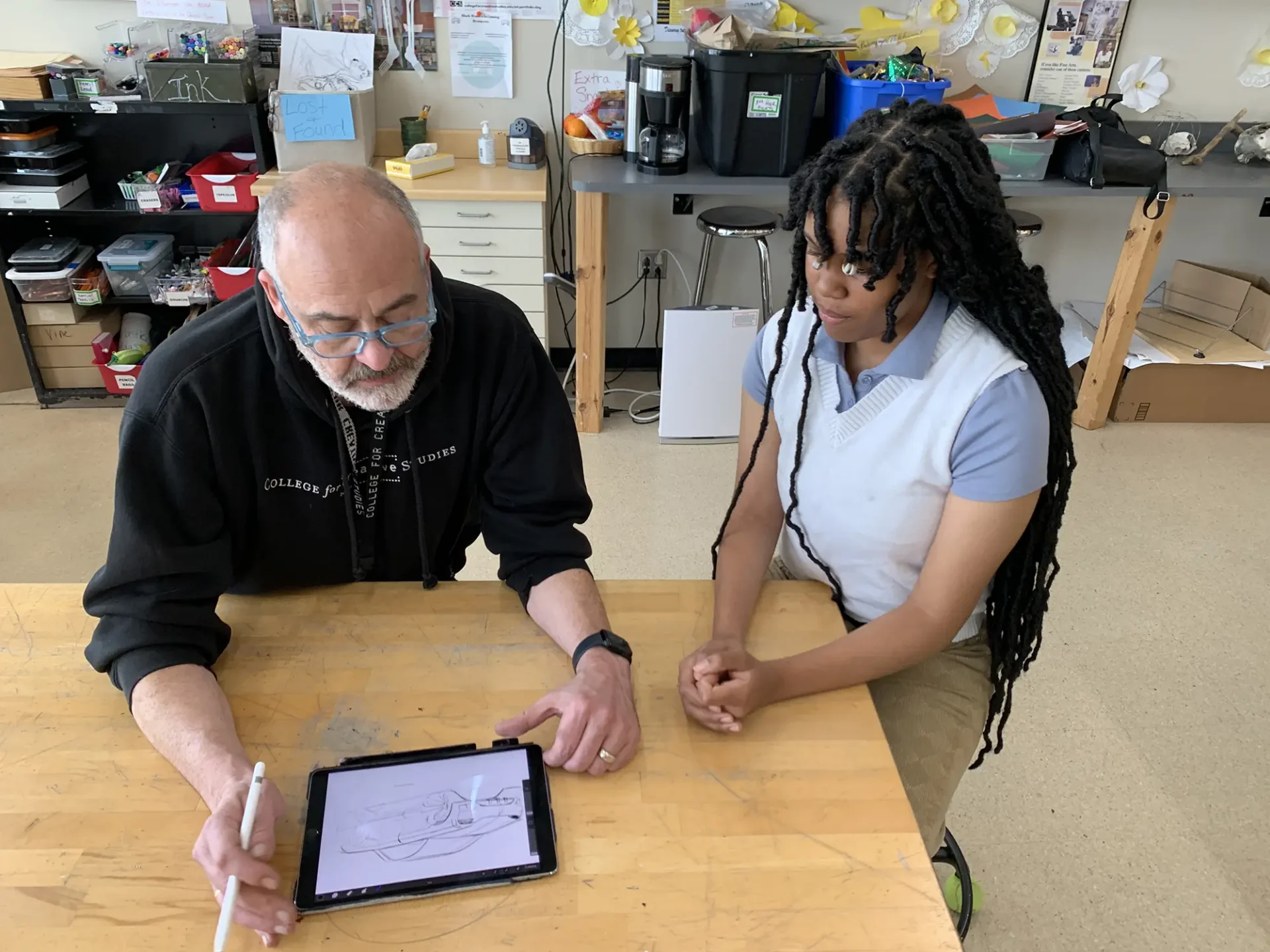
Scott met “with everyone that I could meet with as a student,” from professors to the legal team, who advised her to create a business plan. Figuring out that essential roadmap for any organization required the advice of more CCS staff members. She eventually connected with Imre Molnar, who helped guide her project through an independent study. The two met weekly, with Molnar — a former design director for outdoor gear maker Patagonia — eventually setting her up with Detroit-based Carhartt. “He truly believed that [Empowerment Plan] could be something, that it actually could be a business or an organization when I did not,” Scott said. “I didn’t know that it could be something like that. And I certainly didn’t think I was the right person either.” For early iterations of the EMPWR coat, Scott tried a variety of recycled materials, such as billboard fabric, construction fencing and door paneling from General Motors’ vehicles, as well as Tyvek. “You name it, I tried to sew with it,” she said. Learning to take feedback while at CCS was crucial to the development process, and to her role as CEO and founder of Empowerment Plan. “One thing that I took away from CCS was how to take a critique and learn from those critiques and continue to improve,” she said. After graduation, Scott began working with different partners, including Carhartt and RefrigiWear, an Atlanta-based company that produces garments for cold storage. According to Scott, Carhartt helped her to understand how to make long-lasting, durable apparel, and from RefrigiWear, what goes into clothing designed for temperatures as low as negative 40 degrees. But as it turns out, finding the perfect materials for the EMPWR coat and then producing and distributing the sleeping bag-coat was only part of what Scott would do through Empowerment Plan. Because one afternoon, as she was leaving NSO during those days of initial research, a woman had told her, “I don’t need a jacket. I need a job.” That stuck with her, and when it came time to hire employees, she sought people who would need to use the coat — with hopes of them never having to use the coat again. Empowerment Plan created a “paid-to-learn” model, pairing full-time employment with supportive services and programs. In addition to working as sewing techs, employees can earn their GEDs, gain financial skills and receive mental health services. Those early years of creating her organization wouldn’t have been possible if she’d incurred student loan debt, given that she didn’t collect a salary for two years. “Had I needed to worry about paying back student loans or deferring loans, I wouldn’t have been able to do it,” Scott said. “I think of that as [not only] another gift from my grandfather, but also CCS.” Empowerment Plan also wouldn’t have helped hundreds of employees and their families overcome homelessness or distributed its 100,000th coat in March. “I love my job,” Scott said. “What I’ve realized over the years is how lucky I am. I had an incredible experience [at CCS]. I had an incredible mentor and wouldn’t be the same without it.”